

Stop suffocating your sourdough in plastic. You spent hours perfecting that crumb, yet you're watching it turn into a rubbery mess or a rock-hard brick within a day. It is a heartbreaking waste of premium organic flour. You know your bread is a living thing that needs to breathe, and high-quality cloth bread bags are the only way to respect that craft.
We agree that artisan loaves deserve better than a cheap plastic wrap or a dry paper sleeve. You want that satisfying crunch to last. With the artisan bakery market projected to hit over 40 billion dollars this year, more enthusiasts are finally ditching synthetic storage for solutions that actually work. It's time to treat your baking with the reverence it deserves.
This article is your definitive masterclass in bread preservation. You will learn how to maintain a crispy crust for 48 hours or more while adopting a plastic-free lifestyle. We are providing a complete checklist for selecting the best bags, including how to spot quality under the new GOTS 8.0 organic standards. Let's ensure your next loaf stays as perfect as the moment it left the oven.
Key Takeaways
- Stop suffocating your bread. Learn why plastic is a coffin for your crust and how to prevent rapid mold growth.
- Use our definitive checklist to find the best cloth bread bags. Look for 100% organic materials and the right weave density.
- Master the "cut side down" rule. This simple technique protects your crumb and keeps it soft for days.
- Understand the science of breathability. Natural fibers regulate moisture so your bread stays bakery-fresh without going soft.
- Discover the beeswax evolution. Learn how infused cotton creates the ultimate microclimate for your artisan sourdough.
Why Your Bread Deserves Better Than Plastic
You didn't spend three days nurturing a sourdough starter just to watch your hard work wither away in a plastic bag. Plastic is quite literally a coffin for artisan crusts. It smothers the bread. It kills the texture. It turns a masterpiece into a disappointment. Most people reach for plastic out of habit; they assume it keeps things fresh. In reality, it's the fastest way to ruin a high-quality loaf. Your bread is a living, breathing product. It needs an environment that respects its biology.
The Plastic Trap: Why Crusts Go Rubbery
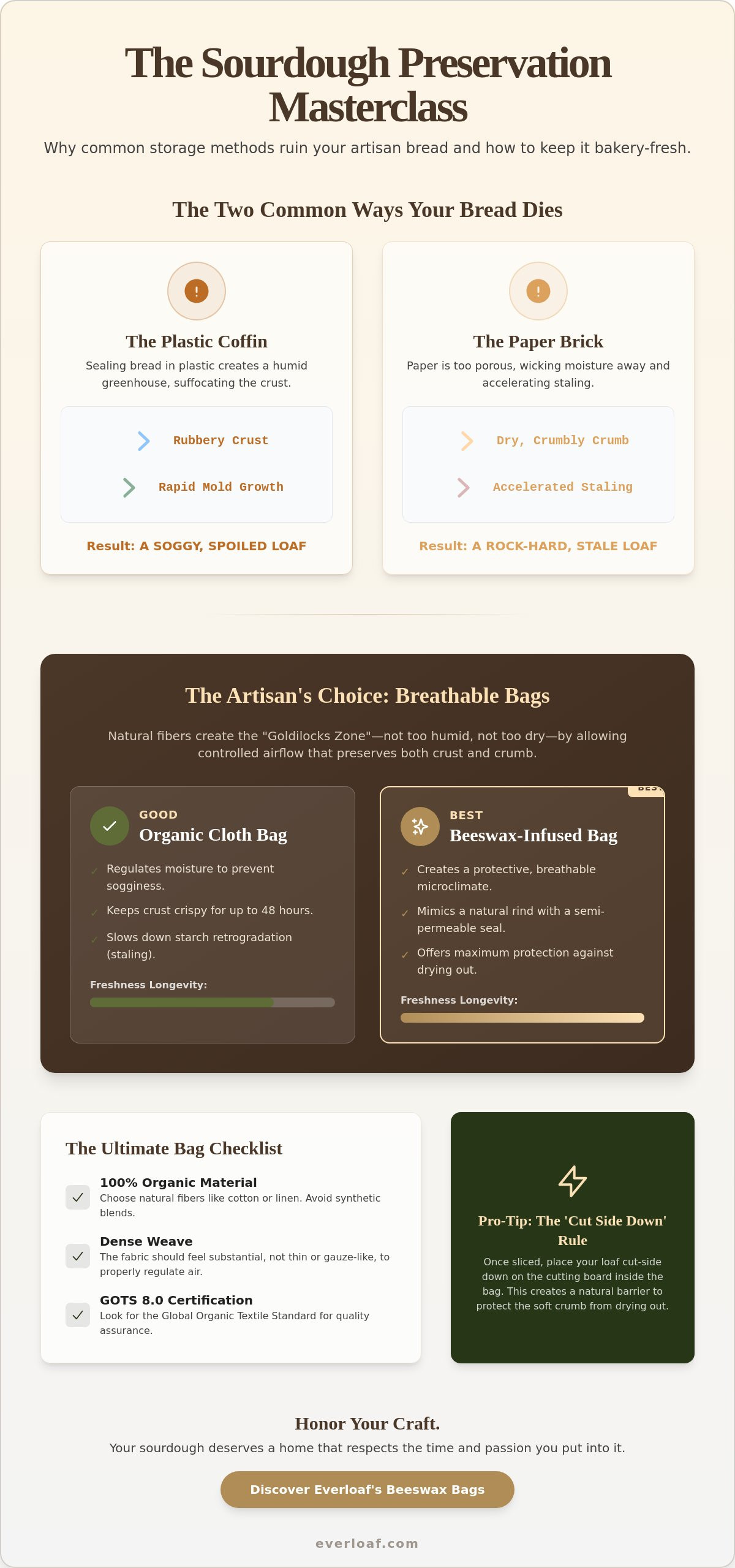
When you slide a loaf into a plastic bag, you're creating a tiny, humid greenhouse. Even a completely cooled loaf still contains internal moisture. In a sealed plastic environment, that moisture migrates from the crumb to the surface and stays there. Crumb sweating is the primary cause of rubbery textures. Instead of a crust that crackles, you get a surface that feels like wet cardboard. This moisture trap doesn't just ruin the crunch; it invites mold. Mold spores thrive in dark, damp, stagnant spaces. Plastic provides all three, leading to rapid spoilage that wastes your expensive organic flour.
The Paper Problem: Why Loaves Turn to Stone
Switching to paper isn't a perfect fix. Paper bags are too porous for long-term storage. They act like a desiccant, pulling moisture out of the soft interior of your bread and releasing it into the air. This accelerates the science of staling. Without a protective barrier, the starches crystallize rapidly. Your bread loses its elasticity. It becomes crumbly and dry. Paper is a fine choice for the first four hours of a loaf's life; after that, it fails as a long-term home. It turns your beautiful sourdough into a rock-hard brick that's only good for croutons.
High-quality cloth bread bags provide the balance your bread craves. They offer the "Goldilocks" zone of airflow. They allow for controlled breathability, meaning excess moisture can escape so the crust stays firm, but the weave is tight enough to prevent the crumb from drying out. This is why cloth bread bags have been the standard in European bakeries for generations. They understand that bread needs to age gracefully. For those who want even more protection, the beeswax cotton bread bags from Everloaf offer a natural, semi-permeable seal. They mimic the protective properties of a real rind. Stop settling for storage that works against you. Your bread deserves a solution that honors the craft.
The Science of Staling: How Cloth Bags Breathe
Bread doesn't just sit on your counter. It undergoes a constant biological and chemical transformation. Most people think bread goes stale because it dries out. That is only half the story. Staling is a complex journey of moisture movement and molecular change. To keep your loaf in peak condition, you must manage the "Moisture Seesaw." This is the delicate balance between a soggy, moldy crust and a bone-dry, mummified crumb. High-quality cloth bread bags are the ultimate tool for this task. They act as a living skin for your loaf. They allow excess moisture to escape at a controlled rate while shielding the interior from the harsh, drying effects of open air.
Natural fibers like cotton and linen regulate the internal microclimate of the bag with precision. Unlike synthetic materials, these fibers are capillary-active. They can absorb a small amount of moisture and release it slowly into the environment. This prevents the "swamp effect" found in plastic. Tight weaves are essential here. A loose, gauze-like fabric allows too much air exchange, leading to "flash drying." A dense, high-quality weave ensures that the air moves, but the moisture stays exactly where it belongs. It's about giving your bread a home that respects its biology.
Understanding Starch Retrogradation
As soon as your bread leaves the oven, the starch molecules begin to realign and harden. This process is called starch retrogradation. It is the scientific reason behind that tough, leathery texture. While you can't stop it entirely, you can slow it down by maintaining stable humidity and temperature. When you use a fabric bread bag, you create a buffer against the outside world. Organic cotton is particularly effective at maintaining temperature stability. It prevents the rapid fluctuations that cause bread cell structures to collapse and harden prematurely. This stability keeps your sourdough soft and elastic for days longer than a paper sleeve ever could.
Moisture Migration: Crust vs. Crumb
Water is always on the move. It naturally migrates from the moist, soft center of the loaf toward the dry, crispy crust. In a sealed environment, this water gets trapped at the surface. It turns your beautiful crust into a rubbery mess. Cloth bread bags intercept this moisture. They let the crust breathe while keeping the crumb hydrated. This is a critical part of learning how to keep bread fresh and avoiding unnecessary waste. By using a breathable barrier, you allow the loaf to age gracefully. If you want to take your storage to the next level, consider upgrading to beeswax cotton bread bags. They provide an extra layer of protection that mimics the natural rind of the bread, locking in freshness without sacrificing that vital airflow.
The Ultimate Cloth Bread Bag Checklist
Picking the right home for your loaf is a decision that dictates its lifespan. You've seen why airflow matters, but don't assume any old sack will do. High-quality cloth bread bags must meet specific standards to truly protect your bake. Understanding the science of bread staling is only the first step; applying that knowledge requires the right hardware. Use this checklist to separate the professional tools from the kitchen clutter.
- 100% Organic and Unbleached: Look for fabrics that haven't been treated with harsh chemicals. Since March 2026, the GOTS 8.0 standard has mandated that any product labeled "organic" must contain at least 95% organic fibers. This ensures your warm bread isn't absorbing synthetic residues.
- Heavyweight Weave Density: Most generic listings ignore weave density. They sell you a thin, gauze-like fabric that lets your bread flash-dry. You need a heavyweight fabric that feels substantial. A dense weave provides the insulation required to keep the crumb soft while still allowing the crust to remain firm.
- Drawstring Closures: A tight seal is essential. Drawstrings allow you to cinch the bag tightly around the loaf, minimizing the amount of dead air space inside. This prevents unnecessary oxidation.
- Size Versatility: A good bag should be a multitasker. Ensure it is large enough to accommodate a wide boule, a long batard, or even a couple of baguettes.
Material Matters: Cotton vs. Linen
Cotton and linen are the two titans of bread storage. Cotton is often softer and features a naturally tighter weave, which is excellent for maintaining a stable internal microclimate. Linen is the traditional choice; it is durable and highly breathable. However, some linen can be too porous if the weave is too loose. It's about finding the right balance for your specific environment. For those curious about the old-world feel, check out our linen bread bag guide for a deep dive on these fibers.
The Construction Checklist
Don't overlook the build quality. Check for reinforced stitching along the seams. Artisan loaves are heavy, and a cheap bag will fray at the stress points within weeks. Hygiene is also vital. Ensure your cloth bread bags are machine washable. Flour and moisture can eventually lead to buildup, so you want a fabric that can handle a regular cleaning cycle without shrinking or losing its shape. High-quality construction ensures your bag lasts for years, not just a few bakes. It is an investment in your craft that pays off with every fresh slice.
Mastering the Cloth Bag Routine
Owning the right gear is only half the battle. You must treat your bread with the same respect the master bakers of Lyon show their daily loaves. In traditional French bakeries, bread is never rushed. It is handled with care from the oven to the table. Using cloth bread bags correctly ensures your sourdough maintains its soul. It is about building a routine that honors the fermentation process you worked so hard to achieve. When you master the ritual, your bread stays fresh, vibrant, and ready for the toaster.
Wait for the "click." This is the subtle sound a crust makes as it cools and contracts. Never bag a hot loaf. If the bread is still warm, it is still releasing steam. Trapping that steam inside any container, even a breathable one, will soften the crust prematurely. Let it rest. Once the loaf reaches room temperature, it is ready for its new home. This patience prevents the rubbery texture that ruins a good artisan bake.
Protect the crumb. Once you slice into your bread, the interior is vulnerable. Use the "cut side down" rule. Press the exposed face of the bread firmly against the bottom or side of the bag. This creates a natural seal. It prevents the soft center from drying out while the rest of the loaf continues to breathe through the crust. For the ultimate protection during this stage, upgrade to a beeswax cotton bread bag to lock in that vital internal moisture without sacrificing the crunch.
Think beyond the counter. Cloth bread bags are excellent for the freezer too. Wrap your loaf in a beeswax wrap first, then slide it into the cloth bag. This double-layer method prevents freezer burn while allowing for a slow, even thaw later. When it comes to cleaning, be gentle. Bread is highly porous. It will absorb the scent of floral detergents or fabric softeners. Stick to scent-free, natural options to keep your sourdough smelling like toasted grain rather than mountain spring lavender.
How to Store Your Loaf Daily
Step 1: Cool the bread completely on a wire rack for at least two hours to ensure the internal structure is set. Step 2: Place the loaf in the center of the cloth bag, making sure the cut side is pressed against the fabric. Step 3: Cinch the drawstring tight to minimize air pockets and store the bag in a cool, dry spot away from direct sunlight.
Caring for Your Cloth Bag
Shake out the crumbs every single day. Old crumbs can trap moisture and invite mold spores that ruin future loaves. Wash your bag every 2 to 3 weeks using a scent-free, natural detergent. Always air dry your bags. High heat from a dryer can shrink the organic fibers and ruin the fit for your larger boules. Proper care ensures your bag remains a supportive companion in your baking journey for years to come.
Beyond Basic Cloth: The Beeswax Evolution
Traditional cloth bread bags are a massive leap forward from the plastic coffins we discussed earlier. They respect the bread. They allow it to breathe. However, for the serious sourdough enthusiast, sometimes even the best fabric needs a performance boost. This is where the beeswax evolution changes the game entirely. We have moved beyond simple storage into the territory of active preservation. It is time to give your loaves a home that works as hard as you do. You've mastered the bake; now master the longevity.
The Orvix innovation is our answer to the staling problem. By infusing high-quality organic cotton with a precise layer of beeswax, we create a hybrid material that acts like a second skin. This isn't just a container. It is a semi-permeable barrier. It allows the bread to release excess gases while locking in the essential moisture that keeps the crumb tender. The result is a loaf that stays bakery-fresh for up to 10 days. This is the final nail in the coffin for single-use plastic. You can finally stop wasting expensive organic flour on stale ends.
The Best of Both Worlds
This hybrid design offers a level of care that standard cloth cannot match alone. The cloth provides the sturdy structure and essential breathability. The beeswax provides the moisture seal that prevents the "flash drying" we warned you about in the construction checklist. It is the gold standard for sourdough storage. If you are tired of racing against the clock to finish your loaf, these beeswax cotton bread bags are the solution your kitchen is missing. They balance the moisture levels perfectly without turning the crust into rubber.
Why Everloaf Leads the Way
Our journey began in the legendary bakeries of Lyon. We saw how the masters treated their craft and knew American home bakers deserved the same quality. We don't compromise. Our commitment to 100% organic materials is unwavering. We use unbleached fabrics and sustainable waxes because we believe your food should never touch chemicals. You aren't just buying a bag; you are joining a community of thousands of passionate bakers who have finally ditched plastic for good. Respect the crust. Honor the crumb. Choose a storage solution that treats your bread like the masterpiece it is.
Honor Your Craft with Better Storage
Your bread is a living masterpiece. It deserves a home that respects its biology. You've seen how the right cloth bread bags balance the moisture seesaw to prevent rubbery crusts and rock-hard crumbs. By following our construction checklist and mastering the cooling routine, you ensure your premium organic flour and hours of labor never go to waste. It's time to stop settling for storage that suffocates your work.
Join the community of thousands of enthusiasts who have already revolutionized their kitchens. Our Lyon-inspired culinary designs are crafted from 100% organic cotton to provide the ultimate microclimate for your loaves. With thousands of 5-star baker reviews, the results speak for themselves. Don't let your next sourdough wither away in a plastic coffin. You've put in the hard work at the oven; now give your bread the protection it needs to age gracefully.
Upgrade to the Orvix Beeswax Bread Bag for 10-day freshness and experience the crackle of a perfect crust every morning. You've mastered the bake; now master the storage. Your best loaf is yet to come.
Frequently Asked Questions
Are cloth bread bags better than plastic for sourdough?
Yes! Cloth bread bags are vastly superior because they allow your sourdough to breathe. Plastic creates a humid, stagnant environment that turns a crispy crust into a rubbery mess. This trapped moisture also invites rapid mold growth. A high-quality cloth bag maintains the "Goldilocks" zone of airflow. It protects the soft crumb while honoring the integrity of the crust.
How long does bread stay fresh in a cloth bag?
Standard cloth keeps a loaf bakery-fresh for roughly 48 to 72 hours. If you want more longevity, our beeswax-infused options extend that window to 10 days. The key is how the natural fibers regulate moisture migration. By keeping the internal microclimate stable, you prevent the bread from turning into a rock. It is about aging your loaf with grace and respect.
Can I put warm bread in a cloth bag?
Never bag a hot loaf. Wait for the bread to cool completely on a wire rack before storage. If you bag it while warm, the residual steam will condense inside the fabric and soften the crust. This leads to the "crumb sweating" that ruins artisan textures. Give your bread at least two hours to rest. Patience is the final ingredient in a perfect sourdough routine.
Do cloth bread bags prevent mold?
Yes, they are highly effective at preventing mold compared to plastic alternatives. Mold thrives in the damp, airless spaces found in sealed bags. Because cloth allows excess moisture to escape, it removes the primary catalyst for spoilage. However, you must shake out old crumbs daily. Hygiene is vital. A clean bag ensures your next loaf stays healthy, vibrant, and delicious.
How do I wash my cloth bread bag without ruining it?
Wash your bag every 2 to 3 weeks using a scent-free, natural detergent. Bread is porous and will absorb floral or chemical aromas. Avoid fabric softeners at all costs. Always air dry the fabric rather than using a machine. High heat from a dryer can shrink the organic fibers and ruin the fit for your larger boules. Gentle care preserves the life of the bag.
Can you freeze bread in a cloth bag?
You can, but we recommend a double-layer approach for the best results. Wrap your loaf in a beeswax wrap first to provide a moisture seal, then slide it into the cloth bag. This prevents freezer burn while allowing the bread to thaw evenly. It is a sustainable, plastic-free way to build a bread stash. Your future self will thank you for the fresh toast.
What is the best fabric for a bread bag?
100% organic cotton and linen are the gold standards. We prefer heavyweight organic cotton for its superior weave density and softness. It provides the ideal insulation to keep the crumb soft while letting the crust breathe. Ensure your fabric is unbleached and GOTS certified. This guarantees that no harsh chemicals touch your food. Your bread deserves the highest quality materials available.
Do I need to use a bread box with a cloth bag?
It isn't necessary, but a bread box can provide an extra layer of protection in very dry climates. The cloth bag does the heavy lifting by regulating the loaf's internal moisture. If your kitchen is particularly drafty, placing the bagged loaf inside a box can further slow down the staling process. Most of our community finds that a high-quality cloth bread bag is more than enough on its own.


