

Your artisan sourdough is literally suffocating inside that plastic bag. It’s a bold claim, but the soggy, rubbery crust you find every morning proves it’s true. You’ve put hours of heart and hard work into your bake. Your loaf deserves better than a plastic coffin. Choosing the right fabric bread bag is the only way to respect the craft. We agree that there’s nothing more frustrating than watching a beautiful crust lose its life within hours. You need a storage solution that actually works without the confusion of choosing between linen or cotton.
This guide will show you how the right materials regulate moisture and airflow to keep your sourdough crust crispy and the crumb soft for days. You’ll discover why beeswax-infused organic cotton provides the perfect humidity seal for your favorite loaves. We’ll help you find a plastic-free, eco-friendly storage solution that protects your investment of time. You can finally maintain 'day one' freshness until the very last slice. We’re going to explore how fabric acts as a living medium to keep your bread at its absolute best.
Key Takeaways
- Learn why your bread needs natural fibers to breathe and avoid the soggy disaster caused by plastic storage.
- Master the science of moisture regulation to stop your crumb from drying out before you reach the last slice.
- Compare different materials to find the perfect fabric bread bag for your specific baking style and climate.
- Discover simple care routines for organic cotton that protect your investment and keep your kitchen eco-friendly.
- Get an inside look at the Orvix, our premium beeswax-infused solution inspired by deep culinary traditions.
What is a Fabric Bread Bag and Why Does Your Loaf Need One?
Your sourdough doesn't stop evolving the moment it leaves the oven. It’s a living product that continues to release moisture and gases long after the bake is finished. A fabric bread bag is a reusable storage sleeve crafted from natural fibers like organic cotton or linen. It serves as a specialized home for your loaf. Unlike the suffocating environment of plastic, fabric allows for controlled gas exchange. This process prevents moisture from building up on the surface and ruining your hard work.
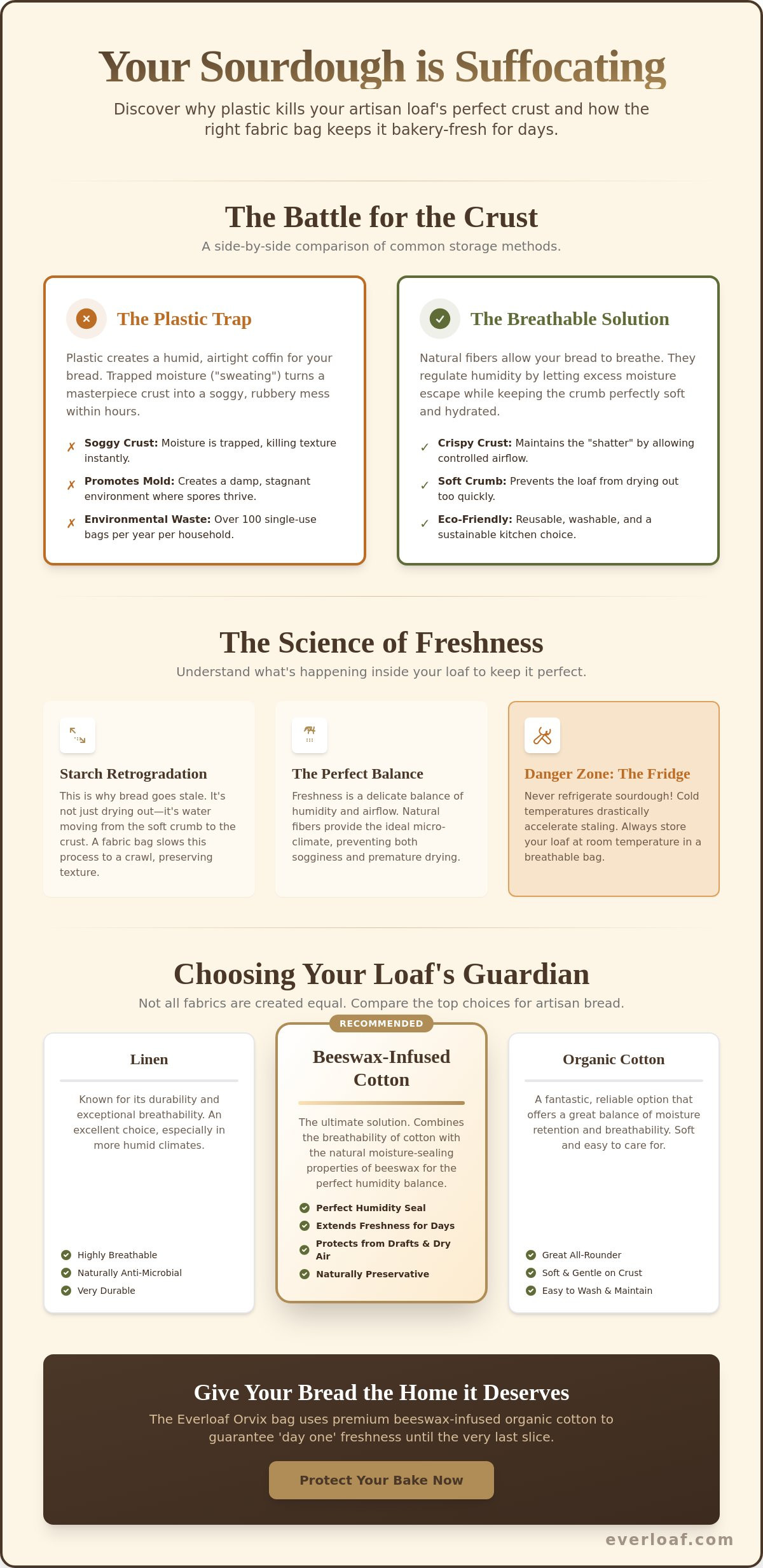
Most home bakers fall into the "Plastic Trap" without realizing it. When you seal a fresh loaf in an airtight bag, you create a humid microclimate. The moisture trapped inside has nowhere to go but back into the crust. This turns a beautiful, shattered-glass crust into a rubbery, chewy mess. To truly understand The Science of Freshness, you must recognize that bread needs a delicate balance of humidity and airflow. A quality bag provides exactly that.
Fabric vs. Plastic: The Battle for the Crust
Plastic bags cause a destructive "sweating" effect. You’ve seen it before; the inside of the bag fogs up, and the bread feels damp. Professional bakers avoid plastic for artisan boules because it kills the texture instantly. They prefer breathable environments that respect the "crunch" factor. A fabric bread bag acts as a natural buffer. It lets excess steam escape while keeping enough moisture inside to ensure the crumb stays soft. It’s the difference between a sad, soggy sandwich and a vibrant, crusty slice of heaven. Your bread deserves a storage solution that doesn't compromise its integrity.
The Environmental Impact of Switching to Cloth
Your kitchen habits have a footprint. If you enjoy two loaves of bread a week, you're likely tossing over 100 single-use plastic bags into the trash every year. That’s a lot of waste for a product that actually hurts the quality of your food. High-quality organic cotton is built for longevity. It’s durable, washable, and designed to last through hundreds of loaves. Investing in a fabric bread bag is a smart, one-time move. You protect your bread and the planet at the same time. It’s a sustainable choice that pays for itself in flavor and freshness. It's time to treat your kitchen and your craft with the respect they deserve.
The Science of Freshness: How Fabric Regulates Humidity
Bread is a ticking clock. From the moment it leaves the oven, a chemical transformation begins. Most people think bread just "dries out," but the reality is more complex. Your loaf is actually undergoing a process called starch retrogradation. This is the primary reason your soft crumb turns into a leathery brick within days. Understanding this science is the first step toward better bread care.
Starch retrogradation is the process where bread goes stale as water moves from the crumb to the crust. In an airtight plastic bag, this moisture gets trapped. It sits on the surface and turns the crust into a rubbery mess. A fabric bread bag acts as a smart buffer. It slows down the evaporation process without stopping it entirely. This balance is key. Natural fibers like organic cotton contain micro-perforations that allow for a controlled exchange of gases. Your bread needs this to stay vibrant.
Airflow is also your best defense against spores. Mold thrives in damp, stagnant environments. Plastic creates a greenhouse effect that invites fuzzy green growth. By using a breathable material, you ensure that moisture doesn't pool. You protect the integrity of the loaf and extend its life. It's about respecting the chemistry of the bake.
Staling vs. Drying: Understanding the Difference
Stale bread isn't always dry bread. You can have a loaf that is both stale and damp if it’s stored poorly. Staling is a structural change in the starch molecules as they recrystallize. Starch retrogradation is the primary cause of bread texture loss. The right bag keeps the crumb supple by managing how fast that water migrates. It ensures the crust stays firm and protective rather than becoming a soggy blanket. Your bread deserves to age gracefully, not collapse into a textureless shadow of itself.
Why Temperature and Airflow Matter Together
The refrigerator is the ultimate "danger zone" for your sourdough. Cold temperatures actually accelerate the staling process by causing starch to crystallize faster. You’re effectively putting your bread in a time machine that leads straight to the trash can. Always store your loaves at room temperature. A beeswax-infused fabric bread bag provides the perfect shield. It protects your loaf from harsh kitchen drafts while allowing it to breathe naturally. This combination of stable temperature and gentle airflow keeps your bread fresh until the very last slice. It’s a simple change that yields professional results.
Choosing the Right Material: Linen vs. Cotton vs. Beeswax-Infused
The material you choose is a promise to your bread. It’s the difference between a loaf that stays vibrant for a week and one that turns into a rock by Tuesday. While many options exist, not every fabric bread bag is equipped to handle the needs of a high-hydration sourdough. You need to match the textile to your baking rhythm. Your choice determines how effectively you can manage the moisture balance we discussed in the previous section.
Linen is the historic standard. It’s incredibly porous and allows for maximum airflow. This is perfect if you plan to devour your baguette within a few hours. However, linen can be too breathable for longer storage. If you leave a loaf in plain linen for three days, you’ll likely find a very dry crust. Cotton offers a tighter weave. It’s softer and more durable, providing a slightly better moisture barrier for standard sandwich loaves. It feels great in the hand and stands up to frequent use.
The real innovation lies in the "Beeswax Middle Ground." Some brands use synthetic PUL linings, which are basically plastic laminates. That’s not a natural solution for a purist. Our Orvix technology uses pure beeswax infused into organic cotton. It creates a semi-permeable seal that mimics the natural protection of a traditional breadbox. It gives you the best of both worlds: airflow to prevent mold and a seal to prevent drying.
Linen Bread Bags: The Old-World Standard
Linen has been a staple in French bakeries for centuries. Its porous nature is legendary for keeping crusts shattered-glass crisp. You should check out our linen bread bag guide to understand how this tradition meets modern freshness. Choose linen when you know the bread will be gone within 24 to 48 hours. It’s the purist’s choice for immediate quality and that classic bakery aesthetic.
The Beeswax Revolution: Why It Wins for Sourdough
Sourdough is an investment of time. It deserves a storage medium that respects that effort. Beeswax-infused cotton creates a natural barrier that slows down staling without trapping heat. The wax itself has natural antimicrobial properties, which help keep your storage environment clean. This is why many enthusiasts consider this the best bread bag of 2026 for achieving 10-day freshness. It’s the ultimate upgrade for any serious baker. You can find our specialized fabric bread bag designed specifically for these long-lasting, artisan results.
Practical Care: How to Maintain Your Fabric Bread Bag
Caring for your storage tools is an essential extension of the baking process itself. If you treat your tools with respect, they will treat your bread with respect. A high-quality fabric bread bag is a long-term investment in your kitchen’s ecosystem. It doesn't require complex maintenance, but it does demand a simple, disciplined routine. Start by shaking out the crumbs every single day. Old crumbs can trap unwanted moisture or attract spores that compromise the freshness of your next bake. It’s a five-second habit that keeps your storage environment pristine and ready for the next warm boule.
Washing your bag depends entirely on the specific material and construction. For 100% organic cotton without any coating, a gentle machine wash is usually acceptable. However, everything changes when you introduce the specialized beeswax infusion found in the Orvix. Heat is the ultimate enemy of this protective layer. You must strictly follow the "Cold Water Only" rule. Warm or hot water will melt the wax and strip the bag of its humidity-regulating powers. Use a soft sponge and a tiny bit of eco-friendly soap for spot cleaning when necessary. This preserves the delicate balance that keeps your sourdough at its best.
Never toss your natural fiber bags into a tumble dryer. The aggressive heat of a dryer shrinks organic fibers and destroys the structural integrity of the weave. Air-drying is the superior method for all natural textiles. Simply drape your bag over a drying rack or a clean kitchen chair. This ensures the micro-perforations stay open and functional. It allows the fabric to return to its natural shape without the stress of mechanical heat. Your bread deserves a home that remains structurally sound for years to come.
Removing Stains and Odors Naturally
Flour buildup and sourdough starter stains are badges of honor in a busy kitchen. They show you’re committed to the craft. To handle these marks, use mild, eco-friendly soaps that don't contain harsh synthetic fragrances. It’s vital to avoid fabric softeners at all costs. These products leave a chemical residue that clogs the pores of your fabric bread bag. When the fibers are clogged, your bread can't breathe, and the "living" exchange of gases stops. Stick to natural cleaners to protect the integrity of the textile and the flavor of your crust.
Reviving Your Beeswax Coating
A premium bag should last for years with proper handling. To keep the beeswax infusion fresh over months of heavy use, avoid aggressive scrubbing or wringing the fabric. When the bag isn't housing a fresh loaf, fold it neatly and store it in a cool, dry drawer away from the stove. This prevents the wax from softening prematurely. If you notice the coating feels less tacky after a long period, it’s simply a sign of a tool well-used. You can ensure your artisan loaves always have the perfect environment by using our beeswax bread bag designed for maximum longevity.
The Everloaf Orvix: The Ultimate Fabric Storage Solution
Your bread is a masterpiece. It represents hours of patience, precise temperature control, and a deep respect for the craft of baking. It deserves a home that reflects that effort. The Everloaf Orvix is the definitive answer to the storage struggles we have explored in this guide. It is where 100% organic cotton meets the protective power of pure beeswax. We designed this fabric bread bag for the American home baker who refuses to settle for mediocre results. Our roots are firmly planted in Lyon’s rich culinary tradition. We have taken that European reverence for the loaf and adapted it for your modern kitchen.
The Orvix is the only solution that confidently promises 10-day freshness for your sourdough. By utilizing the "Beeswax Middle Ground" we discussed earlier, it creates a semi-permeable environment. It allows the bread to breathe while preventing the moisture loss that leads to starch retrogradation. Stop settling for rubbery, suffocating crusts or dry, crumbly interiors. Your bread deserves better than the status quo. It deserves a storage medium that acts as a living extension of the bake itself.
Craftsmanship and Organic Standards
Safety and quality are our primary pillars. We use GOTS certified organic cotton to ensure that no harmful chemicals or synthetic residues ever touch your food. This is the gold standard for textile safety. Many competitors hide behind "eco-friendly" labels while using PUL linings. These are synthetic polyurethane laminates; they are essentially hidden plastic. We avoid these materials entirely in favor of natural beeswax. The Orvix design is intentionally spacious. It is built to comfortably house large artisan boules and long, traditional baguettes. You will never have to cram your beautiful bakes into a space that is too small. Every stitch is designed to support the integrity of your bread.
Join the Everloaf Community
You aren't just buying a bag. You are joining a community of thousands of home bakers who trust the Orvix to protect their investment of time. Our customers frequently share how they have finally stopped throwing away half-eaten loaves. This shared passion for quality is what drives us to curate the best tools in the industry. Beyond the fabric bread bag, you can complete your baking kit with our professional-grade Sourdough Knife, the Everloaf Bread Sling, and the Danish Dough Whisk. These tools are designed to work in harmony. They ensure your journey from the first mix to the last slice is perfect. It is time to treat your kitchen with the authority it deserves.
Experience the Orvix Beeswax Bread Bag and discover the difference that professional-grade storage makes for your artisan loaves.
Give Your Sourdough the Home It Deserves
You now understand that bread is a living product. Storing your hard-earned bake in a plastic bag is a disservice to the hours you spent cultivating that perfect starter. By switching to a high-quality fabric bread bag, you finally master the delicate science of moisture regulation. You protect the shattered-glass crunch of the crust while keeping the crumb soft and supple for much longer than you ever thought possible. It's time to stop treating your artisan loaves like a commodity and start treating them like the craft they are.
The Orvix isn't just another kitchen accessory; it’s a tool built on French culinary heritage. Crafted from 100% Organic GOTS Certified Cotton, it provides the perfect humidity seal to keep your favorite loaves fresh for up to 10 days. You've done the hard work in the kitchen. Now, it's time to ensure every slice is as perfect as the first. Upgrade your kitchen with the Orvix Beeswax Bread Bag and experience the difference for yourself. Your bread has never been in better hands. Happy baking!
Frequently Asked Questions
Can I wash a fabric bread bag in the washing machine?
You can machine wash plain 100% organic cotton bags, but never put beeswax-infused bags in the washer. High temperatures and mechanical agitation will strip the protective wax coating from the fibers. Always hand-wash your specialty bags in cold water with a mild, eco-friendly soap. This protects the humidity-regulating seal and ensures your bag lasts for years of daily use.
How long does sourdough stay fresh in a fabric bread bag?
A high-quality beeswax-infused bag keeps sourdough fresh for up to 10 days. Standard linen or cotton bags typically maintain peak texture for 2 to 4 days. The exact duration depends on your kitchen's humidity and the hydration of your loaf. Artisan sourdough naturally lasts longer than commercial bread because its acidity acts as a natural preservative.
Is a linen bread bag better than a cotton one?
It depends on how quickly you eat your bread. Linen is highly porous and keeps crusts exceptionally crisp for the first 24 hours. Cotton has a tighter weave, making it superior for multi-day moisture retention. If you want a balance of both, a beeswax-infused fabric bread bag provides the best long-term environment for your artisan loaves.
Do fabric bread bags prevent mold better than plastic?
Yes, fabric is significantly better at preventing mold because it allows for essential airflow. Plastic traps moisture against the bread, creating a stagnant greenhouse effect where spores multiply rapidly. Breathable fibers let excess steam escape, keeping the surface dry enough to discourage mold growth while keeping the interior soft. It is the most hygienic way to store fresh bakes.
Can I use a fabric bread bag for store-bought sliced bread?
You can use these bags for store-bought bread, but they are specifically optimized for artisan loaves. Processed bread often contains preservatives and higher sugar levels designed for plastic storage. Sourdough and yeast-based boules have a structure that needs to breathe. While a cloth bag won't hurt store-bought bread, you will see the most dramatic results with homemade or bakery-fresh loaves.
Do I need to wrap my bread in paper before putting it in a fabric bag?
You don't need any extra layers. Wrapping your bread in paper inside a cloth bag can actually accelerate the drying process by wicking moisture away from the crumb. The fabric itself provides all the buffering your loaf needs. Just place the bare loaf directly into the bag and pull the drawstring tight to create a protective microclimate.
How do I stop my bread from getting too hard in a cloth bag?
Always store your loaf with the cut side facing down or pressed against another slice. This minimizes the surface area exposed to air and prevents the crumb from drying out. If you find your bread gets hard too quickly in plain cloth, consider a beeswax-infused fabric bread bag. The wax creates a better seal that holds moisture in without sacrificing the crust's texture.
Are beeswax-infused fabric bags safe for people with allergies?
Most people use beeswax products without issue, but those with severe bee or pollen allergies should consult a professional. We use pure, natural beeswax that is free from synthetic chemicals. If you have a known sensitivity to honey or propolis, a plain organic cotton bag might be a safer alternative for your kitchen. We prioritize your safety and the quality of your experience.


