

Your sourdough deserves better than a plastic coffin. You spend days nurturing a starter. You wait hours for the perfect bake. Then, you ruin it in a plastic bag. Plastic suffocates your bread. It turns a crispy crust into a rubbery mess. Paper is just as bad. It sucks the life out of your crumb. Finding the right reusable bread bags for homemade bread is the only way to respect your craft. You want that bakery-fresh snap on day three. You want to ditch the single-use waste for good. With states like California and Washington banning single-use plastics in 2026, the shift to sustainable storage is no longer optional. It's a necessity for your kitchen.
This freshness guide shows you how to achieve the perfect "third way" of storage. You'll discover how the right material allows your bread to breathe while locking in essential moisture. We'll explore why beeswax and cotton are the gold standard for longevity. You will learn to maintain a crispy crust and a soft, moist crumb for over three days. We are moving past the "Amazon problem" of cheap, thin imitations that fail your kitchen. It's time to give your bread the home it needs.
Key Takeaways
- Stop suffocating your crust. Discover why plastic is the enemy of artisan sourdough and how it turns a perfect bake into a rubbery mess.
- Learn the science of breathability. Master the balance between moisture migration and starch retrogradation to keep your crumb soft.
- Choose your material wisely. Compare linen, cotton, and beeswax to find the perfect environment for your specific type of loaf.
- Implement the "Cooling Rule" and the "Cut Side Down" method. These professional tricks keep your bread fresh for three days or more.
- Invest in high-quality reusable bread bags for homemade bread. See how the Orvix standard combines professional bakery traditions with sustainable, organic materials.
Why Plastic is Killing Your Homemade Bread’s Crust
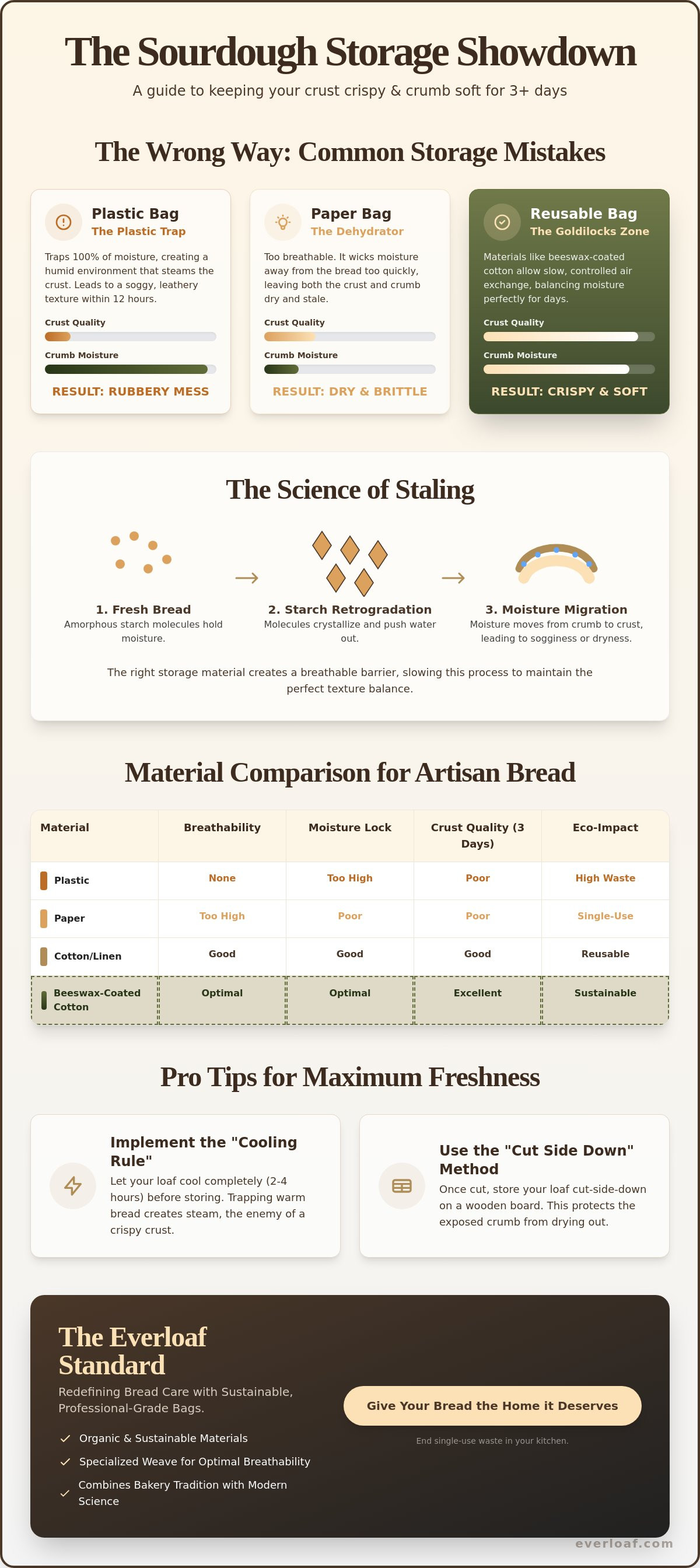
Plastic is a death sentence for a good crust. You worked hard for that crunch. Don't let a Ziploc bag steal it. When you seal a loaf in plastic, you create the "Plastic Trap." It's a non-breathable wall. The moisture inside the bread naturally wants to escape. Plastic stops it. That moisture gathers on the surface. It turns your beautiful, crispy boule into a rubbery mess within 12 hours. This is why "fresh as plastic" is a lie for artisan bakers. It's a negative standard that ruins the texture you spent days perfecting.
Commercial bread is different. It’s loaded with emulsifiers and preservatives. It’s engineered to survive in a bag for weeks. Your homemade bread is a living thing. It has no chemicals to fight off the humidity trapped by plastic. It deserves a better home. High-quality reusable bread bags for homemade bread provide the airflow your loaf craves. They act as a protective skin rather than a suffocating cage.
The "Rubbery Effect" is heartbreaking. You pull a loaf out of the oven. It sounds hollow. The crust is like glass. Twelve hours in a plastic bag later, that glass is gone. It becomes leathery. You can't even tear it properly. This happens because the moisture has nowhere to go. It migrates from the center to the edge. It gets stuck. It saturates the crust. You end up with a loaf that feels like a damp sponge. Your bread is too good for that fate.
The Difference Between 'Soft' and 'Fresh'
Softness isn't always freshness. Plastic makes bread soft by steaming it. The moisture stays trapped. It ruins the texture. True freshness is a delicate balance. You need enough moisture to keep the crumb tender. You also need enough air exchange to keep the crust firm. Your sourdough has an open crumb. This makes it highly vulnerable to high humidity. Understanding the science of bread staling shows that airflow is critical. It prevents condensation. It stops mold before it starts. It keeps the bread alive.
The Environmental Toll of Single-Use Storage
Think about your waste. A weekly baker uses 52 single-use bags a year. That's just for one loaf. It adds up fast. By May 2026, regulations in California and Washington have already restricted single-use plastic film. The world is moving on. You should too. Microplastics are a real worry for home cooks. They can leach into your bread when it's still warm. Switching to reusable bread bags for homemade bread isn't just about taste. It's about your health. It's about a plastic-free kitchen aesthetic that honors your craft. It feels better. It looks better. It works better. Your kitchen deserves a boutique feel that respects the environment.
The Science of Breathability: How Reusable Bags Work
Bread is a living, breathing entity. It doesn't just "dry out" over time. It undergoes a complex chemical transformation. Starch retrogradation is the true cause of that disappointing, rock-hard texture. This process involves the crystallization of starch molecules as the loaf cools and ages. This chemical shift pushes water out of the starch granules. That moisture then migrates from the soft, moist crumb toward the outer crust. If you trap that moisture with plastic, you get soggy bread. If you leave it exposed, it turns into a crouton. Using high-quality reusable bread bags for homemade bread allows you to hit the "Goldilocks Zone." It's the perfect balance where the crumb stays hydrated and the crust stays firm.
This internal migration causes several undesirable changes in your bread's sensory profile. Your loaf needs a second skin. It needs a material that respects its biological needs. Natural fibers like organic cotton and linen provide a semi-permeable barrier. They allow for a slow, controlled exchange of air. This prevents the "Plastic Trap" we discussed earlier. It ensures your bread doesn't steam itself to death. Give your bread the environment it needs to thrive. High-quality reusable bread bags for homemade bread ensure your hard work stays fresh for days.
Moisture Management in Natural Fibers
Retrogradation is the crystallization of starch molecules that makes bread feel firm. Cotton and linen are nature's moisture managers. They wick away excess humidity that would otherwise lead to mold. The weave density is the secret. A density that is too low causes rapid dehydration. A density that is too high mimics plastic. You need a specialized weave to protect your craft. This careful management ensures your bread ages gracefully rather than decaying. It's about respecting the integrity of the flour and water.
Why Sourdough Needs Special Treatment
Sourdough is special. Its lactic acid content provides a natural barrier against spoilage. This unique chemistry allows it to thrive in breathable storage. You want to preserve that tough, flavorful crust and the elastic crumb. A breathable bag maintains that essential "chew" that defines a long-fermentation bake. For a full breakdown of material choices, read The Fabric Bread Bag Guide to see why your loaf deserves professional-grade care. Give your sourdough the respect it earned during its 24-hour rise.
Comparing Materials: Linen, Cotton, and Beeswax
Linen is the traditionalist's choice. It offers high breathability. It looks beautiful on a rustic table. But it fails at moisture retention. Your loaf dries out too quickly. Raw cotton is another common option. It's affordable. It's tough. But it often leads to faster drying than a baker wants. Research from the University of Wyoming Extension shows that improper storage shortens the bread's shelf life. You need a material that understands the loaf's needs. You need a barrier that doesn't just sit there. It needs to work.
Beeswax-infused cotton is the modern hybrid. It mimics a natural fruit peel. It lets the bread breathe. It keeps the moisture in. This is the "third way" of storage. When you choose reusable bread bags for homemade bread, you want the Orvix standard. We use a 100% organic cotton base. It's built for longevity. It feels like a specialized tool, not a commodity. Many cheap bags on platforms like Amazon are a trap. They use thin fabric and a light coating. They fail after three washes. The Orvix system is different. It's a professional standard that respects your craft. Your hands will tell the difference the moment you touch it.
The Beeswax Advantage for 10-Day Freshness
Pure beeswax is the secret. It creates a semi-permeable barrier. It's naturally antimicrobial. This prevents mold growth without the need for chemicals. It beats plain fabric because it controls the air exchange perfectly. You get a consistent result every time. It stops the "Rubbery Effect" by allowing just enough moisture to escape. Read the Ultimate Beeswax Bread Bag Guide to see how to maintain freshness for up to 10 days. Your sourdough deserves this level of care. It's about preserving a masterpiece, not just hiding it in a cupboard.
Durability and Reusability Comparison
Quality matters. A good bag outlasts a thousand paper wraps. It stands up to repeated use. The material becomes more supple over time. It responds to the heat of your hands. Bakers appreciate this tactile experience. You can feel the quality of the organic cotton. It's a design-conscious choice for a modern kitchen. It looks beautiful on your counter. Washing is simple. Use cool water. Use a mild soap. The organic cotton base remains strong. This isn't a disposable item. It's a companion for your baking journey. It respects the environment and your bread equally. By choosing reusable bread bags for homemade bread, you are investing in a plastic-free future that actually works.
Mastering Your Bread Storage: Tips for Longevity
Your bread is a living masterpiece. Don't ruin it at the finish line. Proper storage is the final step of the baking process. It requires discipline and the right tools. When you use reusable bread bags for homemade bread, you aren't just hiding a loaf. You're preserving a texture. Follow these steps to keep your bread in peak condition for days.
- Step 1: The 'Cooling Rule'. Never bag a warm loaf. Steam is the enemy of a crisp crust. Wait at least 2 hours until the center is completely room temperature. If you feel any warmth, keep it on the wire rack.
- Step 2: The 'Cut Side Down' trick. Once you slice into your boule, the crumb is exposed. Place the cut side directly against the bottom of the bag or a flat surface. This uses the crust as a natural seal to lock in moisture.
- Step 3: Minimize air volume. Air is a thief. It steals moisture from the crumb. Fold your bag tightly around the loaf. Squeeze out as much internal air as possible before sealing it.
- Step 4: Choose the right environment. Your countertop is the best home for your bread. Keep it in a cool, dry spot away from direct sunlight. Never put your bread in the fridge. Cold temperatures accelerate staling.
- Step 5: The Day-4 Refresh. If your loaf feels firm, don't toss it. Spritz the crust lightly with water. Pop it into a 350°F oven for 5 to 10 minutes. It will emerge with a revived crunch and a soft center.
How to Care for Your Reusable Bags
Respect your gear. If you use a beeswax-infused bag, avoid heat at all costs. Wash it in cold water with a mild, alcohol-free soap. Never put it in the dishwasher or the microwave. If the wax begins to crack after months of use, you can re-wax it with fresh beeswax pellets and a warm iron. For plain cotton or linen, a gentle machine wash is fine, but air dry to prevent shrinking. A well-cared-for bag can last for years of weekly bakes.
Storing Different Loaf Shapes
Every loaf has different needs. A round boule requires a wide base. A long batard needs a snug, elongated wrap. Sliced bread is the ultimate challenge because every surface is exposed to air. For sliced loaves, keep the pieces pressed tightly together inside the bag. To ensure your artisan bakes always have the perfect fit, invest in The Orvix Bread Bag. It’s designed to adapt to any shape while maintaining a professional seal. Stop settling for subpar storage and give your bread the home it deserves.
The Everloaf Standard: Why Our Orvix Bags Redefine Bread Care
Everloaf isn't just a brand. It's an advocate for your bread's soul. We looked to the heritage bakeries of Lyon to find a better way. Professional bakers have known these secrets for generations. We brought those standards directly to your kitchen. The Orvix system is our answer to the failure of plastic. It combines 100% organic cotton with pure, sustainable beeswax. This isn't a generic container. It's a specialized tool for those who demand excellence in every slice. Your bread has inherent needs. It deserves to be treated with reverence.
American home bakers are leading a movement. You spend hours on your crumb. You deserve storage that respects that effort. Thousands of bakers have already ditched the guilt of single-use waste. They've discovered that reusable bread bags for homemade bread can actually improve the quality of their bakes. Our community's verdict is clear. Quality wins. Longevity matters. We designed this for the baker who refuses to compromise on form or function. It's a modern boutique approach to an ancient craft.
Craftsmanship You Can Feel
Touch the fabric. You'll feel the difference immediately. We use unbleached, food-safe organic materials. This is heavy-duty construction. It's built to handle the sharpest sourdough crusts without tearing or fraying. We don't believe in flimsy alternatives that fail after a few bakes. Every stitch honors the time you spent at the bench. This is about more than just storage. It's about a commitment to quality that matches your own passion for baking. It’s professional-grade care for the home environment.
Join the Fresh Bread Revolution
One bag makes a massive impact. It replaces hundreds of plastic wraps over its lifetime. It’s a design-conscious choice that looks beautiful in any kitchen. There is a specific sensory joy in the morning. You open a fresh, beeswax-scented bag. You find a loaf that still has that perfect, bakery-fresh snap. As of May 2026, our batches are moving incredibly fast. The May 31st batch is already 96% sold. Don't let your next bake go to waste in a plastic cage. It's time to upgrade your storage with the Orvix Beeswax Bread Bag. Join the chorus of approval and protect your craft today.
Honor Your Craft with Professional Storage
Your sourdough journey doesn't end when the loaf leaves the oven. It ends when the last slice is enjoyed. Plastic is a compromise you no longer have to make. It suffocates your hard work and ruins the texture you spent days perfecting. Real freshness comes from a balance of moisture and air. You've learned the science of breathability and the importance of the "Cooling Rule." Now it's time to apply those standards to your kitchen aesthetic. Investing in the right reusable bread bags for homemade bread is the final step in mastering your craft.
The Orvix system represents the gold standard in bread care. Our bags are crafted from 100% Organic GOTS Cotton and are hand-infused with pure beeswax. This specialized design is already trusted by thousands of artisan home bakers who demand professional results. It's time to ditch the waste and the rubbery crusts for good. You've earned a better experience.
Keep your bread fresh for 10 days with the Orvix Beeswax Bag. Give your next bake the home it deserves. You’ve earned that perfect crunch.
Artisan Bread Care: Frequently Asked Questions
Do reusable bread bags really keep bread fresh?
Yes, they provide a semi-permeable barrier that regulates airflow and moisture. Unlike plastic, which traps moisture and creates a rubbery crust, reusable bread bags for homemade bread allow your loaf to breathe. This prevents mold while keeping the crumb soft. It’s the professional way to respect your bake. You get a crisp crust and a tender center for days. Stop suffocating your bread and start protecting it.
How do you wash a beeswax-infused bread bag?
Use cold water and a mild, alcohol-free soap to clean your bag. Never use hot water or a dishwasher. Heat will melt the beeswax and ruin the protective seal. Simply rinse, wipe with a soft cloth, and air dry. This preserves the antimicrobial properties of the wax. Treat it with care and it will protect your bread for months. It’s a simple process for a superior result.
Can I use a reusable bread bag in the freezer?
Yes, you can use these bags for short-term freezing. For long-term storage, wrap your loaf tightly in beeswax wraps first. This adds an extra layer of protection against freezer burn. Always ensure the bag is sealed tightly to minimize air contact. When you’re ready to eat, let the loaf thaw completely at room temperature before opening the bag. It’s the best way to preserve that bakery-fresh quality.
Is linen or cotton better for storing homemade bread?
Cotton is the superior choice for most home bakers. Linen is highly breathable but often allows bread to dry out too quickly. Our reusable bread bags for homemade bread use organic cotton as a base. When infused with beeswax, cotton creates the perfect "second skin." It offers better moisture retention than plain linen while still preventing the sogginess caused by plastic. Give your loaf the balance it deserves.
How long does sourdough stay fresh in a beeswax bag?
Sourdough can stay remarkably fresh for up to 10 days in a high-quality beeswax bag. The natural acidity of sourdough works with the antimicrobial beeswax to prevent spoilage. You will maintain a great "chew" and flavor profile long after a standard loaf would have failed. For peak results, use the "Cut Side Down" method to seal the crumb. Your 24-hour fermentation deserves this level of respect.
Do I need to wrap my bread in paper before putting it in a reusable bag?
No, you don't need a paper liner. The beeswax-infused cotton is designed to be the primary protective layer. Adding paper can actually draw moisture away from the crumb too quickly. Place your cooled loaf directly into the bag. This allows the natural fibers to manage the humidity levels exactly as intended. It’s simpler and more effective. Trust the design and let the bag do the work.
Can these bags be used for store-bought bread too?
Yes, these bags are excellent for any artisan-style store-bought bread. If the bread comes in plastic, remove it immediately. Plastic ruins the crust of even the best bakery loaves. Transfer the bread to your reusable bag to restore its natural texture. It will stop the "Rubbery Effect" and give the bread the environment it needs to stay delicious. Every loaf is worthy of specialized attention.
What size bread bag do I need for a standard sourdough boule?
A standard sourdough boule needs a bag with a wide base and ample volume. Our Orvix bags are designed to fit boules up to 10 inches in diameter with ease. You want enough room to fold the top over securely. A snug fit is good, but you shouldn't have to squash your crust to get it inside. Respect the shape of your loaf and choose a bag that accommodates its needs.


