

Your artisan sourdough is a living masterpiece, yet you're likely suffocating it in plastic or leaving it to wither in paper. It's a common mistake that ruins expensive organic flour and hours of patient fermentation. Plastic bags trap moisture, turning your golden crust into a rubbery disappointment. Paper bags do the opposite, sucking the life out of the crumb until it's a rock-hard brick. You deserve better, and so does your bread.
If you've been wondering how long does bread last in a beeswax bag, the answer will change your kitchen routine forever. We're showing you the science-backed way to keep your loaves fresh for up to 10 days using professional-level storage. By using breathable, wax-infused organic cotton, you can finally maintain that perfect balance of a crispy exterior and a pillowy interior. It's about treating your craft with the reverence it deserves while cutting out unnecessary kitchen waste.
This 2026 guide covers everything from current food safety standards to the "Sourdough Crossover" trends that are revolutionizing home kitchens. We'll explore why beeswax is the gold standard for longevity and how to give your loaves a professional edge. Get ready to stop the waste and start enjoying bakery-quality slices for over a week.
Key Takeaways
- Stop suffocating your bread. Learn how starch retrogradation affects your crust and how to prevent it from turning rubbery or rock-hard.
- Discover exactly how long does bread last in a beeswax bag and the science-backed secrets to maintaining freshness for up to 10 days.
- Compare the performance of linen, plastic, and wax to find the perfect balance of breathability for your artisan loaves.
- Master professional cooling and slicing techniques to protect your crumb and keep every slice as soft as the first.
- Upgrade to Lyon-inspired storage that respects your craft and eliminates unnecessary kitchen waste.
Why Traditional Bread Storage Bags Fail Your Homemade Loaves
You've spent forty-eight hours nurturing a starter and mastering the perfect fold. The result is a masterpiece with a crackling crust and a wild, open crumb. Then, you put it in a plastic grocery bag. Within six hours, that crisp texture is gone. It's heartbreaking. Traditional storage methods aren't just insufficient; they're actively working against the quality of your bake. Your bread is a living texture that requires respect, not just a container.
Understanding the science of food preservation is key to keeping your artisan loaves alive. Bread is a dynamic product that continues to exchange moisture with its environment long after it leaves the oven. When you use the wrong vessel, you disrupt this delicate balance. This is why many bakers eventually ask how long does bread last in a beeswax bag compared to standard options. The difference isn't just a day or two. It's the difference between a gourmet experience and wasting expensive organic flour on a loaf that ends up in the bin.
The Plastic Trap: Why Your Crust Goes Rubbery
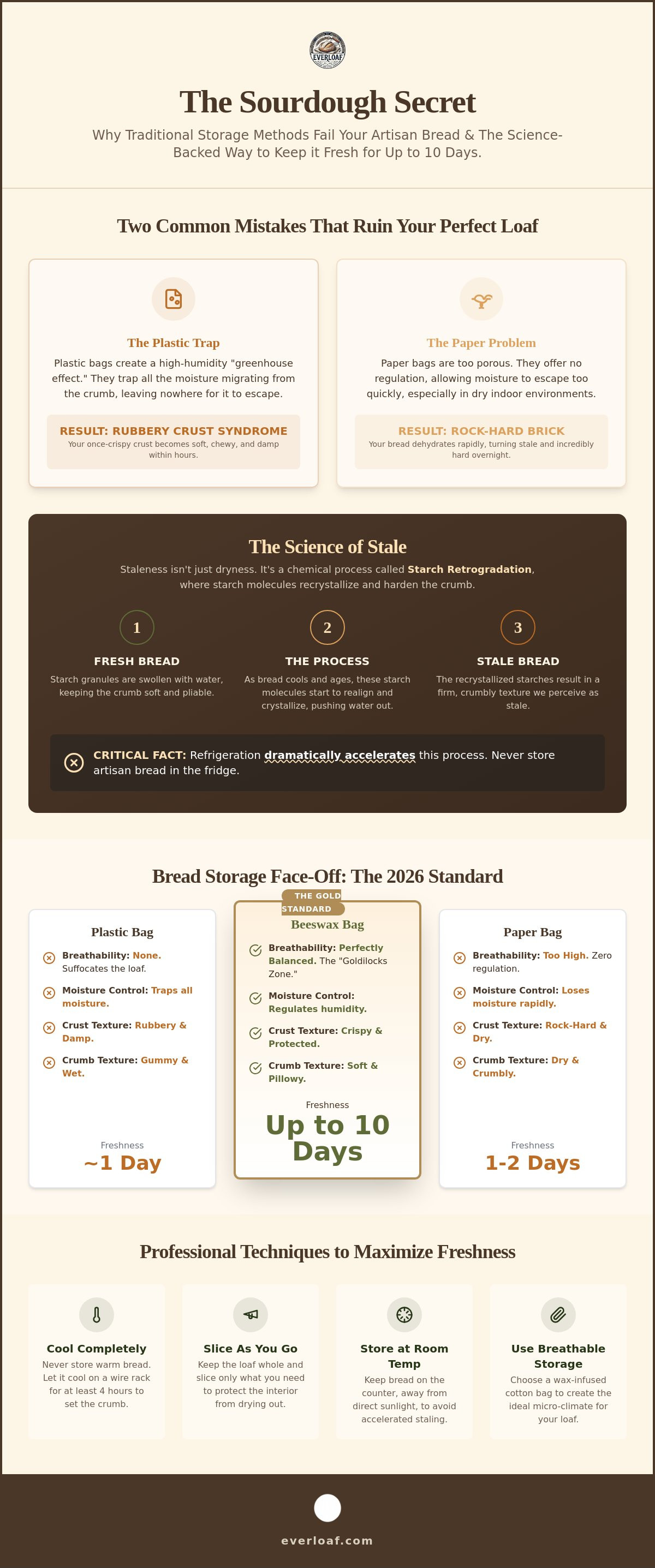
Your bread is gasping for air. Plastic creates a high-humidity greenhouse effect around your loaf. It seals everything in, which sounds helpful, but it's a disaster for sourdough. Moisture naturally migrates from the soft crumb to the crispy crust. In a plastic environment, that moisture has nowhere to go. It sits on the surface, softening the Maillard reaction’s beautiful results until they become chewy and damp. Plastic ruins sourdough crust by sealing in moisture that should be allowed to breathe, effectively steaming your bread from the inside out. You're left with Rubbery Crust Syndrome, a fate no artisan loaf deserves.
The Paper Problem: Why Your Bread Goes Hard
Paper bags are a desert for your dough. While they allow the bread to breathe, they offer no regulation. Paper is far too porous for long-term counter storage in most kitchens. In dry indoor environments, evaporation happens far too quickly. This rapid loss of water accelerates starch retrogradation, the process where starch molecules recrystallize and make the bread feel stale. Paper offers zero protection against this dehydration. Your bread doesn't just get old; it turns into a rock-hard brick overnight. To stop this, you need specialized care. The beeswax cotton bread bag provides that attention by mimicking a second skin for your loaf, regulating humidity without suffocating the crust.
The Science of Freshness: Humidity, Breathability, and Starch
Freshness isn't just a feeling; it's physics. Your bread is a complex network of starch and protein holding onto precious water. The moment it leaves the heat of the oven, a molecular timer starts. Understanding the science behind this timer helps you answer how long does bread last in a beeswax bag with total confidence. It's not magic. It's molecular management. To keep your loaf in peak condition, you must control how water moves within the bread's structure.
What is Starch Retrogradation?
Staleness is often misunderstood as simple drying. In reality, it's a chemical process called starch retrogradation. During baking, starch granules absorb water and swell. As the bread cools, those starch molecules begin to recrystallize. This process pushes water out of the granules and into the surrounding protein structure, making the crumb firm and crumbly. Temperature plays a massive role in this transformation. Refrigeration accelerates staling because cold temperatures force starch molecules to recrystallize at a significantly faster rate than room-temperature storage. You need consistent moisture to keep those starches soft and pliable. A University of Montana study highlights how beeswax-based storage outperforms traditional methods by balancing this moisture loss effectively.
Managing the Goldilocks Humidity Zone
Artisan boules need a specific micro-climate to survive on your counter. If the environment is too dry, you get a brick. If it's too wet, you get mold and rubber. The goal is to slow down evaporation without stopping it entirely. This is what we call the "Goldilocks Zone." Breathability is your best friend here. It allows just enough moisture to escape so the crust stays crisp, while retaining enough to keep the interior tender. This balance slows down the aging process of artisan boules significantly.
Beeswax creates a semi-permeable barrier that mimics a secondary skin for your loaf. Unlike plastic, which traps every drop of moisture, or paper, which lets it all go, beeswax regulates the exchange. It's a professional-level solution for a common kitchen problem. When you treat your bread with this level of reverence, you'll see why the beeswax Bread Bag is the preferred choice for serious home bakers. It creates the perfect environment for your sourdough to age gracefully. By managing moisture migration at the molecular level, you ensure your artisan creations remain delicious for up to 10 days.
Comparing Materials: Which Bread Storage Bag Wins in 2026?
Choosing the right storage isn't just about convenience. It's about protecting your investment. You've spent time and money on high-quality ingredients, so don't let them go to waste. In the world of bread care, three materials dominate the conversation: plastic, linen, and beeswax-infused cotton. Each has a specific impact on the life of your loaf. People often ask how long does bread last in a beeswax bag before making the switch. The answer is often double the lifespan of paper or linen storage because of how the material interacts with the bread's biology.
Plastic is fine for soft, mass-produced sandwich bread that relies on preservatives. It's a death sentence for your artisan sourdough crust. It turns a crispy boule into a soggy, rubbery mess within hours. On the other end of the spectrum, linen bags are a classic choice. They are highly breathable, which is great for the crust but often lets the interior dry out too quickly in modern, climate-controlled kitchens. Understanding The Science of Staling helps you see why fabric choice matters. You need a material that balances these two extremes.
Linen vs. Beeswax-Infused Organic Cotton
Linen is a beautiful, traditional option. However, it requires a naturally humid kitchen environment to perform well. Most of us don't live in a professional bakery with high ambient moisture. Beeswax adds a critical layer of seal that raw fabric simply lacks. It creates a semi-permeable barrier that holds moisture in the crumb while letting the crust breathe. At Everloaf, we choose 100% organic cotton for our Orvix bags because it provides the perfect foundation for our wax infusion. You can dive deeper into these differences in The Ultimate Beeswax Bread Bag Guide.
The Sustainability Scorecard
Ditch the single-use plastic rolls. A high-quality reusable beeswax bag can last for a year or more with proper care. Compare that to a plastic bag that ends up in a landfill after just a few days. The carbon footprint of a natural wax wrap is significantly lower than the continuous production and disposal of petroleum-based plastics. It's a win for your kitchen and the planet. Transitioning to reusable bread bags for homemade bread is a simple, high-impact change for any sustainable home. If you're ready to treat your loaves with professional-level care, the beeswax Bread Bag is the definitive choice for 2026.
How to Maximize Freshness with Your Reusable Bread Bags
Your bread is a masterpiece, but even the finest sourdough can't survive poor handling. To get the most out of your bake, you must respect the cooling and storage process. Most bakers fail because they rush the transition from oven to bag. If you follow these professional steps, you'll stop wondering how long does bread last in a beeswax bag and start seeing consistent 10-day results. It's about creating a ritual of care that honors the effort you put into your dough.
The Pre-Storage Checklist
Patience is the most important ingredient in bread storage. Never bag a warm loaf. Bagging bread while it's still releasing steam leads to immediate condensation inside the bag. This trapped moisture is an invitation for mold to take hold within forty-eight hours. Before you reach for your storage, use the "Knock Test." Tap the bottom of your loaf; it should sound hollow and feel room temperature to the touch. Once it's ready, use the best knife for cutting sourdough bread to take your first slice. To keep the rest of the loaf fresh, always slice from the middle. This allows you to press the two cut ends back together before sliding them into the bag, effectively sealing the crumb against the air.
Caring for Your Beeswax Bread Bag
Treat your bag with the same reverence you give your starter. The golden rule is simple: keep it cold. Hot water is the ultimate enemy of beeswax-infused fabric. High temperatures will melt the wax infusion right out of the cotton, destroying the semi-permeable barrier that regulates humidity. For routine cleaning, use cold water and a small drop of mild, alcohol-free soap. Wipe it down or give it a quick rinse, then hang it to air-dry away from direct sunlight.
Over months of heavy use, you might notice the wax coating start to thin or crease. Don't worry. You can easily refresh your Orvix bag by placing it between two sheets of parchment paper and running a warm iron over it for a few seconds. This redistributes the wax and restores that signature seal. By maintaining the integrity of the material, you ensure your kitchen remains a plastic-free zone for years to come. Ready to give your artisan boules the home they deserve? Upgrade to a professional beeswax Bread Bag today and experience the difference in every slice.
The Everloaf Advantage: Professional Storage for Home Bakers
Your loaf is more than just food. It's a testament to your patience and skill. After a 24-hour ferment and a careful bake, that bread has inherent needs. It needs to breathe. It needs to stay hydrated. Most importantly, it needs to be treated with reverence. At Everloaf, we built our brand around this respect for the craft. We bridge the gap between large-scale distributors and the local specialized shop. We don't just offer products. We offer a supportive companion in your baking process. Your passion deserves a storage solution that works as hard as you do.
From Lyon to Your Kitchen
Our heritage is our guide. Lyon is the heart of French culinary tradition, and it's where we learned that the storage of a loaf is as critical as the bake itself. We brought those French bakery standards directly to your kitchen. We believe in respecting the loaf throughout its entire lifecycle. This philosophy informs every item we curate, ensuring that your home kitchen performs like a professional atelier. To truly master your craft, you must understand the environment. Our guide on How Humidity Affects Bread Storage dives into the science that drives our design. We've translated that data into a product that works for you every single day.
Why Artisans Choose the Orvix Bag
The Orvix bag isn't your standard wrap. It's the professional choice for serious bakers. We use 100% organic cotton as our base. Then, we infuse it with pure beeswax to create a semi-permeable shield. This specific construction has been tested by culinary professionals to keep sourdough texture perfect for up to 10 days. When enthusiasts ask how long does bread last in a beeswax bag, they're looking for a solution that honors their hard work. The Orvix bag delivers that longevity without compromising on the sensory rewards of a crispy crust. It's designed for those who know that the secret to a great meal is in the details of the ingredients.
You aren't just buying a bag. You're joining a community that values quality and sustainability. We advocate for the quality of your experience. We want every slice to taste like it just left the cooling rack. Stop settling for insufficient storage that ruins your expensive organic flour. If you've been wondering how long does bread last in a beeswax bag, the proof is in the results of our specialized design. It's time to treat your artisan boules with the care they deserve. Shop The beeswax Bread Bag today and join the chorus of bakers who have found a better way. Experience the Everloaf difference and keep your passion fresh for longer.
Master the Art of Lasting Freshness
Your artisan loaves deserve a storage solution that respects the craft. You've learned how to combat starch retrogradation and why plastic is a disaster for sourdough crust. By mastering the "Goldilocks Zone" of humidity, you ensure every slice is as satisfying as the first. When you understand how long does bread last in a beeswax bag, you can stop rushing through your loaves and start enjoying them for up to 10 days. It's about bringing professional standards into your home kitchen with ease.
Our Orvix bags are crafted from 100% organic cotton and infused with pure, natural beeswax. This Lyon-inspired professional design provides the semi-permeable barrier your bread craves. It's time to ditch the waste and treat your hard work with the reverence it deserves. Your sourdough has inherent needs, and we've designed the perfect environment to meet them.
Keep your sourdough fresh for 10 days with the Orvix Beeswax Bread Bag. You've mastered the bake; now master the storage. Your kitchen is ready for this upgrade. Happy baking.
Frequently Asked Questions
Can I freeze bread inside a beeswax bread bag?
Don't put your beeswax bag in the freezer for long periods. The extreme cold can cause the natural wax to crack and flake off the cotton fabric, damaging the bag's integrity. If you need to freeze your loaf, wrap it tightly in a freezer-safe material first. Once you're ready to eat, thaw the bread completely on the counter before placing it in your bag for daily storage.
How long does a beeswax bread storage bag last before replacement?
Respect the material and it will respect your bread. A high-quality beeswax bread storage bag typically lasts for a year or more with proper care. You'll know it's time for a refresh or replacement when the wax begins to thin significantly or loses its signature tack. This longevity is part of why bakers ask how long does bread last in a beeswax bag; it's a long-term investment in your kitchen's quality.
Will the beeswax smell transfer to my sourdough bread?
The natural honey scent of the beeswax will not transfer to your sourdough bread. While the bag has a warm, evocative aroma when new, it's designed to be a neutral protector for your bake. You'll enjoy the scent during handling, but your crust and crumb will retain only the flavors of your fermentation. It's a clean, professional storage solution that treats your loaf with reverence.
Are fabric bread bags better than wooden bread boxes?
Beeswax-infused fabric bags offer superior moisture regulation compared to wooden bread boxes. A wooden box is often too large, allowing too much air to circulate around the loaf and causing it to dry out. Our bags act as a secondary skin, hugging the bread and slowing the aging process. They're also much easier to store in a compact, design-conscious kitchen while providing better humidity control.
How do I clean a bread bag if it gets flour buildup?
Cleaning flour buildup is simple if you use the right temperature. Shake the bag out thoroughly after each use to remove loose crumbs and flour. If a deeper clean is necessary, use cold water and a tiny drop of mild soap. Avoid scrubbing with abrasive tools and never use hot water. Air-dry the bag completely before sliding in your next fresh loaf to prevent any moisture issues.
Do beeswax bread bags work for store-bought loaves too?
Beeswax bags work beautifully for store-bought loaves too. While these breads often contain preservatives, they still suffer from the rubbery texture caused by plastic storage. Moving them into a breathable wax environment improves the eating experience. When people ask how long does bread last in a beeswax bag, they're often surprised that even grocery store bread stays at peak quality for longer.
Is organic cotton better than linen for artisan bread storage?
Organic cotton is the superior choice for wax infusion. While linen is a classic, it's often too porous to hold a consistent wax seal in modern, dry kitchens. We use 100% organic cotton because it creates a tighter bond with the beeswax. This ensures the humidity regulation is precise and reliable. It's the professional standard for maintaining that perfect 10-day freshness window for your artisan creations.
What size bread bag do I need for a standard sourdough boule?
For a standard 800g to 1kg sourdough boule, you'll want a bag that is approximately 12 by 15 inches. This size provides enough room to fold the top over and create a secure, airtight seal. Don't cram a large loaf into a small bag. Giving your bread a little space ensures the wax-infused cotton can regulate the micro-climate effectively and protect the crust's integrity.


