

What if your bread could stay bakery-fresh for 10 days without a single inch of plastic wrap? You spent hours nurturing your starter and used premium organic flour; your bread deserves better than the status quo. It's frustrating to watch a beautiful loaf turn into a rubbery mess in plastic or a rock-hard brick in a paper bag. You shouldn't have to waste expensive ingredients or your hard work on stale slices.
This guide shows you how a beeswax bag for sourdough bread creates the perfect micro-climate to keep your crust crispy and your crumb soft. Whether you choose a $10 budget option or a premium $34 handcrafted bag, you're investing in a tool that respects your craft. We'll explore the science of moisture transfer, how to maintain your bag for its full one-year lifespan, and why 2026 is the year we finally move away from the 4.2 million tons of plastic wrap waste generated annually. Discover how to protect every slice from the first cut to the very last crumb.
Key Takeaways
- Understand the science of starch retrogradation to stop your bread from hardening prematurely.
- Learn why a beeswax bag for sourdough bread outperforms paper and plastic by balancing moisture and airflow.
- Master the hand-warmth sealing technique to create a custom, airtight micro-climate for your 1kg boules.
- Discover the essential cleaning steps to extend your bag's lifespan to 24 months while avoiding heat damage.
- Explore how organic materials and traditional culinary design combine to respect the integrity of your artisanal bake.
The Science of Sourdough Freshness: Why Humidity Control is Key
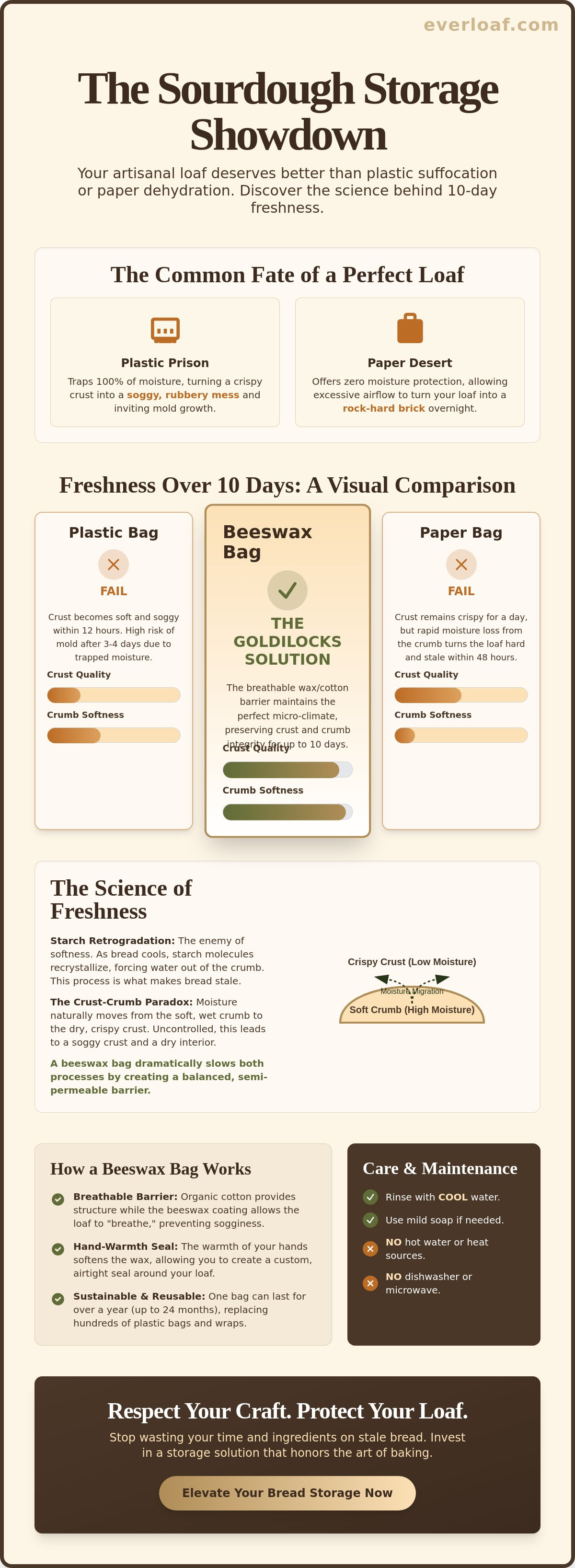
Sourdough is a masterpiece of fermentation. Your loaf isn't a static object; it's a dynamic system of moisture and starch. To keep it fresh, you must understand the "Crust-Crumb Paradox." This is the process where moisture naturally migrates from the soft, hydrated center to the crisp, dehydrated crust. Without the right barrier, this movement ruins your bread in hours. A beeswax bag for sourdough bread acts as a semi-permeable shield. It mimics the natural protection of the grain itself, allowing the bread to "breathe" without surrendering its soul to the air.
Staling is actually a chemical reaction called retrogradation. As bread cools, starch molecules recrystallize and force water out of the crumb. If that water has nowhere to go, the crust turns into a soggy, rubbery mess. If it escapes too fast, you're left with a rock. A Beeswax wrap or bag manages this specific exchange. The FDA recognizes beeswax as safe for food contact under regulation 21 CFR 184.1973, making it the ideal choice for managing this delicate science. Your bread deserves a storage solution that understands biology.
How Beeswax Regulates Moisture Migration
Beeswax is a natural humectant. It doesn't just block air; it manages it. The organic cotton base provides the structure, while the wax coating creates a tailored micro-climate. This balance is critical for artisan loaves. The wax slows down evaporation enough to stop the crumb from drying out. Simultaneously, it allows just enough gas exchange to prevent moisture from pooling on the surface. Beeswax prevents the staling process by creating a controlled environment that dramatically slows evaporation.
Why Plastic and Paper Fail Your Loaf
Generic grocery store solutions are the enemies of artisan bread. They don't respect the craft. Plastic is a suffocating trap. It holds 100% of the moisture inside, which destroys your beautiful crust and invites mold growth. Paper is the opposite extreme. It offers zero protection against airflow, turning your boule into a brick by the next morning. A beeswax bag for sourdough bread is the "Goldilocks" solution. Consider these failures:
- Plastic traps moisture, causing rubbery crusts and rapid mold.
- Paper causes excessive airflow, leading to "rock-hard" loaves.
- Generic bags ignore the specific needs of high-hydration sourdough.
By 2026, we've learned that better storage means less waste. Stop throwing away half-loaves because of poor packaging. Switch to a method that keeps your bread exactly as you intended: crispy on the outside and soft on the inside.
Comparing Storage Methods: Why Beeswax Wins for Artisan Loaves
Your sourdough is an investment in time, patience, and high-quality ingredients. It deserves a storage method that respects the craft. Traditional European bakers relied on heavy fabric for centuries to protect their loaves, but modern, climate-controlled kitchens present a different challenge. Choosing a beeswax bag for sourdough bread isn't just about aesthetics; it's about superior performance. The science of bread staling shows that moisture loss is the primary enemy of freshness. Without a proper barrier, your artisanal crust and soft crumb will degrade within hours.
The environmental cost of traditional storage is staggering. In 2018, Americans generated approximately 4.2 million tons of plastic bags, sacks, and wraps. Only a small fraction of that was recycled. Reusable beeswax is the only responsible path for the modern baker. If you've previously explored fabric options, you might have read our Ultimate Guide to Using a Linen Bag for Bread in 2026. Linen is a classic choice, but for those seeking the absolute best in longevity, it's only the beginning of the journey.
Beeswax vs. Linen: The Sourdough Showdown
Linen is excellent for the first 24 hours. It allows the bread to breathe and keeps the crust sharp. However, linen is highly porous. After the first day, it allows moisture to escape too quickly, leading to a dry, crumbly loaf. A beeswax bag provides the semi-permeable "seal" that raw linen lacks. This unique barrier is what enables 10-day freshness while maintaining that sought-after artisanal texture. You can explore this further in our guide on the Long-Term Bread Storage Bag: How to Keep Sourdough Fresh for 10+ Days.
The Role of Organic Cotton in Bread Preservation
The base material of your storage bag is just as important as the wax itself. We insist on 100% organic cotton because it provides a natural, breathable foundation. Synthetic blends often contain polyesters or microplastics that trap heat and moisture incorrectly, leading to rapid mold growth. A high-density cotton weave ensures the beeswax adheres perfectly, creating a uniform protective layer. This is why a premium beeswax bag for sourdough bread feels substantial and works reliably for every single bake. Your bread worked hard to rise; give it a home that keeps it at its peak.
Choosing the Best Beeswax Bag for Sourdough Bread
Your bread deserves a home that fits its stature. Selection is everything. A professional-grade beeswax bag for sourdough bread isn't just a container; it's a precision tool for the serious baker. When you choose a bag, start with the dimensions. A standard 1kg sourdough boule needs room to breathe. Don't cram your loaf into a tight space. Look for a bag that offers at least two inches of clearance on all sides. This space ensures the wax doesn't stick prematurely to the crust before you're ready to seal it.
The "seal" is where the magic happens. High-quality bags use the natural heat from your hands to activate the wax. By pressing the opening firmly, you create a custom, airtight closure. This is a hallmark of a superior product. Look for bags infused with jojoba oil and tree resin. These specific additions ensure the bag remains pliable through hundreds of uses. Without them, the wax will crack, and your micro-climate will fail. Investing in a high-quality beeswax bag for sourdough bread means choosing longevity over a cheap, disposable alternative.
Sizing Guide: From Boules to Baguettes
High-hydration loaves are unpredictable. An 85% hydration dough creates an airy, voluminous structure that requires an XL bag. If your bag is too small, you'll struggle to fold it correctly. To maximize freshness, you must minimize internal air pockets. Fold the top of the bag down tightly against the crust. If you're storing a half-loaf, place the cut side against the bottom of the bag first. This creates a secondary seal against the waxed surface, protecting the soft crumb from immediate exposure to air.
Material Integrity: Pure Beeswax and Sustainable Sourcing
Pure, food-safe beeswax (E901) is non-negotiable. It protects the delicate flavor profile of your long-fermented dough. Many beginners ask if their bread will taste like a candle. The answer is no. Professional-grade bags use refined wax that leaves zero residue or scent on your food. Your bread deserves a clean environment. We prioritize 100% organic cotton because it's naturally free from the pesticides found in conventional crops. Supporting brands that focus on plastic-free manufacturing isn't just an environmental choice. It's a commitment to the purity of your kitchen and the quality of every slice you serve.
Maintenance and Care: Making Your Bag Last for Years
Your kitchen tools should be partners in your craft. A high-quality beeswax bag for sourdough bread is an investment that pays off over hundreds of uses. With correct care, these bags last between 12 and 24 months. This longevity is the core of the "buy less, buy better" mindset. It's a direct rejection of the 4.2 million tons of plastic wrap waste generated annually. Your bread deserves a clean, sustainable home that doesn't end up in a landfill after one week. Quality lasts when you treat it with respect.
Heat is the absolute enemy of your storage bag. Never use hot water, dishwashers, or microwaves. Beeswax melts at approximately 144°F. Even a warm loaf straight from the oven can compromise the wax seal. Let your bread cool completely on a wire rack before storage. This protects the integrity of the bag and ensures the moisture migration is managed correctly. Beeswax is naturally resistant to bacteria, and the FDA classifies it as Generally Recognized as Safe (GRAS) under regulation 21 CFR 184.1973. This natural protection keeps your sourdough environment healthy without the need for harsh chemical cleaners.
The Step-by-Step Cleaning Ritual
Cleaning is simple but specific. Use cold water and a drop of mild, alcohol-free dish soap. Gently wipe the interior and exterior with a soft cloth. If you have stuck-on flour or seeds from a heavily coated boule, use a soft-bristled brush to nudge them away. Never scrub aggressively. Always air dry your bag by draping it over a drying rack or a clean jar. The "air dry only" rule is non-negotiable. Placing it near a heater or in direct sunlight will ruin the wax layer instantly. Once it's dry, fold it and store it in a cool, dry drawer.
How to Refresh and Re-wax Your Bag
After a year of constant use, you might notice the wax thinning in high-crease areas. You can refresh your beeswax bag for sourdough bread at home. Place the bag on a sheet of parchment paper in an oven set to its lowest possible temperature, usually around 150°F, for just 2 to 3 minutes. This redistributes the wax and fills in tiny cracks. If the fabric becomes heavily frayed or the wax no longer clings despite a refresh, it's time to compost it. A 100% organic cotton bag is fully biodegradable and returns to the earth in months. Ready to upgrade your kitchen? Get your professional beeswax bread bag here.
Elevate Your Bread Storage with the Everloaf Orvix Collection
Your sourdough journey represents hours of patience, precise hydration, and a deep respect for fermentation. Don't let that effort vanish the moment your loaf leaves the oven. The Orvix collection is the culmination of Lyon-inspired culinary tradition, brought into the modern home kitchen. It's the final piece of the artisanal puzzle. We've crafted this beeswax bag for sourdough bread to ensure your hard work stays fresh for up to 10 days. By using 100% organic cotton and pure, food-grade beeswax, we provide a storage solution that mirrors the high quality of your ingredients.
We believe in a community of bakers who refuse to settle for stale slices. When you choose Everloaf, you're joining a group that treats bread with reverence. It's not just a commodity; it's a living product that continues to evolve even after the bake. Our Orvix bags are loved by thousands of home bakers who have transitioned away from the 4.2 million tons of annual plastic wrap waste. This is the gold standard for anyone serious about their crumb structure and crust integrity. Your bread deserves a home that protects its soul.
Designed for the Modern Artisan
The Everloaf design balances aesthetic beauty with rugged functionality. The Orvix bag isn't just a container. It's a specialized tool that complements your entire toolkit. It pairs perfectly with the precision of our Sourdough Knife and the ease of the Everloaf Bread Sling. This ecosystem of tools ensures that from the moment you lift your loaf from the Dutch oven to the final slice a week later, the quality never dips. Keep your sourdough fresh with the Orvix Beeswax Bread Bag and experience the difference that professional-grade materials make in your kitchen.
The Everloaf Promise: Quality Your Bread Deserves
Your bread deserves better than a suffocating plastic bag or a dry paper sleeve. It deserves a micro-climate that understands the "Crust-Crumb Paradox" we've explored in this guide. The Orvix bag is the best investment a serious home baker can make in 2026. It's a durable, sustainable, and high-performance companion that respects the history of baking while embracing modern sustainability. We stand by every bag we produce because we know the passion that goes into every boule. Visit our shop to explore the full sourdough kit and give your bread the home it truly deserves. Stop wasting organic flour on stale results. Start preserving the perfect bake today.
Master the Art of Lasting Freshness
Your bread worked hard to rise; don't let it fail in the final stage. You now have the knowledge to master the science of the crust-crumb paradox and the power of hand-activated seals. By choosing a high-quality beeswax bag for sourdough bread, you're protecting your artisanal crumb for a full 10 days of enjoyment. This isn't just a simple storage choice. It's a commitment to respecting the craft of long fermentation and high-hydration doughs.
The Orvix collection brings Lyon-inspired design and professional-grade performance directly to your countertop. Crafted from 100% Organic Cotton and pure, food-safe beeswax, it's a tool loved by thousands of home bakers who demand the best results. Stop settling for rubbery crusts or rock-hard loaves that waste your premium organic flour. It's time to treat your kitchen with a "buy less, buy better" mindset that benefits both your table and the environment. Give your sourdough the home it truly deserves.
Your bread deserves better. Shop the Orvix Beeswax Bread Bag today.
Every slice should be as perfect as the first. We can't wait to see your next beautiful bake stay fresh until the very last crumb. Happy baking.
Frequently Asked Questions
How long does sourdough stay fresh in a beeswax bag?
Sourdough typically stays fresh for 7 to 10 days when stored in a high-quality beeswax bag for sourdough bread. The wax coating creates a semi-permeable seal that balances moisture levels perfectly. It slows down the starch recrystallization process while preventing the heavy humidity buildup that leads to mold. You'll enjoy a crispy crust and soft crumb well into the second week of storage.
Can you put warm bread in a beeswax bag?
You should never put warm bread inside the bag. Sourdough requires a full cooling period on a wire rack to set its structure. Because beeswax melts at approximately 144°F, any residual heat from the oven will liquefy the coating. This ruins the bag's effectiveness and leaves a waxy residue on your crust. Always wait until the loaf reaches room temperature before storing.
Are beeswax bags hygienic for bread storage?
Beeswax is naturally hygienic due to its inherent antibacterial and antifungal properties. These qualities create a clean environment that resists microbial growth better than plastic. The FDA recognizes beeswax as safe for food contact under regulation 21 CFR 184.1973. Simply follow standard cold-water cleaning rituals to maintain a pristine storage space for your artisanal bakes. Your bread deserves a safe home.
Do beeswax bags make the bread taste like honey?
Your bread won't taste like honey. While pure, food-grade beeswax has a faint, natural aroma, it doesn't transfer flavor to the loaf. The scent is a sign of material purity and typically fades after the first 14 days of use. Your sourdough's complex fermentation profile remains entirely intact and protected from outside odors. It's a clean, neutral environment for your bake.
How do I remove dried sourdough crumbs from the bag?
Turn the bag inside out and shake it over your sink to remove loose debris. For stubborn flour or seeds, use a soft-bristled brush to gently clear the surface. You can also use a damp cloth with cold water for a deeper clean. Avoid scrubbing, as aggressive friction can wear down the wax layer prematurely. Keeping it clean ensures the bag lasts for its full 24-month lifespan.
Can I freeze bread inside a beeswax bag?
You can use a beeswax bag for sourdough bread in the freezer for up to 30 days. However, these bags aren't fully airtight for long-term preservation. For storage beyond one month, we recommend wrapping the loaf in a secondary medium to prevent freezer burn. The bag is designed primarily to maintain daily freshness and texture on your kitchen countertop.


