

Your artisan loaf deserves better than a plastic shroud. You spent days nurturing your starter; why settle for a rubbery crust by Tuesday? Most bakers lose their hard work to mold or staleness within 72 hours. It is a waste of expensive organic flour and your precious time. The secret is not a better recipe; it is a better long term bread storage bag. With the global sourdough market projected to reach 6.61 billion dollars by 2033, more people are realizing that how you store the loaf is just as important as how you bake it.
We agree that the choice between a rock-hard paper bag and a sweaty plastic bag is a losing game. This guide reveals how to maintain a perfect crumb and crispy exterior for 10 days or more without using single-use plastics. You will discover the science of beeswax breathability and why 71% of food lovers prioritize mouthfeel above all else. We also preview how the Everloaf Cotton-Beeswax Bread Bag, shipping its next batch on June 18th, uses antimicrobial properties to keep your kitchen waste-free and your toast delicious until the very last slice.
Key Takeaways
- Stop suffocating your sourdough. Learn how starch retrogradation steals moisture and why plastic bags act as "mold chambers" for your crust.
- Quit the fridge habit. Discover why cold temperatures are the fastest way to turn a soft crumb into a rock-hard disappointment.
- Master the "Golden Rule" of cooling. Learn how to properly seal your long term bread storage bag to maintain that perfect, crackly crust without trapping moisture.
- Choose the right armor. Compare organic cotton and beeswax to see how natural fibers provide the ultimate antimicrobial protection for your artisan bread.
- Bring professional culinary standards home. See how heritage-inspired designs ensure every slice of your loaf is treated with the respect it deserves.
The Science of Stale Bread: Why Traditional Storage Fails
Your bread is a living masterpiece of chemistry. It deserves more respect than being shoved into a dark cupboard. Most bakers assume staling is just a simple matter of the loaf "drying out," but the reality is far more complex. The true culprit is a chemical transformation called starch retrogradation. This is the physical process where bread molecules crystallize and harden over time. As these starch molecules realign, they push moisture out of the crumb and into the crust. To stop this, you need a specialized long term bread storage bag that manages humidity with precision.
Understanding The Science of Stale Bread is the first step toward saving your sourdough. When your loaf leaves the oven, it's in a state of flux. Without the right environment, that beautiful, open crumb starts to transform into a rigid, gritty texture. It isn't just losing water; it's undergoing a structural collapse at the molecular level. Traditional storage methods like plastic or paper fail because they only address one side of this moisture equation. They either trap too much or let too much escape. Your bread needs a middle ground to survive.
The Problem with Plastic and Mold Growth
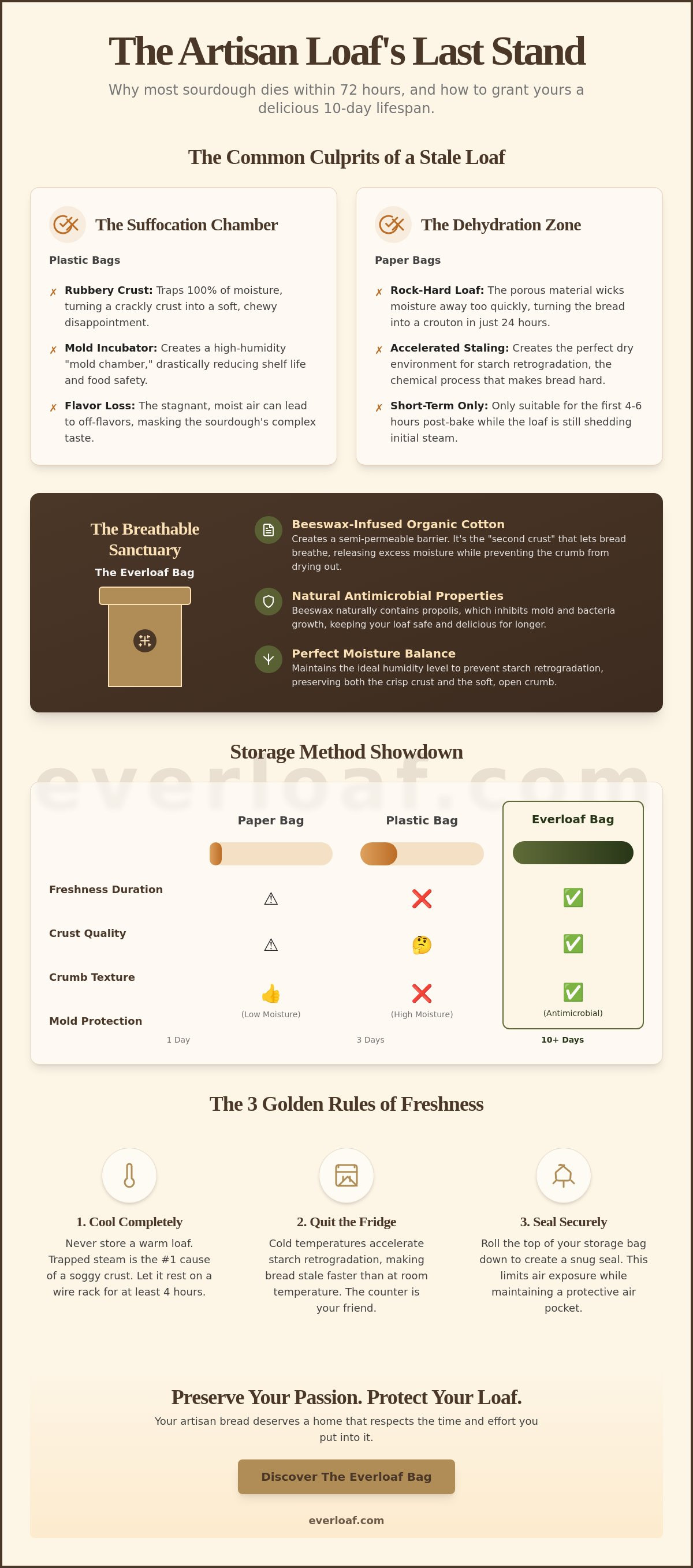
Plastic bags are essentially suffocation chambers for artisan loaves. They create a total airtight seal that prevents any gas exchange. This traps the bread's internal moisture against the crust, quickly turning it from crackly to rubbery. It's a disaster for texture. Even worse, these bags create a stagnant, high-humidity microclimate. Once the humidity inside the bag crosses the 15% threshold, mold spores begin to thrive. You might not see the fuzzy green spots immediately, but invisible early-stage mold can still impact the flavor and safety of your food. Consuming these spores can trigger allergic reactions or digestive upset in sensitive individuals. Your sourdough is too valuable to become a petri dish.
Why Paper Bags Turn Bread into Croutons
If plastic is a suffocation chamber, paper is a desiccant. Paper is naturally porous. It acts like a sponge, pulling moisture out of the loaf and releasing it into your kitchen air. This accelerates evaporation to an unsustainable degree. Paper is only suitable for the first 4-6 hours post-bake when the crust is still shedding its initial steam. After that, the environment becomes too dry. Starch retrogradation is the primary cause of staling in dry environments, and paper bags provide the perfect conditions for it to happen. Within 24 hours, your expensive loaf is better suited for croutons than a fresh sandwich. For real longevity, you need the breathable barrier found in a long term bread storage bag that uses natural materials to balance the air. It’s the only way to keep the crumb soft while protecting the crust’s integrity.
Choosing the Best Long-Term Bread Storage Bag: Material Analysis
Your bread deserves a home that breathes. Selecting the right material for a long term bread storage bag is the difference between a fresh breakfast and a moldy mess. While linen is a common choice for bakers, organic cotton offers superior durability and a more consistent moisture barrier. Linen can be too porous; it often lets water escape too quickly. 100% organic cotton maintains the crumb's hydration without the suffocation effects of plastic. Using organic materials also ensures your sourdough's complex flavor profile remains pure. Synthetic fibers can leach chemical odors into your loaf, ruining days of fermentation work.
Size matters when selecting your storage. A sourdough boule or a long batard needs room to thrive. If the bag is too small, the crust presses too tightly against the fabric, creating moisture trap points. You want enough extra material to roll the top down securely. This creates a protective air pocket that keeps the crust crisp. If you plan to store bread for more than 10 days, even the best bag has limits. For those extended timelines, follow research-based guidelines on Freezing for Maximum Freshness to halt the staling process entirely.
The Magic of Beeswax-Infused Cotton
Beeswax is the secret ingredient. It transforms simple cotton into a semi-permeable membrane. Think of it as a second crust for your loaf. This layer allows the bread to exhale excess moisture while preventing the internal crumb from drying out. Natural beeswax contains propolis. This resinous substance is used by honeybees to seal hives and is known for its powerful antimicrobial properties. It actively fights the spores that lead to mold growth. The wax also provides a unique self-sealing feature. When you fold or roll the bag, the warmth of your hands softens the wax, creating a custom fit that minimizes internal air volume.
Plastic-Free and Eco-Friendly Benefits
Choosing a sustainable option saves more than just your bread. One high-quality reusable bag replaces hundreds of single-use plastic bags over its lifetime. It's a win for your kitchen and the planet. At the end of its long life, a 100% organic cotton and beeswax bag is fully biodegradable. It returns to the earth rather than sitting in a landfill for centuries. For those who value both performance and the environment, the beeswax bread bag stands as the gold standard for eco-conscious bakers. It respects the craft and the world we bake in. You don't have to choose between a fresh crust and a clean conscience.
Countertop vs. Fridge vs. Freezer: Storage Method Comparison
Where you park your loaf determines how much of it you actually enjoy. It is a calculated choice between chemistry and convenience. Many bakers default to the fridge, thinking it preserves freshness. They are wrong. To get the most out of your long term bread storage bag, you must understand how different environments impact the crumb. The following table breaks down the three primary methods for artisan bread.
| Method | Shelf Life | Crust Quality | Mold Risk |
|---|---|---|---|
| Countertop (Beeswax Bag) | 7-10 Days | Crispy & Soft | Low |
| Refrigerator | 2-3 Days | Leathery | Moderate |
| Freezer | 3+ Months | Preserved | Zero |
The ideal home for your bread is a cool, dry spot on the countertop. Keep it away from direct sunlight and heat sources like the toaster or oven. Light and heat fluctuate, which causes condensation inside any container. A dark corner and a high-quality long term bread storage bag create a stable microclimate. This balance is essential for fighting the science of bread staling, which involves the migration of moisture from the crumb to the crust. By controlling the air around the loaf, you slow this process down significantly.
The Danger Zone: Why the Refrigerator Kills Bread
Cold temperatures between 35 and 45 degrees Fahrenheit are a death sentence for sourdough. In this specific range, starch crystallization accelerates by 600%. The fridge effectively sucks the life out of the crumb while leaving the crust tough and leathery. It is the fastest way to ruin a professional-grade loaf. Bread should never be refrigerated unless it contains perishable fillings like meat or soft cheese. If your bread is a standard sourdough, keep it out of the cold to protect its integrity.
Long-Term Freezing Strategies
If you won't finish a loaf within 10 days, use the freezer. It is the only way to hit the "pause" button on staling. Slice your bread before freezing; it allows you to take exactly what you need without thawing the whole loaf. Once frozen, your beeswax bread bag acts as a final shield against freezer burn and odor absorption. When you're ready to eat, pop a slice directly into the toaster. For a full loaf, a quick 10-minute refresh in a 350-degree oven restores that "just baked" magic. Your bread deserves a second chance at perfection.
Maximizing Freshness: How to Use Your Storage Bag Correctly
Your bread is a living thing. It deserves a routine that respects its chemistry. Owning a long term bread storage bag is only half the battle; you must use it with intention. The most critical mistake bakers make happens before the bread even touches the fabric. Follow these professional standards to ensure your loaf stays fresh for the full 10 day window. If you treat the storage process with the same reverence as the bulk ferment, your last slice will be as good as the first.
The Golden Rule is simple: never bag a warm loaf. Steam is the enemy of a crackly crust. If you seal your bread while it's still shedding heat, you create a sauna inside the bag. This condensation is an open invitation for mold. Another vital technique is the "Cut-Side Down" method. Once you slice into your boule, place the exposed crumb face-down against the bottom of the bag. This physical barrier prevents air from directly hitting the soft interior. It keeps the crumb moist while the rest of the loaf remains breathable.
Step-by-Step Daily Use Guide
- Wait at least 2 to 4 hours after baking. The internal structure needs to set and reach room temperature before storage.
- Insert the loaf and gently squeeze out excess air. Air drives the staling process by accelerating moisture migration.
- Roll the top of the bag tightly. Use the warmth of your hands to seal the wax against itself for a custom fit.
- Store the bag in a cool, dry place. Avoid the top of the fridge or spots near the oven where temperatures fluctuate.
Special Care for Sourdough vs. Yeast Bread
Sourdough has a natural advantage. Its higher acidity levels, typically between a pH of 3.5 and 4.8, act as a built-in preservative against mold. You can afford a slightly looser roll for hard-crust boules to maintain that crunch. Yeast breads are different. They lack that acidic punch and have a softer crust that dries out faster. For these, ensure a tighter seal to maintain hydration. If you want more specific advice, check out our guide on how to store homemade bread. Proper care also extends to the bag itself. Wash it only in cool water with mild soap. Heat will melt the wax and destroy the protective barrier your bread relies on. Ready to upgrade your kitchen ritual? Secure your own long term bread storage bag today and stop wasting your hard work.
The Everloaf Advantage: Why Your Bread Deserves Better
Everloaf draws its inspiration from the culinary heart of Lyon, France. We believe that home bakers should have access to the same professional standards as the world's finest boulangeries. Your bread is a labor of love. It shouldn't be treated like a disposable commodity. By choosing a high-quality long term bread storage bag, you're honoring the craft and the ingredients that went into your loaf. We don't just sell kitchen accessories. We provide the tools that bridge the gap between a hobbyist's kitchen and a master baker's studio.
The Orvix bag is a result of this heritage. Its 100% organic cotton weave is specifically engineered for long-term storage. Unlike generic linen sacks, this heavy-duty fabric provides the structural integrity needed to protect your crust while maintaining the perfect internal microclimate. It's a specialized environment that respects the science of your sourdough. Thousands of bakers now call it their favorite kitchen tool. They've seen the results firsthand. They've tasted the difference that proper breathability makes on day seven, day eight, and beyond.
Crafted for Quality and Longevity
We designed the Orvix bag for daily use over many years. Its artisan-first construction features a generous size that fits large boules and long batards without squishing the delicate crust. You won't have to force your bread into a space that's too small. The heavy-weight cotton and thick beeswax coating create a durable barrier that only gets better with time. We invite you to join a community of passionate bakers who refuse to settle for stale, wasted bread. It's time to treat your kitchen to a sustainable, plastic-free solution that actually works.
Upgrade Your Kitchen Today
Our 10-day freshness promise is more than a claim. It's a commitment to quality that thousands of customers rely on every morning. Beyond the performance, the Orvix bag serves as a beautiful countertop centerpiece. It signals a kitchen that values tradition, health, and environmental responsibility. Demand for this level of care is surging. In fact, our May 24th batch is already 96% sold out. The next batch is scheduled for shipping on June 18th. Don't let another loaf go to waste while you wait. Get your Everloaf Beeswax Bread Bag and stop wasting your hard-earned loaves! Your bread has needs, and it's time you met them.
Elevate Your Daily Loaf
Your sourdough represents hours of patience. It deserves a home that respects that effort. We've seen how the fridge accelerates staling by 600% and how plastic traps moisture to invite mold. Real longevity comes from a long term bread storage bag that balances humidity and breathability. By switching to a 100% organic cotton and pure beeswax barrier, you protect the crumb while keeping the crust crackly. It's the professional standard your kitchen has been missing.
Join the 10,000+ home bakers who have already reclaimed their countertops. You can reduce your kitchen’s plastic waste by 100% while ensuring every slice is as delicious as the first. This isn't just about storage; it's about valuing the craft of baking. Stop settling for rubbery crusts and rock-hard ends. Invest in the last bread bag you will ever need-keep it fresh for 10 days! You’ve mastered the bake. Now, master the keep. Your future sandwiches will thank you.
Frequently Asked Questions
How long does bread really last in a beeswax storage bag?
Artisan bread typically stays fresh for 7 to 10 days in our long term bread storage bag. This is a 300% improvement over paper bags, which often turn loaves into croutons within 48 hours. Sourdough naturally resists mold due to its low pH level, usually between 3.5 and 4.8. The breathable beeswax barrier maintains this advantage by preventing moisture from pooling against the crust.
Can I use a long-term bread storage bag for store-bought loaves?
You can definitely use these bags for store-bought loaves. Remove the plastic sleeve first to let the bread breathe. Most commercial loaves contain calcium propionate to inhibit mold. This means they often stay fresh for 10 to 14 days when stored in a beeswax environment. It's a great way to reduce single-use plastic waste in your kitchen while respecting the quality of your food.
How do I clean my beeswax bread bag without ruining the wax?
Use cool water and a tiny drop of mild dish soap for cleaning. Gently wipe the interior and exterior with a soft cloth and rinse. Never use hot water, as beeswax melts at 144 degrees Fahrenheit. Air dry the bag over a drying rack or a clean bottle. Proper maintenance ensures your long term bread storage bag remains effective for several years of daily use.
Is it better to store bread sliced or whole for long-term freshness?
Storing the loaf whole is the best choice for maximum longevity. Slicing increases the surface area exposed to oxygen, which speeds up starch crystallization. If you've already sliced the bread, use the "Cut-Side Down" technique. Press the open crumb firmly against the bottom of the bag. This physical seal keeps the interior soft while the crust stays crackly and fresh.
What should I do if my bread bag starts to smell like old wax?
A faint honey scent is normal for natural beeswax. If the bag develops a stale odor, wash it with cool water and mild soap immediately. This usually removes trapped crumbs or moisture that cause smells. If the bag is over two years old and the wax coating has thinned, it might be time to replace it. Your bread deserves a clean, effective home to stay delicious.
Can I use these bags to freeze bread for several months?
These bags are perfect for freezing bread for up to 3 months. They provide a thick, protective layer that prevents freezer burn and odor absorption. Slice your bread before freezing so you can grab a single piece for the toaster. For the best results, wrap the bag tightly to minimize the amount of air inside the frozen package. It's the ultimate preservation strategy.
Why is my sourdough crust getting soft in the bag?
Soft crusts usually happen because the bread was bagged while still warm. Even a slightly warm loaf releases steam that gets trapped by the wax. Wait at least 2 to 4 hours for the loaf to reach room temperature before storage. If your kitchen humidity is above 60%, store the bag in the coolest, driest spot available to keep that signature sourdough crunch.
Does the beeswax flavor transfer to the bread?
No flavor transfer will occur with high-quality bags. We use pure, food-grade beeswax that's generally recognized as safe by the FDA under regulation 21 CFR 184.1973. While you might smell a pleasant, natural honey aroma when you open the bag, it doesn't alter the complex sour notes of your bread. Your sourdough's flavor remains pure and exactly as you intended.


