

The classic paper bag is actually a death sentence for your artisan loaf. While many rely on paper bags for storing bread, they're often the reason your sourdough turns into a rock within 24 hours. It's a frustrating cycle. You spend days nurturing a starter and hours baking, only to find a stale brick the next morning. With 71% of consumers reporting that texture is the key driver for food enjoyment, a ruined crust is a real tragedy. Paper is a transit tool, not a storage solution.
We know you value the craft of a perfect loaf. You shouldn't have to choose between a rubbery crust in plastic or a dried-out crumb in paper. This article shows you exactly how to achieve 10-day freshness without sacrificing that signature crunch. We'll dive into the science of moisture loss and reveal the sustainable methods that keep your bread alive for a full week. Discover how to treat your bread with the respect it deserves and stop wasting your best bakes.
Key Takeaways
- Stop using paper bags for storing bread for more than a few hours. They are transit tools that accelerate staling through starch retrogradation.
- Avoid the plastic humidity trap. Plastic bags lock in moisture that turns your beautiful, crispy crust into a rubbery mess.
- Protect the crumb with the "cut side down" trick. This simple placement preserves internal moisture while keeping the exterior firm.
- Respect your craft by choosing breathable, sustainable materials. Your sourdough deserves a storage solution that balances airflow and protection.
- Unlock 10-day freshness for every loaf. Learn how the right environment can triple the lifespan of your artisan bread.
Why We Reach for Paper Bags for Storing Bread
There is a reason your favorite local bakery hands over that warm loaf in a crisp, brown sleeve. It feels right. Paper bags for storing bread carry a certain artisanal weight. They signal that the contents are fresh, handmade, and free from industrial preservatives. This classic aesthetic isn't just about looks; it is a nod to a time before plastic dominated our kitchens. It creates an emotional connection to the craft of baking. When you carry a loaf home in paper, you are participating in a tradition that respects the bread.
Beyond the look, paper serves a vital functional purpose. Unlike plastic, paper is porous. It allows air to circulate around the loaf. This is essential because bread is a living product that continues to release moisture long after it leaves the oven. If you trap that moisture, you lose the very thing you worked so hard to create: the crunch. In a world where 71% of consumers prioritize texture for food enjoyment, maintaining that "crusty" and "crunchy" feel is everything. Paper helps you win that battle, at least for the first few hours. It also aligns with the global shift toward sustainability. With California's 2026 ban on plastic checkout bags and 67% of shoppers preferring eco-friendly businesses, paper is the responsible choice for the modern kitchen.
The Science of the Crust
The magic of a great crust depends on moisture migration. After baking, water moves from the soft interior (the crumb) to the exterior. If this moisture is trapped by plastic, the crust becomes a rubbery, damp mess. Paper acts as a breathable barrier. It lets excess steam escape while protecting the loaf from direct drafts. This balance is critical during the first six hours post-bake. However, staling is more than just drying. It is a complex chemical and physical process where starch molecules recrystallize. While paper saves the crust's texture initially, it can't stop this process for long. It manages the exit of moisture, but it doesn't have the power to lock it in where it matters most.
When Paper is the Perfect Choice
Paper bags for storing bread are the undisputed champions of short-term transit. If you plan to eat your loaf with dinner or gift it to a neighbor, paper is your best friend. Warm loaves must never go into plastic. The heat will create immediate condensation, ruining the texture in minutes. Think of the paper bag as a "transit tool" rather than a long-term home. It is perfect for that journey from the cooling rack to the cutting board. For same-day consumption, it keeps the exterior firm and the interior soft. It is a specialized solution for a specific window of time.
The Staling Science: Why Paper Bags Can Fail Your Sourdough
Paper is a liar. It looks beautiful on your kitchen counter, but it is actively sabotaging your hard work. Many enthusiasts rely on paper bags for storing bread because they believe "breathable" is synonymous with "fresh." This is a dangerous myth. While paper allows the crust to stay crisp for a short window, it quickly turns into an evaporation trap. It pulls moisture directly out of the crumb and releases it into the surrounding air. Your sourdough doesn't just get old; it gets mummified.
The real culprit is a process called retrogradation. This is the structural recrystallization of starch molecules. As your bread cools, water moves out of the starch granules and into the interstitial spaces of the dough. Paper accelerates this decline. Because paper is essentially a sieve, it creates a one-way street for humidity. It doesn't just "breathe" in a healthy way. It exhales the very soul of your loaf until you are left with a flavorless rock. This is why that expensive organic flour feels like a wasted investment after only 48 hours.
Moisture Loss vs. Staling
Dry bread and stale bread are not the same thing. Dry bread has simply lost its water content. Stale bread has undergone a fundamental chemical shift that makes the texture leathery and tough. Paper bags for storing bread fail because they facilitate both disasters simultaneously. By providing zero resistance to moisture migration, paper leaves the interior parched and the molecular structure brittle. Paper acts as a relentless desiccant that draws the life-giving moisture out of your artisan loaves.
The 24-Hour Rule
You have a very narrow window of success. After 24 hours, a paper bag has reached its expiration date as a functional storage tool. You will see the signs clearly. The crust will lose its golden glow and feel like sandpaper. The center will lose its elastic spring. This is the point of no return for crumb softness. If you want to enjoy your bake beyond the first day, you must transition to a medium that respects the bread's biology. A beeswax cotton bread bag provides the protective seal needed to stop the evaporation trap in its tracks. Don't let a paper bag turn your masterpiece into a memory.
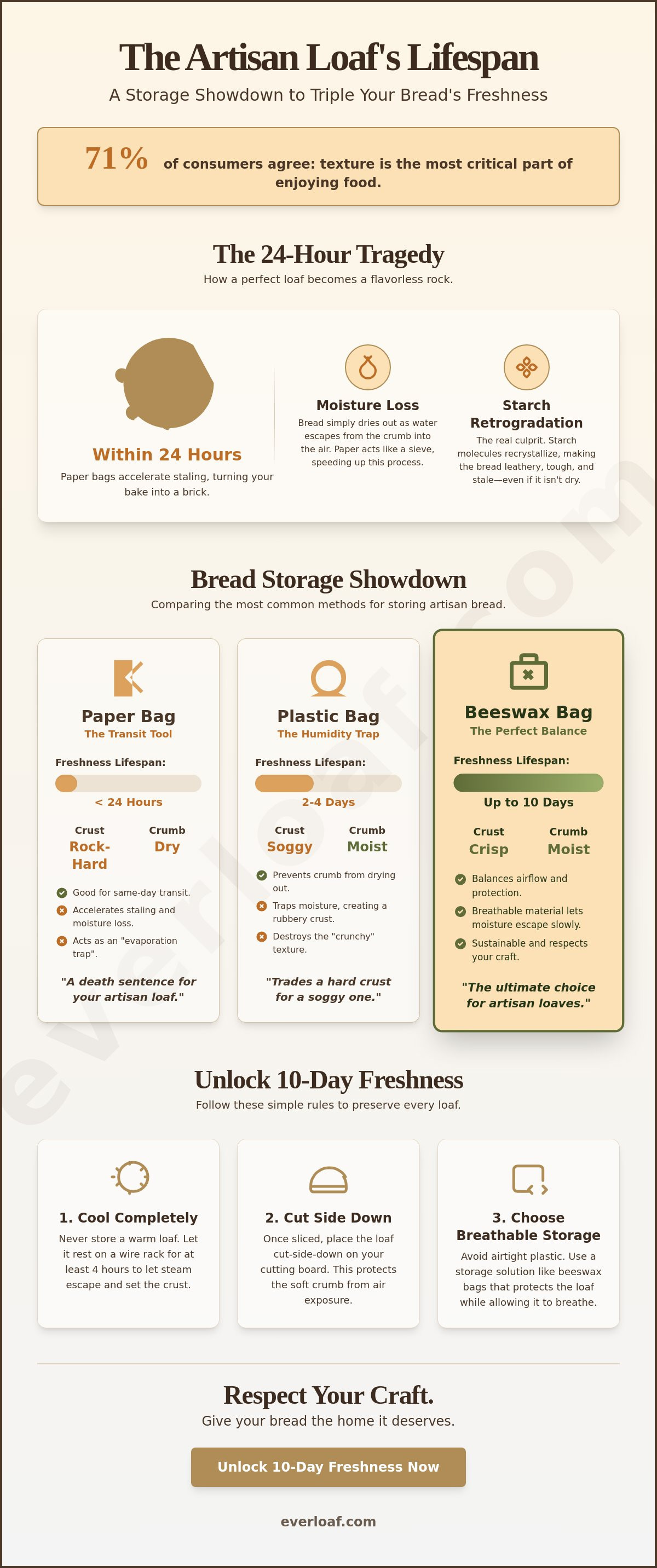
Bread Storage Showdown: Paper vs. Plastic vs. Beeswax
You have spent hours on the perfect crumb. Now, don't let the wrong container ruin it. Your storage choice is the final step in the baking process. Most home bakers fluctuate between three main options. Each one handles moisture differently. Plastic is a humidity trap. It seals in moisture so effectively that your crust becomes a soggy, rubbery mess within hours. It suffocates the bread. On the other end, we've seen how paper bags for storing bread act as a moisture thief. They leave your loaf parched and brittle. Beeswax is the "Goldilocks" solution. It is the balance your bread has been begging for.
The global beeswax wrap market is valued at approximately $195.2 million in 2026. This isn't just a trend; it's a shift toward quality. People are tired of wasting expensive organic flour on failed storage. If you want your sourdough to survive past the first day, you need a medium that respects the bread's biology. You need a solution that protects the interior while honoring the crust.
A Framework for Freshness
To choose the right home, you must understand how these materials breathe. Consider this breakdown of the three most common methods:
- Plastic: Zero airflow. It causes moisture to pool on the surface, leading to rapid mold growth and a limp texture.
- Paper: High, uncontrolled airflow. It facilitates rapid evaporation and speeds up the "rock-hard" staling process.
- Beeswax: Controlled breathability. It allows just enough air to move so the crust stays firm, but keeps the crumb hydrated.
Sustainability also matters. In 2026, 67% of consumers prefer businesses that use sustainable packaging. Paper is disposable; plastic is a pollutant. A high-quality wax bag is a reusable investment that lasts for a year of bakes. The cost-per-use is significantly lower than constantly buying single-use sleeves.
Why Beeswax is the Hybrid Winner
Beeswax works because it mimics nature. When organic cotton is infused with pure wax, it creates a flexible, breathable "skin" for your loaf. It doesn't just sit there; it protects. Pure beeswax also has inherent antimicrobial properties. This helps keep your bread safe from spoilage without the need for chemicals. It is the only method that truly addresses the needs of an artisan loaf. If you are ready to stop the moisture theft, The Orvix Bread Bag offers the specialized care your sourdough deserves. It bridges the gap between the bakery and the long-term pantry. Your bread worked hard to get here; give it a home that loves it back.
Best Practices for Using Paper Bread Bags at Home
If you must use paper bags for storing bread, do it with intention. You have a narrow window of about 18 to 24 hours before the quality drops off a cliff. Treat that window with respect. Start by choosing the right environment. Avoid drafts. Keep your loaf away from the toaster or oven vents. These heat sources accelerate the drying process. Paper is a temporary shelter. Use it wisely.
The most effective strategy is the "Cut Side Down" method. Once you slice into your loaf, never leave the open crumb exposed to the air inside the bag. Place the sliced end face-down on a clean wooden cutting board. Then, slide the paper bag over the top. This creates a physical seal against the board. It forces the moisture to stay inside the loaf rather than escaping through the porous paper. Double-bagging is a common myth. It might buy you an extra hour, but it mostly just wastes resources. One layer of paper is already enough of a moisture thief.
You need to know when to quit. If you aren't finishing the loaf by tomorrow morning, the paper bag has done its job. Transitioning to a more permanent home is the only way to protect your investment. To stop the cycle of dry bread and wasted flour, move your loaf into a beeswax cotton bread bag before the 24-hour mark hits. It is the upgrade your kitchen deserves.
The Temperature and Humidity Factor
Your kitchen counter is the best place for a short stay. It provides a stable environment. However, never put your paper-wrapped bread in the refrigerator. Cold temperatures speed up the crystallization of starches. It turns your sourdough into a leathery mess instantly. In high-humidity climates, paper is a liability. It absorbs moisture from the air, which can lead to rapid mold growth on the crust. If your kitchen is humid, paper bags for storing bread will fail you even faster than usual.
Reviving a 'Paper-Dried' Loaf
Even a rock-hard loaf can be saved. If you left your bread in paper too long, try the misting technique. Run the loaf quickly under a cold tap or spray it heavily with a water mister. Place it in a 350°F oven for six to ten minutes. The water turns to steam, rehydrating the crumb while the heat recrisps the crust. If it is beyond saving, don't throw it away. Pulse it into breadcrumbs or toss it with olive oil for croutons. Every failed storage attempt is a lesson for your next bake. When you are ready to start again, use a Danish Dough Whisk to ensure your next batch of sticky dough is perfectly mixed from the start.
Beyond Paper: Why Beeswax is the Ultimate Choice for Artisan Loaves
Your bread is a labor of love. A true sourdough loaf often requires a three-day commitment from starter feeding to the final bake. It is a slow, intentional craft. Why would you compromise that effort at the very end? Relying on paper bags for storing bread is like running a marathon and tripping at the finish line. You deserve better. Your kitchen deserves better. Most importantly, your bread deserves a home that actually preserves its life.
The difference is visible in the data and the crust. While paper fails after 24 hours, a beeswax environment offers a 10-day freshness promise. This isn't just about avoiding a rock-hard loaf. It's about maintaining the soul of the bake. The sensory experience changes completely. Instead of the dry, dusty smell of aging paper, you are greeted by the faint, clean scent of natural wax. It feels specialized. It feels permanent. You are moving from a culture of waste to a culture of quality tools that last.
The Everloaf Difference
We don't settle for "good enough" in our kitchen. Our design philosophy is rooted in the culinary traditions of Lyon, where bread is treated with reverence. The Orvix design uses 100% organic cotton. This is a significant upgrade over synthetic-lined options or highly processed paper bags. Our material mimics a natural skin, providing the perfect level of protection. You can learn more about our specific Long-Term Bread Storage Bag and how it maintains that elusive 10-day window. It is a tool designed by bakers, for bakers.
Making the Switch
Transitioning your kitchen to a paper-free zone is a smart financial move. Think about the recurring cost of bulk paper sleeves. They are single-use items that add up over a year of baking. A reusable beeswax bag is a one-time investment that protects hundreds of loaves. It simplifies your pantry. It removes the clutter of half-torn paper bags for storing bread that litter your counters. You are choosing a path that respects the environment and your wallet.
Stop settling for stale bread. Join a community of enthusiasts who refuse to waste another ounce of organic flour. It is time to treat your artisan loaves with the respect they earned in the oven. Take the final step toward perfect storage and keep your bread fresh for 10 days. Your next sandwich will thank you.
Give Your Sourdough the Home It Deserves
You've worked too hard on your starter to let a poor storage choice ruin the result. We've seen that paper bags for storing bread are perfect for the walk home from the bakery, but they fail as a long-term solution. They pull the life out of your loaf. They leave you with a rock within 48 hours. It's time to treat your craft with the reverence it earned in the oven.
Our beeswax bread bags are crafted by culinary professionals who understand the biology of a perfect crust. Made from 100% organic cotton, they provide the breathable seal your bread needs to thrive. Join the community of home bakers who've already left thousands of 5-star reviews. Discover the secret to 10-day freshness and stop the cycle of wasted flour and rubbery crusts.
Your kitchen is ready for a professional upgrade. You can Upgrade to a Beeswax Bread Bag for 10-Day Freshness and experience the difference for yourself. Respect the bake. Protect the crumb. Happy baking.
Frequently Asked Questions
Can I reuse paper bags for storing bread multiple times?
You can reuse them if they remain clean and dry, but their effectiveness drops quickly. Bread crumbs and residual moisture weaken the paper fibers over time. This makes the bag more porous and less capable of protecting your loaf. For the best results, limit reuse to once or twice. If you want a truly permanent solution, it's time to move beyond disposable paper.
Is it better to store bread in a paper bag or a bread box?
A bread box is the superior choice for long-term freshness. While paper bags for storing bread are excellent for transit, they offer too much airflow for multi-day storage. A quality bread box creates a stable micro-climate. It balances humidity better than paper ever could. This prevents the crumb from drying out while keeping the crust from becoming leathery or damp.
Why does my bread get hard so fast in a paper bag?
The culprit is evaporation. Paper is highly porous and acts like a sponge for moisture. It pulls water out of the soft interior of your loaf and releases it into the kitchen air. Without a proper barrier, the starch molecules in your bread recrystallize rapidly. This process, known as staling, turns your beautiful sourdough into a flavorless rock in record time.
Should I put my paper-wrapped bread in the fridge?
Never put your bread in the refrigerator. The cold temperature actually accelerates the staling process through starch retrogradation. Paper offers zero protection against the dry, circulating air inside a fridge. You'll end up with a loaf that is both cold and leathery. If you can't finish your bread within a few days, freezing is a much better option for preserving quality.
How do I keep the crust crispy while using a paper bag?
Use the "cut side down" technique to save the texture. Place the sliced end of the loaf firmly against a wooden cutting board. Then, slide the paper bag over the top of the bread. This creates a physical seal for the exposed crumb while allowing the rest of the crust to breathe. It's the best way to maintain that sought-after crunch for the first 24 hours.
What happens if I put a warm loaf in a paper bag?
This is the only time paper is truly the perfect choice. A warm loaf needs to release steam to prevent the crust from becoming soggy. Paper bags for storing bread allow that moisture to escape safely. If you use plastic or wax too early, the trapped heat will create condensation. This ruins the texture instantly. Always let your bread breathe in paper until it reaches room temperature.
Are brown kraft paper bags food-safe for all types of bread?
Most virgin kraft bags are food-safe, but you should check for a food-grade label. Avoid using recycled paper bags for long-term contact unless they are specifically certified. Recycled fibers can sometimes contain traces of inks or adhesives from their previous life. For artisan loaves, stick to high-quality, unbleached paper to ensure your bread stays pure and free from unwanted chemical scents.
Can I freeze bread inside a paper bag?
Freezing in paper is a mistake. Paper is not airtight. It won't protect your loaf from the harsh environment of the freezer. You will likely see signs of freezer burn within just a few hours. To save your bread for later, wrap it tightly in a beeswax wrap or place it in a dedicated freezer-safe container. This preserves the moisture so the bread tastes fresh once thawed.


