

Your beautiful linen bread bag is likely the reason your sourdough turns into a brick by day two. It feels wrong. We're often told that simple cloth is the best home for an artisan loaf. You put in the hard work. You spent days nursing a starter and perfecting your hydration. It's heartbreaking to watch that effort go to waste because of a storage choice that looks great but fails your bread. When comparing linen vs beeswax bread bags, the difference in your loaf's life is staggering. Stop settling for stale results and wasted flour.
You deserve to enjoy that perfect crumb for more than a single morning. We're settling the storage debate once and for all. Discover the definitive winner for artisan loaves so you can finally stop throwing away hardened bread. We'll show you how to push your bread's lifespan toward that 10-day freshness goal while keeping your kitchen plastic-free. Learn how to protect both the crust and the crumb with the specialized attention they deserve. It's time to treat your craft with reverence.
Stop Wasting Your Sourdough!
- The Freshness King! Beeswax-infused cotton is the definitive winner. Enjoy your bread for up to 10 days.
- Linen vs Beeswax Bread Bags! Linen is a breathable classic. Beeswax is the moisture-locking powerhouse your bread needs to stay soft.
- Texture Matters! Preserve that perfect artisan crumb. Your bread deserves specialized attention to prevent drying.
- Easy Care! Don't let maintenance myths stop you. A quick cool-water rinse keeps your bags in peak condition.
- Professional Results! Stop throwing away stale loaves. Build a sustainable, plastic-free kitchen today.
Linen vs Beeswax Bread Bags: The Great Storage Showdown
Your artisan sourdough is a living masterpiece. It has specific needs. It requires a home that respects its texture and life cycle. Most people default to plastic bags. This is a disaster. Plastic is the common enemy of quality bread. It suffocates the loaf. It traps moisture against the crust, turning it rubbery and inviting rapid mold growth. To truly care for your bake, you must choose between two specialized materials. The linen vs beeswax bread bags debate isn't just about aesthetics. It's about performance.
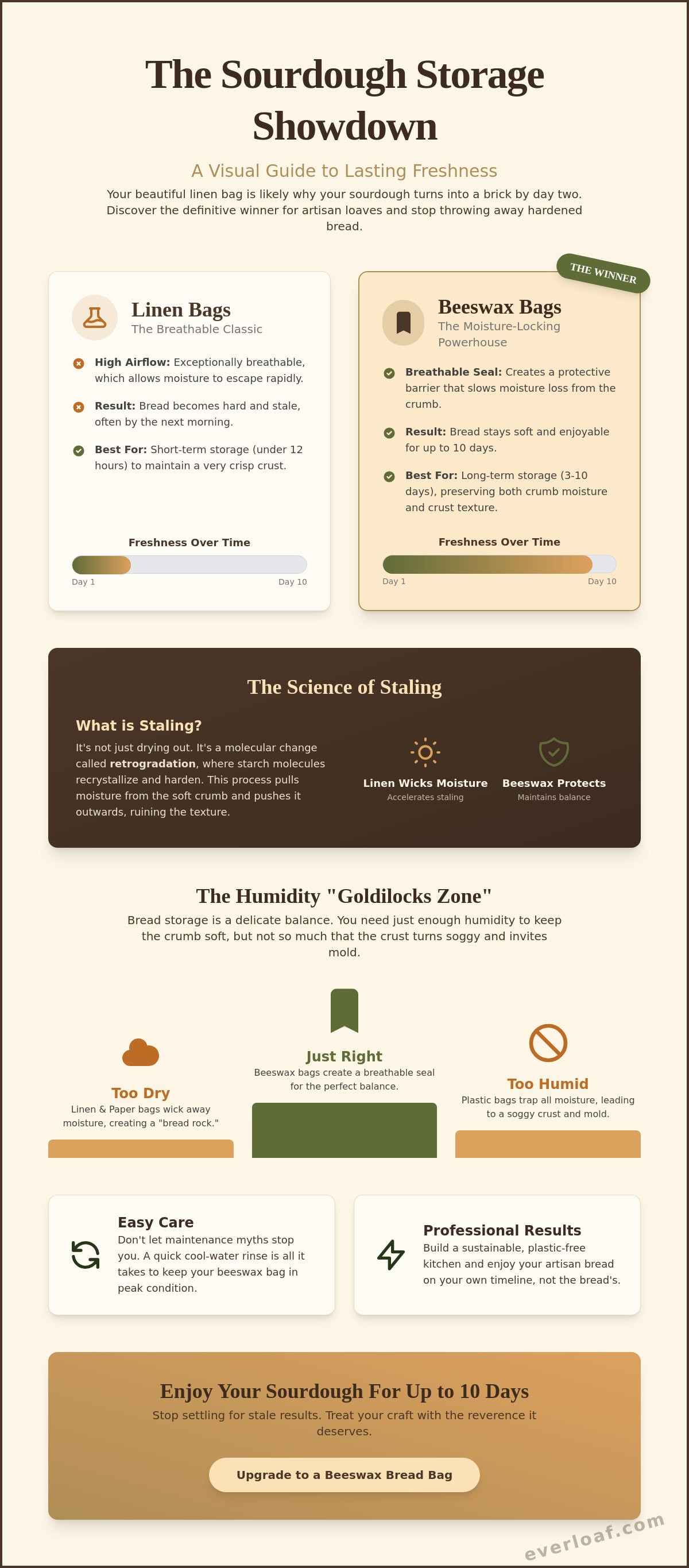
The core conflict centers on airflow versus a protective barrier. Linen is the breathable classic. It allows your bread to "breathe" completely. A beeswax-infused cotton bag acts more like a powerhouse for longevity. It creates a breathable seal that slows down the drying process. To understand why this choice matters, you have to look at The Science of Staling. Staling isn't just drying out; it's a complex physical change. Your storage choice dictates how fast that change happens. You want a solution that respects the effort you put into your starter.
The Traditional Case for Linen
French bakers have trusted linen for centuries. There is a reason for this tradition. Linen is exceptionally breathable. It's the perfect companion for high-hydration breads with a thick, "singing" crust. This airflow ensures the crust remains crisp and crackly. If you plan to eat your baguette or boule within 12 hours, linen is a fantastic choice. It prevents the moisture from the crumb from softening the exterior. However, this high breathability is a double-edged sword. Because it lets so much air in, it also lets moisture out. Your bread will likely be quite hard by the next morning. It's a short-term solution for immediate enjoyment.
The Modern Rise of Beeswax Storage
Sourdough enthusiasts are leading a storage revolution. They are moving toward the beeswax Bread Bag for a simple reason: it works longer. Think of beeswax like the protective peel of a fruit. It's a natural, sustainable barrier. It keeps the essential moisture inside the crumb where it belongs. This is why beeswax storage is becoming the gold standard for home bakers who don't want to bake every single day. It offers the best of both worlds. It provides enough airflow to prevent mold while locking in enough moisture to keep the bread supple for days. It's the ultimate upgrade for a modern, plastic-free kitchen that values both craft and conservation. You get to enjoy your bread on your own timeline.
The Science of Staling: Why Material Choice Matters
Bread doesn't just "go dry" because of the air. It changes on a molecular level from the moment it leaves the oven. This chemical transformation is the secret to winning the linen vs beeswax bread bags debate. When your loaf cools, starch molecules begin to reorganize and harden. This process pulls water away from the soft, hydrated crumb and pushes it toward the crust. Your choice of storage determines how fast this migration happens. You need a material that manages this moisture without suffocating the bread.
Linen is a thirsty fabric. It acts like a wick, pulling moisture out of the loaf and releasing it into your kitchen. This accelerates the drying process significantly. Beeswax creates a different environment entirely. It provides a semi-breathable seal that keeps essential moisture trapped where it belongs. It's a more sophisticated way to protect your bake. Using food-safe materials like pure beeswax also adds a layer of natural protection. Beeswax contains antimicrobial properties that help defend your sourdough against mold growth, a common failure of both plastic and plain cloth storage.
Retrogradation and Your Sourdough
Sourdough has a hidden advantage in the fight against staling. The natural acidity from a long fermentation slows down the breakdown of starches. You've spent days nurturing that starter; your storage should honor that effort. Retrogradation is the recrystallization of starch molecules that turns soft bread into a flavorless brick. While sourdough resists this better than commercial bread, the wrong bag can still ruin a loaf overnight. A beeswax-infused bag supports the bread's natural chemistry by maintaining a stable internal environment. It's the best way to extend your sourdough's natural lifespan.
Humidity Control: The Goldilocks Zone
Storage is all about balance. Too much humidity creates a rubbery crust and invites mold. This is why plastic bags are a disaster for artisan loaves. Too little humidity creates the "bread rock" effect typical of paper or linen storage. You're looking for the Goldilocks zone. You want just enough breathability to keep the crust from getting soggy, but enough of a barrier to keep the crumb supple. Understanding how humidity affects bread storage is the first step toward professional-level preservation. Many bakers find that switching to the beeswax Bread Bag is the simplest way to hit that perfect balance every time. It treats your bread like the premium product it is.
Performance Comparison: Crust, Crumb, and Longevity
Choosing between linen vs beeswax bread bags is a choice between short-term texture and long-term enjoyment. You need to know what you're optimizing for. Is it the immediate crunch of a fresh baguette? Or is it the soft, spreadable crumb of a sourdough boule on day four? Each material serves a distinct purpose in your kitchen. Understanding these trade-offs will save your loaves and your sanity. It's about matching the storage to the bread's inherent needs.
- Crust Retention: Linen is the undisputed champion of the "crunch." It keeps the exterior crisp by allowing moisture to escape. Beeswax softens the crust slightly over time as it locks humidity inside.
- Crumb Moisture: Beeswax keeps the interior supple and hydrated. Linen allows the crumb to toughen and dry out quickly.
- Longevity: A linen bag buys you 1 to 2 days of quality eating. A beeswax bag extends that window to 7 or even 10 days.
Your bread type matters too. A light, airy brioche or a soft sandwich loaf will turn into a sponge in a linen bag. It needs the barrier. Conversely, a same-day baguette thrives in linen. For the serious sourdough baker, the marathon performance of beeswax is usually the winner. It's the difference between a Tuesday morning toast and a Friday morning sandwich.
The Sourdough Test
Sourdough is built for the long haul. Its natural acidity is a preservative, but it needs help to survive past day three. By the 72-hour mark, a loaf in a linen bag is often too hard for anything but croutons. You can try a middle-ground solution by placing your linen bag inside a wooden bread box. This adds a layer of protection, but it still lacks the moisture-locking power of a true barrier. For high-performance storage, the beeswax bread bag is the only way to keep that interior soft enough for a sandwich well into the week. It respects the time you spent on your fermentation. Don't let your hard work go to waste.
The "Day 5" Reality Check
Think about your Friday morning. If you baked on Sunday, the "Day 5" reality is usually a choice between the toaster or the trash. In a linen bag, the bread has been exposed to 120 hours of drying air. It's a rock. Most people assume they have to freeze half their bake to avoid this waste. Beeswax bags change the game. They prevent the need for immediate freezing by maintaining the "Goldilocks zone" of humidity. Check out The Ultimate Beeswax Bread Bag Guide to see how to master this 10-day freshness cycle. Stop throwing away your hard work and start enjoying every last slice. Your kitchen deserves this level of efficiency.
Practicality and Maintenance: Addressing the Objections
Many bakers hesitate because they worry about the upkeep. They think linen is easier to toss in the wash. They fear beeswax is too delicate or smells too strong. These are common misconceptions. When you look at linen vs beeswax bread bags through the lens of daily use, the reality is refreshing. Both materials are built for the long haul. They just require different types of respect. Your storage solution should be a partner in your kitchen, not a chore. High-quality materials make all the difference in your experience.
Durability is a major factor for the eco-conscious kitchen. You can expect years of service from either option if you treat them well. Linen is a rugged, ancient fiber. It handles wear with grace. Beeswax bags are equally impressive. They rely on the flexible strength of organic cotton and the protective nature of the wax. The "wax smell" debate is usually a matter of quality. Pure, high-grade beeswax has a faint, sweet scent of honey. It doesn't transfer to your bread. It actually enhances the sensory experience of opening your bag each morning. It feels like a boutique ritual.
How to Clean Your Beeswax Bag
Cleaning your bag is surprisingly fast. You don't need a washing machine. In fact, you must avoid it. Follow these simple steps to keep your bag in peak condition:
- Shake out any loose crumbs after each use.
- Wipe the interior with a damp cloth or rinse under cool water.
- Use a tiny drop of mild, alcohol-free dish soap if needed.
- Hang it over a drying rack to air dry completely.
Beeswax is highly sensitive to heat and will melt if exposed to hot water or appliances. Never put your bag in the dishwasher or microwave. This simple, cool-water routine preserves the integrity of the wax for hundreds of uses. It's a low-energy way to maintain a high-performance tool.
Linen Care and Longevity
Linen presents its own set of challenges. Flour buildup and fine bread dust get trapped deep within the fibers. You might think a hot machine wash is the answer. Be careful. Pure linen is notorious for shrinkage. A bag that fit your large sourdough boule yesterday might only fit a small roll after a trip through the dryer. Many experts prefer an organic cotton base for bread storage because it offers more stability. It provides a better environmental footprint during manufacturing than traditional linen while offering superior durability. If you want a solution that balances ease of care with professional results, the beeswax Bread Bag is the ultimate choice for your modern kitchen. It simplifies your process while elevating your results.
The Winner: Why Beeswax-Infused Cotton is the Ultimate Choice
The results are in. After comparing linen vs beeswax bread bags across every category, one solution stands alone. Pure linen is a beautiful, traditional choice for immediate serving. It fails the longevity test. If you want to stop throwing away hardened loaves, the hybrid approach is the only answer. Beeswax-infused cotton provides the moisture barrier that linen lacks. It offers the breathability that plastic denies. It is the perfect middle ground for the serious artisan baker.
Everloaf is committed to this superior standard. We use 100% organic cotton as our base. We infuse it with pure, culinary-grade beeswax. This combination creates a powerhouse for preservation. Our inspiration comes directly from the culinary heritage of Lyon, France. We've taken those high standards and adapted them for the American home baker. You shouldn't have to choose between a "singing" crust and a soft crumb. The final verdict is clear. Beeswax wins for sourdough longevity, total waste reduction, and respect for the craft.
Invest in Your Baking Craft
Think about the effort you put into every bake. You spend hours monitoring fermentation and perfecting your tension. It is a tragedy to let that work vanish in 24 hours. A premium storage solution is an investment in your results. It is actually cheaper than throwing away half a loaf every week. High-quality storage completes the artisan experience. It ensures your bread is as enjoyable on Thursday as it was on Sunday. It's time to treat your sourdough like the premium product it is. Shop the beeswax cotton bread bags today and see the difference for yourself.
Complete Your Sourdough Toolkit
Your journey doesn't end with a great bag. Professional results require the right tools at every stage. Pair your storage solution with The Sourdough Knife for clean, effortless slices that don't crush the crumb. Many of our community members consider the Danish Dough Whisk and our bread bag to be the "dynamic duo" of baking. One perfects the start; the other protects the finish. Respect the bread you worked so hard to bake. Give it a home that honors its quality and extends its life. You've earned every delicious slice.
Protect Your Craft and Enjoy Every Slice!
You've put in the hours to master the perfect sourdough. Don't let a storage mistake ruin your results. When we look at linen vs beeswax bread bags, the winner is undeniable. Linen is a beautiful tradition for same-day eating, but it simply can't compete with the moisture-locking power of beeswax. Science proves that a semi-breathable barrier is the only way to stop starch retrogradation from turning your loaf into a rock. You deserve a kitchen that respects your effort. By choosing the right barrier, you can finally achieve that 10-day freshness goal and stop wasting your hard-earned flour.
It's time to upgrade your toolkit. Our solution is crafted from 100% organic cotton and infused with pure, antimicrobial beeswax. It's a choice trusted by thousands of home sourdough bakers who refuse to settle for dry, hardened loaves. This isn't just about storage; it's about honoring the life of your bread. Take the final step in your artisan journey today. Keep your bread fresh for 10 days with The beeswax Bread Bag. Your future self will thank you for that soft, delicious sandwich on day five. Happy baking!
Frequently Asked Questions
Is a linen bread bag better than plastic?
Yes, linen is a much healthier choice than plastic for your bread. Plastic traps moisture and creates a humid environment that leads to soggy crusts and rapid mold growth. Linen allows your loaf to breathe and stay crisp. However, while it beats plastic, it can't match the long-term moisture retention provided by a beeswax-infused barrier.
How long does bread stay fresh in a beeswax bag?
You can expect your bread to stay soft and delicious for 3 to 5 days in a standard beeswax bag. Premium options can even push that freshness window toward 7 or 10 days for hearty sourdough boules. This performance is the deciding factor in the linen vs beeswax bread bags debate for bakers who want their hard work to last all week.
Can I wash a beeswax bread bag in the washing machine?
Never put your beeswax bag in the washing machine or dishwasher. The high heat from these appliances will melt the protective wax coating and ruin the bag instantly. To keep it clean, simply rinse the interior with cool water and a tiny drop of mild soap. Always hang it to air dry away from heat sources.
Do beeswax bags make the bread taste like honey?
No, your sourdough will not take on the taste of honey. High-quality, culinary-grade beeswax has a very faint, sweet scent that is pleasant but doesn't transfer to your food. It simply acts as a clean, natural barrier. You get all the antimicrobial benefits without any unwanted flavor changes to your artisan crumb.
Can I use a linen bag for sourdough?
You can use a linen bag for sourdough if you plan to eat the entire loaf within 24 hours. Linen is excellent at keeping that signature sourdough crust crackly and crisp for the first day. For storage beyond the first morning, you'll find the bread becomes too tough to enjoy without a moisture-locking beeswax layer.
What is the best way to store homemade bread without plastic?
The beeswax Bread Bag is the definitive choice for plastic-free storage. It acts like a second skin for your loaf by balancing breathability with essential moisture retention. It's the most effective way to honor your baking process while maintaining a sustainable kitchen. You'll stop throwing away stale ends and start enjoying every single slice.
Does beeswax prevent mold on bread better than linen?
Yes, beeswax offers superior protection against mold. It contains natural antimicrobial compounds that help defend your bread from spoilage. While linen prevents mold by drying the bread out completely, beeswax keeps the bread soft and edible while still providing a protective environment. It's a much more sophisticated way to handle your artisan bakes.
Can I freeze bread inside a beeswax bag?
Avoid using your beeswax bag for freezer storage. The extreme cold can make the wax brittle and cause it to crack or flake over time. For the best results, use a dedicated freezer wrap for long-term storage. Save your beeswax bag for the countertop where it can do its best work keeping your bread fresh for daily eating.


