

Why does your premium sourdough loaf feel like a rubber tire by sunrise? It's a heartbreaking sight for any bread lover. You've invested in a craft product, yet your kitchen counter seems determined to ruin it. Finding the best way to store artisan bread overnight is about more than just convenience; it's about respecting the loaf. Your bread is a living thing that needs to breathe. Most people either suffocate their crust in plastic or let it wither in the open air.
We agree that waking up to a dull, chewy crust is a total disappointment. With sourdough interest up 45 percent this year, you're not alone in wanting a better solution. You deserve that bakery-quality crunch every single morning. This guide reveals the professional secrets to keeping your artisan crust crackling and your crumb pillow-soft through the night. You'll learn how to avoid mold and food waste using sustainable, plastic-free methods that actually work. We're diving into the science of breathability to ensure your bread stays as perfect as the moment it left the oven.
Key Takeaways
- Stop the steam. Never bag a warm loaf; cooling is the final stage of baking.
- Ditch the plastic. Learn why airtight bags destroy your crust and promote rapid mold growth.
- Master the best way to store artisan bread overnight by using breathable shields that mimic the crust's natural protection.
- Protect your crumb. Understand starch retrogradation to keep your sourdough soft and supple for days.
- Choose the right gear. Discover why organic cotton and beeswax are the gold standard for high-hydration boules.
Understanding Why Artisan Bread Goes Stale Overnight
Your artisan loaf is a masterpiece of chemistry. It's not just food; it's a living structure that demands respect from the moment it leaves the oven. Most people treat their bread like a standard grocery item, tossing it into a plastic bag or leaving it exposed on the counter. This is a mistake. Finding the best way to store artisan bread overnight requires understanding that your bread is fighting a constant battle between moisture and air. The goal is not to stop time, but to manage how the bread ages as it sits on your counter.
Artisan bread relies on a delicate balance. The interior crumb is a hydrated network of gluten and starch, while the crust acts as a protective, dehydrated shield. As soon as the loaf begins to cool, this balance shifts. Moisture is the enemy of the crust, but the lifeblood of the crumb. If you don't manage this migration, you'll wake up to a loaf that has lost its soul. Temperature and humidity are the primary culprits in this overnight transformation. High humidity softens your crust into a rubbery mess, while a dry environment turns your soft crumb into a literal rock.
The Science of Starch Retrogradation
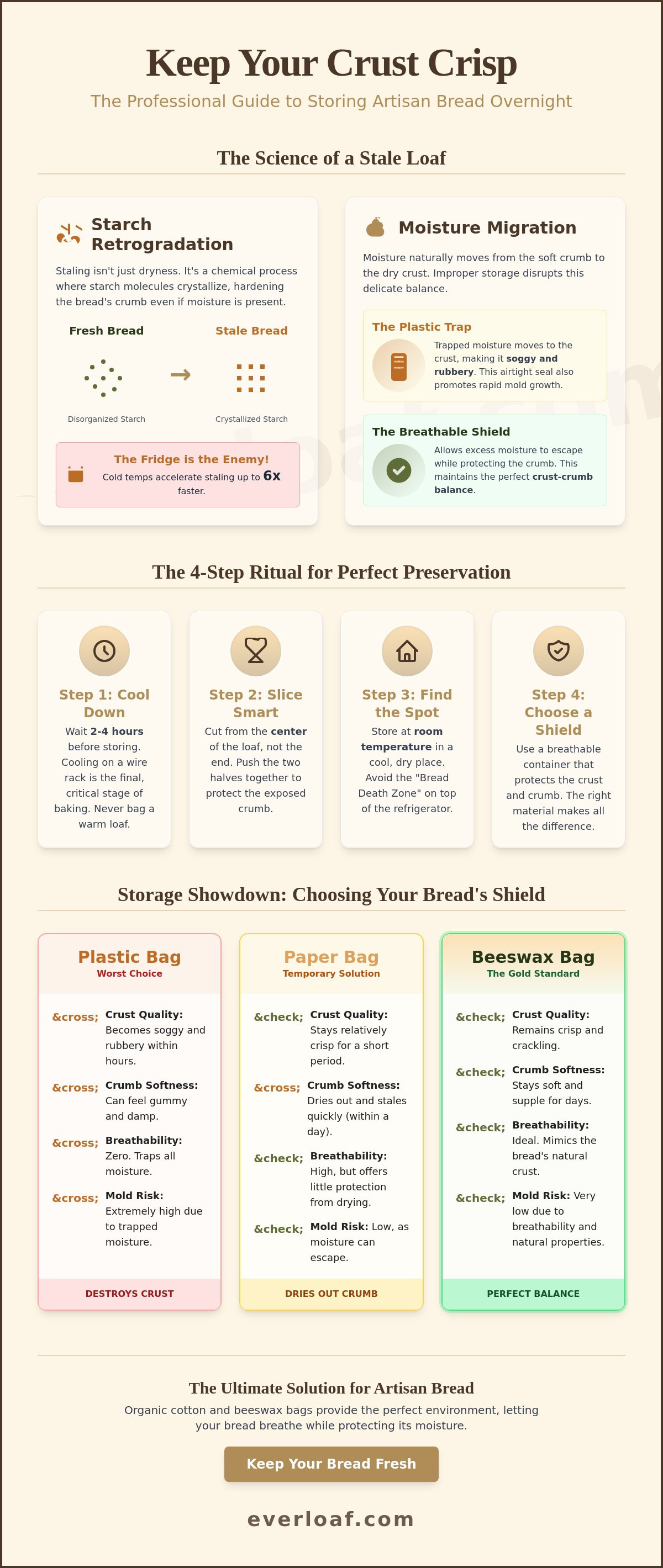
Staling is not just about the bread "drying out" as many believe. It's a complex chemical shift. Scientists refer to this as the process of bread staling, and it's driven by starch molecules. As the bread cools, these starch molecules begin to realign and crystallize, which forces water out of the starch granules. Retrogradation is the crystallization of starch during cooling. This process makes the bread feel hard and gritty even if the total moisture content hasn't changed much. Refrigerator temperatures are the absolute worst for this. The cold environment actually accelerates this crystallization, making your bread go stale up to six times faster than it would at room temperature.
Moisture Migration: The Crust-Crumb Conflict
Your bread is in a state of internal war. Moisture naturally moves from the soft, hydrated interior to the dry, crispy exterior. In a sealed environment, like a plastic bag, this moisture gets trapped against the crust. The result? That beautiful, crackling exterior becomes a soggy, rubbery disappointment within hours. Conversely, leaving the loaf completely open allows the crumb to lose its essential hydration to the room's air. High-hydration doughs, like traditional sourdough, have a natural advantage here. Their high water content and acidic environment help them resist these changes longer. To maintain this balance without the "plastic trap," many enthusiasts use specialized beeswax cotton bread bags. These allow for a controlled gas exchange, letting the crust breathe while keeping the interior supple. It's the best way to store artisan bread overnight because it respects the bread's need for airflow without sacrificing its moisture.
The 5-Step Process to Store Bread Overnight
Storing your loaf isn't an afterthought. It's an extension of the baking process itself. If you want the best way to store artisan bread overnight, you must follow a disciplined ritual. Most people fail because they rush the process. They treat a handcrafted loaf like a standard grocery item. Respect the craft. Follow these five steps to ensure your crust stays crisp and your crumb stays soft until morning.
Step 1: The Critical Cooling Phase
Cooling is the final stage of baking. Do not skip it. Wait at least 2 to 4 hours before you even think about storage. Cutting into warm bread releases a cloud of steam. This steam is the moisture your crumb needs to stay supple. When it escapes prematurely, your bread dries out instantly. Use a wire rack for this phase. It ensures air circulates under the bottom crust. If the base stays damp, it gets soggy. A soggy base is a breeding ground for mold. Patience is your most important ingredient here.
Step 2: The Slicing Strategy
How you cut determines how the bread ages. Never slice from the end of the loaf. Start from the center and work your way out. This strategy minimizes the surface area exposed to oxygen. When you're done, push the two cut halves back together. This creates a natural seal for the crumb. You need a clean, effortless slice to avoid crushing the delicate internal structure. For the best results, use a professional Sourdough Knife to maintain the loaf's integrity.
Steps 3-5: Environment and Protection
Location is everything. Find a cool, dry spot at room temperature. Stay away from direct sunlight or drafts. Never place your bread on top of the refrigerator. This is the "Bread Death Zone." The heat from the compressor accelerates staling by warming the loaf. Instead, find a dedicated corner on your counter.
Now, choose your shield. A paper bag is acceptable for a few hours, but it eventually turns your bread into a crouton. Plastic is even worse. It traps 100 percent of the moisture and ruins the crust. Experts often debate the best way to store yeast bread, but for artisan loaves, breathability is the priority. The "Cut Side Down" trick is a lifesaver for open-air storage. Place the cut side flat on a wooden cutting board to protect the crumb. For total protection, slide your loaf into a beeswax bread bag. It provides the perfect semi-breathable barrier. This is the best way to store artisan bread overnight without the risk of mold or a rubbery crust.
Paper vs. Plastic vs. Beeswax: Choosing the Right Shield
Your choice of storage material is the difference between a gourmet breakfast and a trip to the compost bin. Most people reach for whatever is in the kitchen drawer. This is a gamble you shouldn't take with high-quality sourdough. Not all shields are created equal. To find the best way to store artisan bread overnight, you must understand how different materials interact with your loaf's moisture. You aren't just covering the bread. You're managing an ecosystem.
Why Plastic Bags Ruin Artisan Bread
Plastic is a death sentence for a crispy crust. It creates a literal greenhouse effect. As the bread sits, any remaining moisture is trapped against the surface. This moisture steams the crust from the inside out. Within hours, your beautiful, crackling boule becomes a rubbery, uninspiring mess. It loses the very character that makes artisan bread special. In humid environments, this lack of airflow is even more dangerous. Stagnant air and trapped moisture are an open invitation for mold. If you value your sourdough, keep it far away from polyethylene. It's the fastest way to ruin your hard work.
The Pros and Cons of Paper and Linen
Paper is the traditional choice, but it's a short-term fix. It works well for the first four hours after baking. However, paper is too porous for overnight storage. It allows moisture to escape far too quickly. By morning, you're left with a rock-hard loaf that requires a hammer to slice. Linen bags are a step up, but they often share this flaw. They provide excellent airflow but lack a moisture barrier. This leads to rapid dehydration in dry kitchens. Understanding How Humidity Affects Bread Storage is vital when choosing these breathable options. Without a balance, your bread simply withers away.
The "Goldilocks" zone exists in the combination of organic cotton and beeswax. This pairing offers a semi-permeable barrier. It's the best way to store artisan bread overnight because it mimics the bread's natural protection. Beeswax allows for essential gas exchange while preventing the crumb from drying out. It keeps the crust's integrity intact without the "plastic trap" effect. It's a specialized solution for a specialized product. Your bread deserves a shield that works with its nature, not against it. A beeswax bread bag provides this exact balance, ensuring your loaf stays bakery-fresh until the very last slice.
Specific Strategies for Sourdough and Crusty Boules
Not all loaves are created equal. A delicate baguette has completely different needs than a hearty, high-hydration sourdough boule. If you treat every loaf the same, you're doing your bread a disservice. You've spent time or money on quality; now it's time to protect that investment. Finding the best way to store artisan bread overnight means tailoring your approach to the specific biology of your bread. High-hydration boules, for instance, are thirsty. They need more airflow than a standard sandwich loaf to prevent the crust from turning into a damp sponge.
Respect the craft. Your bread is a result of hours of fermentation and careful handling. It deserves more than a haphazard toss onto the counter. By understanding the unique characteristics of your loaf, you can extend its life significantly. Whether it's the acidity of a starter or the thin crust of a French stick, each detail matters for overnight success.
Storing Sourdough: The 10-Day Goal
Sourdough is the undisputed king of longevity. It has a built-in survival mechanism. The long fermentation process creates a naturally acidic environment that acts as a shield. This acidity doesn't just provide flavor; it actively inhibits mold growth. This is why your sourdough stays fresh and safe far longer than commercial yeast bread. While a standard loaf might fail after two days, a well-managed sourdough can stay delicious for over a week. This is the best way to store artisan bread overnight when you're dealing with a wild yeast starter. To hit that 10-day milestone, you need a storage solution that respects this biology. Read The Ultimate Beeswax Bread Bag Guide to master the art of long-term sourdough freshness.
The Baguette Challenge
Baguettes are the most fragile members of the bread family. They go stale in hours, not days. This happens because of their high surface-area-to-volume ratio. Their thin, crispy crust is incredibly sensitive to moisture migration. To save a baguette, you must act immediately. Use the "Paper-then-Cloth" method. Wrap the loaf in a paper bag to protect the crust's texture, then slide it into a breathable cloth or beeswax barrier to slow down the drying process. If you wake up to a rock-hard baguette, don't panic. Sprinkle the crust with a little water and pop it into a 350-degree oven for five minutes. It will revive the crunch instantly. For the ultimate protection, keep your boules and baguettes in beeswax cotton bread bags to ensure they never lose their bakery-quality character.
Why the Orvix Beeswax Bag is the Ultimate Solution
Your bread is a masterpiece. It deserves a home that understands its needs. Generic storage fails because it ignores the biology of a crusty loaf. The Orvix Beeswax Bag is the result of years of testing and community feedback. It's the best way to store artisan bread overnight because it manages moisture with professional precision. We use 100 percent organic cotton infused with pure beeswax to create a living shield for your bread.
This isn't just a bag; it's an investment in quality. The beeswax infusion provides a natural, antibacterial barrier. It protects your loaf from external contaminants while letting it breathe. Unlike plastic, which suffocates the crust, or paper, which dehydrates the crumb, our bag finds the perfect middle ground. It's sustainable, plastic-free, and designed to last for years of daily use. We believe in respecting the craft of baking by providing the tools it requires to shine. Your kitchen deserves the same standard of excellence as the bakery itself.
The Goldilocks Zone of Breathability
Breathability is a science. The wax-cotton combination prevents the "steaming" effect that ruins a crunchy crust. Simultaneously, it stops the rapid drying that turns a crumb into a rock. This method draws inspiration from traditional French bakery techniques used in Lyon for generations. By mimicking the natural protection of the grain, we've created a storage solution that keeps sourdough fresh for up to 10 days. It's the best way to store artisan bread overnight without sacrificing the texture you worked so hard to achieve. You get that bakery-quality experience every single morning. No more rubbery crusts or wasted boules.
Caring for Your Artisan Storage
Maintenance is simple and efficient. Respect the materials, and they will respect your bread. Simply wipe the interior with a damp cloth or rinse with cool water and a drop of mild soap. Avoid hot water, as it will melt the beeswax coating. This organic approach is safer for your family and the planet. You're eliminating single-use plastics while ensuring your bread stays in its prime. Join the thousands of enthusiasts who have upgraded their process. Give your loaf the treatment it deserves. Upgrade your bread storage with the Orvix Beeswax Bag today.
Master Your Morning Toast
Your bread deserves a standard of care that matches the effort of its creation. Stop settling for rubbery crusts and rock-hard boules. You now understand the science of moisture migration and the critical importance of the cooling phase. This knowledge is the foundation for the best way to store artisan bread overnight. It is about respecting the chemistry of the loaf while protecting the integrity of the crust.
It's time to treat your bread with the reverence it earned. Our solution is rooted in tradition and perfected for the modern kitchen. Crafted from 100% organic cotton and infused with pure; antibacterial beeswax; our storage system was designed by culinary professionals from Lyon, France. It provides the Goldilocks zone of breathability that generic bags simply cannot offer. You've mastered the bake; now master the storage.
Don't let another masterpiece go to waste on your counter. Keep your artisan loaves fresh with the Orvix Beeswax Bag. Your morning routine is about to get a lot more delicious. Enjoy every crackling slice!
Frequently Asked Questions
Can I leave fresh bread on the counter overnight without a bag?
You can leave an uncut loaf on the counter for a few hours. For sliced bread; place the cut side down on a wooden board. This protects the soft interior while keeping the exterior crackling. It is a temporary fix. Without a proper bag; the bread will eventually turn into a giant crouton. A breathable barrier is always superior for long-term satisfaction.
Is it better to store artisan bread in the refrigerator?
The refrigerator is the absolute enemy of your loaf. Cold temperatures trigger rapid starch retrogradation. This chemical shift turns your bread hard and gritty overnight. It happens much faster in the fridge than on the counter. Keep your bread in a cool; dry spot in your kitchen instead. Your sourdough deserves better than a cold; damp shelf. Don't punish your crust.
How do I keep my sourdough crust from getting soft overnight?
Preserving that crunch requires airflow. Plastic bags trap 100 percent of moisture; which steams the crust until it becomes rubbery. The best way to store artisan bread overnight is to use a beeswax-infused cotton bag. This material allows essential gas exchange. It keeps the crumb soft while preventing the crust from absorbing too much humidity. Your bread needs to breathe to stay beautiful.
What is the best way to store a baguette overnight?
Baguettes demand immediate attention because they lack the volume to hold moisture. Wrap your baguette in a paper bag to shield the crust; then slide it into a larger beeswax bag. This double-layer method provides the best way to store artisan bread overnight when the crust is exceptionally thin. Act fast. A baguette's peak freshness window is much shorter than a hearty sourdough boule.
Can I use a paper bag for homemade bread?
Paper is acceptable for the first few hours after the cooling phase. It is excellent for transport from the bakery. However; it fails for overnight storage. Paper is too porous. It lets the essential moisture from the crumb escape into the room. You'll wake up to a loaf that is impossible to slice. Use paper as a temporary shield; not a permanent home for your masterpiece.
How do you refresh artisan bread that has gone hard?
Hard bread isn't a lost cause. Sprinkle the crust with water or wrap it in a damp paper towel. Pop it into a 350-degree oven for 5 to 10 minutes. The heat forces moisture back into the starch molecules. This process temporarily reverses staling. Eat it immediately. Once it cools again; it will be harder than before. Respect the revival process and enjoy the crunch.
Does freezing artisan bread ruin the texture?
Freezing is the only way to pause the staling process effectively. Slice your loaf before freezing so you don't have to thaw the whole thing. Wrap slices tightly in beeswax wrap to prevent freezer burn. Toast them directly from the freezer. This method preserves the original texture better than any other long-term storage. It's a lifesaver for busy households who value bakery-quality results every day.
Why does my homemade bread go stale so much faster than store-bought?
Your homemade bread is honest. It doesn't contain the dough conditioners; fats; or artificial preservatives found in supermarket bags. Those chemicals are designed to keep bread soft for weeks. Artisan bread relies on the quality of the grain and the fermentation process. It is a premium product with a shorter natural lifespan. Proper storage is the only way to bridge that gap without using additives.


