

Is your sourdough suffering in silence while it suffocates inside a plastic bag? You’ve spent hours perfecting that starter and monitoring the rise, only to watch your crust turn rubbery or your loaf become a literal brick within forty-eight hours. It’s frustrating to choose between wasteful single-use plastic and a stale crumb. Using beeswax bags for bread solves this by respecting the biological needs of your loaf. We agree that your hard work deserves better than a fifteen-minute "working life" before the packaging hits the landfill. With forty percent of all plastic produced currently feeding the waste crisis, your kitchen deserves a more respectful, high-performance alternative.
Discover how to maintain a crispy crust and soft interior for up to ten days. We promise to reveal the secrets of moisture regulation that plastic simply cannot match. This guide provides a complete roadmap to bread longevity. You will learn the science behind the seal, the simple maintenance routine for your wraps, and exactly how to treat your loaves with the reverence they deserve. It is time to upgrade your storage and protect the craft you love.
Key Takeaways
- Stop the "brick" effect by understanding the science of the semi-permeable "second skin" barrier.
- Learn why beeswax bags for bread outperform linen and boxes by mastering precise humidity control.
- Protect your investment with a simple, cold-water maintenance routine that keeps your bags functional for months.
- Select the right size and material standards to ensure your largest sourdough boules have room to breathe.
- Unlock the secret to maintaining bakery-quality crust and crumb for a full ten days.
The Crisis of Stale Bread: Why Plastic and Paper Fail
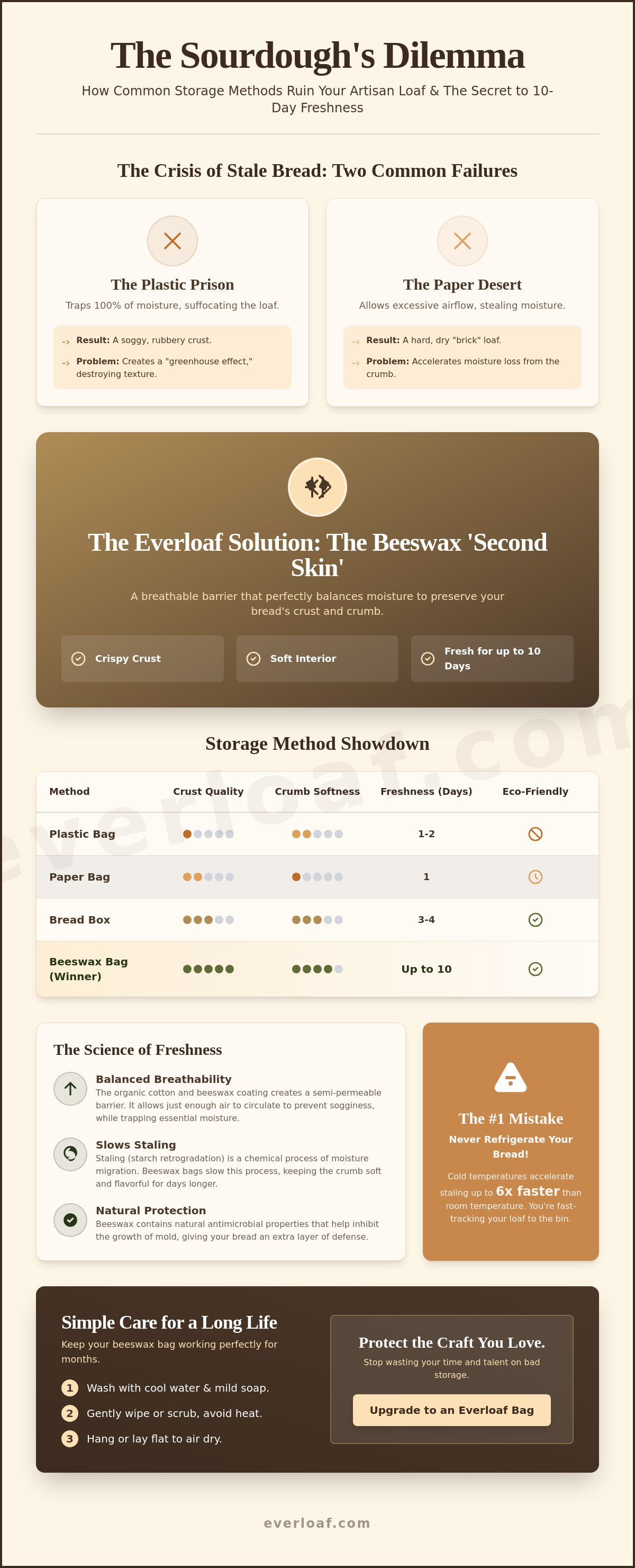
You spent thirty-six hours coaxing a sourdough starter into a masterpiece. Then, you put it in a plastic bag. Within hours, that crisp, mahogany crust turns into a damp, rubbery mess. Plastic is a moisture trap. It locks in one hundred percent of the humidity, creating a tropical environment that destroys texture. On the other hand, paper bags are moisture thieves. They allow excessive airflow that pulls the hydration right out of the crumb. Your beautiful loaf becomes a "brick" by the next morning. These generic methods fail because they don't respect the living nature of bread. Using beeswax bags for bread provides the breathable balance your artisan loaves require. It’s time to stop settling for storage that ruins your hard work.
Understanding Starch Retrogradation
Stale bread isn't just "dry" bread. It's a chemical transformation. Retrogradation is the primary cause of bread staling, occurring as starch molecules recrystallize as the loaf cools. This process turns soft, flexible starches into a rigid, gritty structure. It is a biological inevitability that starts the moment the bread leaves the oven. Many people try the "refrigerator method" to save their bread, but this is a mistake. Cold temperatures actually accelerate recrystallization. Bread in the fridge stales up to six times faster than bread kept at room temperature. You are essentially fast-tracking your loaf to the trash bin. To stop the rot, you need a storage solution that manages moisture without the temperature drop.
The Environmental Cost of Bread Storage
The crisis isn't just about taste. It's about waste. Forty percent of all plastic produced is used for food packaging, often discarded after just fifteen minutes of use. This creates a cycle of guilt and garbage. Even "reusable" plastic containers fail because they lack the breathability essential for a sourdough boule. If you want to understand the basics, what are beeswax wraps and how do they function as a sustainable alternative? They offer a path to a zero-waste kitchen that actually improves the quality of your food. Transitioning to beeswax bags for bread means you stop throwing away half-loaves and start respecting the resources that went into your bake. Your kitchen deserves an aesthetic, plastic-free solution that performs better than the status quo.
The hidden cost of food waste is staggering. When an artisan loaf is thrown out after only two days, you lose more than just flour and water. You lose the time, energy, and craft poured into that bake. Most grocery store solutions treat bread like a static commodity. But your sourdough is alive. It needs a "second skin" that breathes while protecting. Generic plastic and paper simply aren't designed for the high standards of a home baker. You need a tool that matches the quality of your dough.
The Science of Beeswax Bags for Bread: How They Work
Think of your bread as a living thing. It needs to breathe to stay alive. Unlike plastic, which suffocates the loaf, beeswax bags for bread act as a semi-permeable "second skin." This barrier is intelligent. It allows microscopic amounts of air to circulate while keeping the core moisture locked inside the crumb. This balance is critical for artisan loaves. You spent hours developing that gluten structure. You shouldn't let a poor storage choice destroy it in an afternoon. The wax and cotton work together to regulate the environment perfectly.
To understand why this works, we must look at the science behind bread staling. Staling is more than just drying out. It is the migration of moisture from the starch granules to the spaces between them. Beeswax slows this migration down. It creates a stable micro-climate. Your crust stays firm because it isn't drowning in trapped steam. Your crumb stays soft because it isn't losing its internal hydration to the open air. It is a biological hack for freshness.
The Role of Organic Cotton
Quality starts with the foundation. We use 100% organic cotton for a specific reason. The weave density must be precise. If the weave is too loose, the wax won't hold its seal. If it's too tight, the bag loses its essential breathability. Synthetic blends are a disaster for bread. They trap heat and create a "greenhouse effect" that ruins the crust instantly. A pure cotton base ensures the bag remains flexible and durable for hundreds of uses. It provides the structural integrity needed to protect your heavy sourdough boules.
Beeswax as a Natural Preservative
Beeswax isn't just a coating. It is a biological shield. It contains natural antimicrobial properties that help inhibit mold growth. This is a massive advantage over paper or linen. While linen is breathable, it offers no protection against spores. Cotton and wax work in a unique antimicrobial synergy to keep your storage environment clean. Many "eco-friendly" alternatives use vegan resins or soy waxes. These often lack the structural integrity and preservative power of pure beeswax. They can become sticky or lose their seal quickly. Pure wax remains the gold standard.
The Everloaf bag takes this science further. We specifically balance the wax density to ensure maximum freshness without making the bag stiff or difficult to handle. It is about finding that "goldilocks" zone of permeability. If you are ready to see the difference for yourself, you might consider trying the Everloaf beeswax bread bag for your next bake. It treats your bread with the reverence it deserves. You will notice the difference in the very first slice.
Beeswax vs. Linen vs. Bread Boxes: Which Storage Wins?
Choosing the right home for your loaf shouldn't be a guessing game. You have likely tried every method under the sun. Linen bags feel traditional and look beautiful on the counter. However, linen is essentially a sieve for moisture. It is excellent for the first twenty-four hours after a bake. Beyond that, it fails to protect the crumb from the air. Bread boxes are another classic choice, but they are bulky and often inconsistent. They take up valuable counter real estate and rarely provide the tight humidity control required for long-term freshness. Beeswax bags for bread bridge this gap perfectly. They offer the lightweight portability of a bag with the structural protection of a box.
Our community often asks if the ten-day freshness promise is real. It is. While linen and paper allow the bread to turn into a "brick" by day three, the Everloaf bag maintains a soft interior. It creates a micro-environment that adapts to the needs of the loaf. You get the benefits of a breathable material without the moisture loss associated with raw fabric. It is the most efficient way to respect the time you put into your baking process.
The Best Storage for Sourdough
Sourdough is a unique beast. It requires specific humidity levels to maintain its signature tang and elastic crumb. If the environment is too dry, the crust becomes impossibly hard. If it is too damp, the crust loses its character. We compared crust hardness after seventy-two hours in different mediums. Linen resulted in a crust that was difficult to slice. Bread boxes often led to a "leathery" texture. The beeswax barrier kept the sourdough in peak condition. This performance makes the Everloaf bag a must-have for sourdough enthusiasts who want to enjoy their bakes for more than just a single afternoon.
Space-Saving and Practicality
Stop sacrificing your counter space to oversized wooden boxes. Kitchens are busy places. You need tools that adapt to your environment. One of the best features of beeswax bags for bread is the "fold and tuck" method. You can wrap a long baguette or a round boule with the same level of efficiency. Simply slide the loaf in and fold the excess fabric to create a custom seal. When the bag is empty, it folds flat and disappears into a drawer.
Durability is the final win. A single quality beeswax bag can last for over a year with proper care. You aren't just buying a storage tool. You are investing in a long-term partner for your kitchen. Unlike bread boxes that can harbor hidden mold in their seams, a bag is easy to flip inside out and inspect. It is a cleaner, smarter, and more respectful way to handle your food.
Mastering the Care of Your Beeswax Bread Bag
Your bread bag is a partner in your kitchen. It respects the craft of your baking, and it deserves the same respect in return. Proper maintenance is the difference between a tool that lasts a month and one that lasts for years. Beeswax bags for bread are durable, but they are not indestructible. They rely on a delicate balance of wax and fiber to maintain that "second skin" protection. If you treat the bag well, it will keep your loaves soft and your crusts perfect for hundreds of bakes. It is a simple routine that yields massive rewards for your kitchen sustainability.
The golden rule is absolute: never use hot water. Heat is the natural enemy of beeswax. High temperatures will melt the protective coating right off the organic cotton. This destroys the semi-permeable seal and ruins the bag's ability to regulate moisture. Always use cool or lukewarm water for any cleaning task. If you see a stain or a smudge, stay calm. Use a mild, alcohol-free dish soap. Harsh chemicals and alcohol-based cleaners will strip the natural antimicrobial properties from the wax. Keep it simple. Keep it cool.
Daily Cleaning Routine
Most days, your bag only needs a light touch. You don't need to wash it after every single loaf. Follow these steps to keep things fresh:
- Shake it out: Turn the bag inside out over the sink to remove all crumbs.
- Wipe it down: Use a cool, damp cloth to spot-clean any flour or residue.
- Air dry: Drape the bag over a drying rack or a clean jar. Never put it in the dryer.
Deep washes should be rare. Only perform a full immersion wash if the bag becomes sticky or heavily soiled. When the bag is not in use, store it in a cool, dry drawer. Avoid placing it near the oven or on top of the refrigerator where ambient heat can soften the wax over time.
Longevity and Repair
Even the best tools show wear. Over time, you might notice small cracks in the wax coating where the bag folds most often. Don't throw it away. You can easily "reset" the wax using the refresh method. Place your bag between two sheets of parchment paper and run a low-heat iron over it for a few seconds. This redistributes the wax into the cotton fibers, sealing the cracks and restoring the bag to its original glory. It is a satisfying way to ensure your reusable organic cotton bread bags stay in peak condition for the long haul.
Eventually, every bag reaches the end of its life. If the fabric becomes thin or the wax no longer sticks to itself even after a refresh, it is time to start fresh. Because these bags are made from 100% organic cotton and pure beeswax, they are fully compostable. You can cut them into strips and return them to the earth. If you are ready to replace an old favorite or start your journey with a professional-grade tool, you can order your next beeswax bread bag here to keep your kitchen running at the highest standard.
Choosing the Best Beeswax Bags for Your Home Bakery
You have mastered the care and understood the science. Now, you must choose the right vessel. Not all beeswax bags for bread are created equal. Some are too small for a true artisan bake. Others use inferior wax that flakes off after three uses. You need a bag that respects the volume of an XL sourdough boule comfortably. It's about finding a tool that matches the ambition of your kitchen. Generic storage often fails because it ignores the physical scale of a professional-style loaf.
Quality begins with the ingredients. Look for 100% organic cotton and pure, food-grade beeswax. This isn't just about sustainability. It's about the health of your family and the longevity of your bread. Everloaf’s French culinary roots ensure every design choice serves the loaf first. We don't believe in generic, mass-produced solutions. Our community of bakers has ditched single-use plastic for good because they demand a higher standard of freshness. They understand that a beautiful bake deserves a beautiful home.
The transition to a plastic-free kitchen shouldn't feel like a sacrifice. It should feel like an upgrade. When you hold a well-crafted bag, you feel the texture and the weight of quality. It becomes a ritual. You pull the warm loaf from the oven, let it cool, and slide it into its protective sleeve. This is how bread was meant to be handled. It's a return to traditional values with a modern, scientific edge.
The Orvix Difference
Professional bakers are meticulous. They choose Orvix because of the specific wax-to-cotton ratio. This secret balance ensures the bag is flexible enough to fold but thick enough to protect. It provides a consistent environment for your most prized sourdough. This ratio prevents the wax from cracking prematurely while maintaining a perfect moisture seal. If you want to dive deeper into why this specific design wins, read The Orvix Bread Bag: Keep Sourdough Fresh for 10 Days. It is the definitive resource for serious home bakers who refuse to settle for less.
Completing Your Baking Kit
A great bag is just the beginning. Your kitchen should be a sanctuary of high-performance tools. Pair your beeswax bags for bread with a Danish dough whisk to streamline your prep work. These tools work in harmony to elevate your entire process from mixing to storage. You can even create a sustainable gift set for the baker in your life. It is a thoughtful way to share the respect for the craft with those you love. Ready to upgrade your kitchen? Shop the Everloaf collection here and join a movement focused on quality, beauty, and lasting freshness.
Elevate Your Bread Storage Standards
Your artisan loaves are the result of patience and precision. They deserve a storage solution that respects the craft. You now understand why generic plastic and paper fail your sourdough. A breathable, semi-permeable barrier is the only way to maintain that perfect balance of a crispy crust and a soft crumb. By choosing beeswax bags for bread, you are investing in a tool that personifies quality and sustainability in your kitchen. It is a simple shift that yields massive rewards for your daily experience.
Our Orvix bags were designed by culinary professionals in Lyon, France. We use only 100% organic cotton and pure beeswax to ensure your food stays safe and delicious. This isn't just about storage. It's about preserving the integrity of every slice. You can finally keep your bread fresh for up to 10 days without the guilt of single-use waste. Join the community of enthusiasts who have already made the switch to a better way of living.
Stop settling for rubbery crusts and brick-like crumbs. Respect your bake. Upgrade your kitchen with the Orvix Beeswax Bread Bag today. Your future loaves deserve this level of care.
Frequently Asked Questions
Do beeswax bread bags smell like honey?
New bags carry a light, natural scent of honey. This is the hallmark of pure, high-quality wax. Don't worry about your loaf tasting like a beehive. The aroma is subtle and does not transfer to your bread. It naturally dissipates after a few uses and washes. It’s simply a reminder that you are using a clean, biological material in your kitchen.
Can I use a beeswax bag for warm bread straight from the oven?
Never place steaming hot bread inside the bag. Your loaf needs to reach room temperature first. High heat will melt the wax coating and destroy the semi-permeable seal. Respect the cooling process of your bake. Once the crust is no longer warm to the touch, your beeswax bags for bread are ready to provide their protective second skin.
How long do beeswax bread bags actually last?
A well-maintained bag lasts approximately one year. This lifespan depends on how often you use and wash it. Remember the refresh method mentioned earlier to redistribute the wax. If you avoid hot water and harsh chemicals, the organic cotton remains strong. It is a durable investment that replaces hundreds of single-use plastic bags over its working life.
Are beeswax bags safe for people with bee allergies?
Consult your doctor if you have a severe bee-related allergy. Most people with bee sting allergies don't react to beeswax, but safety comes first. Our bags use pure, food-grade wax. If you have any history of contact dermatitis with bee products, we recommend caution. Your health is more important than your storage solution.
Can I freeze bread inside a beeswax bag?
You can freeze bread in a beeswax bag for up to one month. However, wax becomes very brittle at sub-zero temperatures. Do not attempt to fold or unfold the bag while it is frozen. Let the bag and the loaf come to room temperature together before opening. This protects the integrity of the wax coating and prevents cracking.
What happens if my beeswax bag gets moldy?
Treat mold immediately with cool water and mild, alcohol-free soap. If the mold has penetrated the cotton fibers, it is time to compost the bag. Mold is a sign of excess moisture or improper storage. Always ensure your bag is completely air-dried before storing a new loaf. Respecting the cleanliness of the environment is key to long-term freshness.
Do beeswax bags work for store-bought sliced bread too?
These bags work beautifully for store-bought sliced bread. Plastic packaging often makes commercial bread feel sweaty and limp. Moving your sliced loaf into beeswax bags for bread allows it to breathe. You will notice the texture stays consistent for much longer. It is a simple way to elevate even a basic grocery store purchase.
Can I use these bags for things other than bread?
Your bag is a versatile kitchen tool. Use it for large leafy greens, celery, or even covering a proofing bowl. The antimicrobial properties help keep produce crisp and fresh. While designed for the specific needs of bread, the organic cotton and wax barrier protect many types of food. It is a multi-purpose solution for a zero-waste home.


