

You spent days nurturing a starter and hours proofing the perfect loaf. Watching it turn into a rubbery brick by Tuesday morning is a genuine tragedy. Most bakers reach for plastic wrap out of habit. That suffocating layer is exactly what ruins the crispy crust you worked so hard to achieve. It is time to ask: are bread bags worth it? With bread accounting for 20% of household food waste in 2026, your storage choice matters. Your sourdough deserves better than a plastic coffin.
We understand the frustration of losing half a loaf to staleness. It's time to stop settling for subpar storage that fails your craft. This guide reveals the science-backed truth about how the right environment keeps your bread fresh for up to 10 days. You'll learn why breathable materials are the key to maintaining a soft crumb and a crackling crust simultaneously. We will compare linen and beeswax solutions to find your perfect, plastic-free match. Let's save your sourdough and eliminate kitchen waste for good.
Key Takeaways
- Master the science of moisture exchange to prevent your artisan crust from turning into a rubbery mess.
- Compare plastic, paper, and linen to see why most storage methods fail and finally determine if bread bags are worth it for your baking routine.
- Explore why beeswax-infused cotton is the ultimate "Goldilocks" material for maintaining that perfect, crackling crust.
- Stop paying the "Waste Tax" by calculating the true value of your ingredients and labor against the cost of better storage.
- Learn the "Cut from the Middle" technique to protect your loaf's crumb and extend its life for up to 10 days.
The Science of Staling: Why Your Bread Loses Its Soul
Bread is alive. It's a breathing, evolving masterpiece of flour, water, and wild yeast. The moment it leaves the oven, a chemical clock starts ticking. To understand why your sourdough dies so quickly, you must understand The Science of Staling. Most people think staling is just the bread drying out. It's actually more complex than that. It's a chemical shift called starch retrogradation.
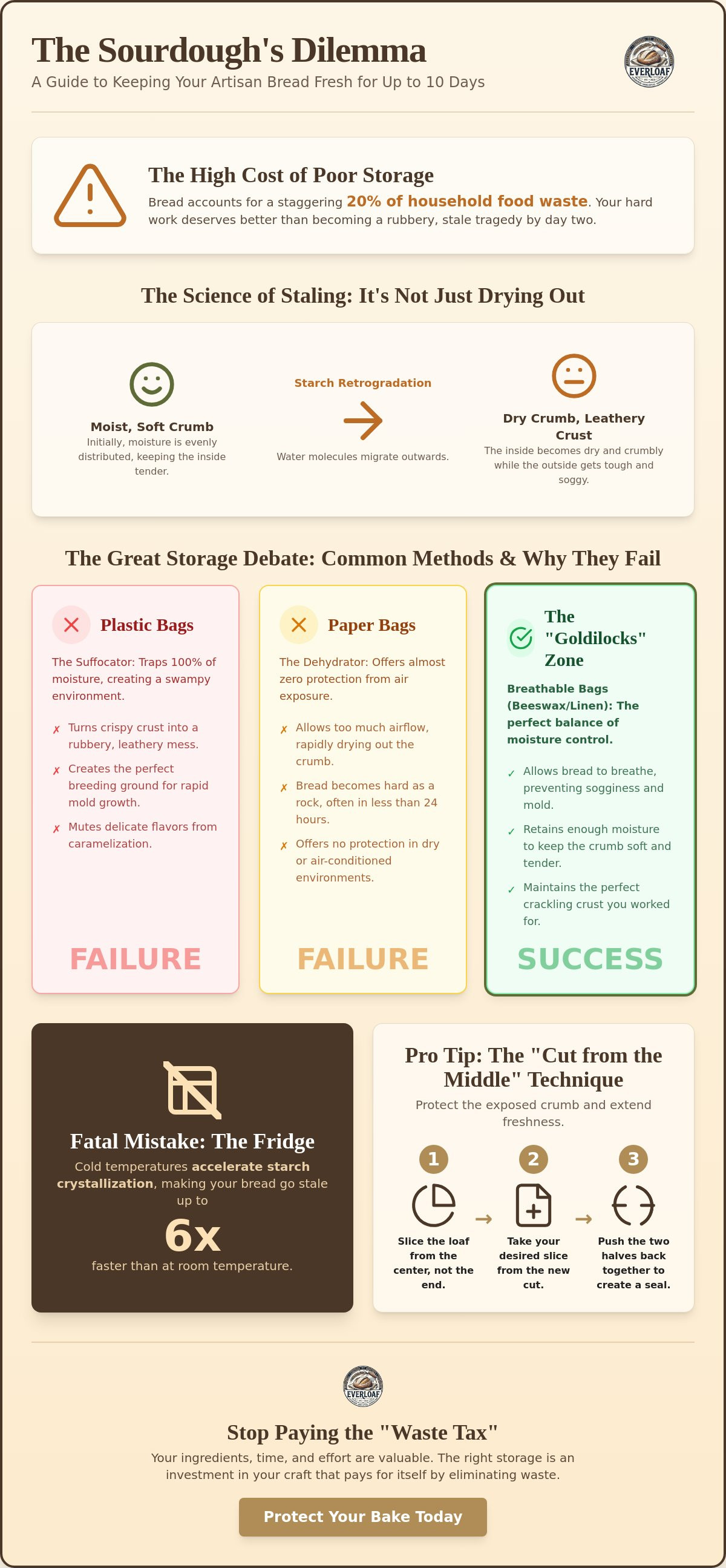
During retrogradation, water molecules migrate from the soft crumb to the hard crust. This leaves the inside dry and the outside leathery. Specialized tools like beeswax cotton bread bags act as a sophisticated climate-control system for your loaf. They manage this specific moisture exchange. They don't just hold the bread; they actively protect its structural integrity and flavor profile.
You face a constant dilemma: stale vs. moldy. Plastic bags trap 100% of moisture. This stops staling but encourages rapid mold growth and ruins the crust. It creates a swampy environment where your bread essentially suffocates. Paper bags allow too much airflow. Your bread turns into a rock in hours. Are bread bags worth it? Absolutely. They provide the "Goldilocks" zone. They let the bread breathe without letting it bleed out all its essential hydration. Your sourdough deserves a home that respects its craft.
The Retrogradation Trap: Why the Fridge is Your Enemy
Many well-meaning bakers toss their loaves in the fridge to "save" them. This is a fatal mistake for artisan bread. Cold temperatures actually accelerate the crystallization of starch molecules. Your bread will go stale six times faster in the refrigerator than on the kitchen counter. Never store fresh artisan bread in the fridge. If you want to understand the finer details of how environment impacts your loaf, check out our guide on How Humidity Affects Bread Storage. Keep your bread at room temperature to maintain its spirit.
Crumb vs. Crust: The Impossible Balancing Act
The perfect loaf has two conflicting needs. The crumb wants to stay hydrated and soft. The crust wants to stay dry and crackly. Plastic suffocates the crust, making it rubbery. Paper dehydrates the crumb, making it crumbly. Bread bags solve this by facilitating evaporative cooling. Evaporative cooling is the process where a controlled amount of moisture escapes through a semi-permeable barrier to keep the surface dry while the interior stays moist. It's the only way to maintain that bakery-fresh texture for more than a single day. When you consider the effort you put into your bake, asking if are bread bags worth it becomes a question of respecting your own hard work.
Plastic vs. Paper vs. Linen: The Great Storage Debate
Choosing a home for your artisan loaf is a high-stakes decision. You spent 24 hours crafting the perfect boule. Don't let a cheap storage choice ruin it in one night. Plastic is the default for many bakers. It's also a tragedy for your crust. It traps every drop of moisture inside. This creates a "greenhouse effect" that turns your crackling sourdough into a rubbery, leathery mess. Worse, that trapped humidity is a playground for mold. You'll find yourself tossing half a loaf by day three.
Paper sits at the other end of the spectrum. It offers zero protection against dehydration. It allows too much airflow. This turns your boule into a literal brick in under 24 hours. Linen is often called the best way to store bread by traditionalists. It's breathable. It's sustainable. However, it requires a very specific environment to succeed. If your kitchen isn't naturally humid, linen will fail you. We need a middle ground. We need a solution that breathes like linen but protects like wax. When you see how these common methods fail, you realize why the question "are bread bags worth it" is so common among serious enthusiasts.
The Plastic Problem: Why "Fresh" Isn’t Actually Fresh
Inside a plastic Ziploc, your bread "sweats." This moisture migration ruins the complex flavor profile of the crust. The delicate notes of caramelization disappear. You're left with a bland, soggy product. Plastic suffocates the soul of the loaf. If you're tired of the plastic cycle, consider Reusable Bread Bags for Homemade Bread as a smarter, more sustainable alternative. Your bread deserves to breathe, not suffocate.
The Linen Limitation: When "Traditional" Isn’t Enough
Linen works wonders in humid European bakeries. It struggles in modern, air-conditioned American homes. Raw fabric has a "wicking" effect. It pulls moisture out of the loaf and releases it into the dry air. This is why many bakers complain their linen bag made their bread too hard to cut. It creates "bread croutons" instead of a preserved loaf. Finding a breathable yet protective barrier is the only way to escape this cycle of waste. So, are bread bags worth it? If you value your time and your ingredients, the answer is a resounding yes.
Why Beeswax is the Secret to 10-Day Freshness
Beeswax-infused cotton is the "Goldilocks" of bread storage. It strikes a balance that plastic and linen simply cannot reach. Plastic is too wet. Linen is too dry. Pure beeswax is just right. It creates a semi-permeable barrier that mimics the natural properties of the bread itself. This material allows just enough gas to escape while locking in the essential moisture your crumb needs to stay soft. This isn't just a container. It's a climate-controlled vault for your bake. When you experience that first slice on day seven, you'll stop asking if are bread bags worth it.
The secret lies in the wax itself. Pure beeswax possesses natural antimicrobial and antifungal properties. These organic traits help inhibit the growth of mold spores that thrive in the stagnant air of plastic bags. The tactile experience of using these bags is deeply personal. Your sourdough is a product of your hands; its storage should be too. The warmth of your palms softens the wax. This allows you to mold and seal the bag into a custom fit for every unique boule or bâtard. This physical seal provides a level of protection that a loose drawstring cannot match.
The Orvix Difference: Organic Cotton Meets Pure Wax
The foundation of a premium bag is 100% organic cotton. This high-quality base ensures that no synthetic chemicals touch your crust. The infusion process creates a barrier that functions like a "second skin" for your loaf. A beeswax bread bag acts as a secondary crust, protecting the interior crumb from the elements. This synergy between the fabric and the wax prevents the "wicking" effect seen in raw linen. It keeps the hydration where it belongs: inside the bread. For those seeking Pro Tips for Artisan Loaf Longevity, the consensus is clear. The environment you create around the loaf is the most important factor in its survival.
Sustainability as a Performance Feature
We believe in products that endure. A single beeswax cotton bread bag is designed to be washed and reused for over a year. This "buy once" philosophy stands in stark contrast to the endless, wasteful cycle of single-use plastic. Choosing a sustainable solution isn't just about the planet; it's about the performance of your kitchen. You gain a specialized tool that pays for itself by saving loaf after loaf from the bin. If you want to maximize this investment, follow our specific care instructions in The Ultimate Beeswax Bread Bag Guide. Protecting your craft has never been more efficient. So, are bread bags worth it? If you value longevity and quality, the answer is right in your hands.
Calculating the ROI: Are Bread Bags Actually Worth the Investment?
Stop paying the Waste Tax. You pour 24 hours of labor and premium ingredients into every bake. When you toss the last third of a stale loaf, you're throwing away cash. A single artisan sourdough loaf in 2026 costs between $10 and $16. Research shows that bread products account for 20% of the weight of food wasted in homes. If you lose 20% of every loaf, you're literally binning nearly $3 every time you bake. Over a year, that's a small fortune. Are bread bags worth it? The math says yes. It's the difference between a high-yield kitchen and a wasteful one.
The emotional ROI is just as significant. There's a quiet, deep satisfaction in eating perfect toast on day five. It feels like a small victory against the elements. You deserve to enjoy every single slice of the craft you've mastered. Settling for stale ends is a sign of disrespect to your own hard work. It's time to demand more from your kitchen storage.
The "Cost Per Loaf" Breakdown
Think of this as a one-time investment in your craft's future. If your bag saves just four loaves from the bin, it has completely paid for itself. Everything after that is pure profit for your pantry. You also save your most valuable resource: time. Proper storage means you can bake a large batch once a week instead of firing up the oven every two days. You gain the freedom to enjoy your labor without the pressure of a ticking clock. Upgrade your kitchen efficiency with Beeswax Cotton Bread Bags and stop the cycle of waste today.
"I haven’t thrown away a crust in six months!"
Our community is vocal about the results. This isn't just an accessory; it's a standard of care. The Orvix bag has become a staple for enthusiasts who refuse to compromise on quality. It treats your loaf with the reverence it deserves. Our users also report incredible success using the bag for delicate greens and leafy produce. It's a versatile powerhouse that earns its place on your counter every single day. When you see the community consensus, the question of are bread bags worth it disappears. The results speak for themselves in every fresh, hydrated bite.
Beyond the Bag: Pro Tips for Artisan Loaf Longevity
Your loaf is a masterpiece. It deserves a sanctuary. Even with the best storage, your daily habits dictate how long that crumb stays supple. Respecting the craft means following a system that protects the bread from the moment it leaves the oven. If you want to reach that 10-day freshness milestone, follow this essential checklist:
- Cool completely: Never bag a warm loaf. Trapped steam turns a crackling crust into a soggy mess in minutes.
- Cut from the center: Start your first slice in the middle of the boule.
- Rejoin the halves: Push the two cut faces together before placing the loaf in your bag.
- Mind the environment: Store your bread in a cool, dry spot away from direct sunlight and heat-sync appliances like toasters.
- Use a beeswax barrier: Ensure your bag is molded tightly to the bread's shape to minimize air pockets.
The "Cut from the Middle" technique is a game-changer for artisan bread. Traditional slicing starts at the end, exposing a large surface area of the crumb to the air. By cutting the loaf in half and slicing from the center outward, you create two mirrored halves. When you're done, press those two halves back together. This physical seal protects the delicate interior from oxygen. It effectively uses the bread's own crust as a shield. When you combine this method with a semi-permeable beeswax layer, you've created an nearly impenetrable defense against staling.
The Perfect Slice: Why Your Knife Matters
A dull blade is a silent killer for sourdough. It doesn't just make slicing difficult; it destroys the bread's longevity. When you use a blunt edge, you apply downward pressure that crushes the air pockets, or alveoli, within the crumb. This compression forces moisture out and speeds up the staling process. A clean, effortless saw is vital for maintaining loaf integrity. For a deeper look at the tools of the trade, read our Best Knife for Cutting Sourdough Bread guide. We recommend the Everloaf Sourdough Knife to ensure every slice is as perfect as the first. Don't let a bad tool ruin a great bake.
The Final Verdict: Is it Worth it?
We've analyzed the science, the materials, and the math. So, are bread bags worth it? If you bake or buy artisan bread more than once a month, the answer is a resounding yes. You're not just buying a bag; you're investing in the quality of your experience. You're choosing to end the cycle of waste and respect the labor involved in every loaf. Stop settling for leathery crusts and rubbery crumbs. It's time to treat your sourdough with the reverence it deserves. Upgrade your kitchen with the beeswax Bread Bag today and taste the difference that proper storage makes.
Save Every Slice of Your Sourdough
Your artisan bread is a labor of love. It deserves better than a plastic coffin or a dry countertop. We have explored how moisture management is the secret to a 10 day shelf life. You now know that beeswax provides the perfect breathable barrier. It protects the soft crumb while keeping the crust crackling. This isn't just about storage; it's about honoring the craft you have mastered. Don't let another boule go to waste because of insufficient care.
When you consider the science and the financial savings, the answer to are bread bags worth it is a resounding yes. Our bags are crafted from 100% organic cotton and infused with pure, food grade beeswax. They originate from the culinary heart of Lyon, France, bringing professional standards directly to your counter. Stop settling for leathery crusts and rubbery ends. It's time to treat your loaves with the reverence they deserve. Stop wasting your hard-earned loaves—get the Orvix Bread Bag. Every slice should be a victory. Happy baking!
Frequently Asked Questions
Do bread bags actually work better than plastic wrap?
Yes, they outperform plastic by managing moisture exchange. Plastic traps humidity and ruins the crust. A beeswax bag allows the loaf to breathe while protecting the crumb. This superior climate control is why many ask are bread bags worth it. Your sourdough deserves more than a swampy plastic environment.
How long does bread stay fresh in a beeswax bread bag?
Artisan loaves typically stay fresh for up to 10 days. The beeswax creates a protective seal that mimics the bread's own crust. This prevents rapid dehydration and starch crystallization. It ensures your toast on day seven is just as satisfying as the first slice.
Can I use a bread bag for store-bought sliced bread?
You can use them for sliced bread, but remove the plastic first. Store-bought loaves benefit from the antimicrobial properties of the wax. However, the bag is specifically designed for the needs of crusty, artisan boules. It respects the unique structure of sourdough.
Are linen bread bags better than beeswax ones?
Beeswax bags are superior for most modern homes. Linen is too breathable and often dries bread out in air-conditioned kitchens. Beeswax-infused cotton provides a balanced barrier. It keeps the crumb soft without sacrificing the crackling crust you worked so hard to achieve.
How do you clean a beeswax bread bag without ruining the wax?
Wash your bag with cool water and mild soap. Hot water is the enemy of the wax coating. Simply rinse it and let it air dry away from heat sources. This easy routine keeps your specialized tool in peak condition for over a year.
Is a bread box better than a bread bag for sourdough?
A bag is usually better because it molds to the loaf. Bread boxes hold a large volume of air that can dry out a single boule. A bag minimizes oxygen contact. It acts as a secondary skin for your bread's soul.
Can you put a bread bag in the freezer for long-term storage?
Keep your beeswax bags out of the freezer. Sub-zero temperatures make the wax brittle and prone to cracking. Use the bag for countertop storage to maximize daily freshness. For the freezer, stick to airtight wraps that handle the cold.
Why does my bread still go hard in a fabric bag?
Raw fabric often wicks moisture away too quickly. This is the primary flaw of plain linen bags. Beeswax-infused cotton solves this by locking hydration inside. If your bread is still hard, ensure you are molding the bag tightly to the loaf's surface.


