
Most People Put Sourdough in the Fridge. Grandma Knew Better.
The simple counter-cloth secret that kept her artisan crust crackling, and her Thanksgiving rolls pillow-soft through Sunday.
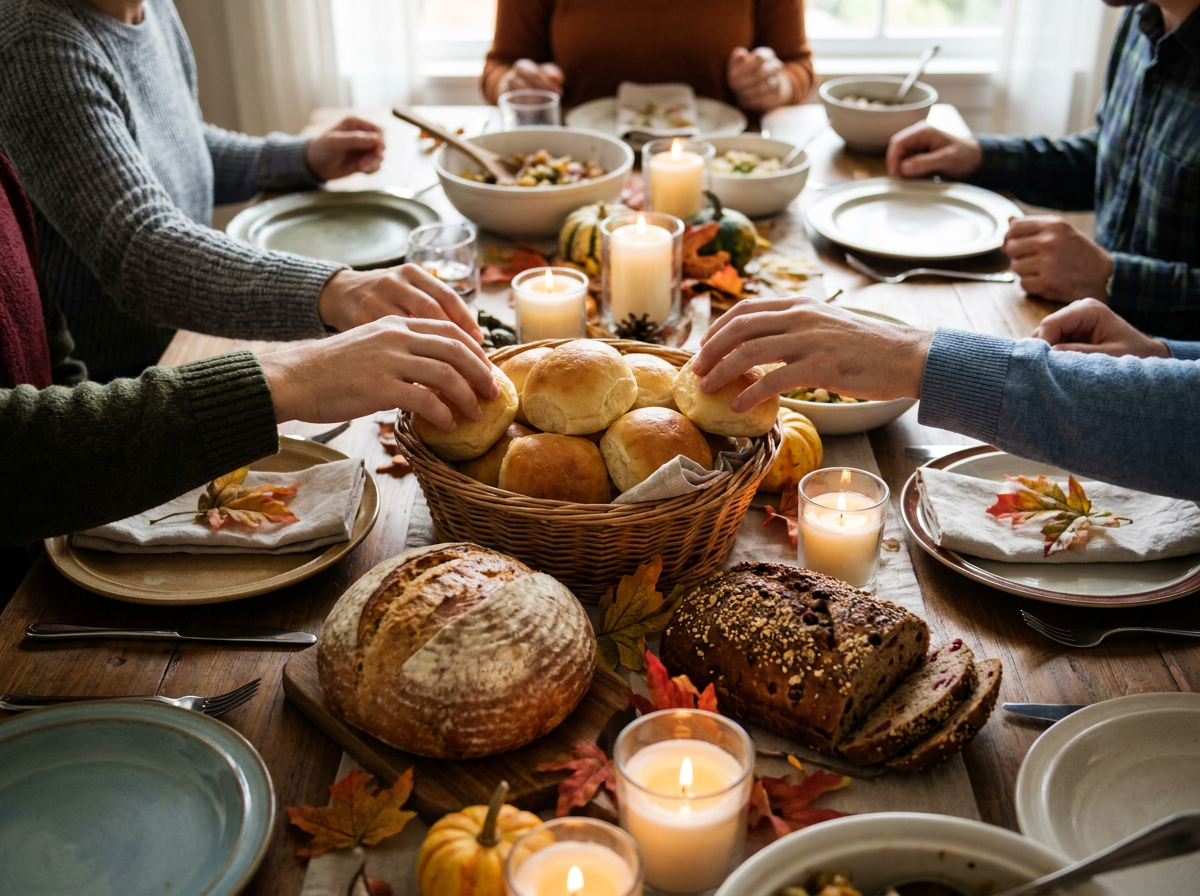
There is a moment every home baker knows too well.
You pull a gorgeous, golden-brown loaf of sourdough out of the Dutch oven. The blistered crust crackles on the cooling rack. The kitchen smells like toasted wheat.
You slice into it, eat half with dinner, and then face the million-dollar question:
How do I keep this loaf from going bad tomorrow?
If you are like most people, your instinct is to wrap that sourdough tight and shove it in the refrigerator.
It feels logical. Cold preserves milk, meat, and vegetables. Why wouldn't it preserve bread?
Because in the baking world, the refrigerator is actually the worst place in the entire house for a crusty loaf of bread.
The Real Reason the Fridge Destroys Sourdough
When bread goes into the fridge, the cold temperature (usually around 38°F to 40°F) does something cruel.
It triggers a chemical process called retrogradation.
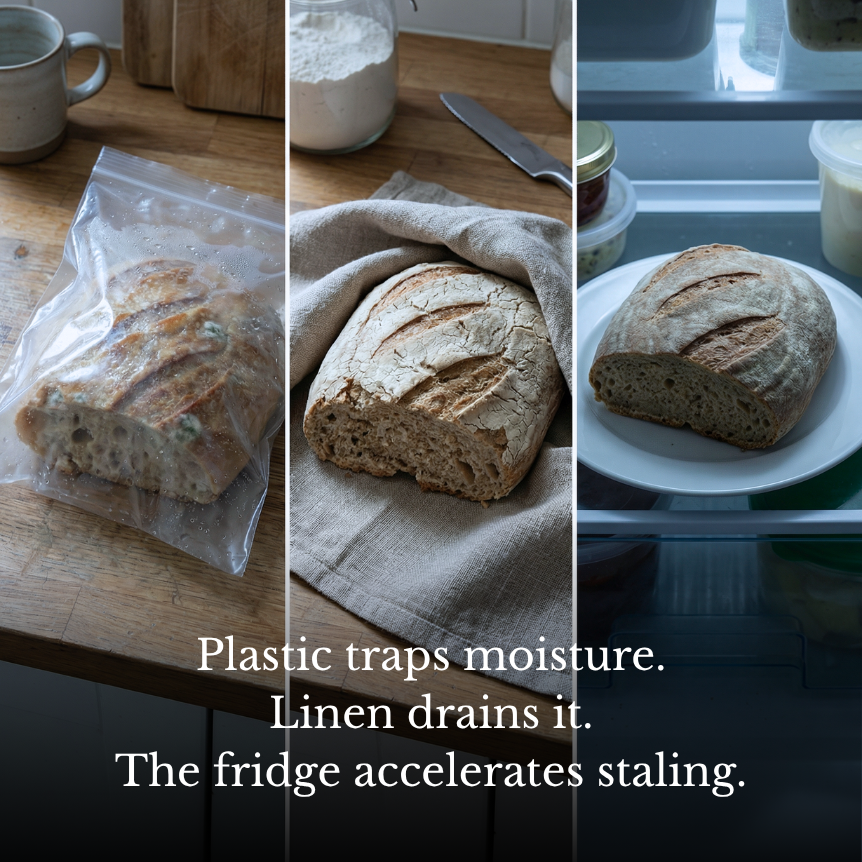
The gelatinized starches that gave your sourdough its tender, airy crumb start to rapidly recrystallize. In plain English: the cold forces moisture out of the starch molecules and makes the bread go stale up to six times faster than if you had left it on the kitchen counter.
Worse, that forced-out moisture migrates directly into the crust.
Within 24 hours, that crackling, blistered sourdough crust you worked so hard for turns leathery and tough, while the inside turns chalky and dry.
So what about plastic bags?
Plastic creates the opposite disaster. Freshly baked artisan bread breathes moisture for days. A sealed plastic bag traps that humidity inside. Within hours, condensation turns your crisp crust into a damp, rubbery sponge. By day three, green mold moves in.
And paper bags? They let all the moisture escape at once, turning a great loaf into dry cardboard by the next morning.
Professional bakers know this.
And my grandmother knew it too.
Grandma Never Touched the Fridge
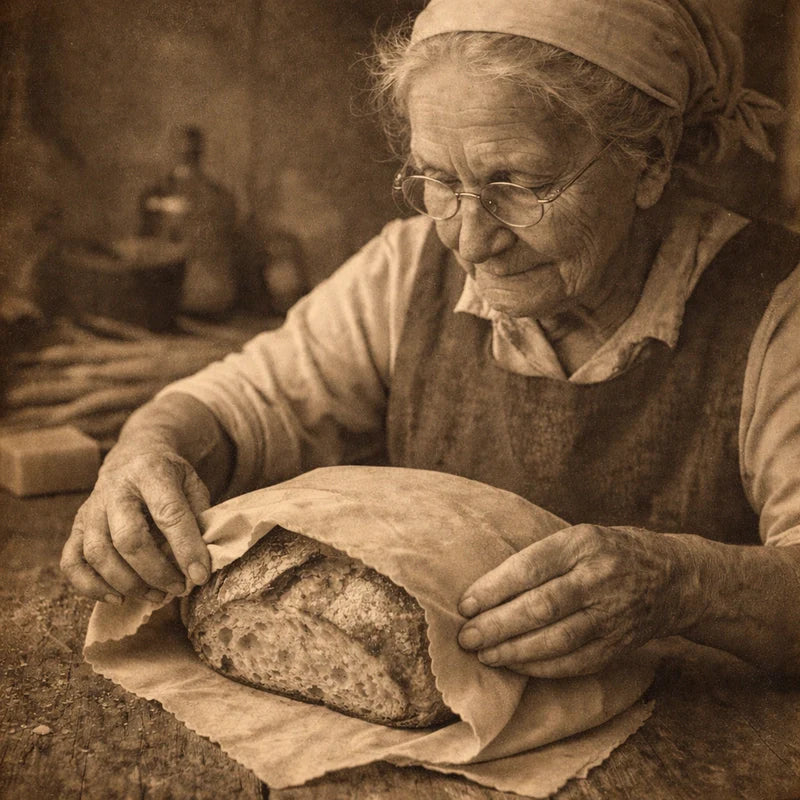
Grandma was famous for her bread.
She kept a sourdough starter alive on her counter for over thirty years. And when Thanksgiving rolled around, her kitchen turned into an absolute bakery.
She would bake big, crusty sourdough boules for table bread, sweet cranberry loaves for breakfast, and two massive pans of golden dinner rolls for Thanksgiving dinner.
And here is the thing:
Grandma never refrigerated a single loaf of sourdough.
She never owned a roll of plastic wrap.
Instead, she wrapped every loaf in a simple, breathable cloth and left it right on the counter.
And no, that cloth was not some lost antique or secret family heirloom that died with her. As it turns out, the exact same breathable cloth method is actually available for anyone to use today.
(Though as I learned the hard way, you have to be careful, because most modern copies sold online are complete fakes that do more harm than good.)
Back then, I never paid attention. Her sourdough stayed crackling-crisp on the outside and tender on the inside for days. Her Thanksgiving dinner rolls were still pillow-soft on Sunday morning when everyone gathered to build leftover turkey sandwiches.
I just assumed she had some secret grandmother magic in her hands.
Until last Thanksgiving, when my own holiday baking ended in complete disaster.
Two Days of Baking for One Meal
Last November, I spent two full days in the kitchen getting ready for family dinner.
Wednesday night, I was up past midnight with flour all over my sleeves. Two loaves of rustic sourdough. A double batch of buttery dinner rolls. The cranberry bread my kids fight over all year.
Thursday dinner was perfection.
Friday was the day I had been waiting for: leftover sandwich day. The best meal of the entire holiday weekend.
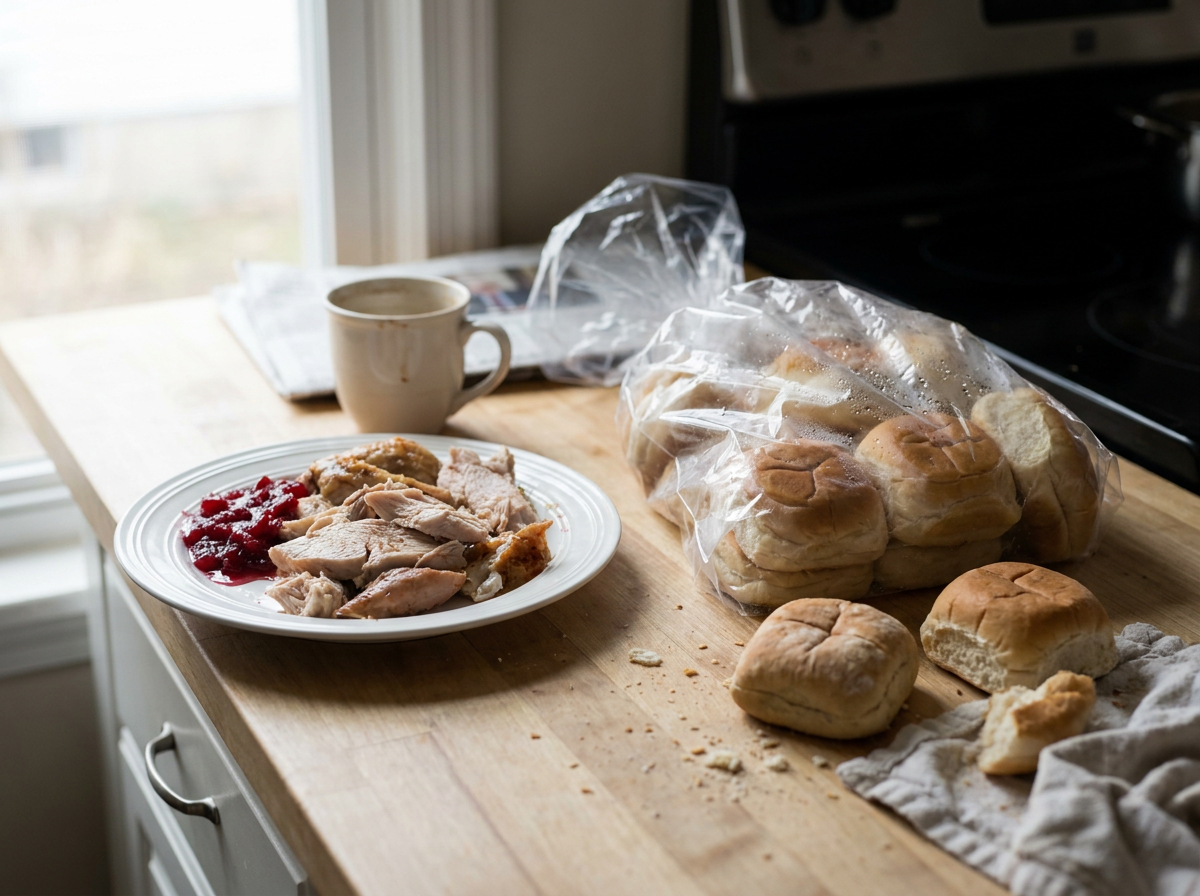
I walked into the kitchen, opened the bread bin, and reached for the loaves I had carefully sealed in plastic bags.
The sourdough crust was limp and rubbery. The dinner rolls were sweaty and stuck together in clumps. By Saturday morning, green spots were already spreading across the bottom of the cranberry bread.
Two full days of work. Half of it thrown straight into the trash can.
I was standing over the garbage can, dumping ruined rolls, when my aunt walked into the kitchen, shook her head, and said:
"Your grandmother would never have thrown that out."
I looked at her. "What did she do, Aunt Claire? Put them in the freezer?"
My aunt laughed.
"She wrapped everything in her beeswax cloth," she said. "Every single loaf, as soon as it cooled down on the counter."
I had seen that cloth sitting on her counter a hundred times. I always assumed it was just for decoration.
It turned out to be the entire secret to keeping crust crisp and crumb tender for over a week without a single slice going to waste.
If you are baking for the holidays this year, here is what you need to know before you pull another loaf out of the oven:
- The breathable physics secret: Why a natural beeswax lining lets bread exhale moisture at the exact rate it bakes, keeping the crust crisp without letting the crumb dry into cardboard.
- The cheap wax trap: Why 90% of the "beeswax bread bags" sold online crack at the folds after two washes, and the simple way to spot fake petroleum-coated imposters.
- The four-generation French baker connection: How an artisan baker from Lyon brought his great-grandmother's triple-infused cotton cloth back to life so any home baker can protect their loaves.
- The holiday payoff: How to make sure every roll, baguette, and sourdough boule you bake this Thanksgiving stays bakery-fresh straight through Sunday's leftover sandwiches.
The Cloth on the Counter
Fresh artisan bread never stops releasing moisture as it cools and sits.
Plastic seals that moisture in, creating a private sauna that destroys the crust and invites mold.
The refrigerator forces moisture out through rapid retrogradation.
Paper lets everything evaporate until your loaf feels like a brick.
Beeswax cloth does what none of those methods can.
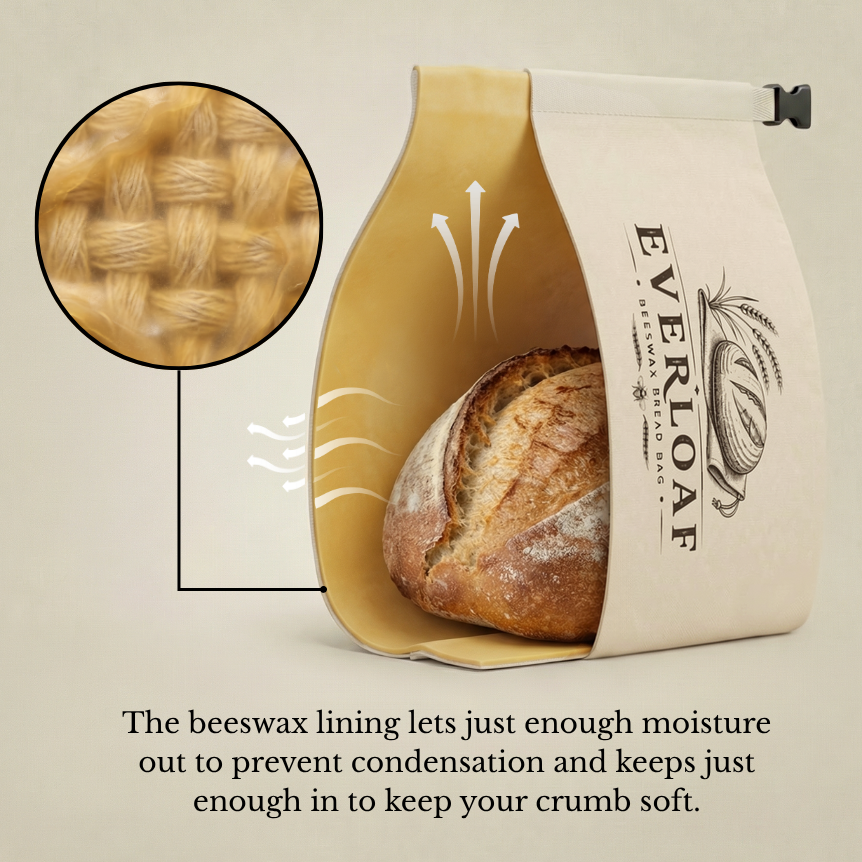
Natural beeswax is semi-permeable. It breathes slowly, at roughly the exact rate fresh bread naturally off-gasses moisture.
That means excess humidity escapes before it can turn your crust soggy, while enough moisture stays locked inside the crumb to keep it soft and chewable.
Mold spores cannot get the humid breeding ground they need.
That is how Grandma's rolls lasted until Sunday, and how her sourdough boules sat on the counter all week without drying out.
When I realized what I had been missing, I immediately went online to buy a beeswax bread bag.
That was when I learned a painful lesson: not all beeswax bags are created equal.
Why Most Beeswax Bags Are a Waste of Money
A lot of companies saw the resurgence in sourdough baking and rushed cheap imitations to market.
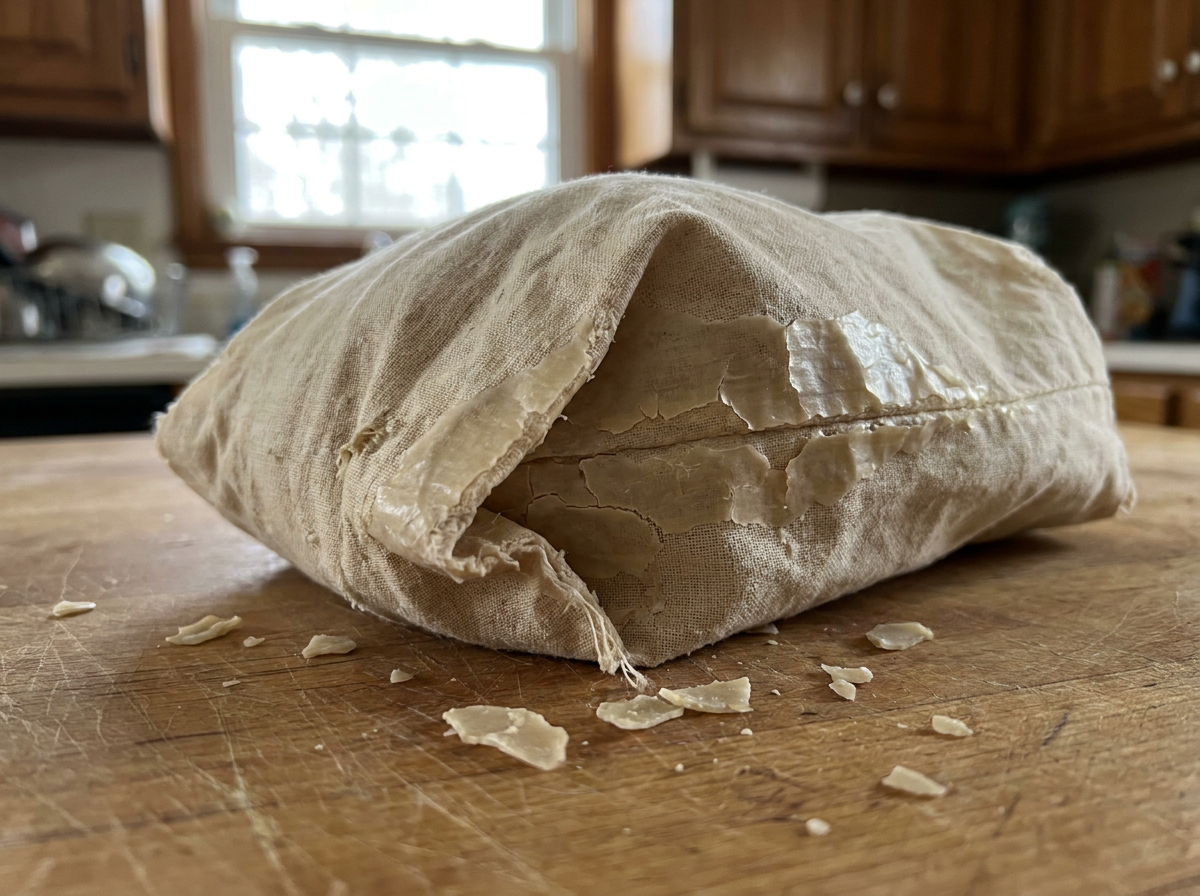
Most of the beeswax bags you find online receive a single, paper-thin spray coating of wax over cheap cotton. The first time you fold the bag, the wax cracks along the crease. After two rinses in cool water, the coating flakes off completely.
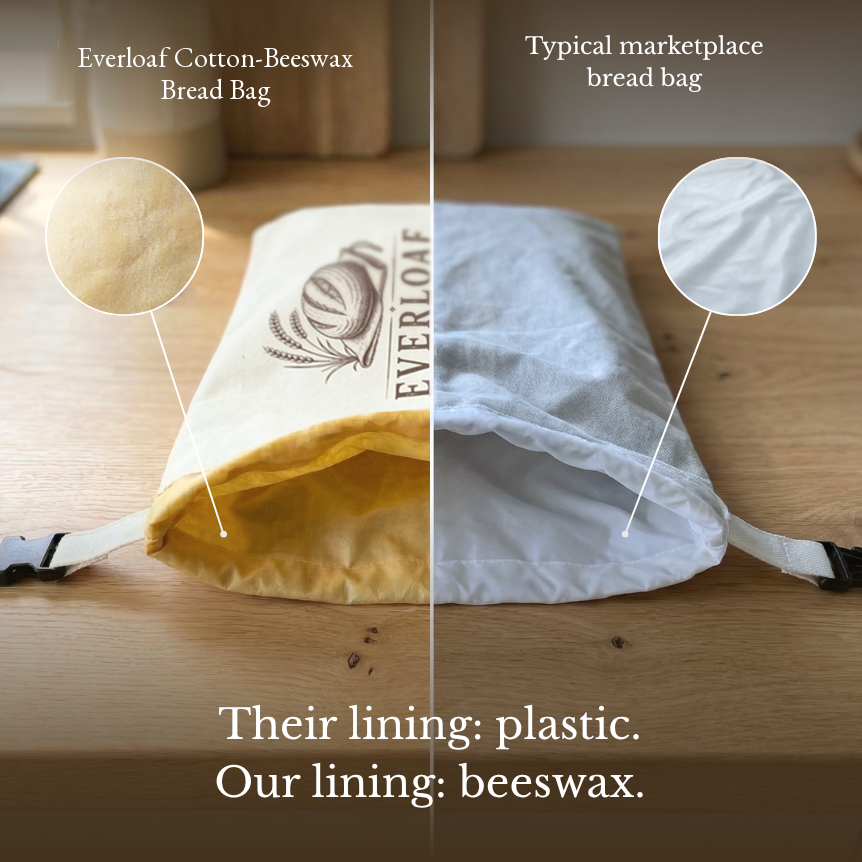
Even worse, several popular brands use synthetic paraffin wax derived from petroleum, then label it as "natural wrap" to cut manufacturing costs.
Those cheap bags do not breathe properly. They suffocate the loaf almost as badly as plastic, leaving you right back where you started.
That is why so many home bakers try a wax bag once, get frustrated, and go back to throwing half their bread away.
The bag I finally found is made completely differently.
Made the Way Grandma's Was
It comes from Everloaf, a small family company founded by Adam.
Adam grew up in Lyon, France, in a family that ran artisan bakeries across four generations. In his family's bakery, wrapping daily boules and batards in heavy beeswax cloth was not a trendy kitchen hack. It was standard practice for over a century.
When Adam moved to America, he could not find a single bread bag that matched the quality his grandmother used in France.
So he decided to make them properly.
Unlike mass-produced bags that get a light surface spray, Everloaf bags start with heavyweight organic cotton.
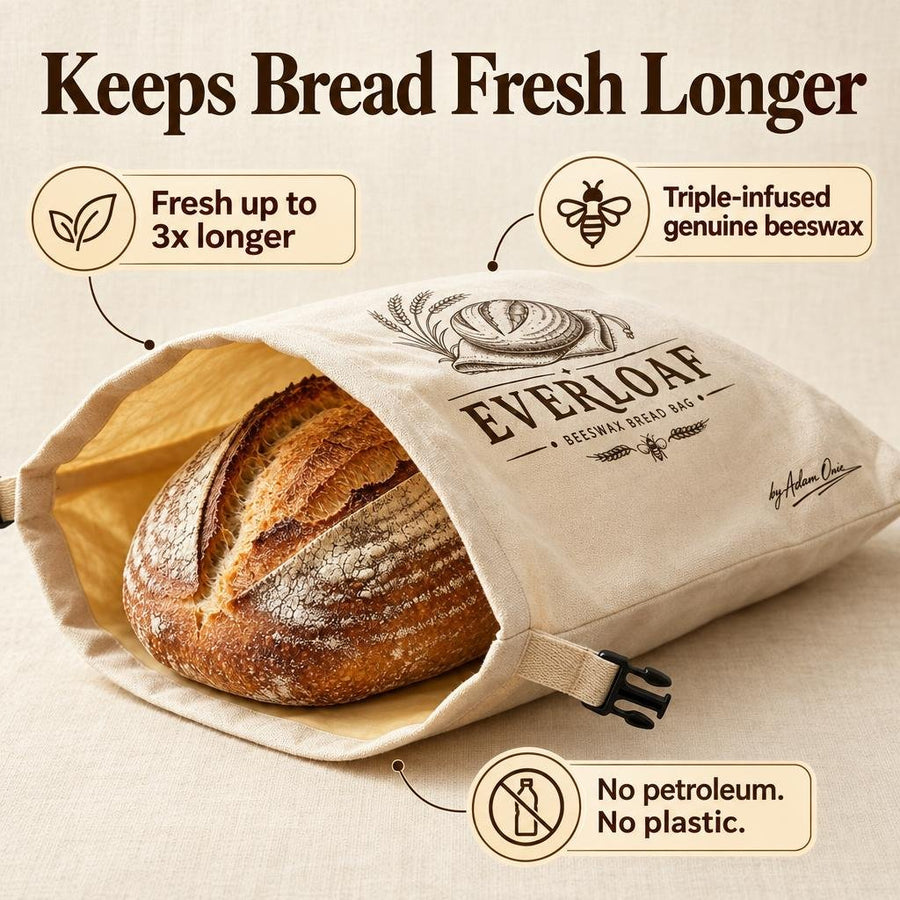
The cotton is immersed and triple-infused with 100% pure, natural beeswax.
The wax penetrates completely through the cotton fibers rather than sitting as a brittle layer on top. You can fold it, roll it, and rinse it in cold water hundreds of times without the lining cracking, flaking, or peeling.
There is zero plastic. Zero petroleum. Zero chemical coatings. Just heavy organic cotton and pure natural beeswax, made the way European bakers have made them for generations.
At 13 by 17 inches, it is generously sized to hold large sourdough boules, oval batards, a dozen holiday dinner rolls, or long loaves of cranberry and banana bread.
What Happened When I Put It to the Test
I decided to test the Everloaf bag the weekend before Thanksgiving with a fresh sourdough boule from our local artisan bakery.
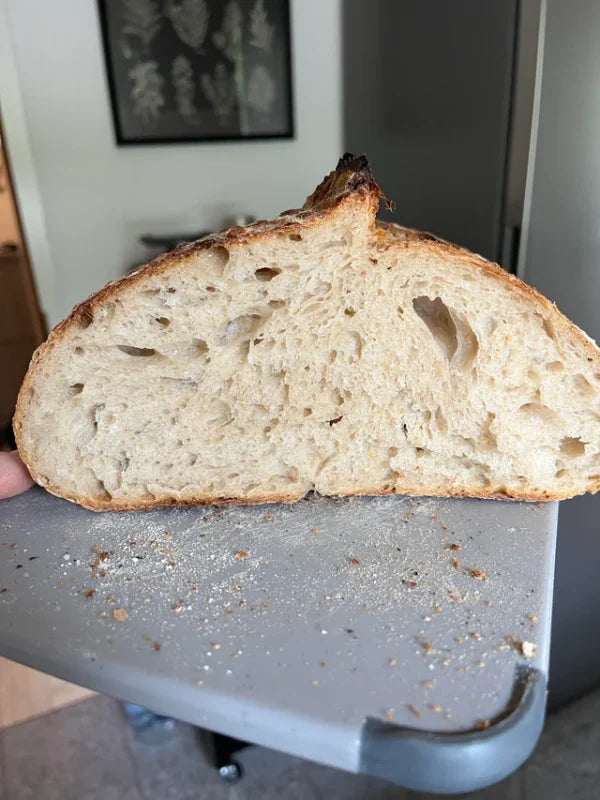
By Monday morning, the crust still crackled under a knife.
By Wednesday, five days after baking, the crumb was still soft, tender, and moist. That is usually the day I am scraping mold off bread or tossing it in the compost.
By Friday, seven days in, it was still making incredible toast.
Other home bakers and sourdough enthusiasts report the exact same experience:
"The bread stayed fresh for 9 days on our counter. The crust kept its texture and the inside stayed wonderfully soft. Really impressed!"
"After two weeks the crust and bread were still great. No mold at all. I am ordering three more as Christmas gifts for my baking friends."
"How did I live my life without these beeswax bags before now? No more throwing out half-eaten sourdough loaves!"
The Holiday Host Gift Nobody Else Brings
Here is an unexpected bonus for the holidays:
If you are visiting family or friends for Thanksgiving, almost every home baker or host faces the exact same bread waste problem.
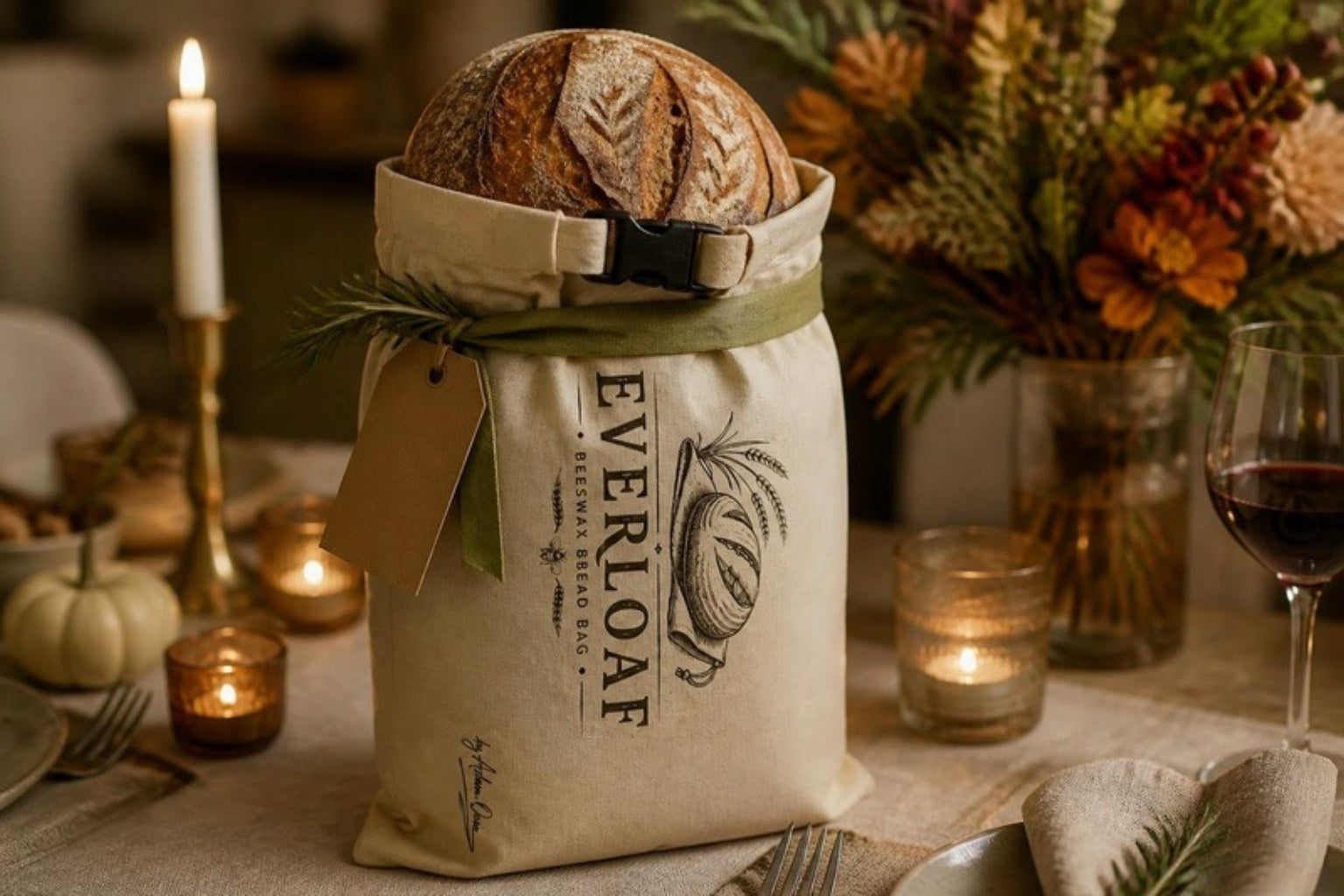
Instead of bringing another predictable bottle of wine, I now bring an Everloaf bag with a fresh loaf of sourdough or holiday bread tucked inside.
It looks gorgeous on a kitchen counter, it is completely practical, and it saves your host from having to throw away half their holiday baking on Saturday morning. It is a gift people use every single week of the year.
Quick Answers from the Kitchen Team
Will my bread smell or taste like beeswax?
No. Pure natural beeswax has a very mild, pleasant honey aroma when you first open the package, but it does not transfer any scent or flavor to your bread or baked goods.
Will my large sourdough boules fit?
Yes. At 13 x 17 inches, the Everloaf bag is deliberately designed for oversized artisan loaves, Dutch oven boules, sandwich loaves, and full batches of dinner rolls.
How do I clean it?
Simply shake out crumbs between uses. If needed, rinse inside and out with cool water and mild dish soap, then let it air dry on your dish rack. Because the beeswax is triple-infused, it will not wash out.
What if it does not work for my baking?
Everloaf covers every order with a 30-Day Fresh Bread Guarantee. If your bread does not stay noticeably fresher and softer for days longer on your counter, email the support team for a full refund, no questions asked.
Before You Bake for Thanksgiving: A Note on Availability
Because each Everloaf bag is handcrafted using natural beeswax and organic cotton rather than stamped out in a massive overseas plastic factory, batch sizes are strictly limited.
Every bag in the current batch is triple-infused by hand, and once it is claimed, the next batch takes time to cure.
With holiday baking kicking into high gear across the country, batches sell out rapidly every November. If you want your bag on your counter in time for Thanksgiving dinner, be sure to claim it before the current holiday batch is spoken for.
And remember: you are fully protected by the 30-Day Fresh Bread Guarantee. Put it to the test on your Wednesday prep, your Thanksgiving table bread, and your Friday leftover sandwiches. If it does not keep your bread fresher for days longer, you do not pay a dime.
Check Holiday Availability & Claim Your Everloaf Bag
- Keeps holiday bread fresh for 7 to 9+ days
- Protects sourdough crust crispness without drying the crumb
- Handcrafted with heavyweight organic cotton and triple-infused pure beeswax
- Generous 13 x 17 inch size fits large boules and dinner rolls
- Backed by the 30-Day Money-Back Guarantee