Why Grandma Swatted My Hand Away When I Reached For The Plastic Wrap (And The Century-Old French Secret Keeping Bread Fresh For 7 Days)
If your homemade sourdough turns into leathery rubber in plastic by Day 2, grows green mold by Day 4, or dries out on the counter into a rock-hard crouton you could drive a nail with, you are not alone. Here is the food biology behind the Bread Storage Paradox, and the simple century-old kitchen remedy keeping artisanal loaves soft and mold-free all week long.
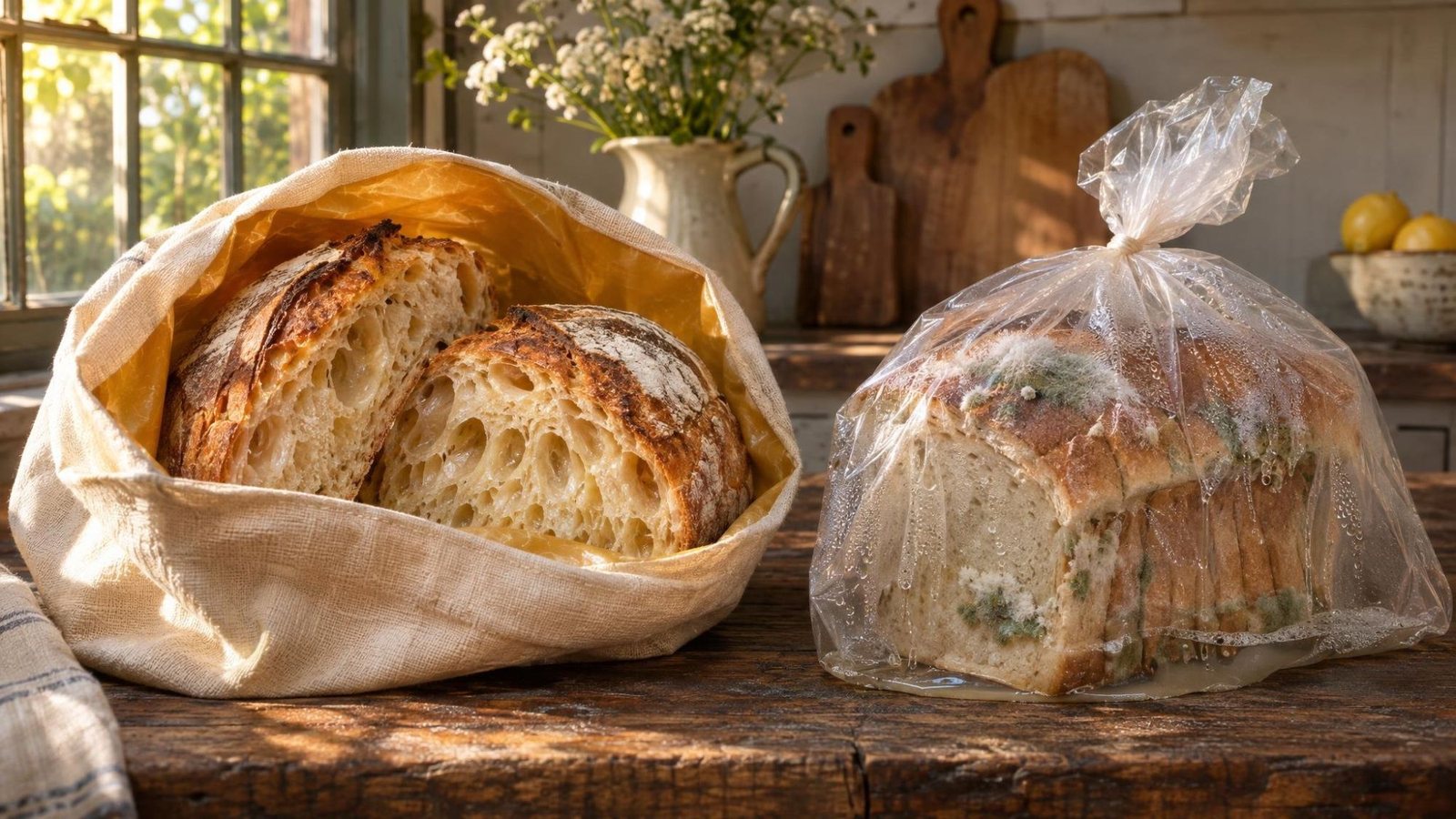
"You're Drowning The Loaf"
When I was twelve years old, I tried to help my grandmother clean up the kitchen after Sunday dinner.
She had just pulled two round sourdough loaves from the oven. The kitchen was still warm, smelling of toasted wheat and yeast.
I grabbed a clear plastic bread bag from the pantry drawer, opened it wide, and went to slide the remaining half of her fresh loaf inside.
Before the crust even touched the plastic rim, Grandma swatted my hand away.
"Stop that right now," she snapped, pulling the loaf back toward her apron. "You're drowning the loaf."
I pulled my hand back, confused. In our house, everything went into plastic. Bread, bagels, sandwich loaves, celery. Plastic was clean. Plastic was what everyone used.
"Store bread is dead bread, honey," she told me, wrapping her loaf in a thick, honey-scented cloth and pressing the corners with warm hands. "That's why it can sit in a plastic bag on a grocery shelf for four weeks and nothing happens. Real bread is alive. You put a fresh loaf in plastic and you're suffocating it in its own sweat. Tomorrow morning that bag will be crying on the inside. That's your crust dying."
She set that wrapped loaf right on the wooden counter.
Six days later, the crust still had an audible crackle when you pressed your thumb into it. The inside crumb was soft, springy, and smelled like sweet grain. Not a single green spore of mold.
For twenty years, I forgot that lesson.
Then in 2021, I started baking my own sourdough.
I spent 36 hours feeding my sourdough starter, measuring flour on a gram scale, doing stretch-and-folds between work calls, and baking beautiful, blistered boules in a 500-degree Dutch oven.
And every single week, the exact same tragedy played out on my counter.
If I sealed the loaf in a plastic bag, the crunchy crust turned as chewy as a bicycle inner tube by Day 2, and green fuzzy mold bloomed along the bottom by Day 4.
And if I tried leaving it on a cutting board, inside a paper bag, or in a metal bread box to let it breathe? By Wednesday morning the loaf had dried out into a rock-hard giant crouton. Slicing it felt like sawing through concrete, and biting into it tore up the roof of your mouth.
It felt like there was no winning: either a soggy mold sponge in plastic, or a tooth-shattering rock on the counter.
Standing over the kitchen compost bin on Wednesday morning, throwing three days of baking labor into the trash, Grandma's voice came rushing back:
"You're drowning the loaf."
Plastic Destroys Real Bread In Two Ways At Once
Most people assume bread goes bad simply because it gets old.
That is only half the story.
Bread goes bad because modern storage forces it into an impossible moisture trap.
When you slide fresh bread into a plastic bag, you trigger two destructive reactions at the exact same moment:
- The Natural Moisture Migration: A fresh loaf of bread is roughly 45 percent water by weight when it leaves the oven. For days after baking, that moisture slowly travels from the soft inner crumb outward through the crust into the air.
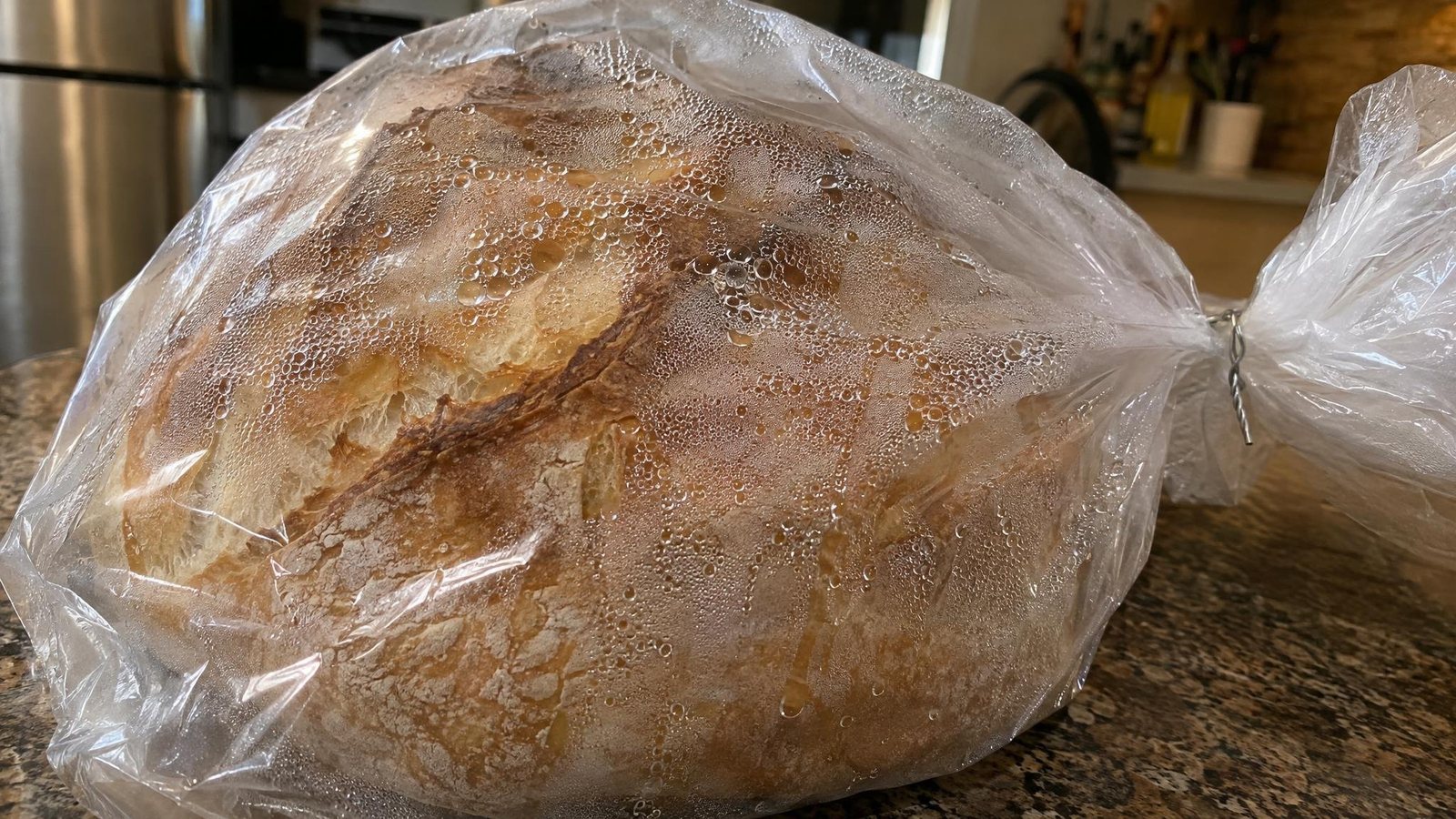
- The Greenhouse Trap: When bread is sealed in plastic, that evaporating water vapor has nowhere to go. It hits the impermeable plastic barrier, condenses into microscopic water droplets, and pools right back onto the surface of the loaf.
Within 24 hours, that trapped moisture turns your crisp, golden crust soft, leathery, and wet.
Within 48 to 72 hours, those trapped droplets create a warm, humid jungle inside the bag. Invisible mold spores floating in every kitchen air draft find that damp starch and explode into green and white fuzzy patches.
This is why artisan bread sealed in plastic often molds faster than bread left sitting completely open on a cutting board. You are not protecting the loaf, you are suffocating it.
Why The Refrigerator Makes Bread Go Stale Up To 6x Faster
When people notice their bread molding in plastic, their immediate instinct is to put the loaf in the refrigerator.
I did this for three years. It turns out to be the single worst move you can make.
Think of bread starch like a wet kitchen sponge. When starch cools down inside the cold air of a refrigerator, that sponge violently wrings itself out. The starch molecules realign, recrystallize, and push moisture away from the crumb.
Food scientists call this process starch retrogradation.
Studies show this crystallization happens up to six times faster at temperatures between 35°F and 40°F, which is the exact temperature range inside your home refrigerator.
The fridge slows mold, but it makes the crumb go stale up to six times faster. You trade mold for a crumb as dry and crumbly as sand.
So what are your real options?
Common Bread Storage Methods Breakdown
| Storage Method | What Happens to the Crust | What Happens to the Crumb | Mold Risk |
|---|---|---|---|
| Plastic Bag | Turns soggy and leathery in 24 hours | Stays soft initially, then gets gummy | High (sprouts mold in 48 to 72 hours) |
| Paper Bag | Stays crisp for 12 hours | Dries out into a rock-hard brick | Low (dries out before mold can grow) |
| The Refrigerator | Rubber-like texture | Stales up to 6x faster, turning dry and sandy | Very low |
| Countertop Bread Box | Loses crispness and gets limp | Dries out unevenly | Medium (traps moisture in dark corners) |
| Beeswax Breathable Bag | Keeps a crisp, crackling crust | Keeps its natural moisture and spring | Low (excess moisture vents out instead of pooling) |

What French Bakers Knew Generations Ago
For over a century, European baking families in Lyon and Paris never used plastic bags or metal bread boxes.
They wrapped their bread in natural beeswax cloth.
Beeswax creates a semi-breathable membrane. It allows excess moisture to exhale slowly at the exact rate the loaf releases it, preventing the soggy greenhouse effect.
At the same time, it shields the crumb from dry room air, preventing the loaf from drying out.
The crust stays crisp. The crumb stays tender. And without a humid puddle of water on the crust, mold spores struggle to take root.
The Upgrade From Grandma's Cloth To A Structured Bag
Grandma's old method used loose squares of wax-coated cloth.
While the cloth worked, anyone who has ever tried wrapping a large 900-gram round sourdough boule with a flat beeswax wrap knows the headache:
- The corners constantly pop loose on the counter.
- Cold wax gets stiff in winter and refuses to stick to itself.
- Sharp, crusty edges poke holes right through the cloth.
- And when crumbs get ground into the folds, you cannot scrub them clean without scraping off the wax coating.
That is where The Everloaf Bread Bag completely reimagined the heritage remedy.
Instead of a clumsy flat wrap or a flimsy single-use bag, Everloaf engineered a triple-infused artisan bread bag:
- Heavy-Gauge Organic Cotton Canvas: Heavyweight organic cotton that blocks kitchen dust, drafts, and ambient light.
- Deep Heat-Infused Wax Core: Pure, genuine beeswax soaked deep into the cotton three separate times, to keep bread fresh without suffocating it.

Why Deep Heat-Infusion Solves The #1 Problem With Beeswax
Search "beeswax bread bag" on Amazon and you will find dozens of cheap $12 options.
Most of those budget bags use thin fabric with a single light spray of wax on the surface. Some are not even real beeswax at all: they use petroleum-based coatings or hidden plastic linings that do not breathe, and act just like cheap plastic.
That sprayed-on coating cracks along the folds within days and washes off the first time you rinse it. You are left with a plain cotton bag that does nothing for your bread.
Everloaf soaks pure beeswax deep into heavyweight organic cotton three separate times, so it won't crack, chip, or wash off.
With Everloaf, cleaning takes thirty seconds: turn the bag inside out, shake out loose crumbs, wipe it down with a damp cloth and a little mild soap, and hang it to dry. Just avoid hot water, which can melt the beeswax. The wax is infused deep into the cotton fibers, so it never flakes off into your bread.
It stays completely hygienic and lasts for years of baking.
The 7-Day Kitchen Counter Test
To see if Grandma's memory held up to scientific scrutiny, I ran a direct side-by-side experiment on my own kitchen counter.
I baked identical 800-gram sourdough loaves from the exact same batch of dough. They baked in the same Dutch oven, cooled on the same wire rack for two hours, and were sliced down the middle.
I stored the loaves using four different common kitchen methods.
The 7-Day Bread Storage Comparison
| Storage Method | Day 1 (Fresh) | Day 3 (Mid-Week) | Day 5 (The Critical Test) | Day 7 (Final Verdict) |
|---|---|---|---|---|
| Clear Plastic Zip Bag | Crust softens slightly after 4 hours. Crumb soft. | Crust is completely soggy and rubbery. Damp condensation on the bag floor. | White and blue mold spores visible along the cut surface. Thrown in compost. | Spoiled. Completely inedible. |
| Brown Paper Bakery Bag | Crust stays crisp. Crumb soft. | Crust is hard. Crumb is noticeably dry and crumbling. | Loaf has turned rock-hard. Crust needs a serrated saw. | Like a brick. Cannot slice without it breaking apart. |
| Traditional Metal Bread Box | Crust stays crisp. Crumb soft. | Crust losing crispness. Loaf is somewhat dry on the cut face. | Crust is leathery. Crumb is drying out. Faint stale smell inside the box. | Stale and dry. Only good for croutons or breadcrumbs. |
| Everloaf Beeswax Bread Bag | Crust crackles cleanly. Crumb soft and tender. | Crust keeps an audible crunch. Crumb stays springy and moist. | Crust still crisp. No mold. Crumb slices easily for sandwiches. | Crust still golden and firm. Crumb moist and fresh. No mold spots. |
On Day 7, the loaf kept in the Everloaf bag made two warm slices of sourdough toast with butter.
The crust still had that gentle crunch. The center crumb tore with that airy, custard-like stretch that bakers spend months trying to master.
I did not throw away a single crumb.

The Weekly Bread Math
Whether you bake your own sourdough or buy artisan loaves from the bakery, bread waste adds up shockingly fast:
- A $7 to $9 artisan loaf from your local bakery or farmers market.
- $3 to $4 worth of bread thrown into the trash or compost every single week.
- $150 to $200 per year literally wasted because of improper storage.
- Over 50 single-use plastic bags tossed into landfills every year.
Because the Everloaf bag keeps your bread good right down to the final heel, it pays for itself within about two months simply through the bread you actually eat instead of throwing away.
Real Reviews From Everloaf Customers
"How have I lived my life without these beeswax bags before now? They are amazing at keeping breads soft. No more stale bread for us! Thank you!!"
"It does what it says it will do. Keep my bread fresher, longer. It works best on sourdough breads than white bread."
"The bag is well made. The clasp closure keeps the bag from opening. It is great for keeping artisan breads fresh."
"My homemade bread stays soft and moist for so much longer!"
Everloaf Multi-Pack Options
Everloaf makes their bread bags in small batches using pure beeswax and heavyweight organic cotton.
Why are these offered in multi-packs?
Because serious home bakers and bread lovers never have just one loaf on hand. One bag holds your active, daily-sliced sourdough on the counter, while the second holds your sandwich loaf, baguette, or fresh weekend bake. (Or keep one for your kitchen and gift the second to a fellow baker who is tired of moldy bread.)
Right now, readers can claim multi-pack pricing with up to 50% in savings:
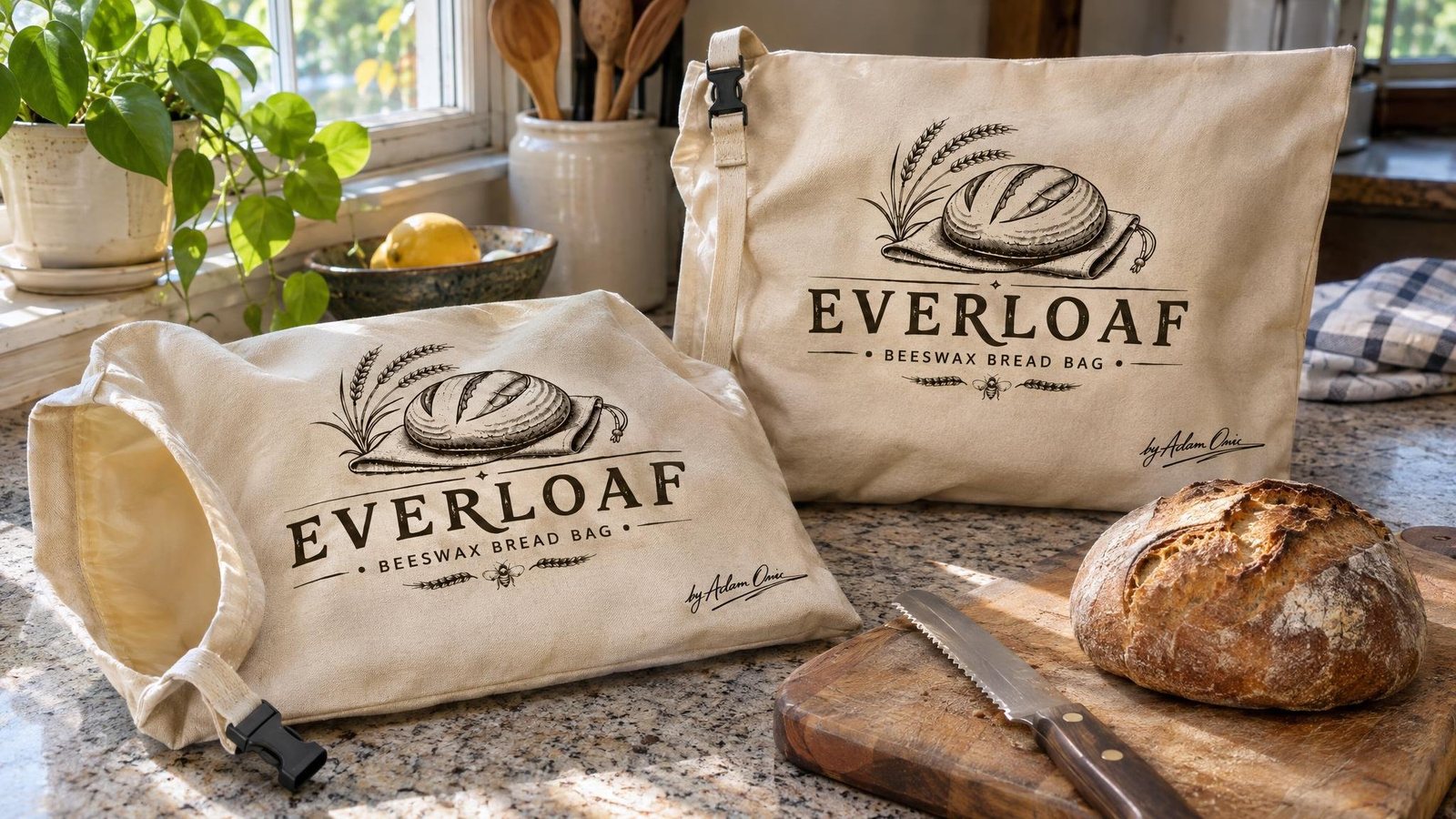
Current Everloaf Multi-Pack Bundles (Early Black Friday Pricing)
| Package | Price per bag | What you get |
|---|---|---|
| The Baker's Pair · 2 Bags | $24.50 / bag | $49.00 total (save 37%). Perfect for your active loaf and your sandwich bread. |
| The Artisan Trio · 3 Bags Most Popular | $22.70 / bag | FREE shipping + FREE Bread Keepers Handbook |
| The Family Hearth Set · 5 Bags Best Value | $19.60 / bag | 50% OFF ($98.00 total) + FREE shipping + FREE Bread Keepers Handbook + 3 FREE Reusable Beeswax Wraps |
The 30-Day "Hollow Thump" Guarantee
Test the Everloaf bag in your own kitchen on your next four loaves of bread.
Slice your sourdough, sandwich loaves, or baguettes. Keep them right on your counter for up to a full week.
If your bread does not stay noticeably crisper outside and tender inside, or if you simply do not fall in love with the quality, email our support team within 30 days for a full, prompt refund.
No interrogations, no hassle.
Frequently Asked Questions
How do I clean my Everloaf bread bag?
Shake out any crumbs, then wipe it down with a damp cloth and a little mild soap and let it air dry. Avoid hot water, as it can melt the beeswax. Treat it right, and your bag will keep your bread fresh for countless bakes.
Will my bread smell or taste like honey or wax?
No. The natural beeswax creates a protective layer, not a flavor transfer. Your bread just tastes like fresh bread.
What sizes of bread will it fit?
Each bag measures 13" x 17". That is big enough for large sourdough boules, Dutch oven loaves, long batards, or two smaller loaves at once, without squishing or cramming.
How long will the bag last?
Years, with simple care. The beeswax is soaked deep into the cotton fiber, not sprayed on top, so it won't crack, chip, or wash off like cheap single-coat bags.
How fast will my order ship?
Every bag is made in small batches, so orders dispatch within 3 to 4 business days. Delivery usually takes 6 to 12 business days after that.
Claim Your Everloaf Multi-Pack Today
Stop throwing away half-eaten loaves and suffocating real bread in plastic bags. Give your crust the breathable natural protection it was meant to have.
- Heavyweight organic cotton triple-infused with pure beeswax
- Buckle clasp closure that keeps the bag shut on your counter
- Large 13" x 17" size for big Dutch oven boules and batards
- 30-Day Money-Back Guarantee: test it on your next four loaves