What Happened When I Put a Digital Cigar Sensor Inside a Plastic Bread Bag
It took exactly 45 minutes for relative humidity to spike to 96%. In the cigar world, that is an absolute red alert for fungal spores. Here is the moisture science behind why your sourdough sweats in plastic, and how traditional French bakeries keep loaves fresh for 7 days on the counter.
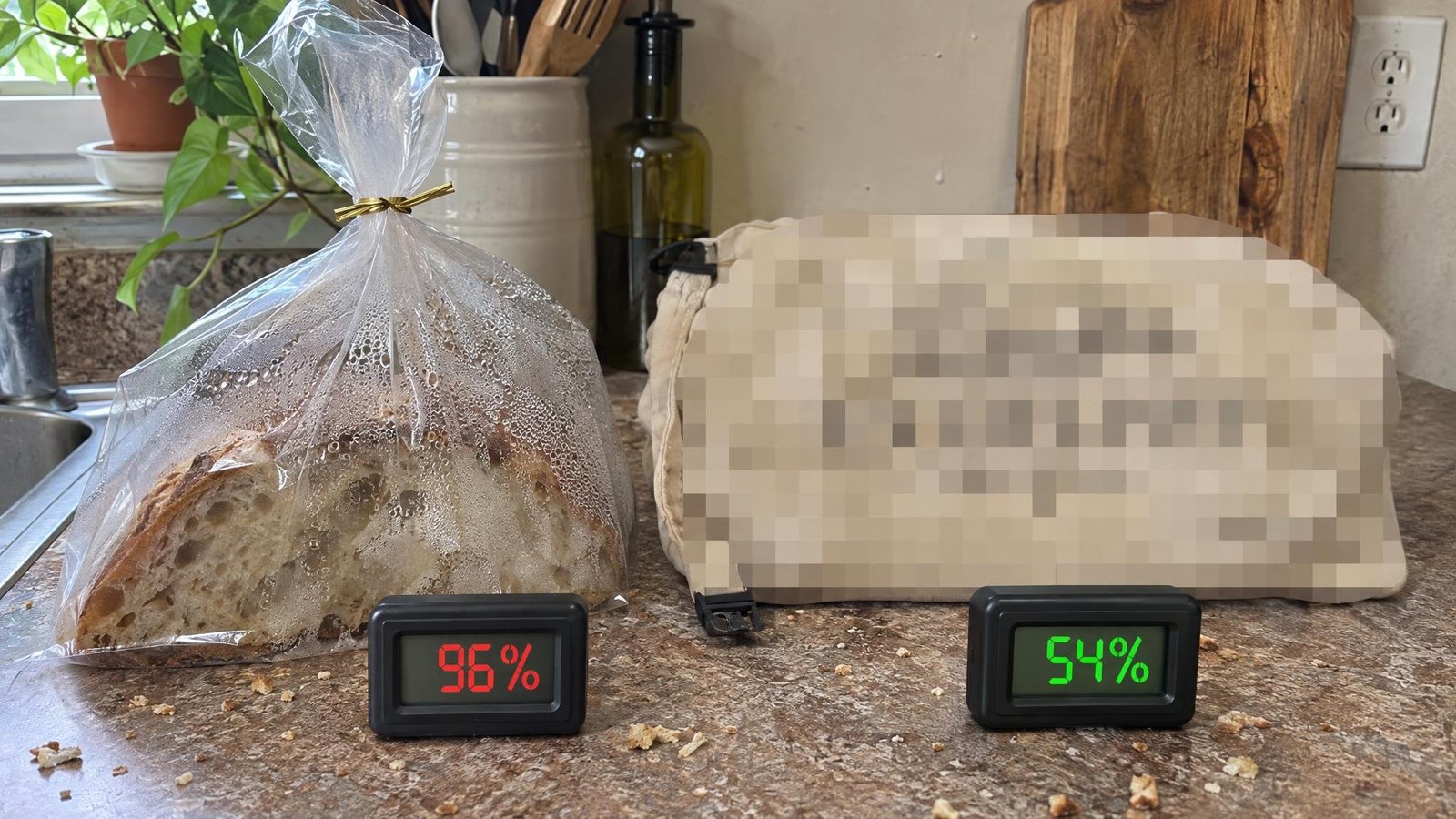
The Data Behind the Experiment
If you saw my post about the 96% humidity reading on our kitchen island, you already know the backstory.
My wife spends thirty-six hours nursing her wild sourdough starter, proofing her dough, and baking these gorgeous country boules in our heavy cast-iron Dutch oven. And for three months, Thursday afternoon meant the exact same depressing routine: standing over the kitchen trash can carving off the bottom half of the loaf because the bottom crust was clammy, the crumb was gummy, and tiny pale-green mold spots were taking over.
I am not the baker in the house. I am the cigar-smoking husband who keeps a cedar humidor.
Anyone who collects cigars knows the golden rule: anything over 72% relative humidity is an absolute disaster. At 75% or higher, dormant fungal spores wake up, ruining an entire collection in days. You spend hundreds of dollars on calibrated Bluetooth sensors and Spanish cedar just to keep the air sitting safely below 70%.
So when we started bickering about why her bread was rotting by day four, I pulled out my calibrated Bluetooth sensor to settle the argument once and for all.
I set the sensor on our kitchen island first. The room air was sitting at a completely normal 48% humidity. Our house was not a swamp.
Then I slid the sensor on a dry napkin inside her twist-tied grocery bread bag, propped the intake vent away from the flour dust, and closed the bag.
Within forty-five minutes, the screen climbed straight past 90% and locked in at ninety-six percent.
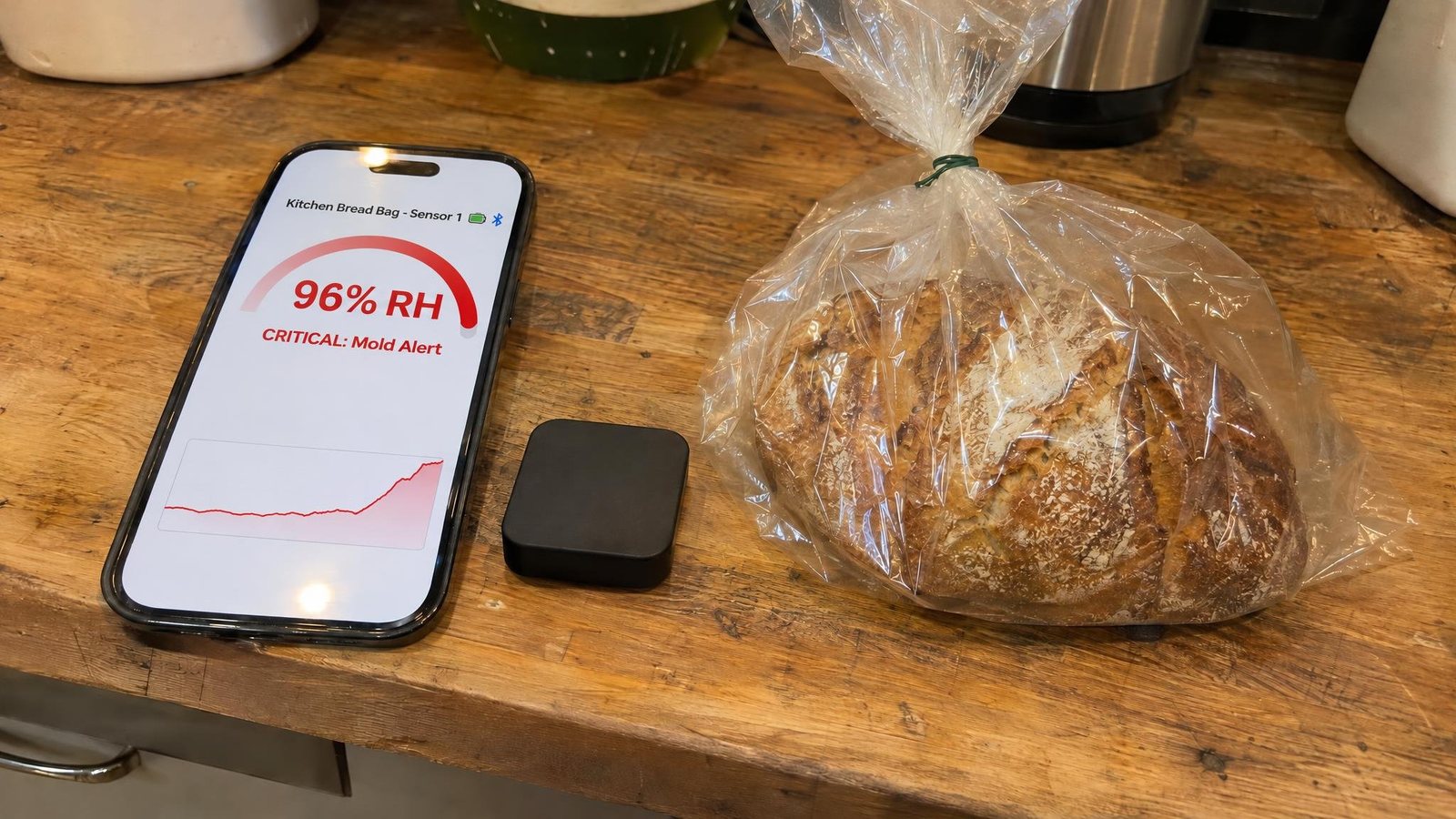
Here is what that reading actually means, why every common bread storage trick fails, and how old-world bakeries solved this without a single inch of plastic film.
The Transpiration Trap (Why Plastic Ruins Artisan Bread)
Food scientists call the underlying issue post-bake moisture transpiration.
Even after an artisan loaf cools to room temperature, the interior crumb continues to migrate water vapor outward toward the crust for days. This natural evaporation process is essential for maintaining crumb texture.
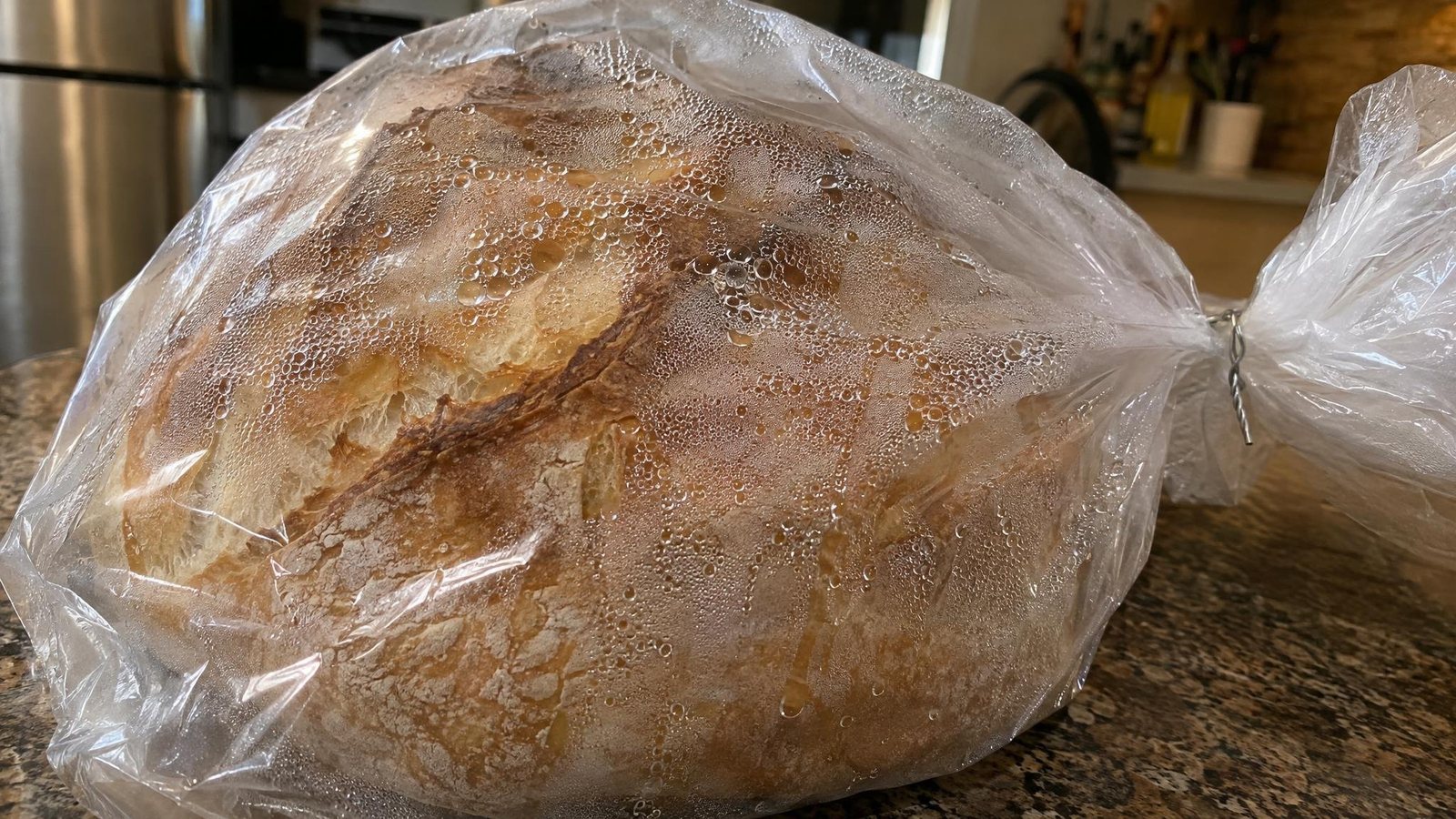
When that loaf is sealed inside airtight, non-porous grocery plastic, that evaporating moisture has zero escape route:
- Evaporation: Warm water vapor leaves the crumb and immediately hits the cold, impermeable plastic wall.
- Condensation: Outside room drafts cool the plastic film, turning the trapped vapor into heavy liquid droplets.
- Pooling: Those standing droplets drip straight down onto the bottom crust.
- Incubation: The crust acts like a sponge, absorbing the standing liquid until it becomes clammy and waterlogged. Inside that warm, stagnant, 96% humidity micro-climate, airborne mold spores find the exact tropical environment they need to multiply.
You are not storing your bread. You are running an incubator.
The Bread Storage Graveyard
Before discovering the real cause, we tested every traditional bread-storage hack recommended on internet baking forums. Every single one failed in its own specific way.
| Storage Method | What Happened to the Bread | Why It Failed |
|---|---|---|
| Bamboo Roll-Top Breadbox | Crust turned into leathery foam by day three; trapped stale crumbs in the sliding track. | Trapped too much ambient humidity without active ventilation. |
| Rustic Linen Bread Bag | Sucked out every drop of moisture within 36 hours; crumb turned into a dry brick. | 100% porous linen allows dry room air to siphon out all interior hydration. |
| Brown Paper Bakery Bags | Crust stayed crisp for 12 hours, then the entire loaf turned into dry sawdust. | Paper lacks any protective barrier, rapidly desiccating the crumb. |
| Freezing Pre-Sliced Slices | Toasting created dry flaking crusts while the interior crumb stayed spongy and wet. | Sub-zero temperatures rupture starch cell walls, permanently damaging texture. |
| Grocery Plastic Bag | Kept the crumb soft, but bottom crust got soggy and sprouted green mold by day four. | Zero breathability; turns into a 96% humidity condensation chamber. |
The Old-World Solution: The Breathable Beeswax Membrane
Old-world European bakeries never had synthetic plastic film. Yet their crusty boules stayed fresh on the counter for nearly a week.
They relied on beeswax-saturated natural textiles.
A family friend who sells sourdough at our weekend farmers market noticed my wife venting about throwing out another half-eaten boule and told her about Everloaf.
Everloaf was created by Adam, a fourth-generation baker whose family operated traditional bakeries in Lyon, France. His grandmother never used plastic wrap; she stored every cooling loaf in heavy cotton cloth soaked in natural beeswax. Adam engineered Everloaf to bring that exact preservation standard to modern home bakers.
Here is how the breathable membrane actually works:
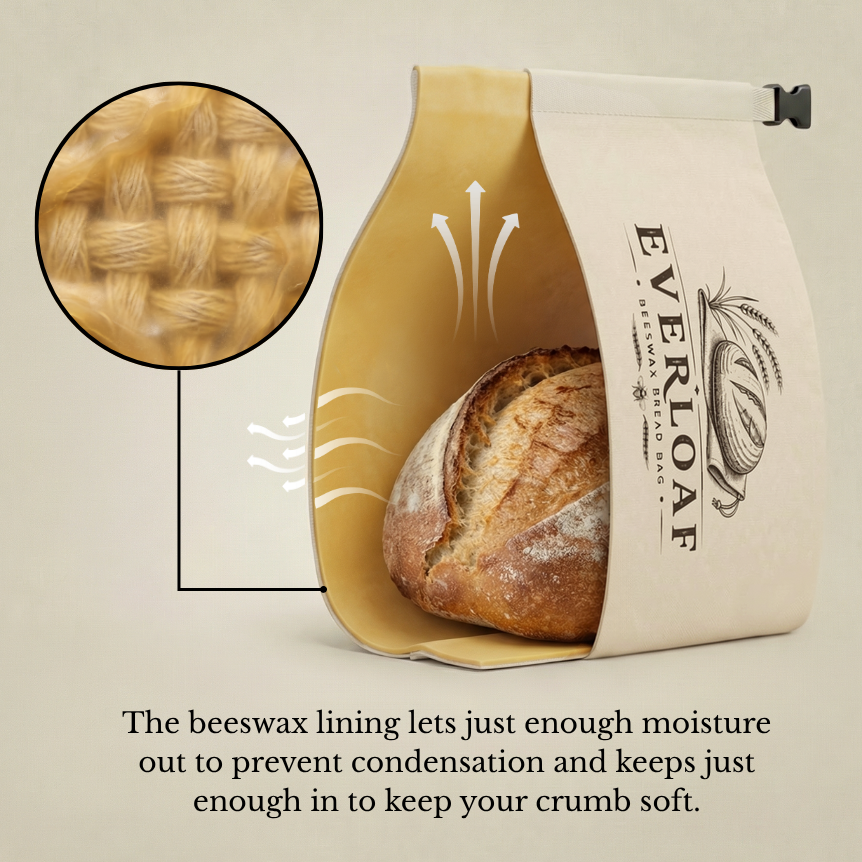
- Active Vapor Permeability: The open matrix of heavyweight organic cotton allows excess water vapor to vent off into the room. Condensation never forms on the interior surface, so the crust never sits in standing water.
- Hydrophobic Shielding: Pure beeswax is deeply infused into each individual yarn fiber. This natural wax coating forms a semi-permeable shield that stops dry room drafts from siphoning hydration out of the crumb.
- Balanced Humidity: Inside the bag, relative humidity naturally stabilizes between 50% and 55%, comfortably below the 72% mold danger zone, while keeping the crumb soft and elastic.
The 7-Day Test Timeline
The day our Everloaf bag arrived, I wiped down my digital cigar hygrometer and ran the test again. I slid a fresh Thursday country boule inside, placed the sensor beside the sliced heel, rolled down the top, and clasped it shut.
Here is the honest day-by-day progression:

Why Most Beeswax Bags Online Are Junk
Once beeswax bags started trending, cheap mass-market knockoffs flooded the market. Most fail for two specific reasons:
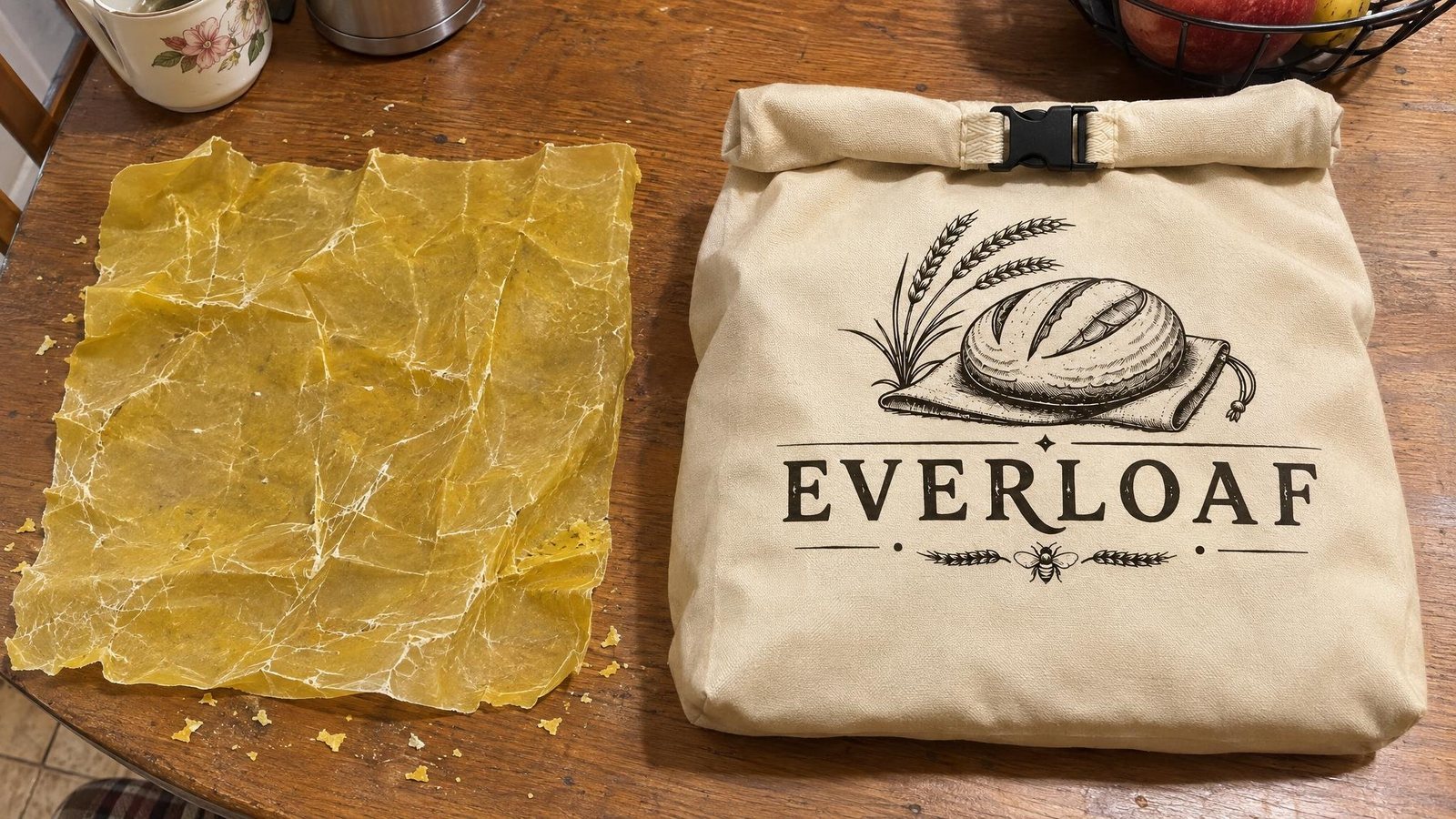
- Surface Wax Spraying: Cheap brands use thin cotton and spray a single light mist of wax over the surface. The moment you roll the bag, that wax layer cracks along the crease lines. After two rinses in cold water, the wax flakes off in yellow crumbs, leaving bare cotton that dries out your bread.
- Hidden Synthetic Liners: Some brands claim to be natural but quietly stitch a synthetic plastic lining inside the fabric, which completely destroys breathability and restarts the incubator effect.
Everloaf builds their bags differently:
- Triple-Infused Saturation: Heavyweight organic cotton is submerged and heat-infused with pure natural beeswax three separate times. The wax penetrates the core of the yarn fibers, so it will never crack, peel, or flake along the folds.
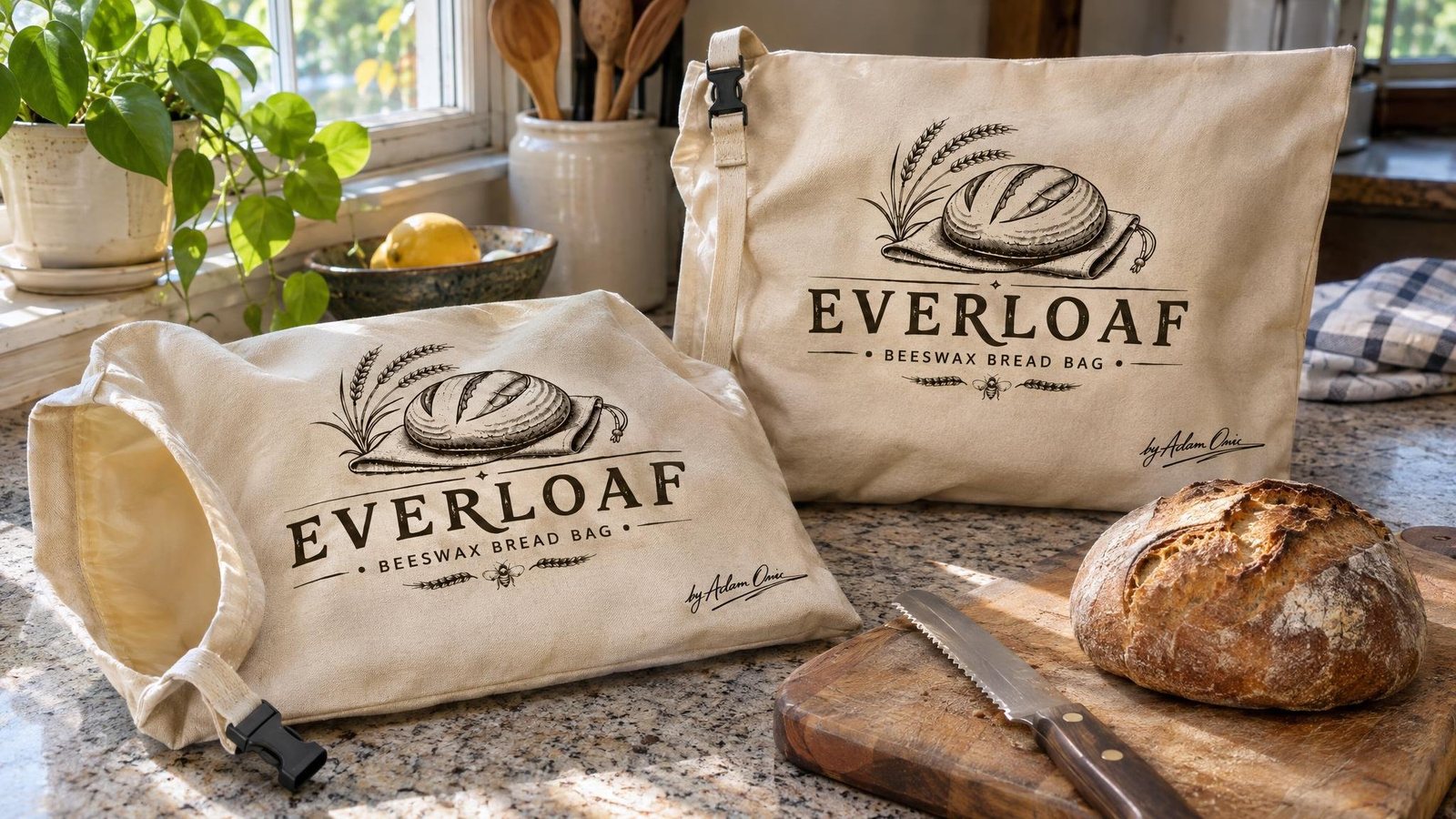
- Generous 13" x 17" Dimensions: Easily fits massive 1,000-gram Dutch oven sourdough boules, long oval batards, baguettes, and sandwich loaves.
- Heavy-Duty Clasp Closure: A built-in roll-down buckle clasp seals the top securely with two quick folds, keeping the bag shut on your counter without wire ties or clips.
- Durable 12 to 18 Month Lifespan: Designed for weekly home bakers. One bag handles over a year of continuous bakes before ever needing a wax refresh.
Real Reviews From Bakers
"How have I lived my life without these beeswax bags before now? They are amazing at keeping breads soft. No more stale bread for us! Thank you!!"
"It does what it says it will do. Keep my bread fresher, longer. It works best on sourdough breads than white bread."
"My homemade bread stays soft and moist for so much longer!"
"The bag is well made. The clasp closure keeps the bag from opening. It is great for keeping artisan breads fresh."
Frequently Asked Questions
Will my bread taste or smell like beeswax?
No. Everloaf uses pure, unbleached, cosmetic-grade natural beeswax. When you first open the package, you will notice a faint, pleasant scent of natural honey and beeswax on the fabric itself, but it never transfers flavor or aroma to your bread, crust, or crumb.
Will my large Dutch oven sourdough boule and long batards actually fit?
Yes. At 13 inches wide by 17 inches tall, Everloaf was explicitly sized for high-hydration artisan boules, long batards, rustic baguettes, and sandwich loaves up to 1,200 grams. You will easily fold the top over twice and lock the clasp.
Does the crust stay crackling like glass for seven days?
Let us be completely honest: after 48 hours on any kitchen counter, all bread crust naturally softens slightly as moisture equilibrates. However, inside an Everloaf bag, the crust retains a firm, crisp-chewy artisan bite with tooth. It never turns into the limp, clammy, waterlogged foam caused by plastic bags, and it pops right back to full crackling crunch with 90 seconds in the toaster.
How long does one Everloaf bag last?
With simple cold-water care, a single triple-infused Everloaf bag easily lasts between 12 and 18 months of continuous weekly bakes. The wax is saturated deep into the cotton fibers, so it will not crack, peel, or wash out during normal use.
How do I clean and maintain the bag?
Cleaning takes 15 seconds. Simply turn the bag inside out, shake out any loose breadcrumbs over the sink or trash, and wipe the interior with a damp cloth and cold water. Never use hot water, the dishwasher, or the washing machine, as heat melts the natural wax. Air dry flat and it is ready for your next loaf.
What if it does not work for my kitchen or my bread?
Every Everloaf bag is protected by a complete 30-Day Money-Back Guarantee. Use it across your next three or four bakes. If your bread does not stay noticeably fresher and mold-free compared to plastic bags or breadboxes, contact customer support for a prompt, 100% refund.
Special Early Black Friday Bundles
Every week you spend hours nursing wild yeast, proofing dough, and watching loaves rise in your oven, only to watch half of that labor rot inside a sweaty plastic bag.
Stop steaming your homemade bread. Give your loaves the breathable, old-world home they were meant to have.
Current Everloaf Package Options (Early Black Friday Pricing)
| Package | Price per bag | Total details & bonuses |
|---|---|---|
| 2 Beeswax Bags | $24.50 / bag | Save 37% ($49.00 total) |
| 3 Beeswax Bags Most Popular | $22.70 / bag | FREE shipping + FREE Bread Keepers Handbook ($25 value) |
| 5 Beeswax Bags Biggest Savings | $19.60 / bag | 50% OFF + FREE shipping + FREE Bread Keepers Handbook ($25 value) + 3 FREE Reusable Beeswax Wraps ($30 value) |
Protect Your Next Bake With Breathable Beeswax
- 100% Breathable Organic Cotton infused 3x with pure natural beeswax
- Sturdy Buckle Clasp Closure locks in crumb hydration while venting moisture
- Large 13" x 17" Size holds your largest Dutch oven boules and batards
- Built to Last 12 to 18 Months of continuous weekly bakes
- Backed by a 30-Day Risk-Free Guarantee: Test it on your next four loaves