

You're suffocating your sourdough. Every time you slide that beautiful, hand-crafted loaf into a plastic bag, you're trading a crispy crust for a rubbery, damp mess. It feels like a total betrayal of the craft. Finding effective zero waste bread storage solutions shouldn't mean choosing between a rock-hard loaf and a plastic-wrapped disaster. You deserve a kitchen setup that respects your hard work and the planet equally.
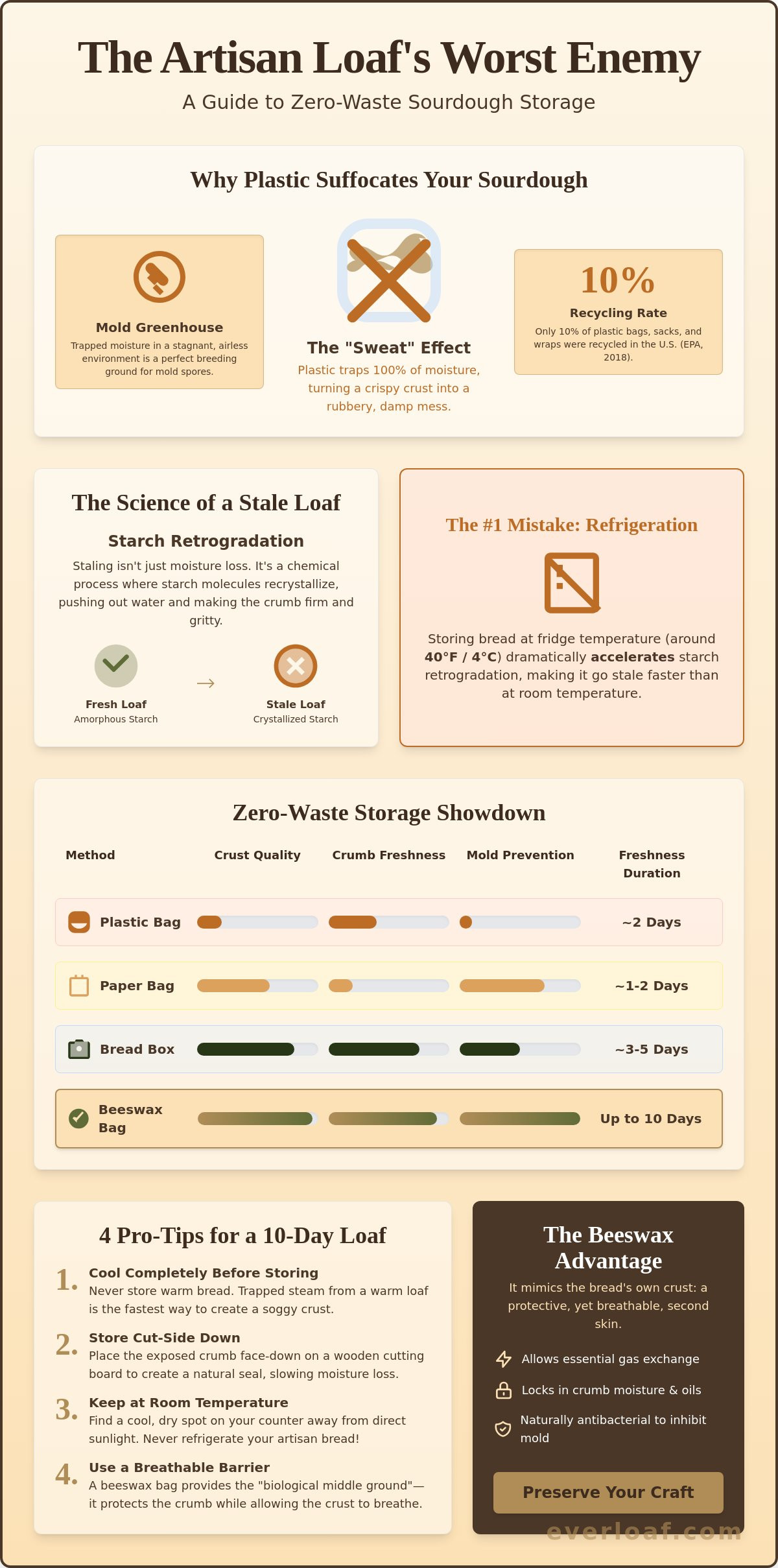
We agree that wasting expensive ingredients is painful. Considering only 10% of plastic bags and wraps were recycled in the U.S. in 2018, the environmental cost of traditional storage is just as high as the grocery bill. You want that day-one crunch to last without the guilt. This guide will teach you how to master the science of the biological middle ground. We'll show you exactly how to achieve a 10-day fresh loaf using high-performance, sustainable methods. We are going to dive into the mechanics of crust preservation and the best ways to keep your crumb soft without a scrap of plastic in sight.
Key Takeaways
- Stop the rubbery crust cycle by understanding why plastic is the enemy of your artisan loaf.
- Master the art of zero waste bread storage solutions by using breathable materials that mimic a loaf's natural crust.
- Learn why your refrigerator is actually accelerating the staling process and where to store your bread instead.
- Discover the "cut-side down" secret and other pro-tips to maintain a soft crumb for up to 10 days.
- Compare the performance of bread boxes, beeswax bags, and silicone to find your perfect plastic-free match.
The Failure of Plastic: Why Your Bread Deserves Better
You spent three days nurturing a starter. You spent hours folding dough. Why would you kill that effort with a five-cent plastic bag? Zero waste bread storage solutions are about more than just ditching plastic. They are about honoring the craft. True zero-waste storage uses breathable, reusable materials to preserve the integrity of your loaf. Plastic does the exact opposite. It treats your bread like a commodity rather than a living, artisanal creation. When you choose sustainable storage, you improve the planet and your morning toast simultaneously.
Plastic is a culinary disaster for high-hydration loaves like sourdough. It creates a closed loop that suffocates the bread. This isn't just about being eco-friendly. It's about flavor and texture. A proper storage method understands The Science of Staling. Staling is a complex chemical process, not just a loss of water. Plastic interrupts the natural moisture exchange your bread needs to stay delicious.
The "Sweat" Effect: How Plastic Ruined Your Sourdough
Plastic bags trap 100% of escaping moisture. This creates a humid, anaerobic swamp inside the bag. Your beautiful, crispy crust absorbs this trapped steam and turns into a rubbery, damp mess. This process destroys the benefits of the Maillard reaction you worked so hard to achieve during the bake. Even worse, mold spores thrive in this stagnant environment. Mold loves moisture and lack of airflow. By sealing your bread in plastic, you are essentially building a greenhouse for fungus. Beyond the kitchen, the cost is staggering. In 2018, the EPA reported that only 10% of plastic bags, sacks, and wraps were recycled in the U.S. The rest end up as permanent waste.
Why Paper and Linen Often Fall Short
Many bakers turn to paper or linen as the first step away from plastic. While paper is zero-waste, it's often too porous. It acts like a desert for your bread. Moisture leaves the loaf too quickly, leaving you with a rock-hard crumb within 24 hours. Linen is a step up, but it's fickle. Linen bags require a very specific ambient humidity to work effectively. In a dry kitchen, linen won't stop the bread from drying out. In a damp kitchen, it doesn't offer enough of a barrier. To keep a loaf fresh for 10 days, you need a hybrid solution. You need a material that balances breathability with high-performance protection. That is where high-quality beeswax cotton bread bags change the game.
The Science of Staling: Humidity, Starch, and Beeswax
Your bread is alive. Even after it leaves the oven, the loaf continues to evolve. Most people assume a hard loaf is just a dry loaf. That is a mistake. To master zero waste bread storage solutions, you must respect the internal chemistry of your sourdough. It isn't just about water loss. It's about how the bread manages its own structure. Finding the "Goldilocks" zone of humidity is the ultimate challenge for any baker who values their craft. You need a solution that protects the crumb without sacrificing the crust.
What is Starch Retrogradation?
Staling is actually a chemical process called starch retrogradation. When bread cools, the starch molecules begin to recrystallize. As they form these crystals, they push water molecules out of the starch and into the spaces between them. This makes the crumb feel firm and gritty. Retrogradation is the primary cause of the "stale" texture. Temperature is your biggest enemy here. Many people think the refrigerator keeps things fresh. It's the opposite. At 40°F, the typical temperature of a home fridge, starch retrogradation happens significantly faster than at room temperature. Putting your artisan loaf in the fridge is the fastest way to kill its soul. Keep it on the counter. Keep it protected.
Beeswax: The Biological Storage Solution
Your loaf needs a protector that understands its needs. Beeswax acts as a secondary skin for your bread. Unlike plastic, which creates a suffocating tomb, or paper, which acts like a thirsty sponge, beeswax offers a semi-permeable barrier. It allows for essential gas exchange while locking in the moisture and oils that keep the crumb soft. Pure beeswax and organic cotton also possess natural antibacterial properties. This helps keep mold at bay without the need for synthetic chemicals. It's a biological middle ground that mimics the protective nature of the crust itself.
This balance is critical for high-hydration loaves. You can learn more about how environmental factors influence your crust in our guide on The Science of Sourdough Freshness. By using a material that works with the bread rather than against it, you can extend the life of your bake by days. If you're ready to upgrade your setup, the beeswax Bread Bag provides the perfect high-performance environment for every loaf you bake. It's time to treat your bread with the reverence it deserves.
Comparing Zero-Waste Solutions: Find Your Perfect Match
Your kitchen counter is a battlefield for freshness. Choosing the right armor for your loaf depends on what you value most. Is it the counter space? The perfect crust? Or the ability to keep a boule soft for a full week? Evaluating zero waste bread storage solutions requires a look at both performance and practicality. Not every method respects the integrity of your bake in the same way. You need a solution that adapts to the needs of your specific loaf.
Traditional bread boxes offer a classic aesthetic. They look great in a farmhouse kitchen. However, they are bulky. They occupy a massive footprint on your counter. Most boxes provide a static level of airflow that doesn't change as your loaf gets smaller. Silicone bags are another option. They are durable and easy to clean. But they often mimic the "plastic tomb" effect. They trap too much moisture. This leads to the rubbery crust we've already identified as a failure. To keep bread truly fresh, you need a method that balances protection with breathability.
Beeswax Bags vs. Traditional Bread Boxes
Think of a bread box as a room and a beeswax bag as a tailored suit. A box has a fixed volume of air. As you eat your bread, that volume of air increases, which can lead to faster drying. A beeswax bag is different. It offers an adaptive fit. You can fold it down to minimize excess air around the bread. This is crucial for high-hydration artisan sourdough. The Orvix style of construction is the benchmark for this quality. It uses heavy-duty organic cotton and a precise wax ratio. This ensures the bag doesn't just hold the bread. It actively maintains the environment the bread needs to thrive.
The Best Method for Your Loaf Type
Different breads have different personalities. You must treat them accordingly. Baguettes are the most fragile. They have a high surface-area-to-crumb ratio. They dry out in hours. You must either eat them immediately or wrap them very tightly in a beeswax wrap to stall the moisture loss. Soft sandwich loaves are the opposite. They need to stay supple. They benefit from a slightly more restrictive environment to keep that pillowy texture.
Sourdough boules are the champions of longevity. This is where the 10-day freshness potential is most achievable. A high-quality beeswax bread bag provides the ideal biological middle ground for these sturdy loaves. It keeps the crumb soft while preventing the crust from becoming a soggy mess. When you match the storage method to the loaf type, you stop fighting against nature. You start working with it. Your bread deserves that level of specialized attention.
5 Pro-Tips for Maximizing Zero-Waste Freshness
You have the right tools. Now you need the technique. Zero waste bread storage solutions only perform at their peak when you respect the physical needs of the loaf. It is a partnership between the material and your habits. These five professional techniques will ensure your sourdough remains a masterpiece until the very last crumb. Small changes in how you handle your bread make a massive difference in its longevity.
- Cool before you store. Never put a warm loaf away. Trapped steam creates condensation, which leads to a soggy crust and mold.
- The cut-side down trick. Always place your bread with the sliced face flat against a clean wooden board or the bottom of your bag. This naturally seals the crumb from the air.
- Find a neutral zone. Keep your bread away from the toaster, oven, or sunny windows. Heat spikes accelerate the chemical staling process.
- Reset your seal. If your beeswax bag feels less "sticky," use the warmth of your hands to massage the fabric. This reactivates the wax for a tighter, more protective fit.
- Revive, don't discard. A hard loaf is not a dead loaf. You can bring it back to life with a simple moisture-and-heat reset.
The Cooling Rule: Patience is a Virtue
Cutting into a hot loaf is a crime against the bake. Your bread is still cooking internally even after you pull it from the oven. This final stage is called starch gelatinization. If you break the crust too early, you release the steam necessary to set the crumb's structure. This results in a gummy, wet interior that spoils quickly. For large sourdough boules, give it a full 2 to 4 hour cooling window. Your patience will be rewarded with a better texture and a longer shelf life. For a deeper dive into these timelines, consult our 2026 Freshness Guide.
How to Revive "Past-Prime" Bread
In a zero-waste kitchen, stale does not mean spoiled. If your loaf has finally lost its fight against the air, use the water-and-oven trick. Quickly run the entire loaf under a cold tap. You want to dampen the crust without soaking the interior. Place it in a 350°F oven for about five minutes. The water turns to steam, rehydrating the starch and crisping the crust. Once it's out, use the Sourdough Knife to get clean, effortless slices. This method works wonders for making your artisan bread last those final few days. To keep your next loaf even fresher from day one, consider upgrading to the high-performance beeswax Bread Bag today.
Master the Craft with Everloaf’s Orvix Collection
Your bread is a labor of love. It deserves a home that reflects that devotion. The Orvix beeswax bread bag isn't just a container. It is a guardian for your hard work. This is the ultimate flagship for zero waste bread storage solutions. We designed this collection for the baker who refuses to settle for "good enough." By choosing high-performance materials, you are making a long-term investment in your baking craft. Stop throwing away money on single-use plastic. Start preserving the soul of your sourdough with a solution that lasts.
Every Orvix bag is built from 100% organic cotton and infused with pure, food-grade beeswax. Our design philosophy draws inspiration from the culinary heritage of Lyon, France. This city knows the value of a perfect loaf. We brought that same reverence to every stitch of our collection. This is where modern sustainability meets old-world craftsmanship. Your kitchen deserves a setup that is as beautiful as it is functional. It's time to treat your bread like the masterpiece it is.
Why the Orvix Design is Different
Size matters when you're baking hearty, high-hydration boules. Most standard wraps are simply too small. Our oversized design ensures full coverage for even your largest artisan bakes. You can feel the difference immediately. The tactile experience of the high-quality beeswax-infused fabric is unmatched. It provides a heavy-duty, adaptive barrier that mimics the bread's own crust. Experts and enthusiasts alike have noticed the quality. It was recently named the top-rated beeswax bread bag of 2026 for its superior performance in moisture retention.
Complete Your Zero-Waste Baking Kit
A master baker needs the right companions for every stage of the process. The Orvix bag is the final piece of the puzzle. Pair it with the Danish Dough Whisk for effortless, air-light mixing. Use the Everloaf Bread Sling to handle your hot boules with total confidence. These tools are built to endure. Ditching plastic saves more than the planet. It saves you the constant cost of flimsy replacements. Build a kitchen that respects the craft and the environment. Shop the Orvix Bread Bag and Save Your Sourdough today. Your next loaf deserves the best!
Give Your Sourdough the Home it Deserves
You've spent hours nurturing your starter and folding your dough. Don't let a flimsy plastic bag undo all that hard work. We've seen how plastic suffocates your crust and why the fridge is a fast-track to staling. True zero waste bread storage solutions work with the bread, not against it. By choosing a breathable, protective barrier, you can enjoy that perfect 10-day fresh loaf without the guilt of single-use waste. It is time to treat your craft with the reverence it deserves.
Our Orvix collection is designed by culinary professionals from Lyon who understand the needs of artisan bread. Every bag is crafted from 100% organic cotton and infused with pure, natural beeswax. It's a high-performance setup that respects your bake and the planet. Upgrade to the Orvix Beeswax Bread Bag and experience the difference for yourself. Your next masterpiece is waiting. Make it last.
Frequently Asked Questions
How long does bread stay fresh in a beeswax bag?
Bread typically stays fresh for 7 to 10 days in a high-quality beeswax bag. This is especially true for hearty sourdough loaves. The bag mimics the bread's own crust to prevent drying while allowing the loaf to breathe. You get a soft crumb and a crust that doesn't turn into a rubbery mess. It is the gold standard for zero waste bread storage solutions.
Can I store warm bread in a zero-waste bread bag?
Never store warm bread in a beeswax bag. You must wait at least 2 to 4 hours for the loaf to cool completely. Heat will melt the natural wax coating and ruin the seal. Cooling also prevents internal condensation, which is the primary cause of rapid mold growth. Patience is the secret to a long-lasting loaf and a healthy storage bag.
Is beeswax bread storage more hygienic than plastic?
Beeswax storage is significantly more hygienic than plastic because it's breathable and naturally antibacterial. Plastic traps moisture and creates an anaerobic environment where mold spores thrive. Beeswax and organic cotton allow for essential gas exchange. This keeps the environment dry enough to discourage fungus but moist enough to keep the crumb soft and delicious for days.
How do I clean my beeswax bread bag without ruining it?
Clean your bag using only cold water and a drop of mild, alcohol-free dish soap. Never use hot water. Heat will strip the wax from the cotton fibers and destroy the bag's performance. Simply wipe it down or rinse it, then hang it to air dry. If the fabric feels stiff, a quick massage with your hands will reactivate the wax.
What is the best way to store sourdough bread specifically?
Store your sourdough cut-side down inside a beeswax Bread Bag at room temperature. This technique naturally seals the exposed crumb and prevents it from drying out. Avoid the refrigerator at all costs. The cold temperature of a fridge accelerates starch retrogradation and turns your beautiful artisan bread into a rock overnight. Keep it on the counter for the best results.
Can I freeze bread inside a beeswax bag?
You can freeze bread in a beeswax bag for short-term preservation. It works well for up to three or four weeks. Just be careful when removing it from the freezer. The wax becomes brittle at low temperatures and can crack if handled roughly. Let the bag reach room temperature before you unfold it to protect the integrity of the wax coating.
Why does my bread still go hard in a linen bag?
Your bread goes hard in a linen bag because linen is often too porous for dry home environments. It acts like a thirsty sponge, pulling moisture out of the loaf and releasing it into the air. Linen lacks the semi-permeable barrier that beeswax provides. If you want a 10-day shelf life, you need the protective "second skin" of a wax-infused fabric.
How often should I replace my zero-waste bread storage tools?
Replace your zero waste bread storage solutions every 6 to 12 months with regular use. You'll know it's time when the fabric no longer holds a seal or feels thin. You can often extend the life of your bag by "resetting" it. Use the warmth of your hands to redistribute the wax and keep your tools in peak condition for your next bake.


