

Your artisan loaf is dying a slow, rubbery death inside that plastic bag. It's a tragedy every baker knows. You spend hours perfecting a sourdough crust only to watch it turn to mush by the next morning. Your bread deserves better than a suffocating plastic wrap. Using a linen bag for bread isn't just a design choice for a beautiful kitchen; it's a scientific necessity for anyone who respects the craft of baking.
We understand the guilt of single-use waste and the disappointment of a dry, hard heel. This guide reveals the science of fabric storage so you can maintain a shattering crust for over three days. With the food storage container market reaching $175.06 billion in May 2026, households are finally ditching plastic for breathable, GOTS-certified materials. You'll learn why a quality linen bag for bread, typically priced between $13.99 and $28.90, outperforms the suffocating alternatives. We're diving into the moisture-wicking secrets that keep your favorite loaves fresh until the very last slice.
Key Takeaways
- Stop the greenhouse effect that ruins your sourdough. Learn how breathable textiles keep your crust crisp while protecting the soft interior.
- Upgrade your kitchen setup with a linen bag for bread to master the science of moisture management and starch retrogradation.
- Protect your hard work by following the cut-side down rule and avoiding the common mistake of bagging hot loaves.
- Discover why beeswax-infused fabrics are the modern secret to keeping your artisan bread fresh for up to 10 days.
What is a Linen Bag for Bread and How Does It Work?
Your bread is a living thing. Even after it leaves the oven, it continues to breathe and change. A linen bag for bread is a breathable, reusable textile storage solution designed to respect those changes. Unlike plastic, which traps moisture and creates a "greenhouse effect" that turns your crust into a soggy mess, fabric allows for a controlled exchange of air. It lets just enough excess moisture escape to keep the crust crisp, while holding in enough humidity to prevent the crumb from turning into a brick. It's the difference between a loaf that dies in a bag and one that matures gracefully on your counter.
If you're a home baker obsessed with hard-crusted artisan loaves, you know the heartbreak of a ruined sourdough. This shift from single-use plastic to long-term fabric isn't just about aesthetics; it's a commitment to the quality of your food. While the bakery flexible packaging market is growing at a rate of 4.2% through 2035, savvy bakers are moving in the opposite direction. They're choosing sustainable, durable alternatives that honor the time and effort put into every bake. Your bread deserves a home that protects its integrity rather than one that smothers it.
The Anatomy of a High-Quality Bread Bag
Thread count is the secret to success. You need a heavyweight linen or cotton weave to provide a proper thermal barrier for your loaf. Lightweight, flimsy fabrics won't provide enough insulation to keep the bread from drying out too fast. Look for unbleached, food-safe fibers that meet OEKO-TEX standards. These certifications ensure your bread isn't resting against harmful chemicals or synthetic dyes. Drawstring closures are the industry standard for a reason. They allow you to adjust the airflow based on your kitchen's humidity. By tightening or loosening the string, you gain total control over the storage environment.
Linen vs. Cotton: Choosing Your Fabric
Linen is the gold standard in European bakeries because of its superior moisture-wicking properties. It pulls dampness away from the crust faster than almost any other natural fiber. However, organic cotton offers incredible durability for daily use and stands up well to frequent washing. To understand why this choice matters, you have to look at the science of bread staling, where starch molecules recrystallize as water migrates from the center to the surface. Breathability is the fabric’s ability to facilitate this moisture migration without letting the loaf dehydrate completely. Whether you choose linen or cotton, you're providing a specialized environment that plastic simply cannot replicate.
The Science of Staling: Why Your Storage Choice Matters
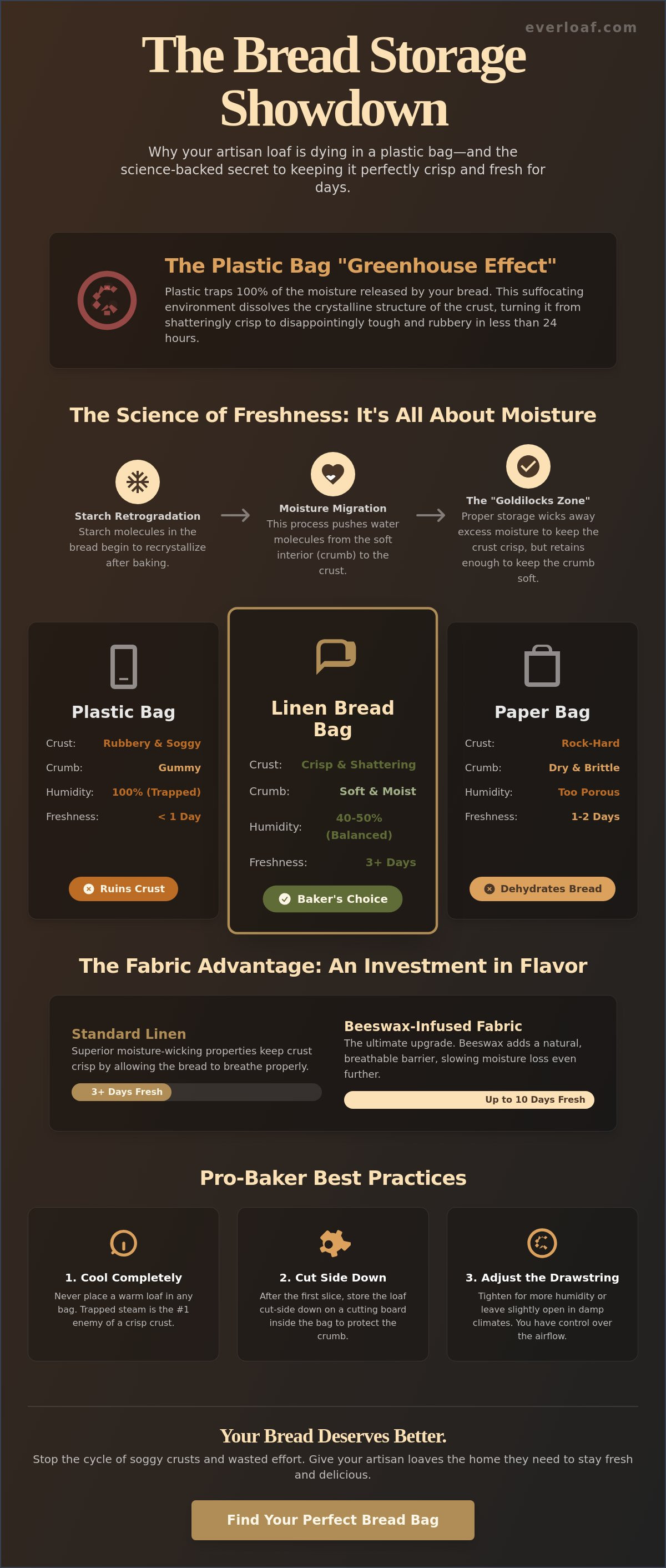
Staling is a chemical heist. Most people think bread just "dries out" as it gets older. That's only half the story. The real culprit is starch retrogradation. As your loaf cools, water molecules migrate from the soft interior to the hard crust. This process is inevitable, but your storage choice determines how it ends. Most people reach for plastic. That's a mistake. Plastic creates a suffocating greenhouse effect. It traps every drop of moisture against the crust. Your beautiful, crunchy sourdough becomes a rubbery disappointment in hours. Your bread deserves a home that understands its chemistry.
Your loaf needs the "Goldilocks Zone" of humidity. Research from university extensions on proper bread storage suggests maintaining a specific balance. You want to aim for roughly 40-50% humidity. Plastic hits 100% almost instantly, leading to mold and mush. Paper bags go the other way. They are far too porous. They offer a one-way ticket to a dry, rock-hard loaf because they allow water to vanish too quickly. A high-quality linen bag for bread provides the exact middle ground your artisan loaf craves. It holds moisture close without letting it pool.
Retrogradation and the Rubber-Crust Syndrome
During the cooling phase, amylose and amylopectin molecules begin to recrystallize. They push moisture outward. In a plastic environment, this water has nowhere to go. It settles on the surface and dissolves the crust's crystalline structure. This is how you get that leathery, impossible-to-chew texture. Fabric bags work differently. They facilitate the wicking of this moisture. The linen pulls the dampness away from the surface and releases it slowly into the ambient air. Your crust stays shatteringly crisp because it can finally breathe.
Humidity Control: The Battle Against Dehydration
Don't confuse staling with simple dehydration. A stale loaf has undergone a chemical transformation; a dry loaf has simply lost its water content. Artisan sourdough, often boasting hydration levels above 70%, is particularly sensitive to these shifts. It needs specific airflow to stay fresh and vibrant. A 100% airtight seal is the absolute enemy of sourdough because it prevents the natural gas exchange required to maintain the loaf's character. If you want to see the difference for yourself, try our beeswax bread bag for a storage solution that mimics the protective properties of a natural crust.
Linen vs. Beeswax: Which Bag Actually Keeps Bread Fresh?
Choosing between tradition and innovation shouldn't be a gamble for your kitchen. A traditional linen bag for bread is a staple for a reason. It offers a classic look and high breathability that plastic can't match. However, the storage landscape is shifting rapidly. As of May 2026, the global canvas and fabric bag market is climbing toward $1.43 billion. Bakers are looking for more than just a pretty cloth. They want performance. Your bread deserves a home that balances airflow with moisture retention. The debate between pure linen and beeswax-infused cotton is where your loaf’s longevity is decided.
The Problem with Pure Linen
Pure linen has a limit. It is fantastic for the first few hours after a bake. It allows the bread to cool while preventing the crust from getting soggy. But most bakers eventually hit the "24-hour wall." Because linen is highly porous, it cannot stop the eventual march of total dehydration. By day three, that beautiful sourdough heel is often a rock. It is a common frustration in the baking community. Traditional cloth is excellent for loaves you plan to finish in a single sitting, but it struggles to protect a loaf over a long weekend.
The Beeswax Evolution
The beeswax Bread Bag takes the lead where traditional fabric fails. By infusing organic cotton with beeswax, we create a semi-permeable barrier. It mimics the natural protection of the bread’s own crust. This "smart" fabric lets the loaf breathe without letting all the moisture escape into the room. It maintains the soft, pillowy interior crumb while defending the exterior crunch. It is the ideal upgrade for anyone who doesn't eat a whole loaf in one sitting. Beeswax also brings a secret weapon to your counter: natural antibacterial properties. These inherent qualities help slow down the spoilage process, giving you a cleaner, safer storage environment for your food.
Lifespan and care are the final factors to consider. A 100% linen bag is easy to toss in the wash. It is durable and lasts for years. Beeswax bags require a bit more care, usually a gentle wipe with cool water and mild soap. However, the tradeoff is clear. You are trading a bit of laundry time for up to 10 days of fresh sourdough. In a market where bakery packaging is focused on extending shelf-life by 4.2% annually, beeswax is the personal solution for the home kitchen. It ensures your last slice is just as good as your first.
How to Use and Care for Your Fabric Bread Bag
Storage is a skill. It's the final step of the baking process. If you treat your loaf like an afterthought, it will taste like one. Using a high-quality linen bag for bread requires a few simple rules to ensure your hard work doesn't go to waste. First, never bag a hot loaf. It is a common mistake that leads to instant regret. A loaf straight from the oven is still releasing steam. If you trap that steam inside a bag, you create a humid trap that destroys the crust and invites mold. Wait at least two hours for the bread to reach room temperature before tucking it away.
Location is just as vital as the bag itself. Do not store your bread on top of the fridge or next to the toaster. These areas are heat magnets. External heat accelerates the staling process we discussed earlier. Fridges also vibrate, which can create subtle temperature fluctuations that mess with the loaf's internal moisture. Find a cool, dry corner of your counter. This stable environment allows the fabric to do its job without fighting the elements. Your bread deserves a resting place that is peaceful and temperate.
The 'Cut-Side Down' Rule
Protecting the exposed crumb is your top priority. Once you slice into that boule, the interior moisture begins to vanish. Always place the loaf cut-side down against the bottom of the bag. This creates a natural seal against the fabric. If you are storing a long batard or a half-loaf, use the excess material of the bag to wrap the bread tightly before pulling the drawstrings. This double-layer approach provides a secondary barrier. It keeps the center soft while the crust stays firm. For whole boules that haven't been cut yet, simply center them in the bag to allow even airflow around the entire surface.
Washing and Maintenance
Cleaning your storage tools preserves their performance. For a pure linen bag for bread, a machine wash on a cold, gentle cycle is usually sufficient. However, beeswax-infused bags require a different touch. Use cool water and a mild, scent-free soap for spot cleaning. Never use fabric softeners. They clog the fibers and leave behind chemical scents that your bread will eventually absorb. You don't want your sourdough to taste like "Spring Breeze" laundry detergent. Always air-dry your bags. Tumble drying can shrink natural fibers and damage the integrity of organic cotton weaves. Proper maintenance ensures your bag remains a reliable baking companion for years.
Ready to upgrade your kitchen setup? Check out our beeswax Bread Bag for a storage solution that works as hard as you do.
Why the Orvix Bag is the Best Choice for Your Bread
The Everloaf beeswax bag is the bridge between centuries of tradition and modern food science. While a standard linen bag for bread is a beautiful start, it often fails once you pass the 24-hour mark. We've taken the breathable heritage of Lyon, France, and evolved it for the modern American baker. By combining 100% organic cotton with a precise infusion of pure beeswax, we've created a storage solution that actually works. It doesn't just hold your bread; it protects it. This is the definitive answer for anyone tired of wasting half their loaf to staling. Our bags are in such high demand that pre-order batches often sell out weeks in advance, with our current May 2026 shipments already nearing capacity.
We believe your kitchen should be as beautiful as it is functional. Moving away from single-use plastic is a priority for the modern household, and the food storage container market is expected to hit $175.06 billion this year for a reason. People want quality that lasts. The Everloaf bag isn't a disposable accessory; it's a professional tool. It honors the time you spend at the flour-dusted counter and ensures that your effort isn't lost to a rubbery crust or a bone-dry crumb. Your bread deserves a home that respects the craft.
Fresh to the Last Slice
Most DIY wraps are sticky, messy, and inconsistent. The Everloaf process uses a proprietary infusion that ensures the beeswax is deeply embedded in the textile fibers. This creates a durable, semi-permeable shield that mimics a natural rind. It's why we can confidently offer a 10-day freshness promise for your sourdough loaves. You're joining a community of thousands of bakers who have finally ditched the plastic guilt for good. Our users frequently describe the bag as their "favorite" and "best" kitchen investment. It's a design-conscious choice that looks as professional on your counter as the bread tastes on your tongue.
Your Bread Deserves Better
Think about the effort you put into your bake. You've spent 24 hours or more nurturing a starter, folding dough, and monitoring the oven. Putting that masterpiece into a plastic bag is a disservice to the entire process. It's time to respect the science of your sourdough. Whether you're a seasoned pro or just starting with our 'Complete Sourdough Kit' bundle, the right storage is the final ingredient for success. Don't let another loaf go to waste.
Upgrade your bread storage with the Everloaf Beeswax Bag today and experience the difference of professional-grade protection.
Honoring Your Craft with Professional Storage
Your bread is a masterpiece. You've mastered the science of the bake; now it's time to master the science of the save. A standard linen bag for bread is a beautiful first step, but your artisan crust needs more than just a simple cloth cover to survive the week. We have explored why plastic is a disaster for sourdough and why 100% airtight seals are the enemy of a perfect crumb. You now understand that moisture management is the only way to beat starch retrogradation. It's time to embrace the hybrid technology that keeps your bread soft and your crust shatteringly crisp until the very last slice.
Inspired by the heritage bakeries of Lyon, France, our solution is 100% organic and plastic-free. Join the community of 5,000+ home bakers who have already ditched the rubbery crusts of the past. Your hard work in the kitchen earned a better ending than a moldy plastic bag. Keep your bread fresh for 10 days with the Orvix Bag. Your next bake is waiting for a better home. Treat every loaf with the reverence it deserves. Happy baking.
Frequently Asked Questions
Can I use a linen bag for sourdough bread specifically?
Yes, a linen bag for bread is the gold standard for sourdough storage. Sourdough has a higher hydration level than most commercial loaves. It needs a breathable home to prevent the crust from becoming a soggy, rubbery mess. Fabric allows the natural gasses to escape while keeping the interior crumb soft and vibrant.
How long does bread stay fresh in a linen bag compared to plastic?
Artisan loaves stay at their peak for 3 to 4 days in a quality fabric bag. Plastic might keep the interior soft, but it destroys the crust's integrity in under 12 hours. By choosing a breathable option, you extend the window where the loaf tastes like it just left the oven. Your bread deserves that extra time.
Do I need to wash my bread bag before the first use?
You should wash your new bag once before it meets its first loaf. This initial wash removes any manufacturing dust and helps open up the fibers. It ensures your bread rests in a clean, high-performance environment from day one. Always use a scent-free detergent to avoid any unwanted flavor transfer to your crust.
Can I freeze bread inside a linen or beeswax bag?
No, do not use a linen bag for bread in the freezer. The porous nature of the fabric allows ice crystals to form directly on the crust, leading to rapid freezer burn. Use a dedicated airtight wrap for the freezing process. Once the loaf returns to room temperature, you can move it back into your fabric bag for daily use.
What happens if my bread gets moldy inside the fabric bag?
Wash the bag in hot water at 60 degrees Celsius immediately. Mold spores can hide deep within the weave of the fabric. You must eliminate them completely to protect your future bakes. If the mold growth is extensive, it is safer to replace the bag to ensure your kitchen stays a healthy environment.
Is a linen bag better than a bread box?
Linen provides a superior, flexible microclimate for your loaf. Bread boxes are often too large, which allows too much air to circulate and dry the bread out. A bag wraps snugly around the bread's unique shape. This provides a more intimate and controlled barrier that adapts to the size of your loaf as you eat it.
Can I store store-bought sliced bread in a linen bag?
You can, but store-bought bread is often too soft for fabric storage. These loaves lack the sturdy, protective crust found on artisan sourdough. They are designed for plastic and will likely dry out within 24 hours if moved to a breathable bag. Keep the fabric for your crusty, home-baked masterpieces.
How do I remove the 'beeswax smell' from my new bag?
Let the bag air out in a well-ventilated room for 48 hours. That honey-like scent is a natural marker of pure, unrefined beeswax. It is completely food-safe and will naturally diminish as the bag is handled. Don't try to scrub it away with hot water, as this will damage the protective coating you need for freshness.


