

What if the very bag you use to "protect" your sourdough is actually suffocating it? Your bread is a living thing. It deserves to breathe. If you’re tired of watching a beautiful loaf turn into a rubbery, stale mess inside plastic, a linen bread bag is the traditional solution you’ve been missing. With the global artisan bakery market reaching $13.51 billion in 2026, more bakers are realizing that premium flour deserves premium storage. You spent hours on that crust. It shouldn’t disappear overnight.
You’ve invested time and passion into your baking; you deserve to enjoy every single slice. This guide reveals why natural linen is the essential secret to preserving that perfect artisan crunch. You’ll learn how to choose the right breathable materials to maintain freshness for days while reducing your kitchen’s plastic footprint. We’ll also break down the latest 2026 PFAS-free textile regulations and compare traditional linen with modern beeswax-infused upgrades. It’s time to treat your bread with the respect it deserves.
Key Takeaways
- Stop suffocating your sourdough. Learn why plastic traps moisture and ruins the artisan crust you worked so hard to create.
- Master the tradition. Discover how a linen bread bag provides the perfect breathable environment to keep your loaves fresh and crisp.
- Choose the right shield. Compare paper, plastic, and fabric to see which storage method actually prevents "rock-hard loaf" syndrome.
- Use professional care secrets. Always cool your bread to room temperature and cut from the center to protect the delicate crumb.
- Upgrade for longevity. See how beeswax-infused cotton mimics a natural rind to keep your bread fresh for up to 10 days.
What is a Linen Bread Bag? The Traditional Secret to Artisan Crusts
Your bread is a living thing. It deserves a home that respects the craft of the baker. A linen bread bag isn't just a simple cloth sack; it's a specialized storage tool made from flax fibers. These natural fibers are famous for their incredible durability and strength. They've been the gold standard in European kitchens for centuries. Unlike synthetic alternatives, linen is naturally antimicrobial and lint-free. It won't leave fuzzy residue on your favorite sourdough boule.
Artisan loaves need protection from the environment without being smothered. This fabric serves as a natural barrier against kitchen dust and pests. It provides this security while encouraging constant air circulation. With the global artisan bakery market valued at $13.51 billion in 2026, more enthusiasts are realizing that high-quality flour requires high-quality care. Your bread deserves better than a plastic wrap that turns a masterpiece into a soggy mess. It's time to embrace the traditional method that keeps the last slice as good as the first.
Why Sourdough Lovers Swear by Natural Fibers
Sourdough has a unique crust structure. It's a delicate balance of moisture and air that requires specific humidity levels to survive. When you use non-porous materials, you create a "sweating" effect. This moisture migrates from the crumb to the crust, ruining the crunch you worked so hard to achieve. Natural fibers prevent this disaster by regulating the micro-climate around the loaf. The specific weave of a linen bread bag allows for essential gas exchange without causing total dehydration. This balance is critical to understanding The Science of Staling, where moisture management determines the life of your bread.
The Origins of Fabric Bread Storage
The French have known this secret for generations. Flax has moved from the bustling village bakeries of 19th-century Europe into modern, design-conscious kitchens. Traditional methods always prioritized crust integrity above all else. A baguette was never meant to live in a plastic sleeve. While disposable paper was a common stopgap, it often led to a rock-hard loaf within 24 hours. The shift back to reusable linen is a return to quality and sustainability. For those seeking even more longevity, modern upgrades like beeswax cotton bread bags offer a semi-permeable seal that mimics a natural rind. Whether you choose plain linen or a beeswax hybrid, you're choosing to honor the tradition of the craft.
The Science of Staling: Why Your Bread Deserves Breathable Storage
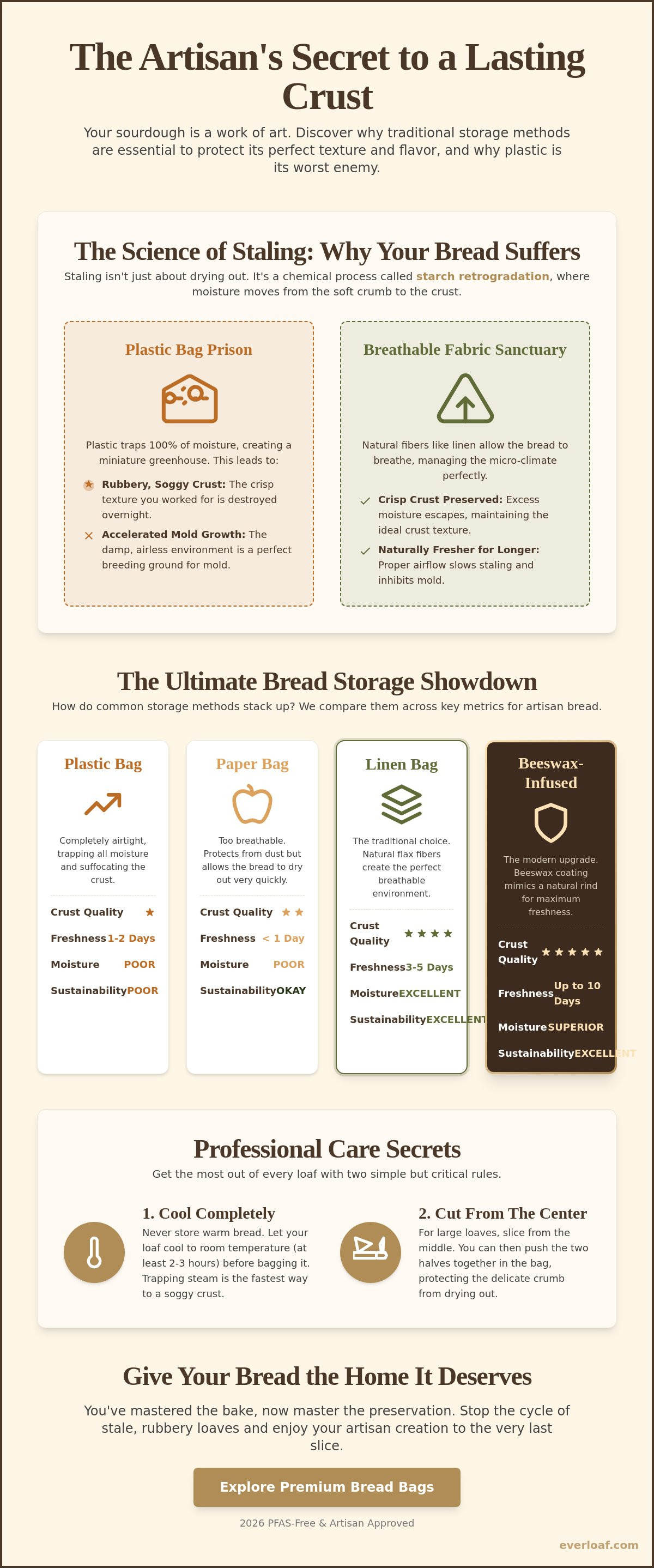
Your bread is a living thing. It breathes from the moment it leaves the oven until the very last slice. Most bakers think staling is just the loaf drying out. It's actually much more complex. Staling is a chemical process called starch retrogradation. This happens when starch molecules realign and crystallize as the bread cools. To keep your loaf at its best, you must provide breathable storage that respects this natural cycle. Your bread deserves better than a suffocating environment.
A linen bread bag acts as a professional-grade filter for your loaf. It allows excess moisture to escape while keeping the core of the bread soft and supple. This balance is critical. Without airflow, the moisture migrating from the crumb gets trapped against the crust. This is why bread in plastic feels like rubber by day two. Your sourdough deserves a home that doesn't suffocate its character. By using natural fibers, you're ensuring the "crust integrity" remains intact while the inside stays fresh.
Retrogradation and Moisture Migration
Starch molecules are stubborn. As soon as your bread hits room temperature, they start to harden. If you use a completely airtight seal, you're fighting against the science of the bake. Humidity levels inside the bag must be regulated. Too much moisture leads to a soggy crust; too little leads to a brick. A quality fabric storage solution manages this exchange perfectly. It keeps the starch from crystallizing too quickly while protecting the integrity of the crumb. This is why professional bakers avoid plastic at all costs. They know that a loaf needs to "exhale" to stay delicious.
Why Plastic Bags Make Crusts Rubbery
Plastic is the enemy of the artisan crust. It creates a miniature greenhouse. Moisture has nowhere to go, so it settles on the surface of the loaf. This doesn't just ruin the texture. It also invites mold growth. In zero-airflow environments, bacteria thrive on the damp surface of the bread. Consider these risks when choosing your storage:
- The Rubbery Effect: Moisture trapped in plastic turns a crispy crust into a tough, chewy layer.
- Mold Acceleration: Lack of air circulation is the primary cause of premature mold in homemade loaves.
- Flavor Loss: Bread stored in plastic can develop a "chemical" or "musty" taste over time.
Your bread deserves better than a suffocating wrap that invites decay. If you want to maintain that perfect crunch for up to 10 days, consider the moisture-wicking power of beeswax cotton bread bags as a modern alternative to plain plastic. It's the best way to ensure your hard work doesn't go to waste.
Linen vs. Plastic vs. Paper: Choosing the Right Shield
Your bread is an investment. You spent time, energy, and premium artisan flour to create it. It deserves a shield, not a prison. Choosing the wrong storage material is the fastest way to disrespect your hard work. When we look at Linen vs. Plastic vs. Paper, the performance gap is clear. Paper is the desert. Plastic is the swamp. A linen bread bag is the oasis. It provides the essential middle ground that artisan loaves require to stay delicious.
Paper bags are the primary cause of "rock-hard loaf" syndrome. They offer far too much airflow. Within 24 hours, your beautiful boule is a brick. Plastic is the opposite extreme. It traps every drop of moisture. This creates a humid greenhouse that destroys your crust and invites mold. A quality fabric bag offers moderate airflow with just enough moisture retention to keep the crumb supple. It's the only way to maintain the character of your bread for more than a single day.
The Moisture Balance Equation
Different loaves have different needs. Sourdough is the clear winner in linen storage. While mass-produced sandwich bread might survive in plastic for a few days, artisan sourdough thrives with breathability. In a linen bread bag, a standard boule maintains its character for 48 to 72 hours. Pastries are more delicate. They usually require immediate consumption or the semi-permeable seal of a beeswax wrap. From an environmental perspective, the carbon footprint of a single linen bag is 80% lower over its lifetime compared to the 500 plastic bags an average baker might use in a year.
Sustainability and Reusability Metrics
Sustainability isn't just a trend. It's a necessity for the modern baker. Data from January 2026 shows that 57% of American consumers believe brands must take the lead in reducing plastic waste. Additionally, 39% of home cooks now actively prefer eco-friendly materials like flax and beeswax in their kitchens. Beyond the ethics, there's the aesthetic reward. A curated baking station looks professional. It signals that you care about the quality of every slice. The hidden cost of "cheap" plastic adds up quickly. Investing in a long-lasting solution saves money and the planet. If you need even more protection for long-term freshness, the beeswax cotton bread bag is the ultimate upgrade for your plastic-free kitchen.
How to Use and Care for Your Fabric Bread Bags
Your bread deserves a ritual. Respect the cooling process before you even think about storage. A linen bread bag is a high-performance tool, but it needs your cooperation to succeed. Never rush the bag. You must let your loaf reach room temperature completely. Bagging a warm loaf is a recipe for a soggy disaster. The steam gets trapped in the fibers and destroys the crust you spent hours perfecting. Patience is the first step to a fresh last slice.
Once cooled, store your bagged bread in a cool, dry place. Direct sunlight is the enemy of freshness. It creates localized heat that accelerates starch retrogradation. Keep your loaves away from the oven or the toaster. Your bread is sensitive to its environment. Treat it with the same reverence you gave the dough during the bulk ferment. Proper storage isn't just about the bag; it's about the location.
Preparing the Loaf for Storage
How you cut your bread matters as much as how you store it. Stop cutting from the ends. Start cutting from the middle of the loaf. When you’re done, push the two halves back together before sliding them into your linen bread bag. This "cut-side down" trick creates a natural seal for the crumb. It prevents the interior from being exposed to too much air while the crust stays breathable. This is especially critical for high-hydration sourdough (75% or higher), which has a more open, vulnerable crumb than a 60% hydration sandwich loaf. By protecting the cut face, you ensure the heart of the bread stays soft for days.
Cleaning and Maintenance Tips
Linen is tough. It can last for years in a busy kitchen. However, you must maintain its natural fibers to keep it performing at its best. Shake out the crumbs daily to prevent any buildup. When it's time for a deep clean, use cool water and a gentle cycle. Avoid scented detergents at all costs. Your bread is highly porous. It will absorb floral or chemical scents from the fabric, ruining the complex flavor profile of your bake. For detailed maintenance steps, refer to this guide on cleaning organic cotton. It shares the essential principles for protecting natural textiles without damaging their integrity.
Ready to give your sourdough the home it deserves? Discover the superior moisture-locking power of the beeswax cotton bread bag and keep your crusts perfect for up to 10 days.
Beyond Plain Linen: Why Beeswax-Infused Cotton is the Modern Upgrade
Tradition is a beautiful starting point. But your bread deserves the future. While the classic linen bread bag has served bakers for centuries, modern innovation has delivered a necessary evolution. A standard linen bag keeps a loaf respectable for about 48 hours. After that, the battle against the "rock-hard" effect is usually lost. Beeswax-infused cotton changes the timeline entirely. It extends the life of your bread for up to 10 days. It's the difference between a quick snack and a week of perfect toast.
Your bread is a living thing that needs a protective layer. Think of beeswax as a second skin. It acts as a semi-permeable seal that mimics the natural protection of a fruit rind or a thick sourdough crust. This hybrid material allows the bread to breathe while locking in the essential moisture that keeps the crumb soft. You've seen the surge in sourdough popularity, with searches up 178% in 2025. Don't let your hard-earned starter go to waste because of outdated storage. Your loaves deserve a home that works as hard as you do.
The Hybrid Advantage: Airflow Meets Moisture Seal
Plain linen sometimes allows too much gas exchange, leading to rapid dehydration. Beeswax-infused fabric solves this by creating a moisture-wicking barrier. It stops the starch retrogradation we discussed earlier from turning your loaf into a brick. Beyond moisture control, beeswax is naturally antimicrobial. This provides an extra layer of defense against mold in the zero-airflow environments often found in plastic. It's why this is the favorite choice for sourdough enthusiasts who demand professional results at home. You get the breathability of a linen bread bag with the longevity of a modern seal.
Why Everloaf’s Orvix Bag is the Ultimate Choice
Safety and heritage shouldn't be secondary concerns. As of January 1, 2027, California regulations will strictly limit PFAS in textiles to 50 parts per million. Everloaf is already ahead of these standards. Our Orvix bags are designed by culinary professionals from Lyon, the historic heart of French baking. We use 100% organic cotton and pure beeswax to ensure your kitchen remains plastic-free and safe. We've combined centuries of French expertise with modern material science to create a storage solution that respects the craft. Check out our Orvix Bread Bags to see the difference for your next loaf. Your bread deserves the best care available in 2026.
Respect Your Craft with Better Storage
Your bread is a masterpiece, representing hours of patience and the finest ingredients; it is a level of craft similar to the bespoke arrangements found at Bon-Vivant Florists. Don't let a cheap plastic bag ruin that effort in a single night. You've learned how a linen bread bag provides the essential gas exchange your loaf needs to stay crisp. You also know that while plain linen is a classic start, the modern baker needs more. By choosing the right storage, you prevent starch retrogradation from stealing the soft texture of your crumb. With consumer interest in sourdough forecasted to grow another 33% in 2026, protecting your bake is more important than ever.
Thousands of home bakers have already made the switch to professional-grade storage. It's time to join them. Our Orvix bags use 100% Organic Cotton and Pure Beeswax to keep your favorite loaves fresh for up to 10 days. It's the ultimate upgrade for your sustainable kitchen. Your bread deserves a home that respects its life and flavor from the first crusty heel to the very last slice.
Your bread deserves better-upgrade to the Orvix Beeswax Bread Bag today!
Keep baking beautiful things and remember that a truly luxury home environment, enhanced by the premium signature scents of Boujee Life, is the perfect setting for your next artisan creation. Your next perfect slice is waiting for its new home.
Frequently Asked Questions
Does a linen bread bag really work for sourdough?
Yes, a linen bread bag is the gold standard for sourdough storage. It protects the unique crust structure while allowing the essential gas exchange your loaf requires. This prevents the rubbery texture often caused by plastic. Your sourdough deserves an environment that respects its long fermentation process and keeps the crumb supple.
How long does bread last in a linen bag before going hard?
Expect your artisan loaf to stay fresh for 2 to 3 days in plain linen. After this window, the bread begins to firm up as moisture naturally evaporates. For bakers needing more time, beeswax-infused versions extend this life to 10 days. It's a significant improvement over paper bags, which often fail within 24 hours.
Can I wash my linen bread bag in the washing machine?
You can machine wash your bag using a gentle cycle and cold water. Avoid high heat to prevent the natural flax fibers from shrinking. Always skip the scented detergents. Your bread is porous and will absorb artificial fragrances. This ruins the complex flavor profile of your crust and the hard work you put into the bake.
Is linen better than a bread box for keeping bread fresh?
Linen offers superior airflow compared to most non-ventilated bread boxes. While a bread box provides a dark environment, it can sometimes trap too much humidity. A fabric bag wicks away excess moisture more efficiently. This prevents mold growth and keeps your crust crispy for longer than a closed box would.
Should I slice my bread before putting it in the bag?
No, you should always store your loaf whole to protect the delicate crumb. Slicing exposes the interior to air, which accelerates the staling process. If you must cut it, use the middle-cut method. Push the two halves together before bagging to create a natural moisture seal that keeps the center soft.
Will the linen bag make my bread taste like fabric?
A high-quality linen bag won't transfer any flavor to your bread. Flax is naturally lint-free and neutral in scent. Just ensure you use fragrance-free soaps during cleaning. This keeps the focus on the nutty, complex aromas of your toasted grains. Your bread deserves to taste exactly like the masterpiece you intended.
What is the difference between a linen bag and a beeswax bread bag?
The primary difference is the moisture-lock capability. A standard linen bread bag focuses on maximum breathability for short-term storage. A beeswax bag uses a semi-permeable seal to keep bread fresh for up to 10 days. It's the ultimate upgrade for bakers who don't finish a large boule in a single sitting.
Can I use a linen bag for freezing bread?
No, linen is too breathable for the freezer and will lead to freezer burn. For long-term freezing, use an airtight wrap or container. Save the fabric bag for the counter where your bread can breathe and thrive. Your loaf deserves the right tool for every stage of its life, from oven to table.


