

Your sourdough is a masterpiece, yet most bakers treat it like a crime scene by wrapping it in suffocating plastic. It's a betrayal of the craft to watch a crackling crust turn rubbery by morning. You've worked too hard on your hydration levels to let poor storage ruin the results. Your bread deserves better than a disposable sleeve that ruins its anatomy. Switching to a beeswax bread bag allows your loaf to breathe while locking in the essential moisture that keeps it alive.
Stop the cycle of stale crusts and plastic guilt. This sustainable storage solution functions as a humidity-regulating second skin to preserve your hard-earned results. You can finally achieve a 10-day fresh loaf without a single piece of plastic waste. In this guide, we'll explore the science of breathability, compare storage methods, and show you how to maintain your bag for a lifetime of beautiful bakes. It's time to honor your crust and crumb with the care they earned during fermentation. Your kitchen aesthetic is about to get as beautiful as your crumb.
Key Takeaways
- Stop ruining your crust with plastic and discover why your bread deserves a breathable alternative.
- See how a beeswax bread bag uses antimicrobial properties to keep your sourdough fresh for 10 full days.
- Compare performance metrics across common storage methods to see which keeps your crumb soft and your crust crispy.
- Learn the essential cleaning techniques and storage tips to make your sustainable kitchen gear last for years.
- Find out why specific bag dimensions matter for artisan boules and how they honor the craft of baking.
Why Your Bread Deserves Better Than Plastic or Paper
You spent 48 hours nurturing a starter, timing bulk fermentation, and perfecting your score. Don't betray that effort with a storage choice that kills the quality of your loaf. Most bakers reach for what's convenient: a plastic sleeve or a paper bag. Both are catastrophic failures for artisan sourdough. Your bread is a living product with a specific anatomy. It deserves a storage solution that mirrors the quality of the ingredients inside it. Storing your hard-earned boule in a low-quality container is like buying a vintage wine and leaving the cork out.
The "stale" feeling you dread isn't just about the bread drying out. It's a chemical process called starch retrogradation. As bread ages, starch molecules recrystallize and toughen. This happens fastest when moisture levels aren't regulated. A beeswax bread bag solves this by acting as a breathable barrier. It prevents the moisture from escaping too fast while stopping it from pooling on the surface. Without this balance, your sourdough's lifespan drops from over a week to less than 48 hours.
The Problem with the Plastic "Greenhouse Effect"
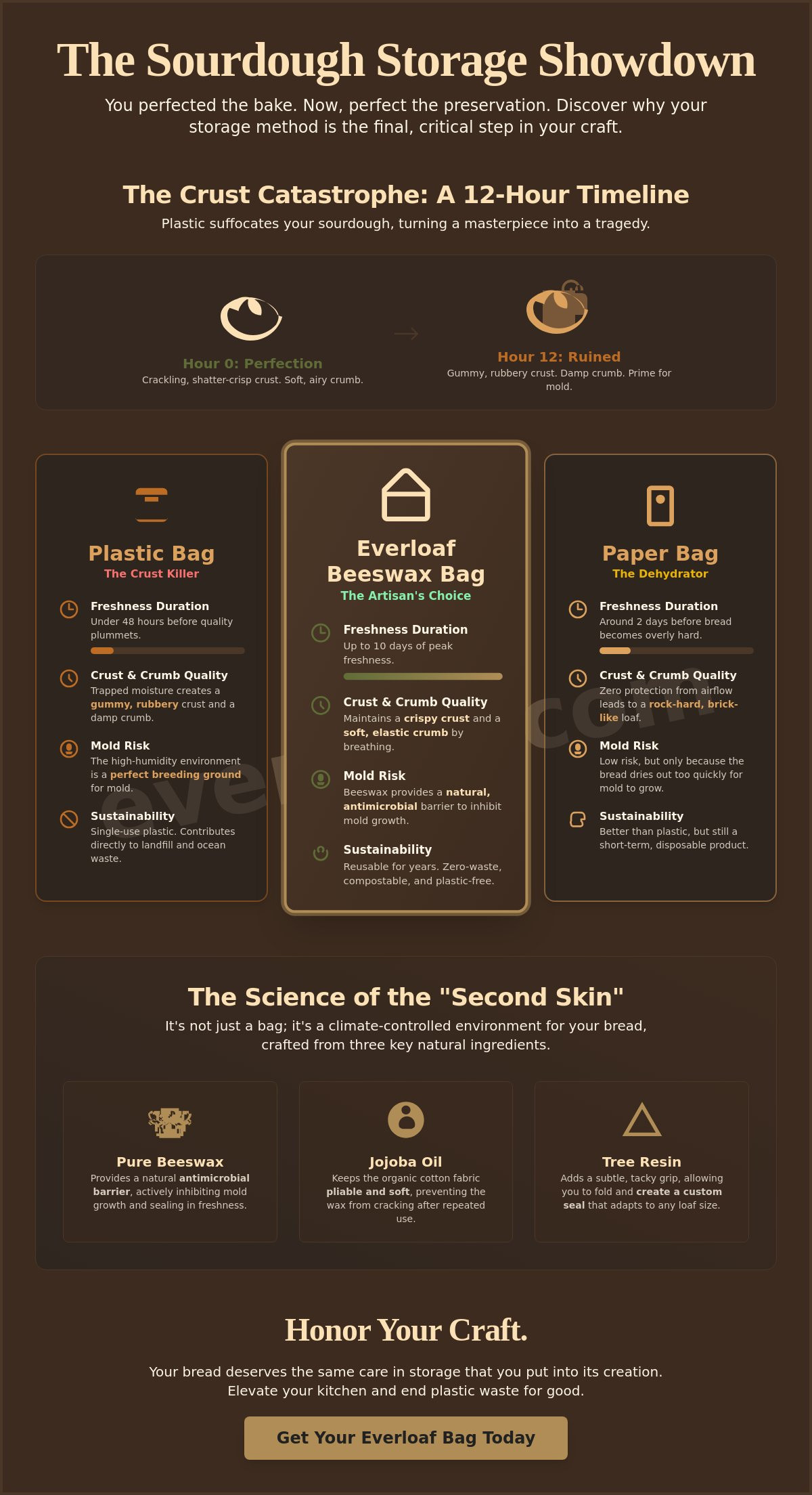
Plastic acts like a greenhouse for your loaf. It traps 100% of the moisture. This water eventually migrates from the soft crumb to your beautiful, hard crust. Within 12 hours, that "shatter-crisp" finish is gone. It's replaced by a gummy, rubbery texture that's impossible to enjoy. Even worse, that trapped condensation creates the perfect environment for rapid mold growth. Airtight storage is the absolute enemy of crusty bread.
Why Paper is Only a Short-Term Solution
Paper bags represent the opposite extreme. They're far too porous and offer zero protection against airflow. This leads to "flash-drying," where the hydration leaves the loaf entirely. Your bread becomes a literal brick by day two. Paper is a fine choice for the 15-minute trip from the local bakery to your kitchen counter, but it's useless for 10-day freshness. Switching to a sustainable alternative to plastic wrap provides the middle ground your bread actually needs. It stops the air from stealing the moisture without suffocating the crust. Your sourdough stays soft on the inside and crisp on the outside, exactly as the baker intended.
The Science of the Beeswax Bread Bag: How It Works
Artisan bread is a living entity. It continues to evolve long after it leaves the oven. To keep it at its peak, you need a storage solution that understands biology. A beeswax bread bag isn't just a simple pouch. It's a bio-mimicry tool designed to function like a natural protective rind. By using a specialized infusion of wax, resin, and oil, this bag creates a climate-controlled environment for your loaf. It respects the craft of your bake by allowing the bread to "perspire" without losing its soul.
The magic lies in the infusion. Pure beeswax provides a natural antimicrobial barrier. It contains esters and long-chain alcohols that actively inhibit the growth of mold spores. To make the bag functional, we blend this wax with jojoba oil and tree resin. The jojoba oil ensures the fabric remains pliable and won't crack after repeated use. The tree resin adds a subtle, tacky grip. This allows you to fold the bag tight, creating a customized seal that adapts to the size of your boule or baguette.
Humidity Regulation: The "Second Skin" Effect
Think of the bag as a second skin for your sourdough. In nature, fruits like lemons or oranges use a porous peel to protect their juicy interior while letting gases escape. Your bread requires the same balance. The weave of the bag allows excess carbon dioxide to exit, preventing the "sour" off-flavors that occur in airtight plastic. More importantly, it maintains a critical "sweet spot" of 12-15% moisture retention. This specific range is the secret to a 10-day fresh loaf. It keeps the crumb soft and elastic while preventing the crust from absorbing too much environmental humidity.
Organic Cotton vs. Synthetic Fabrics
The foundation of a great bag is 100% organic cotton. Synthetic fabrics like polyester are essentially plastic; they can't absorb the wax infusion deeply into their fibers. We use a heavy-duty, high-thread-count weave specifically designed to hold a high volume of the beeswax mixture. This ensures the protection doesn't flake off after three washes. Using organic materials means your food never comes into contact with pesticides or synthetic dyes. Your bread deserves the purity of chemical-free storage. If you want to elevate your kitchen's sustainability, explore the Everloaf collection to find the perfect fit for your next bake.
Beeswax vs. Linen vs. Plastic: The Ultimate Comparison
Choosing a storage method is about choosing the destiny of your loaf. You can't treat a high-hydration sourdough the same way you treat a grocery store sandwich loaf. Most bakers rotate between three main options: plastic, linen, and the beeswax bread bag. Each impacts the anatomy of your bread differently. If you want to reach the 10-day freshness milestone, you need to understand the trade-offs in crust retention, crumb softness, and mold prevention.
Performance metrics tell the real story. Plastic wrap scores a 0/10 for crust quality because it turns a crisp exterior into a gummy mess within hours. Linen bags are excellent for the first six hours; they keep the crust "shatter-crisp" but fail to protect the crumb. By the 24-hour mark, a linen-stored loaf often becomes too hard to slice. The beeswax option provides the only consistent balance. It maintains an 8/10 crust texture while keeping the interior at a 9/10 softness level for nearly a week. This is why over 1,000 units of these bags are sold monthly on platforms like Amazon; bakers are tired of compromising.
The cost-per-use analysis is equally lopsided. A single high-quality bag can last for over 12 months with proper care. Contrast this with the average home baker who spends significant amounts on rolls of single-use plastic wrap every year. Investing in one $30 storage solution effectively replaces $100 worth of disposable waste over its lifetime. It's a rare case where the premium, artisan choice is actually the most economical one.
When to Choose Beeswax Over Linen
Beeswax is the superior choice for high-hydration sourdough that needs to stay soft for a full week. The wax infusion creates a barrier that linen simply cannot provide. Linen is better suited for "same-day" consumption of very hard-crusted baguettes where you want maximum airflow for a few hours. For the modern home baker who wants their Sunday bake to last until the following Friday, the beeswax bread bag is the essential all-rounder.
The Hidden Cost of "Cheap" Plastic
Plastic isn't just bad for your crust; it's a liability for your health and the planet. Storing warm bread in plastic raises concerns about chemical leaching. Non-recyclable soft plastics make up a massive portion of landfill waste. In North America alone, the beeswax wrap market holds a 40% global share because consumers are fleeing these synthetic options. A reusable, compostable alternative respects your bread and your environment simultaneously.
Care and Longevity: Making Your Bag Last for Years
A premium beeswax bread bag is an investment in your kitchen’s future. If you treat this tool with respect, it will protect your loaves for years. Many bakers worry about hygiene, but the science is on your side. Beeswax contains natural esters that actively inhibit bacterial growth. You don't need to scrub it after every use. In fact, over-cleaning is the fastest way to ruin the wax infusion. Your bread deserves a clean environment, but it also needs the wax to stay intact to regulate humidity properly.
For daily maintenance, a simple shake-out is usually enough. If you have sticky residue from a high-hydration dough, use cool water and a tiny drop of mild, alcohol-free soap. Never use hot water. High temperatures will melt the wax right out of the organic cotton fibers. After washing, hang it to air dry away from direct sunlight. This simple routine preserves the antimicrobial barrier that keeps mold at bay for up to 10 days.
The "Oven Refresh" Method
After 12 months of heavy use, your bag might lose its signature tackiness. Most brands tell you to buy a new one, but we believe in longevity. You can reset the wax coating at home. Preheat your oven to its lowest setting, usually around 150°F or 65°C. Place the bag on a sheet of parchment paper. If you see "bald spots" where the fabric looks dry, sprinkle a few food-grade beeswax pellets over the area. Pop it in the oven for exactly 2 to 3 minutes. Once the wax looks glossy, remove it and hang it quickly to cool. This redistribution process makes the bag feel brand new. It's a simple way to honor the craft and reduce waste.
What to Avoid
Heat is the absolute enemy of your storage gear. Never put your bag in the dishwasher or microwave. It will result in a waxy mess and a ruined bag. Most importantly, let your sourdough cool completely before bagging. Placing a hot loaf inside will melt the interior coating and suffocate the bread. You've worked hard on that crust; don't ruin it by rushing the process. For more detailed steps, check out our guide on How to clean and care for your organic cotton bread bag.
Storing your bag is simple. You can fold it flat to save drawer space or roll it to prevent deep creases in the wax. If you find the bag is too stiff in the winter, simply warm it between your hands for 10 seconds. Ready to upgrade your kitchen? Browse the Everloaf shop to find your next favorite baking companion.
The Orvix Difference: Why Everloaf is the Baker’s Choice
Your bread deserves better than a mass-produced, oversized sleeve from a faceless marketplace. The Everloaf beeswax bread bag isn't just another kitchen accessory. It's a tool rooted in the culinary excellence of Lyon, France. We didn't design it to be "good enough." We designed it to be the final word in sourdough preservation. Thousands of bakers have already joined our community, moving away from plastic waste toward a standard of quality that honors the craft of artisan baking.
Quality starts with the materials. We use 100% organic cotton infused with premium, locally sourced beeswax. This isn't a thin, spray-on coating that flakes off after a week. It's a deep, heavy-duty infusion. While generic wraps account for 44.03% of the budget market on Amazon, Everloaf focuses on the specialist. Our bags are priced for value and longevity, with multi-packs starting at $24.50 per bag. It's an investment in every loaf you'll bake this year. Our current May 24th batch is already 96% sold, proving that serious bakers recognize the Everloaf standard.
Designed by Bakers, for Bakers
We tested the Everloaf beeswax bread bag against dozens of sourdough hydration levels, from standard 70% boules to challenging 85% high-hydration doughs. Most generic bags are too small for a true artisan boule. Ours is designed specifically for those generous dimensions. The tactile experience is unique; the bag actually gets better with every use as the wax conforms to your specific baking style. You can feel the quality in the grip of the fabric. Experience it yourself with The Everloaf Bread Bag.
Complete Your Baking Kit
Storage is only one part of the journey. To truly honor your bread, you need tools that match the quality of your storage. The Everloaf bag pairs perfectly with our Danish Dough Whisk for perfect aeration and our precision Sourdough Knife for that clean, effortless slice. The Everloaf promise is simple: we provide quality tools for a lifetime of baking. We treat your bread with the reverence it deserves. Don't let your hard work turn into a rubbery mess or a dry brick. Upgrade your bread storage today at Everloaf.com.
Fresh Sourdough Starts with Better Storage
You now understand why plastic is a betrayal of your craft and why paper is only a temporary fix. A high-quality beeswax bread bag provides the humidity-regulating second skin your loaf requires. By maintaining that critical 12-15% moisture balance, you ensure your sourdough stays fresh for a full 10 days. This 100% organic and plastic-free tool is more than a pouch; it's a commitment to quality inspired by the historic bakeries of Lyon, France. It's designed to last for years with simple maintenance and the occasional oven refresh.
Join the community of over 10,000 home bakers who have elevated their kitchen standards. Your bread deserves a storage solution that mirrors the effort you put into every bake. Stop settling for rubbery crusts and dry crumbs. It's time to treat your loaves with the reverence they earned during fermentation. Your bread deserves better-shop the Orvix Beeswax Bag now. Keep your oven hot, your crusts crispy, and your kitchen sustainable.
Frequently Asked Questions
Does a beeswax bread bag make the bread smell like honey?
No, your bread won't taste or smell like honey. High-quality beeswax has a subtle, natural aroma that stays on the fabric rather than transferring to the loaf. After a few uses, this initial scent fades significantly. Your sourdough's complex fermentation notes remain the star of the show without any interference.
Can I use a beeswax bag for warm bread straight from the oven?
Never put hot bread directly into the bag. The wax infusion begins to soften at approximately 144°F or 62°C. Placing a steaming loaf inside will melt the coating and suffocate the crust. Wait at least 2 to 3 hours until the loaf reaches room temperature before you begin storage.
How long does a beeswax bread bag actually last?
A well-maintained beeswax bread bag lasts for over 12 months of consistent use. You can extend this lifespan by using the oven refresh method to redistribute the wax. If the fabric becomes thin or won't stick to itself after a year of service, it's time to compost it and start fresh.
Is it safe to store sourdough in a beeswax bag if I have allergies?
Our bags use 100% organic cotton and natural beeswax. They're safe for most users, but you should avoid them if you have a known allergy to bees or pine resin. Because we use chemical-free materials, there are no synthetic dyes or pesticides to worry about during direct food contact.
How do I get rid of the "new" wax smell?
The natural scent of fresh wax is a sign of purity and quality. If you find it too strong, simply air the bag out in a well-ventilated room for 24 to 48 hours. Don't wash it immediately just to remove the smell; the aroma will naturally dissipate as the bag settles into your kitchen routine.
Can I freeze bread inside a beeswax bread bag?
Yes, you can use the bag for short-term freezing up to 3 weeks. The wax creates a solid barrier that protects the crumb against freezer burn. When you're ready to eat, let the bag and bread thaw completely at room temperature before opening it. This prevents the cold wax from cracking or peeling.
What happens if my beeswax bag gets moldy?
If mold appears on the bag itself, you must address it immediately with a mixture of cool water and white vinegar. However, if the mold has deeply penetrated the cotton fibers, it's safer to retire the bag. Proper air drying after each wash is the best way to prevent this issue entirely.
Can I use the bag for things other than bread?
Absolutely, this versatile pouch is excellent for keeping leafy greens and celery crisp in the crisper drawer. The humidity-regulating properties work just as well for garden produce as they do for sourdough. Just ensure you wash it with cool water between different food types to prevent any flavor transfer.


