

Plastic bags are where good bread goes to die. You spend hours perfecting a sourdough starter. You hunt down the perfect local loaf. Then, you watch the crust turn rubbery by morning. It's a heartbreaking waste of craftsmanship. If you're tired of bread that suffocates in plastic, it's time to explore the scientific benefits of beeswax for food storage. Your bread deserves a storage solution that actually breathes.
Beeswax creates a natural, breathable barrier. It mimics a protective peel. This maintains the delicate balance between moisture and airflow. Plastic simply can't do this. We promise to show you how this sustainable shift keeps your bread fresh for 7 to 10 days. You can finally eliminate the guilt of single-use waste. We'll dive into the unique properties of food-grade beeswax. You'll learn why it's the professional-grade choice for a crispy crust and a soft, pillowy crumb.
Key Takeaways
- Stop the "sweat effect" that ruins your crust. Learn how natural gas exchange keeps your bread's texture perfect.
- Discover the antimicrobial benefits of beeswax for food storage. Natural esters and fatty acids create a shield against common kitchen mold.
- Keep your sourdough fresh for up to 10 days. It's the secret to maintaining a soft crumb and a crispy exterior.
- Use your own hand warmth to create a custom seal. This professional-grade technique protects the integrity of every loaf you bake.
- Upgrade to the beeswax Bread Bag for larger loaves. It's the specialized solution for boules and baguettes that flat wraps can't match.
What is Beeswax Food Storage? "The Best Choice I Ever Made!"
Stop treating your artisan loaf like a common commodity. Your sourdough is a living thing. It deserves respect. Most people reach for plastic because it's convenient. It's also a death sentence for a crispy crust. Real food storage requires a specialized composite of organic cotton infused with pure beeswax, tree resin, and botanical oils. This isn't a new trend. History shows us that wax has protected food for centuries. Ancient civilizations used it to seal jars and preserve perishables. They knew what we are only now rediscovering.
When you ask What is Beeswax Food Storage? you're looking at a return to functional art. It has evolved from temporary wraps into specialized tools like the beeswax bread bag. Unlike plastic, this is "active" storage. It doesn't just sit there. It interacts with the loaf. It protects the exterior while allowing the bread to live. Understanding the benefits of beeswax for food storage starts with realizing that your food needs to breathe. It needs a microclimate that mimics nature.
The Anatomy of a Beeswax Wrap
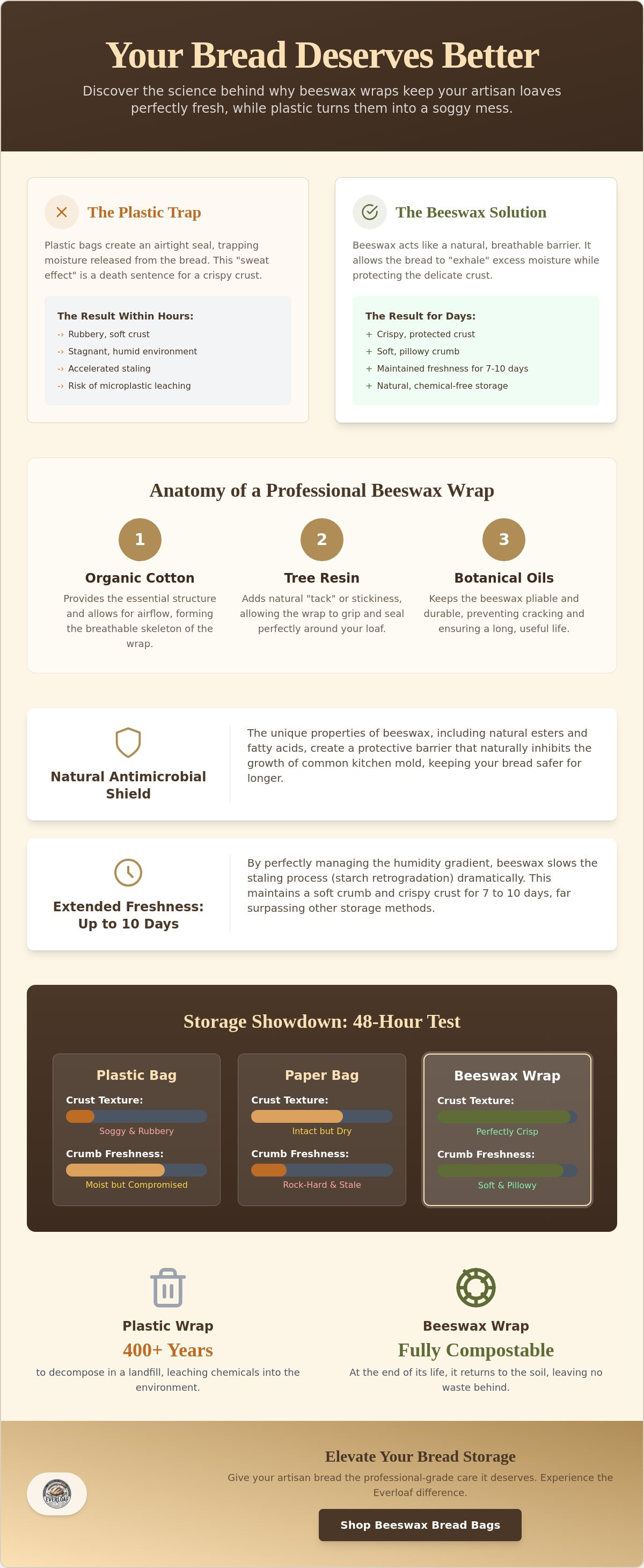
The foundation is 100% organic cotton. This isn't just for aesthetics. The weave provides the essential structure for airflow. Without this skeleton, the storage would be too dense. Tree resin is the second key ingredient. It provides the "tack" or stickiness. This allows the wrap to grip the edges of a bowl or stay folded over a loaf. Finally, jojoba or coconut oil is added to the mix. It keeps the wax pliable. It ensures your storage won't crack or flake after a few uses. It's a balanced ecosystem for your food.
The Environmental Imperative
Plastic wrap has a 400-year lifespan in a landfill. That's a staggering environmental cost for a few hours of use. Beeswax is entirely compostable. When it finally wears out, it returns to the soil. You also eliminate the risk of microplastic leaching. This is critical for warm, fresh-baked goods. Heat can cause chemicals in plastic to migrate into your food. A professional-grade evolution like the Orvix bread bag removes that worry entirely. It's a clean, sustainable way to honor your craft and the planet simultaneously.
The Science of Breathability: Why Plastic is Killing Your Crust
"Airtight" is a lie when it comes to bread. Most people think sealing a loaf in a plastic bag preserves it. It actually accelerates its downfall. Bread is a porous, living structure. It needs to breathe. When you seal it in plastic, you create a stagnant, humid environment. This is the "Sweat Effect." Moisture from the soft crumb migrates to the crispy crust. In plastic, that moisture has nowhere to go. It sits on the surface. Your beautiful crust turns into a rubbery, unappealing mess within hours.
One of the major benefits of beeswax for food storage is its ability to facilitate gas exchange. This is a scientific process where carbon dioxide escapes while essential moisture is retained. Beeswax is FDA-approved as food-safe; it acts as a semi-permeable membrane. It mimics the natural skin of a fruit. It allows the bread to "exhale" without drying out completely. This balance is the key to longevity. Understanding the benefits of beeswax for food storage means choosing a material that works with the bread's natural chemistry.
Staling isn't just about losing water. It's about retrogradation. This is the process where starch molecules recrystallize. It makes the bread feel hard and dry. Beeswax slows this process down by managing the humidity gradient perfectly. Paper bags fail here because they are too breathable. They let all the moisture escape too fast. You end up with a rock-hard loaf by dinner. Beeswax hits the sweet spot. It provides enough protection to stop the crumb from drying but enough airflow to keep the crust alive.
Moisture Regulation for Sourdough
Sourdough is particularly sensitive. Its high hydration levels make it prone to the sweat effect. A crispy crust requires a specific humidity gradient. The interior should stay moist while the exterior stays dry. Beeswax maintains this delicate state. It prevents the moisture from pooling on the crust. If you're serious about your bakes, you need a professional solution. You might want to check out The Ultimate Beeswax Bread Bag Guide to see how this works for your sourdough.
Plastic vs. Paper vs. Beeswax: The Storage Showdown
The results after 48 hours are clear. Professional bakers and home enthusiasts alike see the difference immediately. Here is how the mediums compare:
- Plastic: The crumb stays soft, but the crust is completely rubbery and moist. Mold risk increases.
- Paper: The crust is hard, but the crumb has become dry and crumbly. The bread is essentially toast.
- Beeswax: The crumb remains soft and the crust still has its structural integrity.
Airtight is the enemy. Bread needs a living environment. Gas exchange is the movement of gases through a semi-permeable barrier to maintain internal balance. This is why beeswax wins every time. It respects the science of the bake. It protects your hard work. For a specialized approach to large artisan loaves, the beeswax Bread Bag offers the perfect breathable microclimate.
Natural Antimicrobial Properties: Keeping Mold at Bay
Mold spores are everywhere. They are invisible, patient, and hungry. They wait for the perfect humid pocket to ruin your sourdough. Plastic provides that pocket. One of the greatest benefits of beeswax for food storage is its natural chemical defense. It isn't just a cloth. It's a bio-active shield. Beeswax contains esters, fatty acids, and phenolics. These aren't just technical terms. They are nature's defense system. These compounds actively inhibit bacterial and fungal growth. They create a hostile environment for common kitchen mold spores.
This chemical profile creates a "self-cleaning" effect. Pathogens struggle to survive on the surface of the wax. This is a massive upgrade from plastic. Plastic bags develop micro-scratches over time. These scratches become breeding grounds for bacteria. Beeswax is different. It repels contaminants naturally. This is why a simple cold-water rinse is enough. You don't need harsh chemical sanitizers. The wax does the heavy lifting for you. In high-quality infused fabrics, these properties remain potent for months of daily use. It's a professional-grade investment in your kitchen's hygiene.
Esters and Fatty Acids: Nature’s Preservatives
The molecular structure of beeswax is a masterpiece of evolution. It highlights why the benefits of beeswax for food storage are so unique. It's naturally hydrophobic. It repels liquid water with ease. However, it still allows for the gas exchange we discussed earlier. The infusion process is critical. It bonds these natural protectants directly into the organic cotton fibers. This creates a unified material that is far stronger than its individual parts. It's safe for your family. Food-grade beeswax is a non-toxic contact surface. You can trust it with your most delicate artisan loaves.
Maintaining the Protective Barrier
You must protect the shield that protects your bread. The "No Heat" rule is your most important guideline. Hot water is the enemy. It melts the wax and strips away the antimicrobial layer. Always use cool water. Pair it with a mild, alcohol-free soap. You'll know it's time for a refresh when the fabric loses its signature "tack" or stickiness. If the material feels like plain cotton, your protective barrier has thinned. Learn more about How to Clean and Care for Your Organic Cotton Bread Bag to ensure your storage stays effective for the long haul.
Practical Benefits for the Home Baker: "My Sourdough Lasted 10 Days!"
"My sourdough lasted 10 days!" is the chorus we hear from our community. It's not magic. It's science. When you use plastic, you get that sterile, chemical smell. It's uninviting. Beeswax offers a warm, honeyed scent that complements your bake. It enhances the ritual of slicing a fresh loaf. One of the most practical benefits of beeswax for food storage is how it responds to you. Your own body heat is the key. It transforms a simple cloth into a custom-fit shield for your hard work.
Artisan loaves come in all shapes and sizes. Standard wraps often fall short for a large sourdough boule. This is where the bag format shines. It provides the bulk and volume needed for your biggest bakes. The benefits of beeswax for food storage extend beyond simple freshness. It's about the value of your time and the quality of your ingredients. You've spent days on that starter. Don't let a cheap plastic bag ruin the result in hours.
Mastering the Seal
To activate the storage, simply use your hands. The warmth of your palms softens the wax and resin. Press the material firmly around your boule or batard. Hold for five seconds. The seal becomes a custom fit. This "Hand-Warmth Seal" ensures no excess air enters, but the bread can still breathe. Oddly shaped loaves aren't a problem anymore. Forget clips or ties. The "fold and tuck" method is superior. It creates a tension-based closure that stays put. It treats your bread with the care it deserves.
The Economic Argument
Let's talk numbers. A single high-quality beeswax Bread Bag costs about $30. Over 12 months, it replaces dozens of rolls of single-use plastic wrap. You'll save money while saving the planet. Most importantly, you stop throwing away half-loaves of stale bread. If you prevent just one artisan loaf from going to waste each month, the bag pays for itself in weeks. It's built for durability. A quality bag lasts for over 100 uses with proper care. It's a professional-grade investment for the serious home baker. You can find more details in our review of The Best Bread Bags of 2026.
Ready to upgrade your kitchen? Experience the difference for yourself with the beeswax Bread Bag. It's the professional choice for those who respect the craft of baking.
The Everloaf Difference: Elevating Bread Storage to an Art
Your bread is alive. It breathes. It has needs. Everloaf treats every loaf with reverence. We don't see bread as a commodity. We see it as a craft. Our Orvix bread bag is the culmination of Lyon’s culinary tradition. It's where heritage meets modern sustainability. We understand the benefits of beeswax for food storage better than anyone else. We've built a solution that respects your time and your talent.
Flat wraps have their place in the kitchen. They're fine for a block of cheese or a half-cut avocado. They fail when it comes to the volume of an artisan boule. A bag format provides a 360-degree microclimate. It surrounds the loaf completely. There are no gaps for air to leak in. There is no struggle to stretch a small square over a large batard. We use only 100% organic cotton and premium, pure beeswax. It's a professional-grade solution for people who treat baking as an art form. We are the specialists who know that your bread deserves a home, not just a cover.
Crafted for the Serious Baker
We designed our signature bag to be oversized. It comfortably fits the largest home-baked boules without crushing the crust. We spent months perfecting the specific wax-to-cotton ratio. This precise balance is what ensures 10-day freshness. Home bakers choose Everloaf because we don't compromise. Generic supermarket wraps are thin and inconsistent. Our bags are robust. They feel substantial in your hands. They give your bread the respect it has earned through hours of proofing and baking. You've put in the work. We provide the protection.
Complete Your Sourdough Kit
The best results come from the best tools. The beeswax bread bag is the final piece of your sourdough puzzle. It pairs perfectly with our Danish dough whisk for a seamless baking process from start to finish. You've mastered the crumb. Now, master the storage. Every loaf you bake is a testament to your skill. Don't let it suffocate in plastic. Protect your hard work—shop the Orvix Bread Bag today.
Give Your Loaf the Home it Deserves
Your bread is a labor of love. It shouldn't end up as a rubbery disappointment in a plastic bag. You've seen how the science of breathability protects your crust. You've learned how natural antimicrobial properties keep mold at bay. These are the real benefits of beeswax for food storage. It's about respecting the craft of the bake. It's about choosing a professional solution that honors your ingredients and your effort. Stop settling for storage that suffocates your hard work.
The Orvix Bread Bag is the result of culinary expertise from Lyon, France. We use 100% organic cotton and infuse it with pure, professional-grade beeswax. This isn't just a kitchen accessory. It's an investment in your daily experience. You can finally enjoy a perfect crumb and a crispy exterior for up to 10 days. Stop the waste. Start the ritual of better bread. You deserve a kitchen that works as hard as you do.
Keep your bread fresh for 10 days with the Orvix Beeswax Bag
The community is waiting for you. Join the thousands of home bakers who have made the switch to a more sustainable, high-performance kitchen. Your next sourdough boule will thank you for the upgrade.
Frequently Asked Questions
Is beeswax food storage actually hygienic?
Yes, beeswax is naturally hygienic due to its bio-active compounds. As we explored, the presence of esters and phenolics creates a surface that actively inhibits bacterial growth. This is one of the key benefits of beeswax for food storage compared to plastic. It doesn't develop the micro-scratches that trap pathogens in synthetic bags. Your bread stays safe and clean in a material that actually fights spoilage.
How long does a beeswax bread bag typically last?
You can expect your beeswax bread bag to last for approximately 12 months with regular use. This timeline assumes you follow proper care instructions and avoid all sources of heat. You'll know it's reaching its end when the fabric feels like plain cotton and loses its signature stickiness. At this point, you can choose to re-wax the bag or retire it to the compost bin.
Can I use beeswax wraps for raw meat or fish?
No, you should never use beeswax wraps for raw meat or fish. These products require high-heat sanitization to kill dangerous bacteria, and heat will melt your wax. Beeswax storage is specialized for bread, cheese, and vegetables. Stick to these categories to ensure your kitchen remains safe. Use a different, heat-safe container for your raw proteins to avoid any risk of cross-contamination.
Why is my bread getting hard in my beeswax bag?
Your bread is likely getting hard because the seal isn't tight enough or the wax layer has thinned over time. Remember to use the warmth of your hands to mold the material firmly around the loaf's opening. If the bag is old, it may have lost its moisture-retaining properties. A quick refresh can often restore the humidity gradient needed to keep your sourdough soft and pillowy for days.
How do I clean my beeswax storage without ruining the wax?
Clean your beeswax storage with cool water and a drop of mild, alcohol-free soap. Never use hot water or a dishwasher. The heat will strip the wax and ruin the protective barrier instantly. Simply wipe the surface with a soft cloth or rinse it in the sink. Hang it to air dry away from direct sunlight to preserve the integrity of the professional-grade infusion.
Can I freeze bread inside a beeswax bag?
Yes, you can freeze bread inside a beeswax bag for short-term storage. It works well for up to three or four weeks. The most important rule is to let the bag reach room temperature before you unfold it. Cold wax is brittle and can crack if handled too early. Once thawed, the bag regains its flexibility and continues to protect your loaf as usual.
Does the beeswax smell transfer to the food?
A faint, pleasant scent of honey is normal for new beeswax storage. This natural aroma doesn't transfer to the flavor of your bread or other food items. Most bakers find the scent actually enhances the sensory experience of their kitchen. Over time, the intensity of the smell will naturally fade while the functional benefits of beeswax for food storage remain fully intact for your bakes.
What happens to the beeswax bag when it reaches the end of its life?
Your beeswax bag is 100% compostable and zero-waste. When it can no longer be refreshed, you can cut it into strips and add it to your garden compost. It will break down naturally and return to the earth within a few months. Some enthusiasts even use old bags as effective, natural fire starters for camping. It's a clean, guilt-free ending for a product that has served you well.


