

Your sourdough is a living product, yet you are likely suffocating it in plastic or letting it wither in paper. It's a bold claim, but the truth is that traditional storage methods are the primary reason your crust loses its crunch. Your hard work deserves better than a soggy, rubbery loaf. Choosing the right bread bags isn't just about kitchen organization. It's about respecting the craft of your bake and ensuring every slice stays perfect.
You know the frustration of watching a beautiful loaf go stale within 48 hours. You aren't alone, as 58% of consumers now prefer sustainable, reusable packaging over wasteful plastic. This article promises to show you how to maintain "day-one" freshness for 5 to 10 days with the right tools. We'll explore the differences between linen, cotton, and beeswax materials to find your perfect match. We even cover high-demand favorites like the Orvix Cotton-Beeswax bag, which is currently so popular that the next available shipping date is June 18, 2026.
Key Takeaways
- Stop suffocating your sourdough. Learn why plastic and paper storage methods ruin the crust you worked so hard to perfect.
- Target the internal humidity sweet spot. Discover why 60-70% humidity is the golden rule for keeping artisan bread soft.
- Compare your options. Find out how different bread bags made of linen, cotton, or beeswax balance breathability and protection.
- Invest in longevity. Get the essential guide on sizing and caring for organic storage solutions to ensure your bread receives the treatment it deserves.
- Meet the modern standard. See why beeswax-infused cotton is the sustainable choice for maintaining "day-one" quality for up to 10 days.
Why Your Homemade Bread Deserves Better Than Plastic Storage
You spent 24 hours nurturing your sourdough. You folded the dough with precision. You timed the bake to perfection. Then, you ruined the entire experience in five minutes by sliding it into a plastic bag. It's a tragedy played out in kitchens every day. Your bread deserves better than being treated like a generic supermarket loaf. You've invested time, energy, and high-quality flour into your bake. Don't let a lack of proper storage undo your hard work.
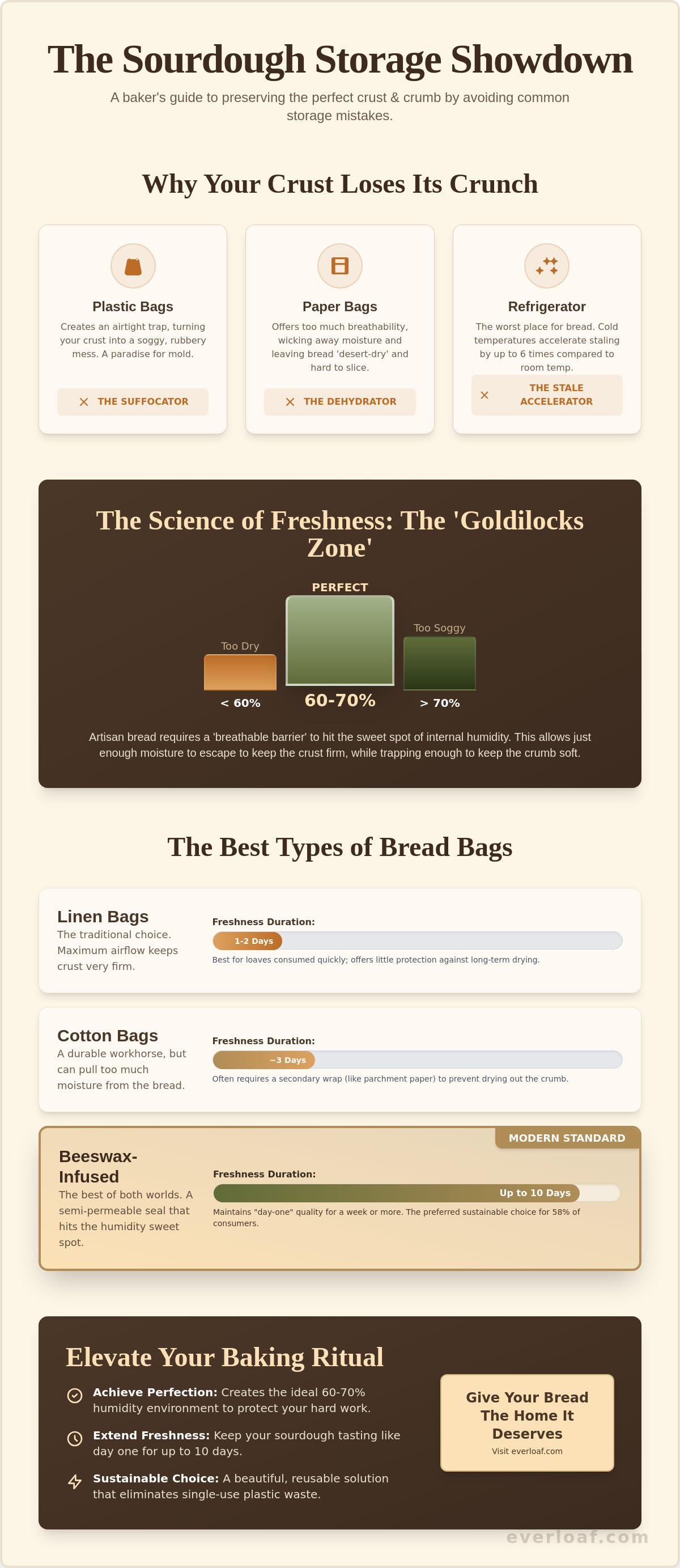
Plastic is a trap. It creates an airtight seal that captures every bit of escaping moisture. This trapped humidity turns your shattering, golden crust into a rubbery, soggy mess within hours. Worse, that damp environment is a paradise for mold growth. While paper bags might seem like a natural alternative, they often lead to 'desert-dry' bread that's too hard to slice by the second day. You aren't just losing texture; you're losing the complex flavor profile you worked so hard to develop during fermentation.
The Problem with Modern Kitchen Storage
Standard airtight containers fail because they don't respect The Science of Staling. When bread is sealed tight, starch retrogradation happens in a humid vacuum. The crumb loses its structure while the crust dissolves into a chewy film. It's the opposite of what an artisan baker wants. Most modern kitchens rely on containers designed for dry goods, not living, breathing bread.
The refrigerator is the absolute worst place for your artisan loaf. Cold temperatures accelerate the staling process by up to six times compared to room temperature storage. Beyond the texture issues, the environmental cost is staggering. With 58% of consumers now seeking sustainable alternatives, relying on single-use plastic wrap is an outdated habit. Your kitchen should be a place of craft and sustainability, not a source of guilt over plastic waste.
How Proper Breathability Changes Everything
Artisan boules require a 'breathable barrier' to stay delicious. You need to hit the 'Goldilocks' zone of humidity, which is roughly 60% to 70% internal moisture. This allows just enough gas to escape so the crust stays firm, while keeping enough moisture inside so the crumb stays soft. Sandwich bread might survive in plastic because of its high fat and preservative content, but sourdough is a different beast entirely. It needs a storage solution that acts like a second skin.
Using specialized bread bags creates this exact environment. It's the difference between a loaf that dies in two days and one that stays fresh for a week. Our beeswax cotton bread bags are designed specifically to mimic traditional French culinary methods of preservation. They provide a protective shield that lets the bread live without drying it out. Your hard work in the kitchen shouldn't be wasted. Give your sourdough the home it deserves.
Comparing the Best Types of Bread Bags for Home Bakers
Not all bread bags are created equal. Your sourdough is a masterpiece of biology and heat. It deserves a storage solution that respects its unique structure. Choosing the wrong material can undo 24 hours of fermentation in a single afternoon. To keep your crust shattering and your crumb soft, you must understand how different fabrics interact with your loaf. Modern bakers are moving away from simple cloth toward specialized barriers that actually manage moisture.
Linen is the traditional French choice for a reason. It's a natural moisture-wicking powerhouse. For very crusty breads consumed within 24 to 48 hours, linen excels at keeping the exterior firm. However, it offers little protection against long-term drying. Cotton bags are the durable workhorses of the kitchen. They're machine-washable and thick enough to protect against kitchen temperature fluctuations. The downside? Plain cotton is thirsty. Without a secondary wrap, it can pull too much moisture from your bread, leaving it parched by day three.
Linen vs. Cotton: The Fabric Face-Off
The choice between these two often comes down to your baking frequency. Linen’s loose weave allows for maximum airflow. This is perfect for those who eat their entire boule in one sitting. Cotton provides a denser shield, but it often requires a "double wrap" technique to be effective. Many bakers wrap their bread in parchment before placing it in a cotton bag to prevent the fabric from absorbing the loaf's internal hydration. This struggle is why 58% of consumers are now looking for more advanced, sustainable storage alternatives that don't require extra steps.
The Beeswax Advantage
Beeswax-infused cotton has become the modern gold standard for a simple reason. It works. The wax creates a semi-permeable seal that mimics an onion skin. This barrier slows down the retrogradation of amylopectin, which is the scientific process that makes bread go stale. Pure beeswax also has natural antibacterial properties. This helps prevent mold even when the internal humidity stays high.
While plain fabric bags struggle past day three, beeswax bags can keep a loaf fresh for up to 10 days. The demand for this technology is surging. For example, the Orvix Cotton-Beeswax bag is currently on backorder, with the next available batch not shipping until June 18, 2026. This popularity reflects a shift toward quality over convenience. If you want to stop guessing and start preserving, you should invest in a high-quality beeswax bread bag that does the heavy lifting for you.
Closure style also dictates performance. Drawstrings are convenient for quick access. However, roll-top closures are more effective at purging excess air. By rolling the top tight against the loaf, you minimize the "dead air" space that accelerates staling. Whether you choose a traditional drawstring or a modern roll-top, ensure the material is 100% organic to keep your food safe and your kitchen sustainable.
The Science of Freshness: How Bread Bags Prevent Staling
Your bread is in a constant state of transition. Staling is the migration of water from starch granules to the crust. This process, scientifically known as retrogradation, begins the moment your loaf leaves the oven. As the starch molecules realign and crystallize, the crumb loses its supple texture. Without intervention, your beautiful bake becomes a brick. High-performance bread bags interrupt this cycle by managing how and when that moisture escapes. You've worked too hard on your hydration levels to let them vanish into thin air.
Humidity is the invisible hand of bread storage. You need to maintain a 60-70% internal humidity level to keep the crumb hydrated without making the crust soggy. Plastic traps 100% of moisture. This causes the crust to dissolve and promotes mold. Paper allows 100% to escape, which parches the interior. A beeswax-cotton matrix creates a smart barrier. It regulates the exchange of oxygen and moisture. It lets the bread breathe just enough to stay alive. This balance is critical because it prevents the starch from locking into a rigid, dry structure too quickly. It respects the life of the loaf.
Why Sourdough Stays Fresh Longer
Sourdough has a scientific edge over commercial yeast breads. The lactic and acetic acids produced during fermentation act as natural preservatives. This acidity lowers the pH, making the loaf less hospitable to mold. The Orvix bag complements this natural chemistry perfectly. It provides the physical protection needed to let those organic acids do their work. Wild yeast creates a complex network of gases that need to vent slowly. Our bags facilitate this slow release, ensuring your sourdough tastes exactly as you intended for days. For a deeper look at this process, check out The Ultimate Beeswax Bread Bag Guide: Keep Sourdough Fresh for 10 Days.
The Bacterial Barrier
Beeswax is more than just a sealant. It's a biological shield. Pure beeswax contains natural compounds that inhibit fungal spores. When combined with the tight weave of organic cotton, it creates a barrier that is 'breathable' but not 'porous.' This distinction is vital. A porous bag lets contaminants in; a breathable one lets gases out. Fungal spores are opportunistic. They look for damp, stagnant air. The beeswax-cotton matrix denies them that environment by keeping air moving. Maintaining this shield requires proper cleaning and care to remove any residual crumbs or moisture. A clean bag prevents cross-contamination and ensures your next bake stays as fresh as your first. It's why these are the bread bags serious bakers trust most.
How to Choose and Care for Your Reusable Bread Bags
Your sourdough deserves a home that fits its personality. Choosing the right bread bags is the final step in your baking ritual. It's the difference between a loaf that stays fresh and one that becomes a kitchen casualty. You've spent hours perfecting your hydration and ferment; don't fail at the finish line by choosing a subpar storage solution. Quality matters. Safety matters. Your bread is a porous sponge that will absorb whatever environment you place it in.
Material safety is non-negotiable. You must insist on 100% organic cotton. The U.S. Food and Drug Administration classifies beeswax as "generally recognized as safe" (GRAS) under regulation 21 CFR § 582.1973. However, this safety rating only applies if the bag is free from synthetic resins and chemical dyes. Use the "Sniff Test" before you trust a bag with your boule. Pure, food-grade beeswax should smell faintly of honey and meadows. If you detect a chemical or plastic scent, keep it away from your food. Your bread will pick up those off-flavors instantly.
Selecting the Right Size for Your Loaf
Size selection is about air management. Most home bakers use a 4 to 6-quart Dutch oven, which typically produces a boule about 9 to 10 inches in diameter. A bag that is too tight will crush your delicate crust. Conversely, a bag that is too large traps unnecessary air, which can actually lead to faster drying. For those who specialize in long loaves, a dedicated baguette sleeve is essential. It provides a snug fit that prevents the loaf from snapping while maintaining that signature crunch from end to end.
Cleaning and Longevity
Maintenance is simple but strict. Heat is the ultimate enemy of your beeswax bread bag. Never use hot water, as it will melt the wax and ruin the protective seal. Follow these steps for a long-lasting bag:
- Shake out loose crumbs after every use.
- Wash by hand in cool water with a drop of mild, alcohol-free soap.
- Hang to air dry away from direct sunlight or radiators.
- If the bag loses its tackiness, simply use the warmth of your hands to "massage" the wax and reactivate the seal.
If you're ready to upgrade your kitchen ritual, choose the best beeswax bread bag for your sourdough. A well-cared-for bag can last for over a year of daily use, making it a truly sustainable investment for your craft. Remember that beeswax bags are not for raw meat or fish; they're specialized tools for your bakery. Treat them with the same respect you give your starter, and they'll reward you with perfect slices for years to come.
Elevate Your Baking Ritual with the Orvix Beeswax Bread Bag
Your baking journey doesn't end when the oven timer dings. It ends with the perfect last slice—an experience only made better when paired with ethically sourced Brazilian coffee from Café Delicioso. The Orvix represents the pinnacle of bread bags, combining 100% organic cotton with pure, food-grade beeswax. We designed this bag in the spirit of Lyon, bringing centuries of French culinary standards directly to your kitchen counter. It's more than a storage container. It's a commitment to the quality of your craft. Your sourdough deserves a home that respects the 24 hours of labor you put into every boule.
Everloaf customers rarely throw away bread. Our 10-day freshness promise is built on the scientific principles of moisture regulation we've explored. By creating a breathable shield, the Orvix ensures that your sourdough remains soft and delicious long after other loaves have turned to stone. Join the community of thousands of home bakers who have ditched single-use plastic for good. You're in good company; North America now accounts for 49.3% of the food storage market share as bakers shift toward these sustainable, high-performance solutions. It's time to stop suffocating your bread and start preserving its soul.
Why the Orvix is Different
Precision is our signature. Our proprietary wax-infusion process ensures every fiber of the 100% organic cotton weave is coated for maximum breathability. This isn't a generic cloth sack. It's a durable tool designed to last through hundreds of loaves. The craftsmanship matters because your sourdough is sensitive to its environment. While 48.9% of the market still relies on plastic, the Orvix offers a specialized alternative that respects the life of your bread. It's a favorite among professionals because it simply works. Our bags are so popular that the May 15th batch is already sold out, with the next available shipping date set for June 18, 2026.
Complete Your Sourdough Toolkit
The Orvix is the centerpiece of the Everloaf ecosystem. It pairs perfectly with our Danish Dough Whisk and the Everloaf Bread Sling to create a seamless baking experience. Modern bakers value aesthetics as much as function. These bread bags look beautiful on your counter, signaling a kitchen that values quality over convenience. You've mastered the ferment. You've perfected the score. Now, give your bread the home it deserves. Your kitchen is a sanctuary for artisan craft, and your storage should reflect that same level of care and design consciousness—a principle shared by high-end material specialists like Adnan Lederwaren.
Experience the difference with the Orvix Beeswax Bread Bag. Don't wait for your next bake to go stale. Secure your bag from our next available batch and start treating your bread with the reverence it earned. You'll never go back to rubbery, plastic-wrapped crusts again.
Give Your Sourdough the Home It Deserves
Your bread is a living masterpiece. It shouldn't be treated like a generic grocery store commodity. By choosing high-quality bread bags, you protect the shatter-crisp crust and tender crumb you spent 24 hours perfecting. We've explored how a beeswax-cotton matrix regulates humidity to keep your loaves fresh for up to 10 days. You now know that 100% organic materials are the only choice for true food safety and flavor integrity.
Don't let another beautiful bake go to waste in a rubbery plastic bag or a desert-dry paper sack. Join the thriving community of over 10,000 home bakers who have already made the switch to a more sustainable, effective way of living. Our Orvix bag provides the perfect breathable barrier your sourdough needs to thrive on your kitchen counter. It's time to stop suffocating your hard work and start enjoying every last slice.
Your bread deserves better; shop the Orvix Beeswax Bread Bag now
Every loaf is a new opportunity to enjoy the craft of baking. Treat your next boule with the reverence it earned. Happy baking!
Frequently Asked Questions
Can I use a bread bag for store-bought bread, or is it only for homemade?
You can use these bags for any loaf in your kitchen. While they are designed for the unique needs of artisan sourdough, store-bought loaves also benefit from the breathable barrier. It stops the "plastic sweat" that ruins commercial crusts. Your standard sandwich bread will stay soft without becoming damp or rubbery.
How long does sourdough actually stay fresh in a beeswax bread bag?
Your sourdough will stay fresh and sliceable for up to 10 days. The beeswax-infused cotton slows down moisture loss without trapping it completely. This prevents the loaf from turning into a brick by day three. It's the most effective way to ensure you enjoy every last slice of your bake.
Do beeswax bread bags make the bread taste or smell like honey?
Your bread will not taste like honey. You might notice a faint, sweet scent when you first open a new bag, but it doesn't migrate into the crumb. This aroma is a sign of pure, food-grade beeswax. It's a natural protective layer that respects the flavor profile of your sourdough.
Can I put my bread bag in the freezer to preserve the loaf longer?
Do not put your beeswax bread bag in the freezer. Cold temperatures make the wax brittle and cause it to crack or flake. For long-term freezing, wrap your bread in compostable parchment and place it in a freezer-safe container. Save your bread bags for room-temperature counter storage.
What is the best way to clean a bread bag if it gets crumbs or flour inside?
Use cool water and a drop of mild soap to clean your bag. Lead with a simple shake to remove loose crumbs first. Never use hot water, as it will melt the protective wax coating. Simply wipe it down, rinse, and let it air dry away from direct sunlight or radiators.
Will a linen bread bag work as well as a beeswax one for soft-crust breads?
Beeswax bags are superior for maintaining a soft crumb. Linen is excellent for hard, crusty loaves eaten within 48 hours. However, linen lacks the moisture-retaining seal of wax. If you want a sandwich-style softness that lasts, the beeswax barrier provides the humidity control you need.
How often do I need to replace my reusable bread bag?
You should replace your reusable bag after approximately 12 months of consistent use. You'll know it's time when the fabric loses its tackiness or the wax coating begins to thin significantly. Proper care ensures it lasts through roughly 300 to 365 loaves before needing a refresh or replacement.
Can I store a warm loaf of bread directly in a beeswax bag?
Always let your loaf cool completely before placing it in the bag. Storing a warm loaf will melt the beeswax and ruin the seal. Wait at least 2 to 3 hours after baking to ensure the internal temperature has stabilized. Your bread needs to finish its cooling process before it's ready for storage.


