

Your bread is alive, and it deserves better than a plastic coffin. It's a heartbreaking scene every baker knows: you spend hours perfecting a sourdough loaf, only to watch the crust turn rubbery and damp inside a grocery store bag. By January 1, 2026, states like Colorado and Maine already implemented strict PFAS regulations because your food packaging shouldn't be toxic. Finding the right natural eco friendly bread storage is about more than just being green; it's about respecting the craft of baking. You need a breathable barrier that manages moisture exchange without suffocating the loaf.
We agree that throwing away expensive flour because of a spoiled loaf is a waste of your hard work. You deserve a solution that looks beautiful on your counter and keeps your bread fresh for days. In this guide, you'll discover which sustainable storage methods actually maintain that shatter-crisp crust and pillowy crumb. We compare the latest eco-friendly materials, from beeswax to linen, to find the perfect companion for your kitchen. Stop settling for stale slices and start treating your bread with the reverence it earned.
Key Takeaways
- Stop suffocating your crust in plastic. Learn how trapped moisture destroys artisan texture and creates a breeding ground for mold.
- Find the perfect natural eco friendly bread storage solution. We compare linen, paper, and beeswax to see which method truly protects your loaf.
- Master the science of crumb moisture. Understand why your bread goes stale and how the right airflow keeps it fresh for days.
- Protect your hard work with simple techniques. Learn why cooling your loaf completely and using the "cut-side down" rule are essential for longevity.
- Upgrade to a professional standard. Discover how organic materials can finally give your sourdough the care and respect it deserves.
Why Your Bread Deserves Better Than Plastic Storage
You spent twelve hours fermenting that dough. You watched the crust blister and the ear rise to perfection. Then, you put it in a plastic bag. Within sixty minutes, that masterpiece is ruined. Plastic doesn't just store bread; it suffocates it. It creates a humid greenhouse effect that forces moisture back into the crust. Your artisan loaf deserves a better life than a damp, plastic cage. It's time to stop treating your hard work like a supermarket commodity.
The Rubbery Crust Dilemma
Sourdough crust is a delicate balance of moisture and air. When you seal a loaf in plastic, the steam has nowhere to go. It settles on the surface, turning a shatter-crisp exterior into a chewy, rubbery mess. Your baguette's signature "ear" loses its structural integrity and becomes a soggy shadow of its former self. This trapped moisture doesn't just ruin the texture; it invites rapid mold growth. Without airflow, your bread is essentially sitting in a petri dish of its own humidity.
Historically, bakers understood this balance. They used a Breadbox to provide a dark, ventilated space that protected the crumb without destroying the crust. This is the core principle of natural eco friendly bread storage. It's about managing moisture exchange, not stopping it entirely. By allowing the bread to breathe, you preserve the very qualities that make artisan baking special.
The Shift Toward Sustainable Kitchens
Modern kitchens are moving away from the "convenience" of single-use plastic. It's a necessary change for your health and the planet. A growing number of jurisdictions are implementing strict disclosure requirements for PFAS in food packaging, with some regulations already in effect as of January 1, 2026. Storing warm, fresh bread in thin plastic risks direct contact with chemical leaching. It's why reusable products held a 64% share of the sustainable food storage market in 2025. People are waking up to the fact that natural is simply better.
Choosing a beeswax cotton bread bag isn't just an aesthetic choice. It's a functional upgrade that aligns with the slow-food movement. You're choosing a breathable, antimicrobial barrier that respects the craft of baking. Natural materials allow your bread to age gracefully, maintaining its character until the last slice. Your bread worked hard to be delicious. Give it a home that keeps it that way.
Comparing Natural Eco-Friendly Bread Storage Methods
Choosing the right natural eco friendly bread storage isn't just about avoiding plastic. It's about finding the specific environment where your loaf can thrive. Most bakers settle for paper bags or linen wraps, but these methods often fall short of true longevity. Paper is a temporary fix. It prevents the "greenhouse effect" of plastic, but it offers zero moisture protection. Within twelve hours, your beautiful sourdough crumb will likely be as dry as a crouton. You deserve a solution that lasts longer than a single afternoon.
Ceramic bread crocks are another traditional option. They look stunning on a countertop, but they're often bulky and inconsistent. Unless the lid fits perfectly and the ventilation is precise, you'll find your bread either drying out or molding faster than expected. In 2025, the sustainable food storage market saw a massive 7.9% growth as consumers moved away from these hit-or-miss traditional methods toward more engineered natural solutions.
Linen and Cotton: The Breathable Classics
Linen has been the favorite of French bakers for centuries. It's highly breathable and keeps the crust in peak condition for short-term storage. However, plain fabric has a major flaw: it breathes too well. Without a barrier to slow down evaporation, the moisture inside your bread escapes far too quickly. This leads to the dreaded "air-drying" effect where the loaf becomes rock hard by day two. If you're curious about how different fabrics stack up, take a look at our guide on The Best Bread Bags of 2026.
The Beeswax Advantage
Beeswax-infused cotton is the "Goldilocks" of natural eco friendly bread storage. It provides the structure of a bag with the performance of a semi-permeable membrane. The wax acts as a natural moisture barrier that keeps the crumb soft, while the cotton weave allows the loaf to breathe just enough to maintain a crispy crust. It's a sophisticated balance that plain paper or linen simply can't match.
Beyond moisture control, beeswax is naturally anti-bacterial. This is a critical advantage in the fight against mold. While a paper bag provides a porous surface where spores can settle, a beeswax-treated surface is naturally resistant. This keeps your bread fresh and safe for days longer than traditional methods. If you're ready to stop wasting expensive flour on spoiled loaves, it's time to upgrade to a beeswax cotton bread bag. Your bread worked hard to be delicious; give it the protection it deserves.
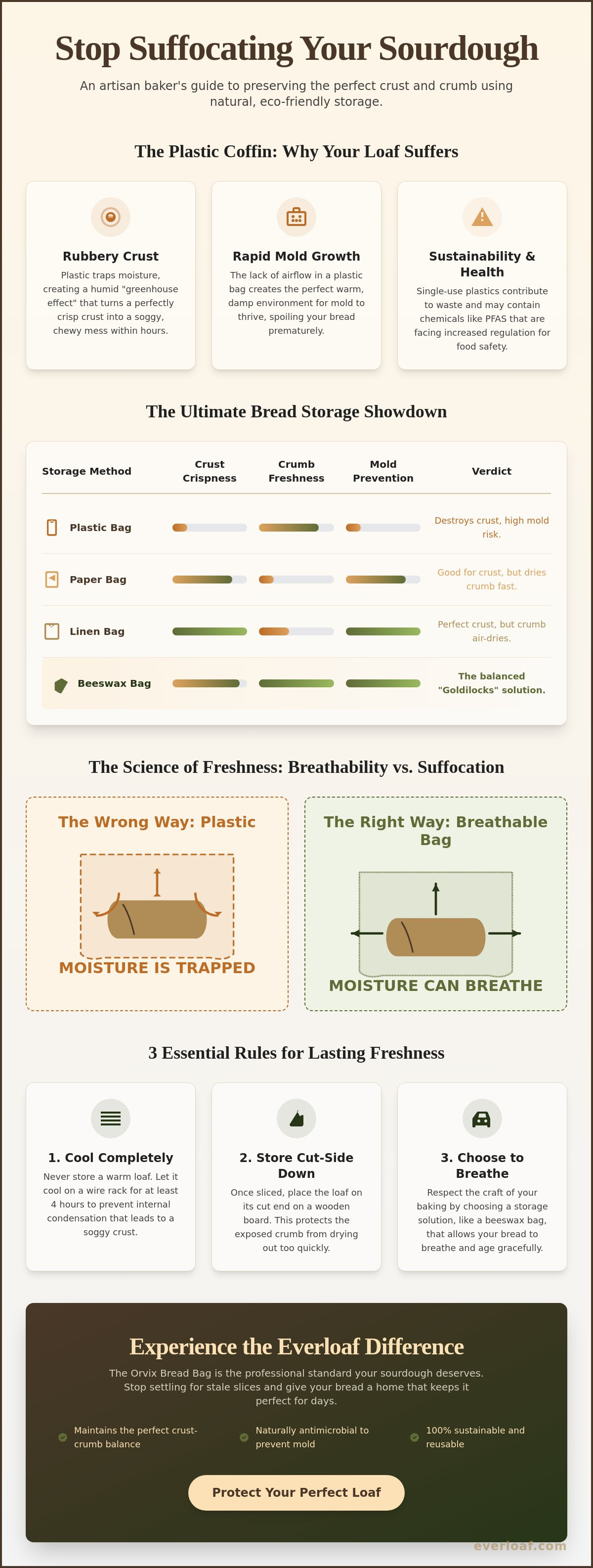
The Science of Freshness: Breathability vs. Moisture
Bread is a biological clock. From the second it leaves the oven, the countdown to staleness begins. Most people think bread just dries out. It's more complex than that. Your loaf is actually undergoing a chemical transformation. To stop it, you need to master the balance between breathability and moisture. This is where natural eco friendly bread storage moves from a kitchen trend to a scientific necessity.
The enemy isn't just air; it's the wrong kind of air. If you seal your bread in plastic, you create a swamp. If you leave it on the counter, you create a desert. You need a micro-climate. Organic cotton fibers provide this by acting as a thermal and moisture regulator. They allow the bread to "exhale" excess steam without losing the essential hydration within the crumb. It's a delicate dance that keeps your loaf in the peak freshness zone for days longer than traditional methods.
Managing Starch Retrogradation
Staleness is caused by starch retrogradation. When bread is baked, starch molecules absorb water and become disorganized. As the loaf cools, those molecules start to recrystallize and move back into a structured, rigid state. This is what makes bread hard and crumbly. Natural fibers create a protective buffer that slows down this chemical recrystallization by stabilizing the moisture levels around the loaf.
Temperature plays a massive role here. Never put your bread in the fridge. Temperatures between 35 and 45 degrees Fahrenheit are the "danger zone" for starch. In this range, retrogradation happens up to six times faster than at room temperature. If you won't finish a loaf within three days, slice it and move it to the freezer. The freezer stops the chemical clock. The fridge just speeds it up.
Humidity Control with Beeswax
Beeswax is the secret weapon for longevity. It acts as a semi-permeable skin, mimicking the natural protection of a fruit's rind. This coating prevents the "sweating" that occurs in non-breathable bags, which is the primary cause of rapid mold growth. By maintaining a consistent level of internal humidity, beeswax keeps the crumb soft while the outer crust remains distinct.
This scientific approach allows high-quality sourdough to maintain its integrity for up to 10 days. You don't have to accept a three-day lifespan for your bakes. When you use a beeswax cotton bread bag, you're using a tool designed to work with the bread's biology. Your bread deserves to age gracefully. Stop the countdown and start preserving the craft you worked so hard to create.
Maximizing Longevity: A How-To Guide for Natural Storage
Practical care is the final bridge between a good loaf and a great experience. You've already learned why plastic is a "crust killer" and how beeswax manages the science of staling. Now, you need to master the daily habits that keep your bread in peak condition. Effective natural eco friendly bread storage is a ritual, not just a container. It starts the moment your loaf leaves the oven and continues until you enjoy the very last slice.
Patience is your first tool. Bagging a warm loaf is a death sentence for the crust. If you trap that residual steam, you'll end up with a soggy, rubbery mess regardless of the material you use. Let your bread cool completely on a wire rack for at least two to three hours. Once it's at room temperature, find a cool, dark corner of your kitchen. Keep your bread away from the toaster, the dishwasher, or direct sunlight. Heat is the enemy of freshness, and a stable environment is essential for maintaining the crumb's integrity.
Slicing Strategy for Freshness
How you cut your bread is just as important as how you store it. Forget the traditional method of slicing from one end to the other. Instead, cut your loaf directly down the middle. Take your slices from the center and then push the two remaining halves tightly back together before placing them in your bag. This simple trick eliminates the exposed surface area of the crumb, effectively using the crust as a natural seal against the air.
Precision matters here. A dull blade tears the delicate structure of the gluten, creating more surface area for air to penetrate. Use a professional sourdough knife to ensure clean, effortless slices that preserve the crumb's moisture. By maintaining the structural integrity of the loaf, you ensure that every subsequent slice is as soft as the first.
Caring for Your Eco-Friendly Storage
Your storage solution is a long-term investment. In 2025, reusable products held a 64% share of the sustainable food storage market because they are designed to last. To keep your beeswax-infused organic cotton performing at its best, you must treat it with care. Never use hot water. High temperatures will melt the protective wax coating and ruin the bag's semi-permeable properties. Use cool water and a mild, alcohol-free soap for spot cleaning. Shake out the crumbs regularly and hang the bag to air dry.
If you want to dive deeper into the benefits of domestically sourced materials, read our full report on Beeswax Bread Bags Made in USA. Proper maintenance ensures your natural eco friendly bread storage remains effective for a year or more of daily use. If your loaf eventually loses its crunch, don't panic. A quick five-minute stay in a 350 degree oven will reactivate the crust and bring that artisan texture back to life. Treat your bread with the reverence it earned, and it will reward you with flavor that lasts.
Ready to give your bread the home it deserves? Upgrade your kitchen with a beeswax cotton bread bag and experience the difference of professional-grade storage.
Experience the Everloaf Difference: The Orvix Bread Bag
You've mastered the science of staling. You've ditched the plastic. Now, you need the ultimate tool to protect your craft. The Orvix Bread Bag isn't just another kitchen accessory. It's a professional-grade solution for natural eco friendly bread storage. Designed by culinary experts in Lyon, France, this bag represents the gold standard of bread care. It combines traditional French baking wisdom with modern organic materials. Thousands of home bakers already trust Everloaf to protect their sourdough. It's time you joined them.
Our commitment to quality is uncompromising. We use only 100% organic cotton and pure, natural beeswax. This isn't a mass-produced commodity. It's a specialized tool for people who take their baking seriously. By 2025, reusable products held a dominant 64% share of the sustainable food storage market. This shift happened because bakers realized that natural materials outperform plastic every single time. Your bread deserves a home that respects its biology. It deserves a container that preserves the hard work you put into every knead and fold.
Thoughtful Design for Artisan Loaves
Your boules and batards aren't standard shapes. They need space to breathe and stay fresh. We designed the Orvix bag with generous dimensions to accommodate even your largest sourdough bakes. The tactile feel of the high-quality organic materials is unique and satisfying. It's durable, beautiful, and built to last for years of daily use. Stop settling for flimsy, paper-thin alternatives that fail after a week. Upgrade your bread storage today and experience the Everloaf standard for yourself.
Join the Sustainable Baking Community
There's a deep emotional satisfaction in maintaining a plastic-free kitchen. You aren't just saving your bread; you're reducing single-use waste and honoring the slow-food movement. This is about more than just freshness. It's about a shared passion for quality and the value of the food we create. Our community is built on the belief that the last slice should be just as good as the first. We believe in treating every loaf with reverence.
We want you to succeed in every bake. For more professional tips on keeping your crusts crispy for over a week, explore The Ultimate Beeswax Bread Bag Guide. Your bread deserves better care than a plastic bag can ever provide. Don't let another beautiful loaf go to waste. Take control of your kitchen and give your bakes the protection they truly earn. It's the simple, beautiful change your kitchen needs.
Give Your Bread the Home it Deserves
Your bread worked hard to reach perfection. Don't let a plastic bag undo that effort in a single hour. We've explored how natural eco friendly bread storage balances breathability and hydration to keep your crumb soft and your crust shatter-crisp. You now understand that starch retrogradation is a chemical process you can control with the right micro-climate. It's about respecting the craft of baking from the first knead to the very last slice.
Designed by professional chefs from Lyon, the Orvix bag uses 100% organic cotton and pure beeswax to mimic a natural rind. It's a professional standard loved by 10,000+ home bakers who refuse to settle for rubbery, spoiled sourdough. Stop wasting expensive flour and start preserving your hard work with a beautiful, sustainable solution. Your kitchen deserves this upgrade. Your bread deserves this care. Keep your bread fresh for 10 days with the Orvix Beeswax Bag and experience the difference of a professional storage ritual. Happy baking.
Frequently Asked Questions
Is natural eco-friendly bread storage better than plastic?
Yes, natural materials are superior because they allow bread to breathe. Plastic creates a humid greenhouse effect that turns artisan crusts rubbery and invites mold growth. With several states like Colorado and Maine implementing strict PFAS regulations on January 1, 2026, moving away from plastic is a health necessity. Natural fibers protect your loaf without leaching chemicals or suffocating the texture.
How long does bread stay fresh in a beeswax bread bag?
High-quality sourdough can maintain its integrity for up to 10 days in a beeswax bag. The wax acts as a semi-permeable skin that keeps the crumb soft while preventing the "sweating" that causes spoilage. This is a significant improvement over paper bags, which typically allow bread to dry out within 12 to 24 hours. Your bread deserves a home that respects its biology.
Can I store warm bread in a natural cotton bag?
No, you must let your loaf cool completely on a wire rack for at least two to three hours first. Bagging a warm loaf traps residual steam, which will ruin the crust regardless of the material you use. Once the bread reaches room temperature, it's ready for natural eco friendly bread storage. Patience ensures your crust stays crisp and your crumb remains pillowy.
What is the best way to store sourdough bread without plastic?
A beeswax-infused organic cotton bag is the most effective plastic-free solution. It provides the "Goldilocks" balance of moisture retention and airflow that plain linen or paper can't match. This method mimics the traditional wisdom of a breadbox while offering a modern, space-saving design. It's the favorite choice for thousands of home bakers who treat their sourdough with reverence.
How do you clean a reusable beeswax bread bag?
Clean your bag using cool water and a mild, alcohol-free soap for spot cleaning. You must never use hot water; high temperatures will melt the protective beeswax coating and destroy the bag's functionality. Simply shake out the crumbs after every use and hang the bag to air dry. This simple maintenance routine ensures your sustainable storage solution lasts for a year or more of daily baking.
Does beeswax bread storage affect the taste of the bread?
No, the subtle scent of natural beeswax does not transfer to your bread's crumb or crust. In fact, it preserves the complex fermentation flavors of your sourdough better than plastic, which often imparts a chemical odor. You'll only taste the flour, water, and salt you worked so hard to perfect. It's a clean, pure way to enjoy every last slice.
Can I freeze bread inside a beeswax-infused bag?
Yes, you can use the bag for short-term freezing to protect against light freezer burn. For long-term storage beyond two weeks, we recommend slicing the loaf and wrapping it tightly before placing it in the bag. The freezer stops the chemical clock of starch retrogradation, while the bag provides an extra layer of organic protection. It's a versatile tool for any serious baker's kitchen.
Why does my bread get hard in a linen bag so quickly?
Linen is highly breathable, which is great for the crust but terrible for the crumb's moisture. Without a barrier like beeswax to slow down evaporation, the water inside your bread escapes into the air within 24 hours. This leads to the "air-drying" effect that turns your masterpiece into a rock. Switching to a beeswax-infused natural eco friendly bread storage solution solves this by creating a protective moisture seal.


