

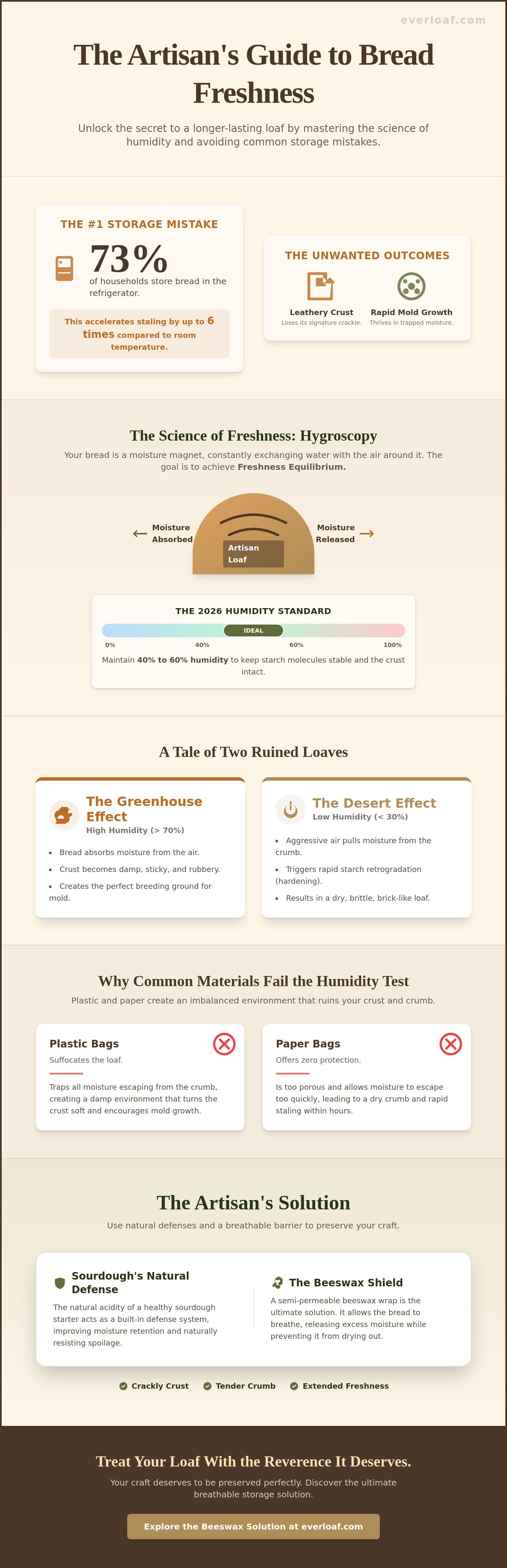
Over 73% of households store their bread in the refrigerator. This common habit can actually accelerate staling by up to six times compared to room temperature. You've poured your heart into every fold and ferment, yet you're still battling leathery crusts and rapid mold growth. It feels like a betrayal when a gorgeous loaf turns brittle or fuzzy before you can even finish the last slice. Your bread is a living masterpiece; it has specific needs that the average kitchen environment fails to meet.
We believe your craft deserves better treatment. Understanding how humidity affects bread storage is the secret to maintaining that perfect, crackly crust and a crumb that stays tender for days. You'll learn to master the invisible science of moisture without resorting to chemicals or suffocating plastic. We're diving into the 2026 science of starch retrogradation and the breathable storage methods that our community of specialists trusts to keep their sourdough at its peak. It's time to treat your loaves with the reverence they earned in the oven.
Key Takeaways
- Your bread is a moisture magnet. Learn how to balance its internal hydration with the air in your kitchen for the perfect "Freshness Equilibrium."
- Discover how humidity affects bread storage to prevent the "Greenhouse Effect" of mold and the "Desert Effect" of rapid staling.
- Stop using plastic and paper. These common materials either suffocate your crust or steal moisture from your crumb within hours.
- Use the natural acidity of your sourdough starter. It acts as a built-in defense system against spoilage, even in high-humidity climates.
- Master the beeswax shield. A semi-permeable membrane is the only way to keep your crust crackly and your crumb tender.
The Science of Hygroscopy: Why Bread Is a Moisture Magnet
Your bread is alive. Even after it leaves the oven, it continues to interact with the world around it. This interaction is driven by a process called hygroscopy. Hygroscopy is the bread's ability to attract water molecules. It means your loaf is never truly static; it's constantly pulling moisture from the air or releasing it back into your kitchen. Understanding The Science of Hygroscopy is the first step toward professional-level storage.
We call the ideal state the "Freshness Equilibrium." This happens when the loaf's internal moisture perfectly matches the room's humidity. If the room is too dry, the bread surrenders its water. If the room is too damp, the bread drinks it up. High-hydration loaves like sourdough are especially sensitive to these atmospheric shifts. Their open crumb and high water content make them vulnerable. You've worked hard on that fermentation. Don't let a rainy day or a dry winter morning ruin your results. Learning how humidity affects bread storage allows you to take control of your kitchen environment.
We believe every loaf deserves respect. You aren't just storing food; you're preserving a craft. If you ignore the air in your kitchen, you're leaving your crust to chance. Mastering how humidity affects bread storage ensures your hard work doesn't go to waste. It's the difference between a mediocre snack and a gourmet experience.
Moisture Migration vs. Atmospheric Absorption
The battle for freshness happens on two fronts. First, there is internal moisture migration. Water naturally moves from the soft, hydrated center toward the dry, crispy crust. This is an inside-out process. At the same time, external humidity attacks the crust from the outside in. High humidity turns a crackly crust into something rubbery and tough. Low humidity steals the moisture from the crumb before you can even make a sandwich. The result is a soggy exterior and a prematurely dry interior. It's a frustrating paradox that ruins thousands of artisan loaves every day.
The 2026 Humidity Standard for Sourdough
Precision matters in the modern kitchen. The ideal humidity for bread storage is between 40% and 60%. This range keeps the starch molecules stable and the crust intact. We recommend following these standards for your home bakery:
- Maintain a consistent humidity range of 40-60% in your pantry.
- Monitor your kitchen with a simple digital hygrometer.
- Ensure your sourdough starter is healthy and acidic to improve crumb resilience.
A vigorous, acidic starter creates a loaf with better moisture retention. If your environment is outside the ideal range, you need a specialized solution. Using a beeswax cotton bread bag provides the breathable barrier your loaf needs to stay in the "Freshness Equilibrium" longer. Treat your bread with the reverence it deserves.
High Humidity vs. Low Humidity: A Tale of Two Ruined Loaves
Most bakers obsess over oven steam and hydration percentages during the bake. They often forget that the real battle begins once the loaf hits the cooling rack. Your bread is a living thing. It reacts to the atmosphere with more sensitivity than most realize. In 2026, our climate controlled homes create micro-environments that can either preserve your craft or destroy it in hours. Understanding how humidity affects bread storage is the only way to defend your hard work against the two extremes of kitchen weather.
When humidity climbs above 70%, your kitchen becomes a "Greenhouse." This is the danger zone for artisan loaves. High moisture levels prevent the crust from staying dry. Instead, the bread absorbs water from the air. This creates a damp, sticky surface that invites disaster. A scientific study on bread storage highlights that excess moisture in the storage environment is a primary driver for microbial growth. Mold spores don't need much to thrive. A rubbery, damp crust is all the invitation they require to turn your sourdough into a science project.
On the flip side, we face the "Desert Effect." When humidity drops below 30%, the air becomes aggressive. It actively pulls moisture out of the soft crumb. This isn't just about the bread drying out. It triggers rapid starch retrogradation. Without enough water molecules to act as a lubricant, the starch crystals in your bread lock together and harden. This is why your loaf turns into a brick during the winter months when the heater is blasting. Knowing how humidity affects bread storage helps you recognize these seasonal shifts before they claim your next sandwich.
The Danger of High Humidity: Mold and Mush
Rubbery sourdough is a heartbreaking symptom of environmental failure. When the air is thick with moisture, surface condensation forms on your loaf. This trapped water destroys the structural integrity of the crust. It turns a crackly, golden exterior into something leathery and tough. Without proper airflow, this moisture creates a stagnant "bio-zone" where mold spores germinate 2.3 days faster than in breathable conditions. You must break the cycle of condensation to keep your bread safe and delicious.
The Arid Climate Crisis: Rapid Staling
Dry air is a silent thief. In the winter, forced air heating systems strip the humidity from your home, leaving your bread vulnerable. The crumb loses its suppleness almost immediately. This accelerated staling makes the bread feel old even if it was baked this morning. You aren't just losing water; you are losing the delicate texture you spent days fermenting. Protecting your loaf from these arid shifts is essential for long term freshness.
We believe your bread deserves a specialized shield against these extremes. A beeswax cotton bread bag provides the perfect semi-permeable barrier. It allows the bread to breathe during humid summers while locking in vital moisture during dry winters. Don't let the weather dictate the quality of your toast.
Why Plastic and Paper Fail the Humidity Test
Most bakers reach for a plastic bag or a paper sleeve by default. It is a mistake. These materials don't understand the needs of your bread. They either suffocate the loaf or leave it completely exposed to the elements. To truly master how humidity affects bread storage, you must view your storage choice as a regulator. It needs to manage the delicate exchange of moisture between the crumb and the air. Anything less is a disservice to your craft.
We believe in treating every loaf with reverence. Your bread is a living structure of starch and water. When you use the wrong container, you disrupt the process of staling. This isn't just about the bread getting old. It is about a chemical shift that happens when moisture is trapped or stolen. In the modern 2026 kitchen, with aggressive air conditioning and heating, these failures happen faster than ever. You need a solution that acts as a shield, not just a bucket.
The Plastic Trap: A Sourdough's Nightmare
Plastic creates a 100% moisture barrier. This sounds helpful, but it is actually a sourdough's nightmare. As moisture migrates from the center to the surface, plastic traps it against the crust. Your beautiful, crackly exterior becomes leathery and soggy in a matter of hours. This trapped environment creates a literal greenhouse for spoilage. Laboratory tests confirm that bread stored in plastic develops visible mold an average of 2.3 days earlier than bread in breathable cotton. You've spent days fermenting that loaf. Don't let a cheap poly bag ruin the texture. For a better way, explore our guide on the Long-Term Bread Storage Bag: How to Keep Sourdough Fresh for 10+ Days.
The Paper Problem: The Fast Track to Stale
Paper is the opposite extreme. It is far too porous for long term care. While it might keep a crust crispy for an hour, it offers zero protection against the dry air of your home. It allows the atmosphere to strip moisture from the crumb at an aggressive rate. This accelerates starch retrogradation, turning your artisan masterpiece into a dry, brittle stone overnight. The idea that paper is the "natural" choice is a myth that ignores how humidity affects bread storage in real world conditions. You can learn the full details in our report on Paper Bags for Storing Bread: The Surprising Truth About Freshness in 2026. Stop settling for mediocre storage and give your bread the specialized environment it deserves.
How Sourdough Starter Naturally Resists Humidity
Your sourdough is a survivor. It isn't like the fluffy, preservative-packed loaves on supermarket shelves. It possesses a biological defense system. This advantage fundamentally changes how humidity affects bread storage for the home baker. While industrial bread relies on chemical additives to fight spoilage, your sourdough uses its own chemistry. It is a more robust, sophisticated product that handles environmental stress with ease. We believe this craft deserves a storage method that respects its unique biology.
The "Sourdough Advantage" comes from the fermentation process itself. During those long hours on the counter, your starter is busy creating a hostile environment for invaders. It reorganizes the very fabric of the bread. This makes the loaf less susceptible to the "Greenhouse Effect" of high humidity and the "Desert Effect" of dry air. You aren't just baking bread; you are engineering a shelf-stable masterpiece.
Acidity as a Moisture Shield
Acidic environments are less hospitable to mold. This is a scientific fact. The lactic acid bacteria in your starter produce organic acids that lower the pH of the final loaf. This lower pH acts as a natural preservative. It slows down the growth of common spores even when the air is thick and damp. A strong, mature sourdough starter is your first line of defense. It creates a crumb structure that regulates moisture migration from the inside out. When you understand how humidity affects bread storage, you realize that your starter is doing half the work for you. A healthy loaf protects itself.
Fermentation and Starch Stability
Long fermentation reorganizes starch for better water retention. During the long rise, enzymes break down and reform carbohydrate chains. These complex structures are much harder to crystallize. This is why sourdough stays fresh to the touch long after a standard white loaf has turned to cardboard. The starch molecules are effectively locked in place. They resist the urge to release their water to the surrounding air. A 24-hour sourdough loaf is a masterpiece of starch stability. It is built to last, provided you give it the right environment to breathe.
We know you treat your starter with reverence. Treat your finished loaf with the same level of care. Pair your resilient sourdough with a beeswax cotton bread bag to maintain that perfect acidity and moisture balance. It is the professional way to honor your hard work.
Mastering the 2026 Humidity Shield: The Beeswax Solution
We believe your sourdough is a masterpiece. It deserves a vault, not just a bag. The beeswax Bread Bag is the 2026 gold standard for artisan care. It uses beeswax-infused cotton to create a semi-permeable membrane. This is the ultimate tool for managing how humidity affects bread storage. It allows the bread to "breathe" just enough to keep the crust crackly. At the same time, it locks in the vital moisture that keeps your crumb tender. It's a sophisticated balance that plastic and paper simply cannot achieve. You're giving your bread exactly what it needs to survive the modern kitchen.
Beeswax is nature's own preservative. It has inherent antimicrobial properties. These properties are your best defense during high-humidity summer months. While plastic creates a greenhouse for mold, beeswax actively fights back. It keeps your sourdough fresh without the need for chemicals or artificial additives. You're protecting the integrity of your craft with the power of nature. This is how we honor the time and effort you put into every fermentation cycle. It's about respecting the loaf's inherent needs.
The 'Breathable Shield' Concept
Beeswax mimics the way a honeycomb regulates its own environment. It provides a flexible, durable barrier that responds to the air. This shield is especially critical for defending against the "Desert Effect" of winter heating. It prevents the dry indoor air from stealing the life from your loaf. For more details on this technique, check out The Ultimate Guide to Using a Beeswax Bag for Sourdough Bread in 2026. It's the definitive resource for serious bakers who want to master their environment and extend their bread's lifespan.
Practical Humidity Hacks for Home Bakers
Location is everything. Even the best bag needs a good home. Store your bread in a cool, dry corner of your pantry. Keep it far away from the stove or the dishwasher. These appliances generate steam and heat that disrupt the "Freshness Equilibrium" we discussed earlier. One golden rule: never store bread on top of the refrigerator. This is a common mistake. The heat from the compressor creates a heat trap that accelerates staling and dries out the crumb. Using beeswax cotton bread bags allows you to stabilize the micro-climate directly around your loaf. You take control of how humidity affects bread storage regardless of the season. It's the smartest way to keep your bread as fresh as the moment it left the oven.
Take Control of Your Kitchen Atmosphere
Your sourdough is more than just food; it's a testament to your patience and skill. You've mastered the hydration and the ferment. Now, it's time to master the environment. Understanding how humidity affects bread storage ensures every slice remains as perfect as the first. Hygroscopy turns your loaf into a moisture magnet. Traditional bags fail to protect the "Freshness Equilibrium." Your bread deserves a specialized shield that respects its unique biology.
Don't let the seasonal shifts of 2026 dictate the life of your loaf. Our community of specialists trusts the Everloaf solution for its 100% organic cotton breathability and culinary-grade beeswax infusion. It's the gold standard for bakers across the United States who refuse to settle for leathery crusts. Stop the humidity struggle with the Everloaf Beeswax Bread Bag and give your artisan creations the reverence they deserve. Keep your crust crackly and your passion alive.
Frequently Asked Questions
Does high humidity make bread go stale faster?
High humidity does not actually make bread stale faster; instead, it causes the crust to become leathery and encourages rapid mold growth. Staling is the process of starch retrogradation, which is actually accelerated by very dry air or cold temperatures. Understanding how humidity affects bread storage helps you see that damp air attacks the exterior of your loaf, while dry air ruins the interior crumb.
Is it better to store bread in a humidor or a bread box?
A bread box is a much better choice than a humidor for artisan sourdough. Humidors are designed to maintain high moisture levels, which will quickly turn a crispy crust into a soggy, mold-prone disaster. A bread box provides the necessary airflow to prevent stagnant moisture from sitting on the surface. We recommend using a breathable barrier inside your bread box for the most consistent results.
How do I stop my sourdough crust from getting rubbery in summer?
You stop a rubbery crust by switching to a storage method that allows the loaf to breathe. Summer humidity often traps moisture against the bread's surface, especially if you are still using plastic bags. Use a beeswax-infused cotton bag to allow moisture to escape without letting the crumb dry out. This prevents the surface condensation that turns a golden, crackly crust into something tough and leathery.
Can I use a beeswax bag in a very dry climate?
Yes, a beeswax bag is the perfect tool for protecting bread in arid environments. It acts as a semi-permeable shield that stops dry air from aggressively stripping moisture from the soft crumb. While paper allows the air to steal hydration in just a few hours, beeswax locks that moisture in place. It defends your loaf against the "Desert Effect" common in dry climates or homes with active winter heating.
Does sourdough starter help bread stay fresh in humid weather?
Sourdough starter provides a biological defense that helps bread resist spoilage in damp conditions. The lactic acid bacteria in the starter lower the pH of the dough, creating an acidic environment that mold spores find inhospitable. This natural acidity allows sourdough to stay fresh longer than commercial yeast breads. It is a built-in preservative that works with your storage choice to fight off the effects of a humid kitchen.
Why does my bread mold so quickly in my kitchen?
Your bread is likely molding because it is trapped in a "greenhouse" of high humidity and stagnant air. If your kitchen humidity exceeds 70%, mold spores can germinate over two days earlier than in a regulated environment. Storing bread near a dishwasher or in a sealed plastic bag creates the damp, warm conditions that mold loves. You must break this cycle by improving airflow and using breathable storage materials.
What is the best humidity level for storing homemade bread?
The ideal humidity level for bread storage is between 40% and 60%. This specific range maintains the "Freshness Equilibrium," ensuring the bread doesn't lose too much water or absorb excess moisture from the room. Mastering how humidity affects bread storage within this window prevents both rapid staling and mold growth. We suggest using a simple digital hygrometer to find the most stable corner of your pantry for your loaves.
Should I store bread in the fridge if my house is very humid?
You should never store your bread in the refrigerator regardless of the humidity level. Cold temperatures between 35°F and 45°F cause starch molecules to recrystallize up to six times faster than at room temperature. This turns your beautiful sourdough into a dry, crumbly mess almost overnight. Instead of the fridge, use a beeswax bag in a cool, dark cupboard to protect the loaf from the surrounding moisture.


