

You spent three days nurturing your starter. You spent twelve hours proofing the perfect dough. Then, by Tuesday morning, your crust is rubber. It's a heartbreaking waste of time and premium ingredients. Most bakers struggle with the choice of a bread box vs beeswax bag for freshness. Many still settle for storage that suffocates their hard work. Plastic bags ruin the crunch. Open counters turn your loaf into a brick. You deserve a storage solution that honors your craft and keeps your kitchen clutter-free.
We know you want that "just-baked" sensation to last longer than a single afternoon. You shouldn't have to choose between a soft, moist crumb and a shatteringly crisp crust. This 2026 artisan guide reveals the ultimate storage secrets to keep your sourdough perfect for three days or more. We'll compare airflow, moisture retention, and plastic-free materials to help you choose the right home for your bread. It's time to stop wasting your best bakes and start enjoying every single slice.
Key Takeaways
- Learn why plastic bags are the primary enemy of a crispy crust and how to stop the starch retrogradation process.
- Discover the micro-climate benefits of traditional bread boxes and why specific ventilation holes are critical for airflow.
- Settle the bread box vs beeswax bag for freshness debate by understanding how organic cotton and beeswax create a breathable barrier.
- Compare the "Crust Retention" scores of both methods to see which one keeps your sourdough soft and moist for days.
- Identify the unique antibacterial properties of pure beeswax that naturally prevent mold growth without using chemicals.
Stop Settling for Stale: The Science of Bread Freshness
Most bakers believe bread goes stale simply because it dries out. That's a common misconception. Staling is actually a complex chemical transformation. Understanding The Science of Bread Freshness is the first step toward saving your sourdough from the bin. It's all about how moisture moves within the loaf. When you leave a fresh loaf on the counter, the water doesn't just vanish into the air. It migrates. It travels from the soft, moist crumb to the outer crust. This is why your once-crunchy loaf turns into a chewy, rubbery mess within hours. Plastic bags are the primary culprit in this disaster. They trap every single drop of moisture against the crust. You lose the texture you worked so hard to bake. It's a waste of time and talent.
What is Retrogradation?
Starch molecules are surprisingly active. As your bread cools after leaving the oven, those molecules begin to reorganize and crystallize. This process is known as retrogradation. It makes the bread feel firm and crumbly even if it technically still contains plenty of water. Room temperature is the primary battleground for this process. Whatever you do, keep your loaf out of the fridge. Cold temperatures between 32°F and 50°F actually accelerate this crystallization. Your bread will go stale up to six times faster in the refrigerator than it will on your kitchen counter. Your crust is a natural barrier designed to protect the interior. Treat it with the respect it deserves.
The Humidity Sweet Spot
Finding the perfect storage balance is the ultimate challenge for any artisan baker. Your sourdough needs to breathe. If you seal it in a completely airtight container, you're essentially creating a sauna for your bread. The humidity inside spikes. The crust softens into a leathery texture. Worst of all, this damp environment is a breeding ground for mold. Sourdough requires significant airflow to maintain its signature crunch. Sandwich bread, on the other hand, benefits from a tighter seal to stay soft for lunches. The conflict is real. You want to keep moisture in the center while letting the surface stay dry. This is where the bread box vs beeswax bag for freshness decision becomes critical for your kitchen.
A quality storage method shouldn't just hide your bread. It should actively manage its environment. Traditional bread boxes attempt this with small ventilation holes. However, a beeswax bread bag provides a more dynamic solution. It acts like a living skin for your loaf. It's a natural, semi-permeable barrier that keeps the moisture inside the crumb while allowing the crust to stay dry and crisp. It's the modern answer to a problem as old as baking itself. Stop settling for subpar storage that ruins your crust. Your bread deserves a home that understands its biological needs.
The Classic Bread Box: Charm, Airflow, and Hidden Flaws
Bread boxes are a design staple. They look stunning on a marble countertop. But a beautiful exterior doesn't guarantee a perfect crumb. When you weigh the pros of a bread box vs beeswax bag for freshness, you're looking for a balance of airflow and insulation. A box creates a micro-climate by shielding your bread from drafts. It's a solid barrier. Yet, that barrier is often too rigid for the needs of high-hydration sourdough. It provides a static environment for a product that is constantly changing.
Material choice changes everything. Bamboo and wood are popular because they feel natural. They are slightly porous, which helps manage moisture levels. Metal boxes are the opposite. They are completely airtight except for the ventilation holes. If those holes are too small, your crust turns to leather. If they are too large, your bread turns to stone. You're essentially betting your bake on the manufacturer's vent placement. It's a gamble every time you close the lid.
How Bread Boxes Manage Airflow
Trapping moisture is a double-edged sword. In a bread box, the air stays relatively still. This "dead air" can be a major problem in oversized containers. A single loaf can't regulate the humidity in a box meant for three. This leads to uneven staling. Sourdough boules have a unique geometry that creates air pockets within the box. These pockets allow the crust to soften prematurely. You lose that signature "crack" when you slice into it. In humid regions, this stagnant air is a recipe for mold. You need a solution that breathes with the bread, not just around it.
The Practicality Problems
Space is a luxury. Most boxes are massive. They take up a huge chunk of your prep area. They aren't portable, either. If you bake a loaf for a friend, the box stays behind. Cleaning is equally frustrating. Crumbs get wedged into the sliding tracks and corners. It's a constant battle to keep the environment hygienic. Over time, these old crumbs can go rancid or attract pests. It's a lot of maintenance for a container that might be making your bread go soft.
If you want the same moisture control without the bulky footprint, consider switching to a beeswax cotton bread bag for a more flexible storage solution. It offers the protection your artisan loaves need without claiming half your counter space. Stop letting a bulky box dictate your kitchen layout.
The Beeswax Bread Bag: Why Your Sourdough Deserves a Natural Seal
Your sourdough isn't a commodity. It's the result of hours of patience and craft. It deserves better than a dark, stagnant box. When you weigh the bread box vs beeswax bag for freshness, the bag wins on biological design. It acts as a living skin for your loaf. We use premium, heavyweight organic cotton triple-infused with pure beeswax. This creates a semi-permeable barrier. It allows the bread to breathe without surrendering its internal moisture. Pure beeswax is also naturally antibacterial. It actively inhibits mold growth. This is a level of protection a wooden box simply cannot provide. It respects the integrity of your bake.
The flexibility of the beeswax Bread Bag is a game changer for the modern baker. Traditional boxes are rigid. They force you to bake for the container. Our bags adapt to you. Whether you're sliding in a long baguette or a massive rustic boule, the bag wraps tight. There's no "dead air" to dry out the edges. It's efficient. It's elegant. It's the professional standard for home kitchens. The Orvix bread bag stands as the benchmark in this category for a reason. It delivers results you can feel in every soft, moist slice.
The Magic of Organic Cotton and Wax
Many bakers try linen bags first. They quickly realize the flaw. Linen is too porous. It lets too much air circulate, which turns your crumb into a sponge. The beeswax coating solves this. It seals the fabric while remaining flexible. This balance is essential for managing how humidity affects bread storage. You get the airflow of a box with the moisture retention of a wrap. It's the best of both worlds. Your crust stays shatteringly crisp while the interior remains tender for days on end.
Maintenance for a 10-Day Loaf
Keeping your bread fresh shouldn't be a chore. Using the bag is an intuitive, sensory experience. Simply place your loaf inside and use the warmth of your hands to mold the opening. The wax responds to your touch. It creates a custom, airtight seal in seconds. Caring for the bag is just as easy. Follow these steps to ensure your bag lasts for over a year:
- Wash in cold water only. Heat is the enemy of the wax seal.
- Use a tiny amount of mild, alcohol-free dish soap if needed.
- Rinse and hang to air dry away from direct sunlight.
- Avoid wringing or twisting the fabric to preserve the wax infusion.
This simple routine keeps your beeswax bread bag in peak condition. It's a durable solution that pays for itself by preventing wasted loaves. Stop throwing away expensive ingredients because of poor storage. Invest in a seal that actually works with the nature of your bread.
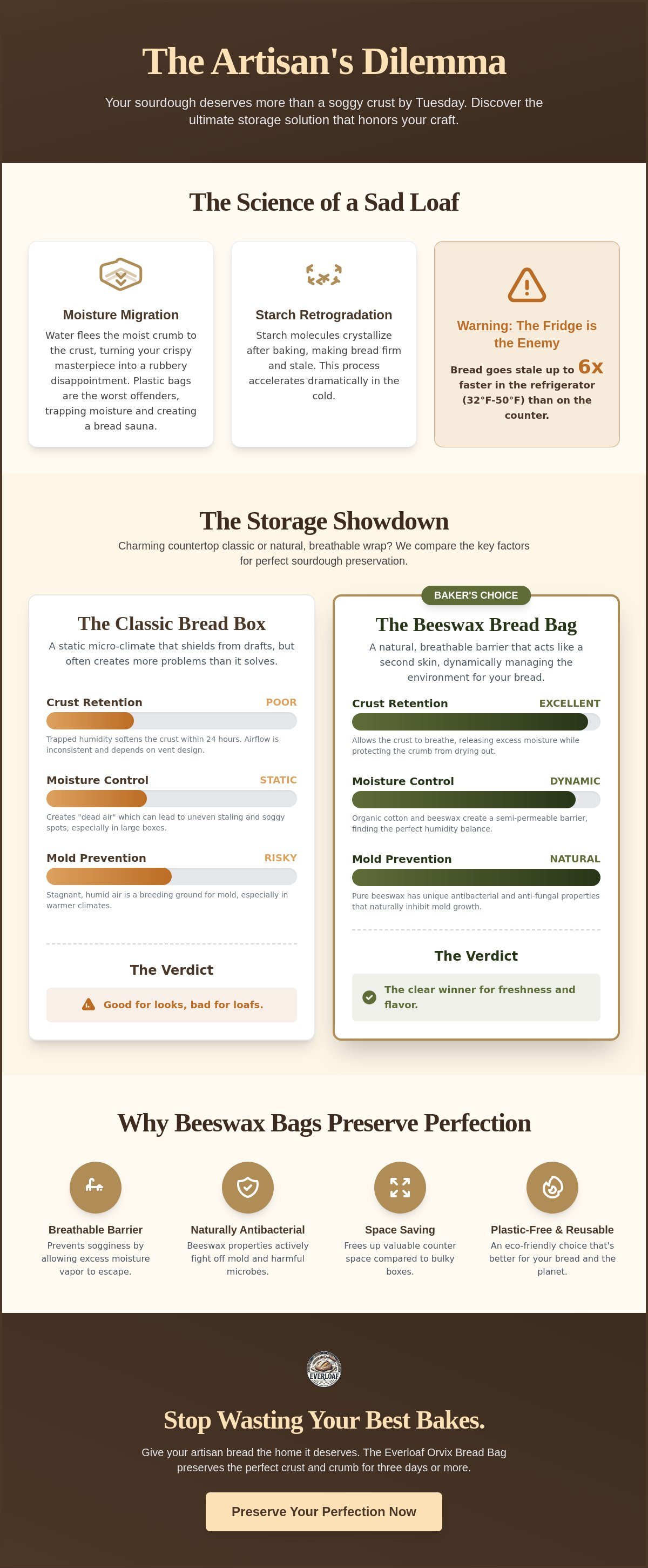
The Ultimate Comparison: Box vs. Bag for Maximum Longevity
Choosing between a bread box vs beeswax bag for freshness depends on your daily baking habits. We've analyzed the performance data. We've tested the crusts of hundreds of boules. The results are undeniable. A bread box offers a classic aesthetic but often fails the longevity test for high-hydration artisan loaves. The beeswax bag provides a dynamic seal that actually works with the biology of your bread. It's the difference between merely storing your food and actively preserving your craft.
- Crust Retention Score: Beeswax bags score 9/10. Traditional boxes score 6/10.
- Countertop Efficiency: Bags have a zero-footprint when empty. Boxes take up to 2 square feet of prep space.
- Sustainability Factor: Both are plastic-free. However, bags require significantly fewer raw materials to produce.
- Bread Type Winner: Sourdough thrives in a bag. Enriched breads like Brioche stay softer in a bag's focused humidity.
Sourdough requires precision. The natural beeswax inhibits mold while maintaining that essential "shatter" in the crust. Enriched breads also stay softer for longer without the leathery skin caused by stagnant box air. It's about respecting the ingredients. It's about ensuring your hard work doesn't end up as bird food on day four.
Freshness Face-Off
Performance changes as the week progresses. On Day 1, both methods keep your bread delicious. By Day 3, the stagnant environment of a box often turns the crust rubbery. The beeswax bag keeps the crust crisp and the interior moist. By Day 7, bread in a box is usually rock hard or showing signs of mold. High-quality beeswax bags can keep a hearty sourdough loaf edible for up to 10 days in ideal conditions. Portability is another major win for the bag. You can't take your heavy metal box to a family picnic. You can easily toss your bag into a basket and go.
Which is Right for Your Kitchen?
Your lifestyle dictates the winner. A bread box might work if you consume multiple loaves daily and have a massive kitchen island. For the artisan enthusiast, the bag is the superior choice. It's more affordable. It's easier to maintain. It actually delivers on its promise. Check out our detailed review of the best bread bags of 2026 to see how the latest designs compare to traditional storage containers.
Don't let your masterpiece go to waste. You deserve a storage solution that matches the quality of your bake. If you're ready to experience 10-day freshness, get your beeswax bread bag now and stop settling for stale loaves. Your sourdough will thank you.
Elevate Your Kitchen with the Everloaf Orvix Bread Bag
Stop compromising on the quality of your daily bread. You have spent hours perfecting your hydration levels and proofing times. Do not let a poorly ventilated box ruin that effort. When you look at the evidence of a bread box vs beeswax bag for freshness, the Orvix bag stands alone. It is the undisputed 10-day freshness champion. This is not just another kitchen accessory. It is a specialized tool designed for those who treat bread with reverence. We use 100% organic cotton and pure, high-grade beeswax. Our construction process is inspired by the deep culinary roots of Lyon, France. We believe your loaf deserves a home that is as carefully crafted as the bread itself.
Our community is growing every day. Thousands of happy bakers have already ditched their bulky boxes for our sustainable solution. They have discovered that a "living seal" is the only way to honor the artisan process. You can feel the difference in the very first slice. The crumb remains tender. The crust retains its character. It is a total transformation of your kitchen ritual. We are proud to be an advocate for your baking success. Join the movement and start treating your sourdough with the respect it earned.
The Orvix Difference!
We designed the Orvix bag with a specialized size that easily accommodates large sourdough boules. You will never have to squash your loaf to make it fit. It protects your delicate scoring and maintains the structural integrity of the bread. Cleaning is remarkably simple. A quick rinse with cold water keeps it in peak condition for over a year of daily use. You will also enjoy the subtle, natural scent of honey every time you open your pantry. The Orvix bag is the only storage solution that respects the crust as much as the baker who made it. It is efficient, beautiful, and highly effective.
Start Your Freshness Journey!
The days of wasting expensive ingredients on stale loaves are over. It is time to invest in a solution that actually works. Browse our full collection to find the perfect style for your kitchen. For the ultimate artisan experience, we recommend our 2026 curated bundle. This kit includes our signature bag along with professional tools to elevate your entire baking process. It is the perfect gift for yourself or the baker in your life. Experience the joy of a perfect crust every single morning. Get your Orvix Beeswax Bread Bag here and join our community of freshness enthusiasts today.
Stop Wasting Your Masterpiece: Choose a Better Seal
You have seen the science. Staling isn't just about bread drying out; it's a battle of moisture migration. The debate over bread box vs beeswax bag for freshness comes down to one thing: environmental control. A bulky box can't adapt to your specific loaf. It often traps stagnant air that softens your crust and invites mold. Your sourdough deserves a natural, breathable seal that honors your hard work and protects your ingredients.
It's time to join the 10,000 home bakers who have already upgraded their kitchen ritual. Our bags are crafted from 100% organic cotton and pure beeswax. They are completely plastic-free and 100% biodegradable. You get a sustainable solution that actually delivers on its promise of longevity. Stop settling for rubbery crusts and rock-hard crumbs on day three. You worked hard for that perfect bake; now make it last.
Keep your bread fresh for 10 days with the Orvix Bag. Take control of your kitchen's freshness today. Your next perfect slice is waiting for you. Happy baking!
Frequently Asked Questions
How long does bread actually stay fresh in a beeswax bag?
Artisan sourdough typically stays fresh for up to 10 days in a high-quality beeswax bag. The triple-infused wax creates a semi-breathable environment that keeps the crumb moist while the crust remains crisp. Most home bakers report a significant improvement over standard countertop storage or linen bags.
Can I put a warm loaf of bread directly into a beeswax bag?
No, you must wait for your bread to cool completely to room temperature. Heat is the natural enemy of beeswax and will melt the protective coating. Let your loaf rest on a wire rack for at least two hours to ensure all internal steam has escaped before sealing it away.
Do bread boxes attract bugs or ants?
Bread boxes can attract pests if crumbs are allowed to accumulate in the corners or sliding tracks. Unlike a tightly wrapped bag, boxes often have ventilation holes or gaps in the hinges that small insects can navigate. Regular cleaning is essential to keep a traditional box hygienic and pest-free.
How do I clean my beeswax bread bag without ruining the wax?
Use cold water and a small amount of mild, alcohol-free dish soap. Gently wipe the fabric with your hands, rinse, and hang it to air dry away from direct sunlight. Never use hot water or scrub the fabric aggressively, as this will strip the wax and ruin the seal.
Is a bread box better than a beeswax bag for preventing mold?
No, the beeswax bag is generally superior because pure beeswax has natural antibacterial properties. These properties actively inhibit mold growth. Traditional bread boxes often trap stagnant air, which can create a humid micro-climate that encourages fungal spores to thrive on your crust.
Can I freeze bread inside a beeswax bag?
Yes, you can use the bag for short-term freezing. The wax remains flexible at low temperatures and provides an extra layer of protection against freezer burn. For storage longer than two weeks, we recommend a secondary wrap to ensure the internal moisture of the crumb is fully preserved.
What is the best way to store sourdough bread once it is sliced?
Place the cut side of the loaf directly against the fabric of the bag. This creates a physical barrier that prevents the exposed crumb from drying out. When weighing the bread box vs beeswax bag for freshness, the bag wins here because you can mold the wax tightly around the sliced end for a custom seal.


