

Is your plastic bread bag actually a coffin for your sourdough? You spend hours nurturing a starter and scoring the perfect loaf, only to watch it turn into a rubbery, moldy mess by day three. Analyzing beeswax bread bags vs plastic reveals a truth most bakers ignore: plastic suffocates your bread. It traps moisture that destroys your hard-earned crust and invites premature mold growth. Your bread deserves better treatment than a single-use bag that was never meant for artisan quality.
We know the frustration of throwing away half a beautiful loaf because it lost its soul overnight. It's time to stop ruining your sourdough. This guide shows you how to maintain a professional, shatter-crisp crust for up to 10 days by using a storage method that breathes. We'll explore the science of freshness, the impact of 2026 plastic regulations, and why a beeswax bread bag is the essential second skin your kitchen needs to eliminate waste and keep every slice perfect.
Key Takeaways
- Understand why plastic "sweating" kills your crust and how to stop the chemical process of staling in its tracks.
- See the data on beeswax bread bags vs plastic to discover why breathable, natural fibers outperform single-use waste every time.
- Learn how the natural antibacterial properties of beeswax create a safe, protective environment for your most expensive sourdough.
- Master the simple two-step cooling and folding process that preserves professional-level freshness for over a week.
- Explore how moving away from plastic reduces kitchen waste while treating your artisan bread with the reverence it deserves.
The Science of Staling: Why Plastic Bags are Killing Your Crust
Stop treating your artisan bread like a leftovers experiment. Most bakers believe that sealing a loaf in plastic preserves it. They think they're keeping the moisture in. In reality, they're building a coffin. Bread doesn't just dry out; it undergoes a complex transformation. The Science of Staling proves that quality decline is a chemical process, not just a loss of water. When you use plastic, you're forcing your bread to suffer through its own biological changes in a stagnant environment.
Plastic creates a 100% moisture trap. As the bread sits, it "sweats." This moisture escapes the soft interior but hits the plastic wall and bounces back. It settles on the surface. This condensation destroys the crust-softening enzymes that give your sourdough its character. Instead of a shatter-crisp exterior, you get a rubbery, damp mess. Choosing beeswax bread bags vs plastic is the first step in respecting the effort you put into your baking. Plastic is a barrier. It's a wall. It blocks the very air your bread needs to stay alive.
Starch Retrogradation and Moisture Migration
Your bread is constantly moving. Even after it leaves the oven, water molecules migrate from the soft crumb toward the crust. Retrogradation is the crystallization of starch molecules. This process happens as the bread cools and ages. In a natural, breathable environment, this migrating moisture evaporates slowly. Plastic interrupts this flow. It forces the water to stay on the crust's surface, accelerating the breakdown of the bread's structure. By using beeswax bread bags vs plastic, you allow this moisture to pass through the fabric. The bread stays soft inside, but the crust remains a fortress.
The Mold Factor: Why Plastic Speeds Up Decay
Mold thrives in a sealed room. Common bread molds require a relative humidity of 80% to 90% to bloom. A plastic bag reaches these levels almost instantly. It creates an anaerobic environment where air cannot circulate. This is a playground for decay. Sourdough has a slight advantage because its natural acidity acts as a mild preservative. However, even the best sourdough eventually fails in the humid prison of a plastic bag. Without natural airflow, the loaf essentially breathes its own moisture until it rots. You aren't saving your bread; you're just making it easier for mold to take over. A breathable shield is the only way to keep your loaf safe and delicious for the long haul.
The Beeswax Advantage: A Breathable Shield for Artisan Loaves
Your bread is a living, breathing masterpiece. It doesn't belong in a plastic tomb. While plastic creates a suffocating environment, beeswax-infused cotton acts as a semi-permeable membrane. It's a second skin for your loaf. This unique material allows your bread to perform its natural processes without the destructive consequences of total moisture entrapment. The organic cotton provides a sturdy structure that protects the delicate crust from bruising while the wax does the heavy lifting of climate control. It's the difference between a soggy, rubbery crust and one that maintains its integrity for days.
When comparing beeswax bread bags vs plastic, you aren't just choosing a container. You're choosing a micro-climate. The beeswax Bread Bag is engineered to let excess moisture escape. This prevents the "sweating" we discussed earlier. At the same time, it retains enough humidity to keep the crumb soft and pillowy. This balance is essential for artisan loaves that lack the chemical preservatives found in supermarket bread. Your sourdough deserves this level of specialized attention.
Breathability vs. Evaporation
Finding the "Goldilocks Zone" of humidity is the secret to professional-level storage. If the environment is too dry, your bread becomes a giant crouton. If it's too wet, it turns to mush. Scientific reviews on beeswax-based coatings highlight their incredible ability to minimize moisture loss while preventing bacterial contamination. The wax coating creates a barrier that slows down evaporation without stopping it entirely. This careful regulation keeps your bread in that perfect window of freshness. For a deeper dive into these environmental factors, you can read more about How Humidity Affects Bread Storage to master your kitchen's climate.
Antibacterial Benefits of Natural Wax
Beeswax is nature's perfect preservative. It contains propolis, a powerful substance bees use to keep their hives sterile. This gives the bags natural antibacterial and antifungal properties. Unlike raw linen, which can harbor moisture and old flour, or plastic, which creates a breeding ground for spores, beeswax actively fights decay. This is why we can confidently promise up to 10 days of freshness for your sourdough loaves. You'll notice the difference immediately. There's no "off" smell and no fuzzy green spots. It's a cleaner, safer, and more respectful way to handle your food. If you're ready to upgrade your storage game, our beeswax Bread Bag is the ultimate tool for the serious baker. Choosing beeswax bread bags vs plastic isn't just about being green; it's about being better.
Beeswax Bread Bags vs. Plastic: The Ultimate Freshness Showdown
The results are in, and the data is clear. Your bread is suffering. In a 72-hour head-to-head test, the difference between beeswax bread bags vs plastic becomes undeniable. Plastic bags are a short-term convenience that leads to long-term disappointment. They smell like chemicals and industrial processing. In contrast, a beeswax bag smells of honey and clean cotton. It's a sensory experience that matches the quality of your baking. By the third day, a loaf in plastic has lost its soul. The crust is tacky. The crumb is starting to sweat. A loaf protected by beeswax remains vibrant, holding its structure and flavor as if it just left the cooling rack.
To understand the true winner, we have to look at how different materials interact with your loaf. Most competitors suggest linen as the ultimate alternative, but they ignore the reality of low-humidity kitchens. Linen often lets too much moisture escape, leaving you with a rock-hard heel by day four. Beeswax finds the middle ground. It's a sustainable alternative to plastic wrap that actually improves the lifespan of your food. Here is how the storage methods stack up:
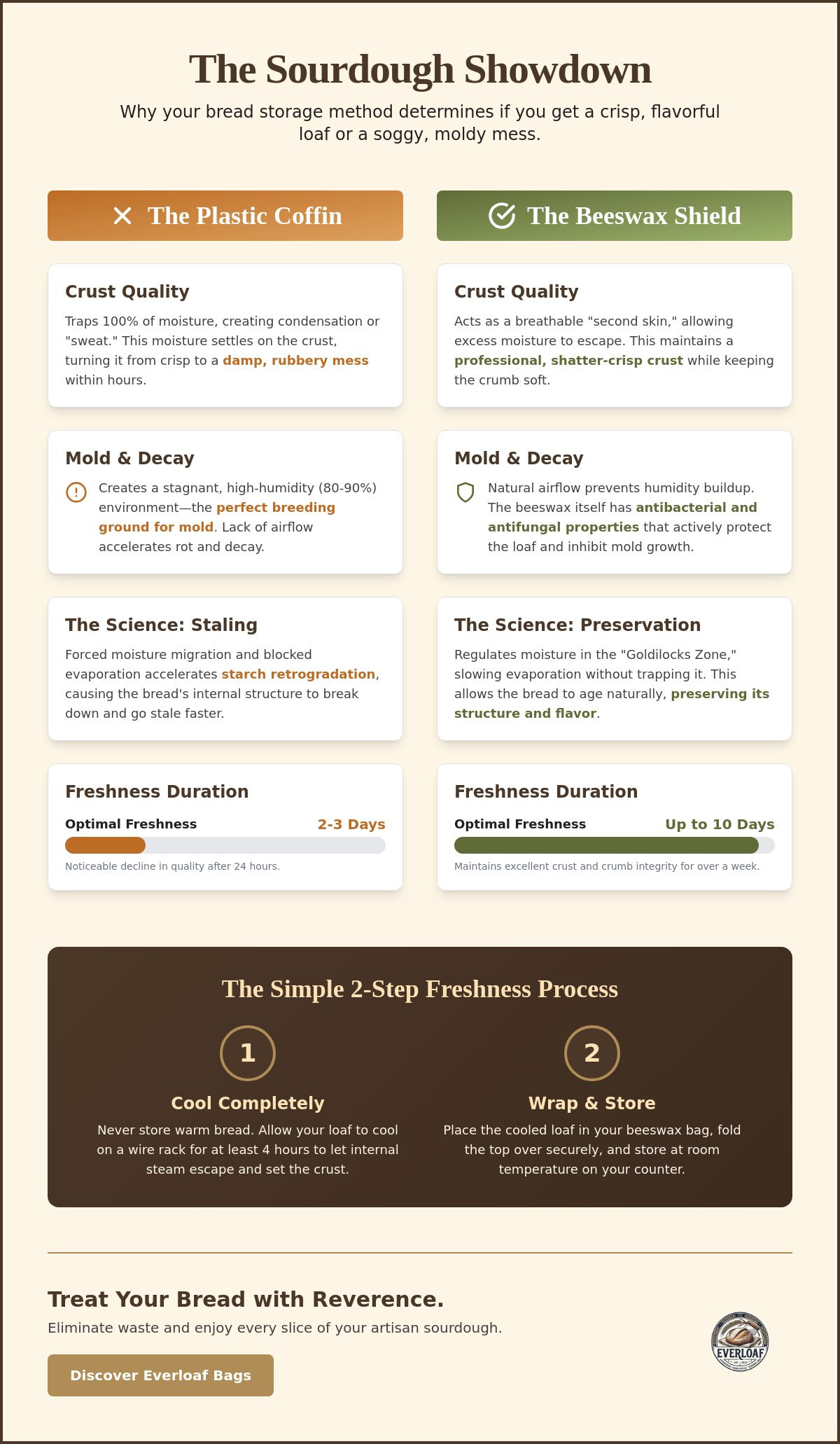
- Plastic Bags: 2-3 days of freshness. 100% moisture trap. High mold risk.
- Linen Bags: 4-5 days of freshness. High evaporation. Rapid drying in dry climates.
- Beeswax Bags: 5-7 days of freshness (up to 10 for sourdough). Breathable shield. Antibacterial protection.
Crust Integrity and Crumb Texture
High-hydration sourdough is particularly sensitive to its environment. It has a high internal moisture content that needs a controlled exit. Plastic forces that moisture to stay on the surface, creating that dreaded rubbery texture. Paper bags go too far the other way, turning your beautiful bread into a giant crouton within 24 hours. Beeswax is the only material that respects the crumb while defending the crust. It allows just enough air exchange to keep the exterior crispy without sacrificing the soft, pillowy interior you worked so hard to create.
Sustainability and Long-Term Value
Stop throwing money into the landfill. As of January 2026, new regulations like California’s SB 1053 have already started removing plastic bags from our daily lives. A 100-pack of plastic bread bags might seem cheap, but it's a cycle of waste. One set of our beeswax cotton bread bags lasts for over a year with proper care. For a weekly baker, that's 52 pieces of plastic kept out of the ocean. It's a professional investment in your craft that pays for itself in saved loaves and reduced waste. You're not just buying a bag; you're upgrading your entire kitchen ecosystem. When you weigh the cost-per-use, the choice between beeswax bread bags vs plastic is a victory for your wallet and the planet.
How to Use and Care for Your Beeswax Bread Bag
Success in the kitchen doesn't end when the timer dings. You've mastered the crumb; now you must master the storage. Using a beeswax bag is a tactile ritual that honors your loaf. Unlike the mindless act of tossing bread into a plastic sleeve, this process requires intention. When you master the beeswax bread bags vs plastic transition, you're adopting a professional standard of care that preserves your work for days.
Follow these steps to ensure your artisan bread stays in its prime:
- Step 1: Cool the loaf. Never put a warm loaf in the bag. Steam will melt the wax and turn your crust into mush. Wait until the bread is room temperature throughout.
- Step 2: Load and fold. Place your loaf inside and fold the top of the bag over tightly. You want to minimize excess air while allowing the fabric to breathe.
- Step 3: Activate the seal. This is the secret step. Wrap your hands around the folded area for five seconds. The warmth of your skin softens the wax, creating a custom, airtight "lock" that holds its shape.
- Step 4: Find a home. Store your bagged bread in a cool, dry spot. Keep it away from the toaster or direct sunlight. Heat is the enemy of both your bread and your bag.
Cleaning and Maintenance
Treat your bag with the same respect you give your sourdough starter. Cleaning is simple but strict. Use only cool water and a drop of mild, alcohol-free soap. If there are crumbs inside, just shake them out. If the bag is soiled, wipe it down or rinse it gently. Never use hot water. Heat will strip the wax from the organic cotton, ruining the semi-permeable membrane. Air-dry your bag by draping it over a drying rack or a clean jar. Keep it far away from the oven's heat vent.
Refreshing the Wax Coating
Your bag is a workhorse, but it isn't immortal. After months of heavy use, you might notice a loss of tackiness. This is normal. It means the wax is wearing thin. You can refresh the coating with a beeswax bar or simply retire the bag to your compost pile when it reaches the end of its life. Because it's made of 100% organic cotton and natural wax, it returns to the earth without a trace. If you're ready to start this journey, invest in the beeswax Bread Bag today and experience the difference of professional storage. When looking at beeswax bread bags vs plastic, the longevity of the tool is just as important as the longevity of the bread.
The Everloaf Standard: Why Our Beeswax Bags Win
Respect the craft. You spend days nurturing a starter and hours watching your dough rise. Why would you compromise at the final stage? At Everloaf, we believe your bread is more than just food. It’s a labor of love. Our design roots trace back to Lyon, France, the culinary capital where bread is treated with reverence. We didn't just create another storage option. We built a professional-grade environment that understands the inherent needs of an artisan loaf. The Orvix bag is the gold standard for bakers who refuse to settle for rubbery, plastic-ruined crusts.
The foundation of our success is the 100% organic cotton we use for every bag. This isn't a cheap, thin fabric. It’s a heavy-duty material designed to provide structural protection while the wax does its work. When you choose beeswax bread bags vs plastic, you're choosing a hand-crafted tool over a disposable commodity. Our bags are built by people who know the struggle of a failed crust. We’ve been there. We’ve felt that disappointment. That’s why every stitch and every gram of wax is applied with the goal of perfection.
Designed by Bakers, for Bakers
A great loaf requires a complete system. The Orvix bag is the final piece of the Everloaf sourdough workflow. It pairs perfectly with our Danish Dough Whisk and the Everloaf Bread Sling to ensure your process is seamless from mixing to storage. We don't just sell bags; we provide the tools for a better baking life. For a deep dive into how this fits your specific kitchen needs, check out The Ultimate Beeswax Bread Bag Guide. It’s time to stop treating your kitchen like a warehouse and start treating it like a boutique bakery.
Join the Everloaf Community
You aren't alone in your quest for the perfect slice. Our community is a unified chorus of approval. Thousands of bakers have already made the switch, leaving behind the guilt of single-use plastic waste. They’ve seen the results. They’ve heard the crunch of a 10-day-old crust that still tastes fresh. Don't let your hard work go to waste in a suffocating plastic bag. Elevate your storage and honor your bread. The choice in the beeswax bread bags vs plastic debate is clear. It's time to Shop the Orvix Beeswax Bread Bag and give your sourdough the home it deserves.
Elevate Your Sourdough Ritual Today!
Your sourdough is a masterpiece. It doesn't belong in a plastic tomb. We've explored the science of staling and why the beeswax bread bags vs plastic debate is so critical for the serious baker. Plastic suffocates your loaf. It destroys the crust you worked so hard to perfect. Beeswax provides a breathable, antibacterial shield that honors every hour you spent on your starter. By choosing a storage method that respects the craft, you ensure every slice is as vibrant as the first day.
The Everloaf standard isn't just about freshness; it's about a commitment to quality. Our Orvix bag is crafted from 100% organic cotton and infused with pure, natural beeswax. It's a professional-grade tool trusted by thousands of home bakers who refuse to compromise on their results. Stop settling for rubbery, damp crusts. Start treating your bread with the reverence it deserves. Your kitchen is a place of creation, not a warehouse for waste. Protect your crust with the Orvix Beeswax Bread Bag. Join our community of enthusiasts and experience the difference of a truly breathable home for your bread. Your next loaf is waiting for its perfect match.
Frequently Asked Questions
Can I put warm bread in a beeswax bag?
No, your bread must be completely cool before you store it. Heat is the enemy of your storage ritual. If you place a warm loaf inside, the residual steam will melt the natural beeswax coating. This ruins the bag’s semi-permeable seal and turns your beautiful crust into a soggy mess. Wait for the cooling rack to do its job before you load the bag.
How long does bread stay fresh in a beeswax bag?
Most artisan sourdough loaves stay fresh for 7 to 10 days in a beeswax bag. This duration is a massive win for beeswax bread bags vs plastic; plastic usually fails by day three. The breathable nature of the wax allows the bread to age gracefully without the threat of rubbery crusts. You get professional results that respect the time you spent baking.
Are beeswax bread bags hygienic?
Yes, these bags are incredibly hygienic. Beeswax contains propolis, a natural substance that bees use to keep their hives sterile. This provides inherent antibacterial and antifungal properties. Unlike plastic, which traps moisture and invites spores, beeswax creates a clean, protective environment. Your bread stays safe and the bag stays fresh with minimal effort. It's a cleaner way to handle your food.
How do I clean my beeswax bread bag?
Wash your bag by hand using cool water and a tiny bit of mild dish soap. It’s a simple process. Avoid scrubbing the fabric too hard. Once it's clean, hang it to air dry away from any heat sources like the oven or toaster. Never use hot water or a dishwasher. High temperatures will strip the wax and destroy the bag's functionality instantly.
Can I use beeswax bags for freezing bread?
You can use them for short-term freezing, but a dedicated freezer bag is better for long-term storage. Beeswax bags are designed for counter storage where bread needs to breathe. In a freezer, you want to block all air to prevent freezer burn. If you're comparing beeswax bread bags vs plastic for the freezer, stick to plastic for anything lasting more than 48 hours.
Does the beeswax flavor transfer to the bread?
No flavor transfer occurs with high-quality bags like the Orvix. You might notice a faint, pleasant scent of honey when you first open the bag. This is a sign of pure, natural ingredients. However, this aroma does not migrate into the crust or crumb of your sourdough. Your bread will taste exactly as you intended, just fresher for much longer than before.


