

Why are you still risking a 500°F steam burn for a single loaf of bread? You have spent days nurturing your starter and hours building tension. The final transfer shouldn't feel like a high-stakes gamble. Many bakers struggle with bunched-up parchment paper that leaves ugly creases or leads to painful accidents. Using a dedicated bread sling for sourdough transfer changes the game. It is a precision tool designed to respect the craft and the inherent needs of your dough.
We agree that your sourdough deserves better than disposable paper that tears or sticks. With 70% of consumers now choosing sourdough for its superior flavor, the pressure to deliver a perfect loaf is higher than ever. This article promises to teach you how to safely move your delicate dough into a scorching pot without losing an ounce of tension. You will learn the exact technique for a seamless, safe transfer that eliminates kitchen waste and protects your hands. We will walk through the steps to master the Everloaf Bread Sling for professional results every time.
Key Takeaways
- Protect your dough's tension during the vulnerable transfer window. Safety is non-negotiable when handling a 500°F Dutch oven.
- Ditch wasteful parchment for a bread sling for sourdough transfer. You'll eliminate ugly creases and respect the quality of your craft.
- Master the seamless "Flip" technique. Move your loaf from the banneton without collapsing the delicate air bubbles you worked so hard to build.
- Solve common transfer failures like sticky dough or improper sizing with quick, specialist-approved adjustments.
- Preserve that perfect artisanal crunch. Learn the essential curing phase to keep your crust from turning into a rubbery mess.
Why Every Sourdough Baker Needs a Dedicated Bread Sling
Your sourdough is a masterpiece. You've spent days managing sourdough fermentation to build a perfect crumb and complex flavor profile. Don't ruin that hard work in the final seconds of the process. A bread sling for sourdough transfer is a high-heat, flexible silicone tool designed for this exact moment. It handles the "transfer window" with grace. This is the critical period where your dough is at its most fragile state. Without proper support, the sheer weight of the dough can cause the internal structure to collapse. A sling provides a stable cradle, ensuring the loaf maintains its tension as it meets the heat.
Safety is the other half of the equation. Your Dutch oven is a scorching 500°F. That is a hostile environment for human skin. A dedicated sling keeps your hands and wrists far away from those glowing metal walls. It also acts as a vital thermal buffer for the bread itself. By creating a thin, consistent layer between the dough and the pot, it prevents the bottom from scorching. You get a golden, even crust instead of a charred, bitter base. It is about respecting the craft and the value of your ingredients.
The Problem with Manual Dough Transfers
Dropping dough by hand is a high-stakes gamble. A clumsy drop deflates the delicate air pockets you spent hours proofing. This lack of control often leads to lopsided oven spring because the dough rarely lands perfectly centered in the pot. Then there are the physical risks. Minor steam burns are often called a "rite of passage," but they are actually a sign of insufficient tools. Your craft deserves better than a frantic, risky toss into a hot pot. Precision matters for the serious baker, and those who want to expand their skills further can explore Cooking Recipes for more creative kitchen inspiration.
The Evolution from Parchment to Precision Slings
Most bakers start their journey with parchment paper. It is a functional makeshift solution for your first few loaves. Eventually, every serious artisan outgrows disposable kitchen supplies. Parchment is unreliable. It tears under the weight of high-hydration dough. It bunches up in round pots, leaving deep, permanent creases in your finished crust. These "paper scars" ruin the aesthetic of a professional bake. The Everloaf Bread Sling is the definitive professional upgrade. It offers reusable precision that respects the environment. It is a tool built for longevity. Once your loaf emerges with that perfect, crease-free crust, keep it protected. Storing your bread in a beeswax cotton bread bag protects the freshness you worked so hard to achieve.
Silicone vs. Parchment: Evaluating Your Transfer Options
Stop throwing your money into the trash with every bake. Parchment paper is a temporary fix for a permanent passion. While a single-use roll might seem inexpensive at first, the cost adds up over hundreds of loaves. A bread sling for sourdough transfer is an investment in your craft that pays for itself quickly. It is about more than just saving money. It is about the quality of the result. Parchment paper is notorious for bunching up inside the tight curves of a Dutch oven. This creates deep, unsightly creases in your crust that ruin the professional look of your loaf. A silicone sling stays flat. It respects the shape of your dough and ensures a smooth, artisanal finish.
Heat limits are another critical factor for the serious baker. Many standard parchment papers begin to smoke or become brittle at 425°F. Sourdough requires much higher temperatures, often reaching 500°F for that initial burst of steam. Silicone is built for this intensity. High-end slings are verified to withstand these extreme temperatures without degrading. This makes the process safer and cleaner. You won't have to deal with charred paper bits sticking to your beautiful crust. It is a cleaner, more efficient way to bake that honors the effort you put into your dough.
Thermal Conductivity and the "Burnt Bottom" Syndrome
Many bakers fear that silicone will result in a soft, undercooked base. This is a common myth. In reality, a silicone bread sling acts as a gentle heat buffer. It regulates the Maillard reaction on the bottom of the loaf. Instead of the direct, harsh contact of a scorching pot that leads to "burnt bottom syndrome," silicone allows for an even, golden brown finish. You still get that satisfying crunch without the bitter, blackened base that often plagues parchment users.
Durability and Maintenance Comparison
Food-grade silicone is a BPA-free, inert material for high-heat cooking. It is designed to last for thousands of bakes. Unlike parchment, which can tear under the weight of a heavy, high-hydration loaf, silicone is incredibly durable. It is naturally non-stick, which is a lifesaver for sticky doughs. Maintenance is simple. A quick rinse or a trip through the dishwasher is all it takes. Your tools should work as hard as you do. Choosing a bread sling for sourdough transfer is a commitment to quality and environmental responsibility. Once you have achieved that perfect bake, preserve the results. Storing your masterpiece in a beeswax cotton bread bag ensures the crust stays exactly how you intended.
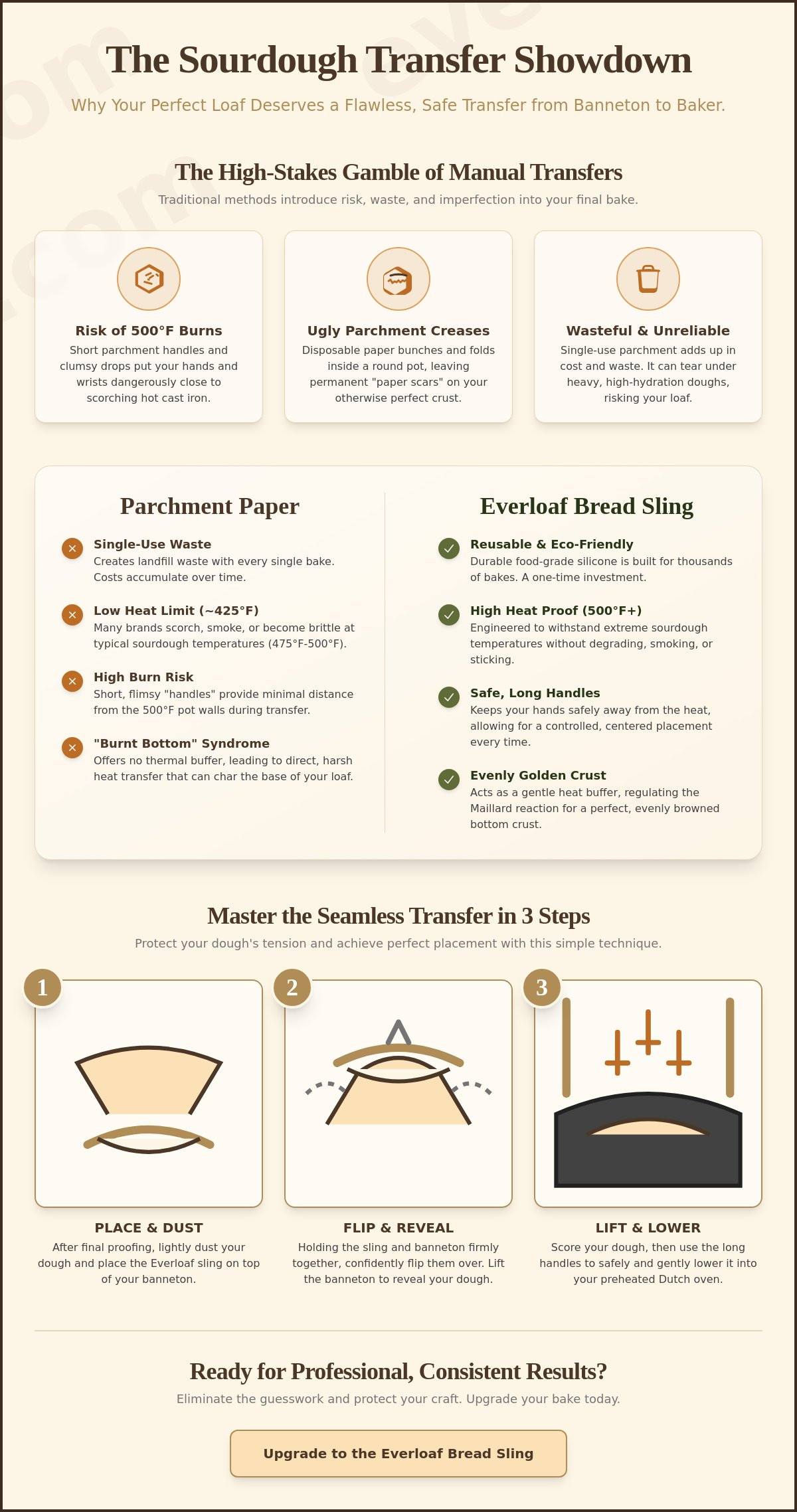
How to Use a Bread Sling for Seamless Sourdough Transfers
Precision is the heartbeat of a great bake. You've nurtured your dough with care. Now, the mechanics of the hand-off must be flawless. Using a bread sling for sourdough transfer isn't just about moving the dough. It's about preserving the delicate structure you've built over hours of labor. Most guides gloss over the actual physics of the transfer. We won't. This is where your artisan results are secured. A controlled move ensures that your oven spring is vertical and powerful rather than stunted and lopsided.
The goal is a seamless transition from the cool banneton to the scorching pot. This requires a tool that acts as an extension of your hands. A high-quality sling provides the stability needed for a perfect drop. It eliminates the panic that often leads to accidents. When you trust your tools, your technique becomes more fluid. You can focus on the art of the bake instead of the fear of a burn. This is the standard of quality your bread deserves.
Step-by-Step: From Banneton to Dutch Oven
Mastering the flip is a rite of passage. Follow these steps to ensure your dough remains aerated and perfectly centered. This level of control is what separates a hobbyist from a true artisan.
- Step 1: Place your Everloaf Bread Sling directly over the top of your proofing basket like a lid. Center the circular base over the dough.
- Step 2: Press one hand firmly against the back of the sling to create a seal. In one fluid, confident motion, flip the entire basket over.
- Step 3: Set the sling down on your clean workspace. Gently lift the banneton straight up to reveal the dough. It should sit proudly in the center.
- Step 4: Perform your decorative scoring. The flat, stable base of the sling provides the resistance needed for clean, deep cuts with your lame.
Safe Loading Techniques for High-Heat Baking
Now comes the heat. Your Dutch oven is waiting. It is likely at a temperature between 450°F and 500°F. Safety is paramount. Grip the long handles of the sling firmly. These handles are your shield. They allow you to lower the dough into the pot while keeping your skin away from the scorching cast iron walls. Don't rush. A controlled descent prevents the dough from shifting or collapsing on one side. This precision ensures a uniform oven spring across the entire loaf.
Centering is vital for even heat distribution. If the loaf sits against one wall, that side will bake faster and potentially scorch. The sling allows for micro-adjustments even after the dough is inside. Once the lid is on, the sling stays. It continues to protect the bottom crust from the direct intensity of the pot. You don't need to remove it mid-bake. It is designed to endure the full cycle. When the timer dings, use those same handles to lift the finished masterpiece out safely. No more fumbling with bulky mitts inside a cramped pot. It is clean. It is professional. It is how great bread is made.
Troubleshooting Common Transfer and Crust Failures
Even the best tools face the reality of a temperamental kitchen. High-hydration dough is a living, breathing challenge. Sometimes your pot isn't a perfect match for your gear. If your sling feels too large for your Dutch oven, don't force it. A bunched-up base ruins the bottom of your loaf. You can safely trim the edges of your silicone sling with sharp kitchen shears. Aim for a flat, centered fit that allows the heat to circulate evenly. This simple adjustment respects the needs of your dough and ensures a professional result every time.
Sticky dough is another common hurdle for the artisan baker. When working with hydration levels above 80%, the dough can feel like it's clinging to the surface. Don't panic. A light dusting of rice flour on your bread sling for sourdough transfer creates a professional non-stick barrier. Rice flour has a higher burn point than standard wheat flour. It ensures a clean release without the bitter taste of charred remnants. It is a small step that yields a massive improvement in your final result. You've worked hard on that dough. Give it the smooth exit it deserves.
Managing Steam and Oven Spring
Steam is the secret to a thin, crispy crust and a dramatic ear. The handles of your sling aren't just for safety. They can actually help trap moisture near the crust during those first twenty minutes of baking. The Everloaf Bread Sling is designed to withstand 500°F while maintaining structural rigidity. This means the handles won't melt or off-gas at high temps. However, you must prevent "Sling Sag." If the handles flop onto the dough, they will ruin your scoring. Hook them over the rim of the pot or tuck them outward before you drop the lid. This keeps the dough surface clear for a perfect expansion.
Cleaning and Longevity Tips
Your tools are an investment in your passion. Proper care ensures they last for thousands of bakes. If you find baked-on flour or dough remnants, don't reach for abrasive scrubbers. A simple soak in warm, soapy water is usually enough. For stubborn spots, a soft cloth will do the trick without damaging the silicone's non-stick properties. Storage matters too. Rolling your sling is much better than folding it. Folding can create permanent weak points or creases over time. Roll it up and store it in a dry place. If you notice any deep tears or signs of thinning, it's time for a replacement. A compromised sling is a safety risk you don't need to take. Once your loaf is perfect, keep it that way. Use a beeswax cotton bread bag to maintain that hard-earned texture and freshness.
Post-Bake Care: Preserving Your Crust After the Transfer
The journey doesn't end when the timer dings. Your kitchen smells like a professional bakery. The loaf looks perfect. Now you must protect that result. The bread sling for sourdough transfer has done its duty in the heat. It now serves its final purpose as a safety tool. Use those long handles to lift your masterpiece from the Dutch oven immediately. Leaving the bread in the pot causes "sweating." This trapped steam ruins the crisp, golden bottom crust you worked so hard to achieve. Move it to a wire rack. Let it breathe.
Respect the curing phase. Your loaf is still active on the inside. As the temperature drops, moisture migrates from the center toward the crust. This is the science of the "singing" bread. Cutting into a hot loaf is a mistake. It leads to a gummy, sticky crumb that sticks to your knife. Give your bread at least two hours to finish its internal transformation. Your patience is an act of respect for the sourdough process. It ensures the texture is as complex as the flavor.
From Hot Sling to Cooling Rack
The transition from a 500°F pot to room temperature is a delicate hand-off. The sling provides the stability needed to avoid dropping a heavy, hot loaf. Air circulation is your best friend during this window. Without a wire rack, moisture pools at the base. This turns a professional crust into a soggy disappointment. You've invested in the best tools for the transfer. Now invest in the best tools for the rest of the journey. Discover how to maintain that quality in our guide on The Best Bread Bags of 2026: Keep Your Homemade Sourdough Fresh for Days.
The 10-Day Freshness Secret
Plastic bags are the enemy of artisan sourdough. They suffocate the bread. They trap moisture and turn a perfect crust into a rubbery mess within hours. Paper bags are equally flawed. They allow too much moisture to escape, leaving you with a rock-hard loaf by the next morning. Orvix beeswax cotton bread bags are the logical partner to your bread sling for sourdough transfer. They offer a semi-permeable barrier. This allows the bread to "breathe" while retaining the essential moisture that prevents staling.
Beeswax is a natural specialist. It is inherently antibacterial and protects your loaf from mold without harsh chemicals. This storage method honors the inherent needs of your bread. It keeps the crust crisp and the crumb soft for up to 10 days. One tool handles the fire; the other handles the longevity. This is the complete system for the serious home baker. Keep your artisan loaves fresh with an Everloaf Beeswax Bag.
Take Command of Your Crust!
You've mastered the mechanics. The bread sling for sourdough transfer has secured your oven spring and protected your hands from the fire. You've ditched the unreliable parchment. Your loaves no longer suffer from unsightly creases or burnt bottoms. This level of precision respects the effort you put into every starter. Your dough has received the specialized attention it deserves. Now, don't let that perfect crust go to waste. A professional bake requires professional storage to maintain its integrity.
The Orvix Beeswax Bread Bag is the final step in your artisan journey. It is crafted from 100% organic cotton by expert culinary specialists. This bag is a guardian for your hard work. It keeps your sourdough fresh for up to 10 days by letting it breathe naturally. It prevents the rubbery texture of plastic and the staling of paper. Upgrade your sourdough storage with the Orvix Beeswax Bread Bag. Your loaves have never been in better hands. Keep baking with confidence!
Frequently Asked Questions
Can I use a silicone bread sling in any Dutch oven?
Yes, you can use a sling in most standard 5 to 7 quart round or oval pots. Ensure the base of the sling rests flat against the bottom of the vessel. If the handles or edges are too wide for your specific pot, they can be trimmed with kitchen shears for a custom fit.
Is a bread sling better than parchment paper for sourdough?
It is the superior choice for serious artisans. Using a bread sling for sourdough transfer eliminates the recurring cost and waste of single-use paper. You also avoid the deep creases that bunched-up parchment leaves on your crust. It's a professional upgrade that respects your craft.
Does the silicone sling affect the bottom crust of the bread?
It improves the result by acting as a gentle thermal buffer. Direct contact with 500°F cast iron often leads to a scorched base. The sling regulates this heat transfer. You achieve a beautiful, golden brown crunch across the entire bottom without any bitter, burnt spots.
What is the maximum temperature a bread sling can handle?
Commercial silicone slings are verified to withstand heat up to 500°F (260°C). This makes them perfectly safe for the high temperatures required in sourdough baking. Always verify the manufacturer's specific rating before your first bake. Safety is a non-negotiable part of the process.
How do I clean a silicone bread sling after a sticky bake?
A simple soak in warm, soapy water is usually all you need. Most dough remnants will slide off thanks to the naturally non-stick surface. Use a soft sponge to wipe away any stubborn flour. Avoid metal scrubbers or harsh chemicals that could degrade the food-grade silicone over time.
Can I leave the bread sling in the Dutch oven for the entire baking time?
You absolutely should leave it in for the full duration. The material is built for long-term heat exposure. It continues to protect your loaf's integrity throughout the steaming and browning phases. There is no need to risk a burn by trying to remove it mid-bake.
Do I need to grease the bread sling before putting the dough on it?
Never use oil or grease on your silicone sling. Fats can smoke at high temperatures and ruin the flavor of your bread. If your dough is particularly sticky, use a light dusting of rice flour instead. It provides a clean release and a professional, flour-dusted aesthetic.
Will a bread sling help prevent my sourdough from burning on the bottom?
This is a primary benefit of using a bread sling for sourdough transfer. The silicone creates a consistent barrier that prevents the "hot spots" common in cast iron baking. It ensures your loaf receives even heat. You'll get a perfect, artisanal finish every time you bake.


