

Your plastic bag is a death trap for your rye. It's time to stop treating this complex, dense grain like a common supermarket sandwich loaf. You know the frustration of finding fuzzy green mold on a beautiful loaf within 48 hours. Or perhaps you've fought to slice through a crumb that turned into a literal brick after just one day. With consumer interest in high-fiber grains like rye growing by 6.2% this year, every slice is more valuable than ever. It's heartbreaking to watch a quality bake spoil before you can even enjoy it.
Rye isn't wheat. Its unique chemistry requires a breathable microclimate that manages moisture migration instead of just blocking air. We're here to help you master how to store rye bread so your loaves stay moist, flavorful, and mold-free for up to ten days. You'll learn the secrets to maintaining that perfect chew and why curing your dark rye is the most important step you're currently skipping. From understanding moisture levels to choosing the right tools like our beeswax Bread Bag, this guide ensures your bread gets the specialized treatment it deserves. Let's transform your kitchen into a haven for long-lasting, artisanal freshness.
Key Takeaways
- Respect the "Rye Cure" by waiting 24 to 48 hours for the loaf's internal structure to fully set. Cutting too early results in a gummy texture that ruins your hard work.
- Keep your loaf away from the refrigerator to prevent rapid starch retrogradation. Cold temperatures accelerate staling and destroy the bread's soul.
- Discover the exact steps for how to store rye bread to maintain a perfect moisture balance for up to ten days. Stop the cycle of moldy crusts and rock-hard crumbs forever.
- Learn why breathable, natural materials like organic cotton and beeswax outperform traditional packaging. A specialized microclimate is the secret to a long-lasting, flavorful loaf.
- Use the right tools to seal your loaf after the first cut to protect the crumb's delicate hydration. Your bread deserves professional-grade care from the very first slice.
The Golden Rule of Rye: Why You Must Wait Before Storing
You just pulled a steaming, dark loaf from the oven. The smell is intoxicating. Your first instinct is to slice it immediately and slather it in butter. Stop. You're about to ruin days of hard work. Rye is a unique beast that demands patience. It requires a "Rye Cure" before you even consider how to store rye bread. This isn't just a cooling period; it's a structural transformation that defines the final quality of your bake.
Rye bread is fundamentally different from wheat-based loaves. While wheat relies on gluten for structure, rye depends on pentosans. Think of these as the biological "glue" that holds your dense loaf together. These complex carbohydrates absorb massive amounts of water during the baking process. They need 24 to 48 hours to finish setting their internal structure and properly distribute moisture. If you slice too soon, you'll encounter the dreaded "gummy crumb." This sticky, unpalatable texture happens because the starches haven't finished their chemical transition. Patience is your most important tool here.
The 24-Hour Stability Test
Place your loaf on a wire rack and leave it completely uncovered. Do not put it in a box. Do not wrap it in a towel. You must allow air to circulate around the entire surface to manage the "Rye Sweat." This is the phase where moisture migrates from the hot center to the crust. The starch set in rye bread is a 24-hour chemical requirement. You'll know it's ready when the loaf feels firm and the crust has lost its initial tackiness. A properly cured loaf actually improves in flavor and sliceability after this first day.
Why Rye Stays Fresh Longer Than Wheat
Rye is built for longevity. Unlike a white baguette that turns into a rock within twelve hours, rye has a high water-binding capacity. It holds onto its moisture with incredible tenacity. The natural acidity of a rye sourdough also acts as a powerful, built-in mold inhibitor. This acidity creates an environment where spoilage organisms struggle to survive. While wheat breads dry out, rye matures. Once the initial cure is complete, using a specialized tool like our beeswax cotton bread bags helps maintain this delicate moisture balance for a week or more. You're not just storing bread; you're managing a living, evolving product that rewards your respect for the craft.
Understanding the Science of Rye Bread Freshness
The refrigerator is where great bread goes to die. It's a common mistake when people wonder how to store rye bread. Cold temperatures actually accelerate a process called starch retrogradation. This is the chemical recrystallization of starch molecules. As they crystallize, they push water out of the crumb. This leaves you with a gritty, dry, and unappealing texture. Experts at confirm that bread stales up to six times faster in the fridge than at room temperature. For a dense rye, this effect is even more devastating.
Dense loaves like Vollkornbrot handle moisture differently than airy wheat sourdough. They contain a massive amount of water trapped within their heavy structure. Over time, this water naturally migrates from the center of the loaf toward the crust. This is "Moisture Migration." In a plastic bag, this moisture gets trapped against the crust. The result is a rubbery, soggy exterior and a perfect breeding ground for mold. You need a storage solution that allows this moisture to escape slowly without letting the bread turn into a brick. Our beeswax cotton bread bags provide exactly this kind of breathable environment.
Pentosans vs. Gluten
Rye doesn't have the strong gluten network found in wheat. Instead, it relies on complex sugars called pentosans. These sugars are incredibly "thirsty." They hold onto water molecules much more tightly than wheat proteins do. This is why rye stays moist for days. However, these same sugars make the bread prone to "sweating" if the air is too humid. A thick, protective crust acts as a natural barrier. It regulates how fast the internal moisture escapes. If the environment is too dry, the crust hardens too quickly. If it's too damp, the pentosans release water too fast, leading to a soggy mess.
The Critical Role of Sourdough Acidity
Traditional rye bread is almost always made with sourdough. This isn't just for the tangy flavor. The low pH level of sourdough acts as a natural preservative. It prevents "rope" spoilage, a bacterial condition that turns the inside of bread into a sticky, stringy disaster. Commercial rye breads made with added yeast lack this high acidity. They stale much faster and succumb to mold within days. The acidity in a true sourdough rye preserves the "chew" of the crumb. It keeps the bread safe and delicious while the flavors continue to develop during storage. Respecting this chemistry is the only way to enjoy your loaf for a full week.
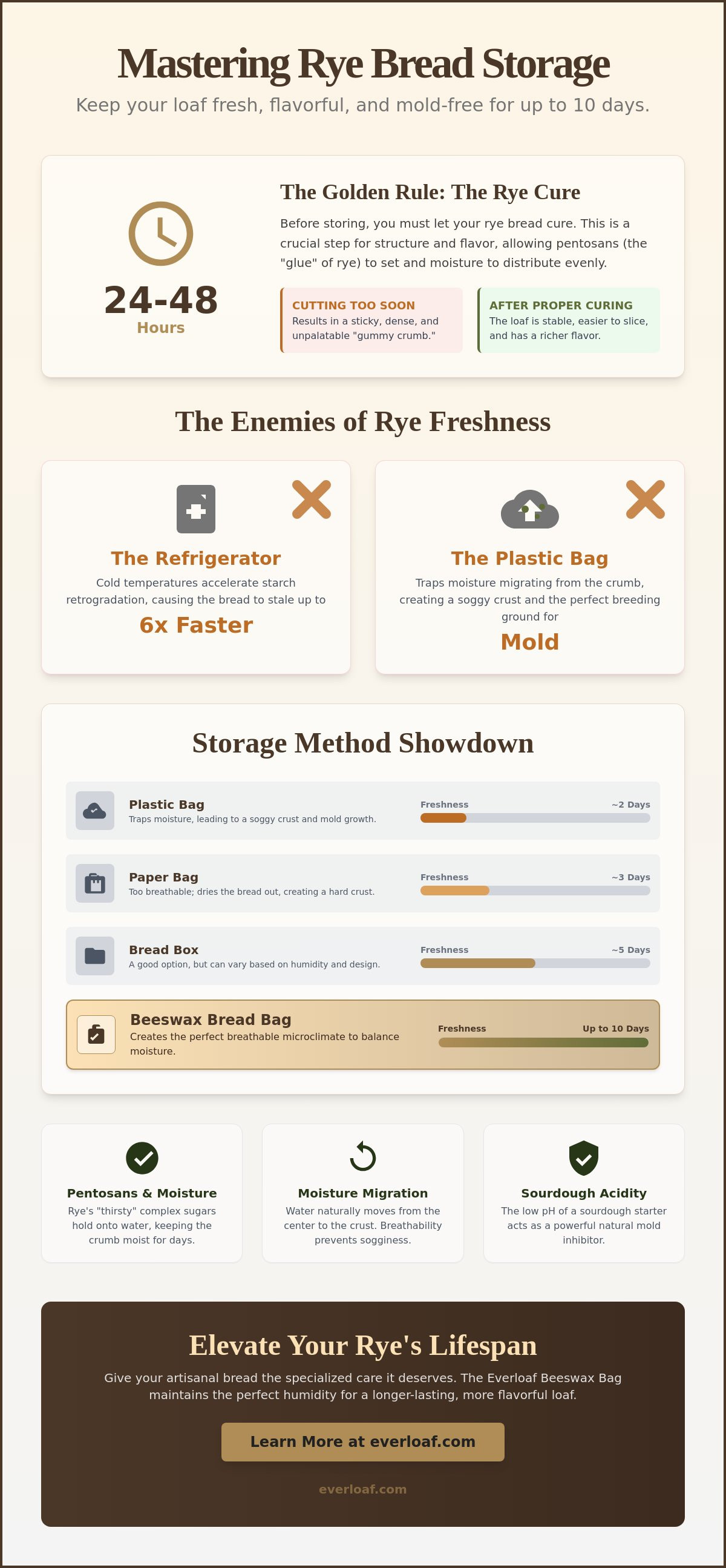
Comparing Storage Methods: What Actually Works for Rye?
Stop using plastic bags immediately. It's the fastest way to ruin a dense rye loaf. While plastic keeps the bread soft, it destroys the character of a thick, artisan crust. It traps moisture directly against the surface. This creates a swampy environment where mold thrives. You'll likely find green spots within 48 hours. Your bread deserves better than a plastic prison. It needs to breathe to survive.
Paper bags aren't the answer either. They offer zero protection against evaporation. A paper bag is a 12-hour solution at best. After that, your rye begins its transformation into a stone. The moisture migration we discussed in the previous section happens far too fast. The crumb loses its iconic "chew" and becomes brittle. It’s a tragic end for a loaf that should easily last a week on your counter.
Linen bags are a favorite in the artisan community. They breathe beautifully and look great in the kitchen. However, for high-percentage rye, they often breathe too much. Rye is exceptionally dense. It needs a specific, elevated humidity level to stay edible. Linen often allows the loaf to dry out before you can even get halfway through it. You need a middle ground between a swamp and a desert.
Why Beeswax is the Professional Baker’s Choice
Beeswax creates a "second skin" for your bread. It utilizes the semi-permeable nature of organic cotton infused with pure beeswax. This material mimics the natural protective barrier of the rye crust itself. It allows the loaf to "exhale" just enough moisture to prevent mold without turning the crumb into a rock. Using beeswax bread bags for homemade bread provides the ideal microclimate for long-term freshness. It’s the most effective way to manage how to store rye bread without compromising quality.
The Foil and Plastic Myth
Some guides suggest wrapping rye in tin foil. This is a common mistake. Trapping 100% of the moisture leads to "crust softening" and a total loss of character. The bread begins to "sweat" in these non-breathable environments. This trapped moisture re-absorbs into the crust, making it gummy and unappealing. If you use a bread box, ensure it has small ventilation holes. Even then, your loaf still needs an individual wrap to stay perfect. Mastering how to store rye bread means moving beyond these outdated myths and respecting the science of the grain.
How to Store Rye Bread Step-by-Step for Maximum Longevity
Your loaf is a masterpiece of chemistry. It has survived the initial 24 hour cure we discussed earlier. Now, you must guide it through its prime. Knowing how to store rye bread is about managing its evolution from day one to day ten. While wheat loaves begin to fade after 24 hours, a well-managed rye is just getting started. Follow these steps to respect the craft and keep your crumb perfect.
- Step 1: The Cool and Cure. Leave the loaf on a wire rack for at least 24 hours. This allows the pentosans to set and prevents the gummy crumb.
- Step 2: The First Cut. Use a sharp Sourdough Knife to slice only what you need. A clean cut preserves the structural integrity of the remaining loaf.
- Step 3: The Face Down Method. Always store the cut side flat against a clean wooden surface. This creates a natural seal for the moist interior.
- Step 4: Mid-Week Wrapping. By day three, move the loaf into a breathable environment to prevent the crust from becoming a brick.
- Step 5: Long-Term Preservation. If you can't finish the loaf within ten days, utilize the freezer to lock in freshness.
Daily Counter Care (Days 1-7)
Keep your bread on a wooden cutting board, cut-side down. This is the oldest baker's trick for a reason. It uses the weight of the loaf to seal the crumb from the air. Avoid the top of the refrigerator. The heat from the appliance's motor accelerates staling and dries out the grain. Instead, use cotton bread bags to maintain the crust's integrity while allowing the bread to breathe. Our community of bakers swears by this method for maintaining that elusive, perfect chew.
The Proper Way to Freeze Rye
Don't freeze a whole rye loaf. It's too dense to thaw evenly. Pre-slice the entire loaf once it has fully cured. Place parchment paper between slices and double-bag them to prevent freezer burn. To revive a slice, use a toaster or a quick hit of steam. This returns the moisture to the starches, making it taste like it was baked this morning. Mastery of how to store rye bread ensures you never waste a single, nutrient-dense crumb.
Storing Different Rye Varieties
A 100% Westphalian Pumpernickel is a different animal than a deli-style light rye. Pumpernickel is nearly indestructible but needs a very tight wrap to stay moist. Deli-style loaves contain more wheat and stale faster; treat them with more urgency. If your loaf is heavy with caraway seeds, store it separately. Those potent oils will migrate to everything else in your bread box. Protect your investment and your palate by using our beeswax cotton bread bags for every variety you bake or buy.
Elevating Your Sourdough Rye with Everloaf’s Natural Solutions
Your bread is an investment in time and quality. Treating it with generic storage solutions is a disservice to the craft. We designed the Orvix Bread Bag to meet the specific, demanding needs of artisan loaves. It isn't just a container; it's a specialized tool for anyone serious about how to store rye bread. By using 100% organic cotton, we ensure the loaf can breathe without losing its soul to the air. This natural material allows for the slow moisture migration that rye requires to stay perfect for over a week.
Integrating sustainable tools into your daily ritual changes the way you experience your bakes. When you use high-quality materials, you're not just preserving a meal. You're showing respect for the fermentation process and the grain itself. This level of care transforms a simple kitchen task into a professional-grade experience. Our community of enthusiasts knows that the right environment is the difference between a wasted loaf and a week of perfect sandwiches.
The Orvix Beeswax Advantage
Pure beeswax is nature's own preservative. It possesses natural antimicrobial properties that help keep mold at bay while maintaining a sterile environment. Unlike plastic, which suffocates the grain, the Orvix bag creates a semi-permeable seal. This seal is incredibly clever; it adapts to the size of your loaf as you slice through it. You can fold and press the bag to eliminate excess air, keeping the environment tight and controlled. For a deeper look at why this outperforms other materials, check out our guide on natural eco-friendly bread storage.
Slicing with Precision
The way you cut your bread directly impacts how long it stays fresh. A dull blade is a disaster for dense rye. It crushes the delicate crumb structure and creates a jagged surface area that lets moisture escape rapidly. You need a clean, decisive cut to keep the interior sealed. We created the Everloaf Sourdough Knife specifically for these challenges. Its precision edge glides through the thickest crusts without damaging the heart of the loaf. This ensures the face of the bread remains smooth and easier to seal against your cutting board.
Mastering how to store rye bread is the final step in your baking journey. Don't let your hard work go to waste in a subpar environment. Your loaves have inherent needs that only the right materials can satisfy. It's time to upgrade your kitchen with tools that work as hard as you do. Respect your craft and protect your loaf today.
Honor the Craft of Every Slice
Your journey with rye doesn't end at the oven door. You've learned that patience is the ultimate ingredient. Respecting the 48 hour cure prevents the gummy crumb and sets the stage for a week of excellence. Remember that your loaf is a living thing with specific needs. It thrives in a breathable microclimate and suffers in the cold stagnation of a refrigerator. By ditching the plastic and mastering how to store rye bread, you ensure every nutrient dense bite is as perfect as the first.
It's time to treat your artisan bakes with the reverence they deserve. Our solutions are trusted by artisan bakers nationwide for a reason. We use 100% organic cotton infused with pure, antimicrobial beeswax to protect the integrity of your grain. This isn't just about storage; it's about honoring the effort you put into every bake. Keep your rye fresh for 10 days with the Orvix Beeswax Bag. Your bread will thank you for the specialized care.
Go ahead and bake that heavy pumpernickel or dark sourdough. You now have the tools and the science to keep it moist and flavorful until the very last crumb. Happy baking!
Frequently Asked Questions
Should I store rye bread in the refrigerator?
Never put your rye in the fridge. Cold air is the enemy of artisan bread. It triggers starch retrogradation, which pulls moisture from the crumb and leaves it gritty. Your loaf will stale up to six times faster in a cold environment. Keep it on the counter in a breathable bag to preserve the texture you worked so hard to create.
How long does homemade rye bread stay fresh?
Homemade rye bread stays fresh for 7 to 10 days when handled properly. Its high water-binding capacity and sourdough acidity provide a natural defense against drying and spoilage. Unlike wheat loaves that fade in 24 hours, rye matures over several days. Mastering how to store rye bread allows you to enjoy its peak flavor on day four or five.
Why does my rye bread get moldy so quickly?
Mold thrives when moisture is trapped against the crust. If you use plastic bags, you are creating a swampy microclimate that invites spores to grow. Rye is naturally moist and needs to exhale. Switching to a breathable cotton or beeswax container prevents this moisture buildup. This simple change stops mold before it starts and respects the integrity of the loaf.
Can I freeze a whole loaf of rye bread?
You should never freeze a whole loaf of dense rye. The core takes too long to thaw, which often leads to a soggy, uneven mess. Always pre-slice your loaf after it has fully cured for 24 hours. Place parchment paper between the slices and double-bag them to lock out freezer burn. This method lets you revive single slices quickly in the toaster.
Is it better to store rye bread in paper or plastic?
Neither paper nor plastic is ideal for long-term storage. Plastic suffocates the bread and causes mold; paper allows moisture to escape too quickly, turning your loaf into a rock. The best solution is a semi-permeable material like beeswax-infused cotton. It mimics a second skin, providing the perfect balance of breathability and moisture retention for your artisan bakes.
Why is my rye bread gummy when I slice it?
Gummy bread is usually the result of slicing too early. Rye requires a 24 to 48 hour cure period to allow its internal structure to set. During this time, complex sugars called pentosans finish binding with water. If you cut the loaf while it is still warm, the steam escapes too fast and the starch remains sticky. Patience is the only cure for a gummy crumb.
How do I revive stale rye bread?
Revive stale slices with a quick hit of heat and moisture. A toaster is the most efficient tool for returning a crisp texture to the crust while softening the interior. For a larger section of a loaf, try a light steam for a few minutes. This process re-gelatinizes the starches and makes the bread feel fresh again. Just remember that revived bread should be eaten immediately.
What is the best container for German-style pumpernickel?
German-style pumpernickel requires a very high humidity environment to stay soft. A beeswax wrap or a tightly sealed beeswax Bread Bag is the gold standard for these ultra-dense varieties. These tools prevent the intense moisture from evaporating while protecting the deep, fermented flavors. Knowing how to store rye bread like pumpernickel ensures that every thin, dark slice remains a gourmet experience.


