

What if the plastic wrap in your drawer is actually the enemy of your artisan bread? It's a hard truth. Most of us feel the frustration of rubbery crusts and the quiet fear of microplastics leaching into our family's meals. You deserve better. Your food deserves better. Learning how to reduce plastic use in the kitchen is your first step toward a healthier home and a more professional pantry. It's about respecting the craft of your cooking and the integrity of your ingredients.
With major 2026 regulations like California's SB 54 and the EU's packaging laws now in effect, the world is finally catching up. Plastic is outdated. We promise a practical, health-focused roadmap to eliminate these materials while actually improving the freshness of your food. Our community is already seeing the difference in every loaf and leaf. You'll discover how to transition to high-quality, breathable alternatives that treat your ingredients with reverence. This guide previews the essential swaps that create a streamlined, beautiful kitchen that performs as well as it looks. Let's build a space that honors your food.
Key Takeaways
- Master a proven four-step framework to audit your pantry and block single-use plastic at the door.
- Discover how to reduce plastic use in the kitchen by switching to breathable, natural storage that honors your ingredients.
- Learn why moving away from plastic bags is the secret to maintaining the perfect, crispy crust on your artisan loaves.
- Identify and replace the "invisible" plastics in your prep tools with high-performance, sustainable alternatives.
- Build a curated, professional kitchen environment that prioritizes your family's health and the longevity of your tools.
Why Your Kitchen is the Frontline of the Plastic-Free Movement
Your kitchen is more than a place to prep meals. It's the heart of your home's health and flavor. Most people view plastic as a simple convenience. In reality, it's a barrier to quality. A true plastic-free kitchen focuses on natural, inert materials like glass, stainless steel, and organic cotton. These materials don't just sit there; they work with your food. Learning how to reduce plastic use in the kitchen is about reclaiming the purity of your ingredients. It's a shift from a disposable mindset to a curated, professional environment.
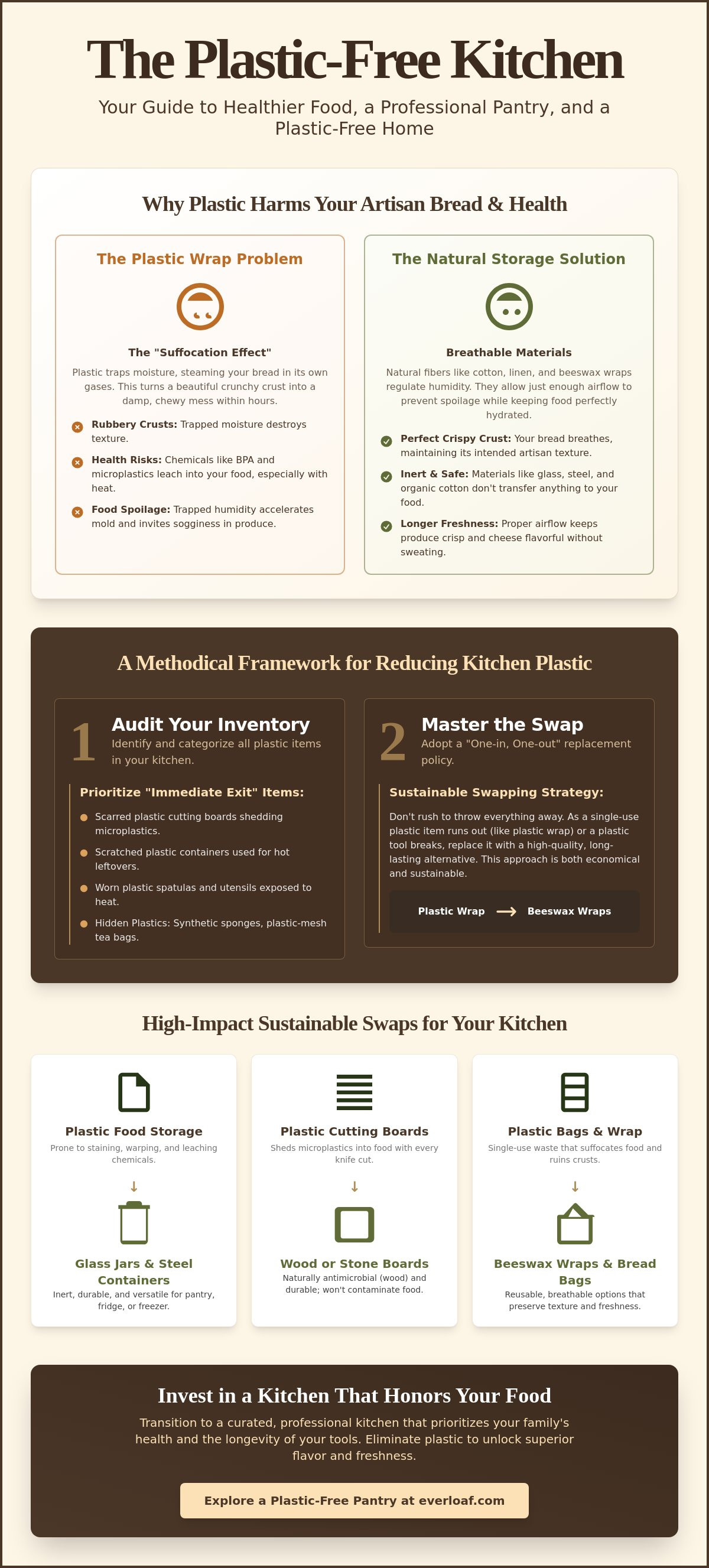
Plastic is a total barrier. It seals everything in, including the gases and moisture that fresh food needs to release. This creates a "suffocation effect." When you wrap fresh produce or warm bread in plastic, you're essentially steaming it in its own moisture. This is the root cause of the dreaded rubbery bread crust. Artisan bread needs to breathe to stay crisp. Plastic turns that beautiful, crunchy exterior into a damp, chewy mess within hours. Your hard work in the kitchen deserves better than a plastic bag.
The Health Case: BPA and Microplastics
The risks aren't just about taste; they're about what stays in your body. When plastic storage containers or cutting boards are exposed to heat, they leach chemicals like BPA directly into your meals. This process accelerates in the microwave or when hot food is placed in a plastic bowl. As of 2026, the United States continues to produce 42 million metric tons of plastic waste annually, much of which sheds microplastics directly into our food supply through daily kitchen wear and tear. Adopting waste minimisation principles helps you cut this cycle at the source. Stop using plastic boards that shed invisible particles with every knife stroke. Your health is worth the upgrade to wood or stone.
The Culinary Case: Why Plastic Ruins Good Food
Plastic is a culinary failure. It traps moisture against the surface of your food, which invites mold and creates soggy textures. Fresh greens wilt faster. Cheese "sweats" and loses its complex flavor profile. Natural fibers and beeswax wraps offer a different path. These materials regulate humidity. They allow just enough airflow to prevent spoilage while keeping the food hydrated. Your ingredients deserve artisan-grade storage that respects their chemistry. For example, using a beeswax Bread Bag protects the crumb of your sourdough while maintaining that signature crust. Our community of bakers knows that how to reduce plastic use in the kitchen is the secret to professional results at home. Stop settling for subpar storage. Start treating your food with the reverence it deserves.
A Methodical 4-Step Framework for Reducing Kitchen Plastic
Transforming your space doesn't happen overnight. It shouldn't. A rushed overhaul is expensive and often leads to unnecessary waste. Instead, adopt a disciplined system. This framework focuses on high-impact changes that protect your food and your family. Mastering how to reduce plastic use in the kitchen starts with awareness and ends with a curated collection of tools that last a lifetime. Let's break it down into actionable phases.
Step 1: Audit Your Current Inventory
Open every drawer. Pull everything out. You need to see the scale of what you own. Categorize your items into two groups: "Immediate Exit" and "Phase Out." Your immediate exit list should include anything that directly compromises health. Think about plastic cutting boards scarred with knife marks or scratched containers used for hot leftovers. These are prime sources of microplastic shedding. Don't forget the hidden culprits. Many tea bags contain plastic mesh. Most kitchen sponges are made of polyester. Even your dish soap might come in a single-use bottle that could be replaced by a bar or a refillable glass dispenser. Prioritize replacing items that touch heat or acidic foods first. Heat accelerates chemical leaching, making those old plastic spatulas a top priority for replacement.
Step 2: Master the Art of the Sustainable Swap
Adopt a "One-in, One-out" policy. This removes the financial sting of upgrading your kitchen. When your roll of plastic wrap finally ends, don't buy another. Invest in a set of beeswax wraps instead. If a plastic storage lid cracks, replace the set with glass or stainless steel. Focus on multi-purpose tools. A high-quality glass jar can store dry goods, hold leftovers, or even serve as a sourdough starter vessel. This minimalist approach creates a streamlined, aesthetically pleasing inventory. It also improves the quality of your ingredients. Understanding how humidity affects bread storage is a great example of why material choice matters. Many of our community members start their journey with beeswax cotton bread bags because they solve a specific problem: keeping crusts crisp without the suffocation of plastic.
The third step is stopping the influx. You can't empty a bathtub if the tap is still running. Bring your own mesh bags for produce. Choose glass-bottled oils over plastic ones. If you order takeout, transfer the food to your own ceramic or glass dishes the moment it arrives. Don't let hot food sit in plastic containers for a second longer than necessary. Finally, commit to maintenance. Natural materials require a different rhythm of care. Wash your beeswax wraps in cool water. Oil your wooden boards. This isn't a chore; it's a ritual of respect for the tools that nourish you. By following this methodical path, you'll find that how to reduce plastic use in the kitchen becomes a natural extension of your culinary craft.
Mastering Plastic-Free Food Storage: Bread, Produce, and Leftovers
Freshness is a living process. Your food needs to interact with its environment to stay at its peak. Plastic stops this process entirely. It creates a stagnant, airless environment that encourages decay. To truly master how to reduce plastic use in the kitchen, you must switch to materials that breathe. Beeswax and organic cotton are the gold standard for living foods. They provide a protective shield while allowing for natural gas exchange. This is the difference between keeping food "alive" and merely delaying its inevitable spoilage.
Your kitchen inventory should reflect the quality of the ingredients you buy. A high-end artisan loaf represents hours of fermentation and craft. Don't let it die in a poly bag. When you understand the mechanics of storage, you realize that plastic is a prison for bread. It forces moisture from the crumb into the crust, leading to a phenomenon known as retrogradation. This is why your bread turns rubbery by day two. Paper bags are equally problematic; they act like a sponge, drawing out all moisture and leaving you with a rock-hard loaf. The beeswax Bread Bag offers a superior solution. It creates a controlled micro-climate that balances humidity with airflow. For a deeper dive into these mechanics, read The Ultimate Beeswax Bread Bag Guide to keep your sourdough fresh for up to 10 days.
Produce and Leftovers: Beyond the Cling Film
Cling film is a single-use disaster that belongs in the past. It's frustrating to use and even worse for your food. Beeswax wraps are the modern alternative for cheese, cut vegetables, and covering bowls. These wraps mold to the shape of your containers using the warmth of your hands. They create a seal that is both firm and breathable. Beeswax is naturally antimicrobial, which provides an extra layer of safety for your ingredients. This natural property helps inhibit the growth of bacteria and fungi that typically plague produce stored in plastic. You'll notice your greens stay crisper and your cheese doesn't develop that slimy, "sweat" texture.
For wet storage, the strategy changes. Glass and stainless steel are the best options for sauces, berries, and meal prep. These materials are completely inert. They won't absorb the strong odors of garlic or the bright colors of tomato sauce. Use wide-mouth glass jars for everything from leftover soup to fresh blueberries. It makes your fridge look like a curated gallery rather than a cluttered storage unit. This shift is a key part of how to reduce plastic use in the kitchen while elevating your daily culinary experience. You'll spend less time fighting with tangles of plastic wrap and more time enjoying the vibrant flavors of your food. It's a cleaner, more respectful way to cook.
Swapping the "Invisible" Plastics: Tools, Cleaning, and Prep
Your kitchen tools should be as enduring as your recipes. Many home cooks overlook the "invisible" plastics hidden in their daily prep. Plastic cutting boards are a prime example. Every chop releases microscopic particles into your ingredients. Switch to wood or FSC-certified paper composites. These materials are self-healing and kinder to your blades. This is a critical step in how to reduce plastic use in the kitchen. It's about choosing materials that respect the integrity of your food. Professional chefs don't settle for flimsy plastic. You shouldn't either.
Coffee and tea rituals are often riddled with plastic. Pods and plastic-lined tea bags are unnecessary waste. Switch to loose-leaf tea and a stainless steel French press or pour-over. This small change removes thousands of pieces of plastic from your life over a year. It also delivers a far superior flavor profile. Your morning routine should be a moment of peace, not a source of pollution. Reclaim your morning with natural materials that let the true notes of your brew shine through.
Sustainable Baking: Tools for the Modern Baker
Baking is a craft that demands precision. Plastic tools often feel flimsy and temporary. The Danish Dough Whisk is a revelation for heavy doughs. Its stainless steel loops cut through flour without the drag of a plastic handle. Stop using parchment paper coated in silicone for every loaf. The Everloaf Bread Sling offers a professional, reusable alternative that handles high heat with ease. Your bread deserves a clean path from bowl to oven. Invest in The Sourdough Knife for a lifetime of perfect slices. High-quality steel and natural handles outperform plastic-handled serrated blades every single time. Elevate your process with tools that feel as good as they perform. Respect the craft of baking by using tools designed for longevity.
Cleaning Without Chemicals or Microfibers
Traditional sponges are a hidden environmental failure. They are essentially blocks of polyester that shed microplastics into the water system with every rinse. Swap them for natural loofah or wooden brushes with plant-based bristles. These tools are effective and compostable. Pair them with a solid dish soap bar. This removes the need for plastic-bottled liquid detergents entirely. Caring for your wooden tools is simple. Apply a food-safe oil once a month to prevent cracking. This ritual ensures your investment lasts for decades. Learning how to reduce plastic use in the kitchen extends to how you maintain your space. A clean kitchen should be free of synthetic residue. For those looking to complete their sustainable setup, our beeswax cotton bread bags provide the perfect finish for your plastic-free prep.
Investing in Longevity: The Culinary Benefits of a Natural Kitchen
A curated kitchen is a sanctuary. It's a space where every tool has a purpose and a story. The disposable era is over. It failed our food and our planet. Transitioning away from synthetic materials isn't just an environmental choice. It's a culinary upgrade. When you commit to learning how to reduce plastic use in the kitchen, you're choosing flavor over convenience. You're choosing the crisp snap of a fresh carrot and the deep, complex crust of a sourdough loaf. Natural materials like beeswax and organic cotton don't just store your food; they protect its soul.
Sustainability is the path to better tasting food. It's that simple. When your ingredients are allowed to breathe, they retain their character. You'll stop throwing away wilted greens and soggy loaves. This efficiency saves money, but the real reward is the quality of your meals. Your kitchen should be a place of professional standards. By removing inert, lifeless plastics, you create an environment where fresh food can thrive. This is the ultimate goal of the modern, design-conscious cook.
The Value of Quality over Quantity!
Stop filling your drawers with clutter. A kitchen full of cheap plastic gadgets is a distraction. You only need a few high-quality tools to master your craft. Think about the sensory joy of a smooth wooden handle. Feel the weight of a professional steel blade. These items age with you. They develop a patina of use that plastic can't replicate. This aesthetic and functional longevity is the hallmark of a specialized kitchen. Our community knows that the right storage makes all the difference. Check out The Best Bread Bags of 2026 to see how design meets utility. It's time to treat your inventory with the same reverence you give your ingredients.
Your Next Step Toward a Plastic-Free Kitchen!
Don't feel overwhelmed by the process. Start today with one meaningful change. Replace your plastic wrap with a material that actually works. We invite you to experience the difference with the Everloaf beeswax Bread Bag. It's a small investment that yields massive results for your baking. Our community of enthusiasts is already seeing the rewards of this shift. Remember, how to reduce plastic use in the kitchen is a journey of consistent, small wins. Each swap is a vote for better health and better tasting food. You've done the hard work of baking. Now, give your bread the home it deserves. The future of home baking is plastic-free.
Reclaim Your Culinary Sanctuary!
You've learned that a plastic-free kitchen is a high-performance kitchen. By auditing your inventory and swapping suffocating wraps for breathable storage, you've prioritized both your health and the quality of your food. Mastering how to reduce plastic use in the kitchen is a journey that starts with a single, intentional choice. It's about moving away from a disposable mindset and embracing tools that offer longevity and sensory joy. Your ingredients are living things. They deserve to be treated with reverence. When you respect the chemistry of your food, the flavors always shine brighter.
Your artisan loaves shouldn't suffer in a poly bag for another day. Upgrade your kitchen with the beeswax Bread Bag to experience professional-grade freshness. Each bag is crafted from 100% organic cotton and infused with pure beeswax for natural preservation. Designed by culinary professionals from Lyon, France, these bags provide the perfect micro-climate for your sourdough. Join our community of enthusiasts who refuse to compromise on flavor. Take that first step today. A cleaner, more vibrant home environment is within your reach. Your next great meal starts with a better way to store it.
Frequently Asked Questions
Is it actually possible to have a 100% plastic-free kitchen?
Achieving a 100% plastic-free kitchen is a high standard that requires discipline but is entirely achievable through curated choices. Most enthusiasts start by eliminating single-use items and gradually phasing out durable plastics like blender bases or gaskets. Focus on the high-impact areas where food meets heat or moisture. By choosing glass, steel, and organic fibers, you create a space that respects your ingredients. It's a journey of quality over convenience.
How do I keep my bread fresh without using plastic bags?
Use a breathable, natural barrier like a beeswax bread bag to maintain the perfect balance of humidity and airflow. Plastic bags suffocate artisan loaves, leading to rubbery crusts and rapid mold growth. Natural fibers allow the bread to breathe while preventing it from drying out completely. This method preserves the crunchy exterior and soft crumb of your sourdough for days. It's the professional way to honor your baking efforts.
Are beeswax wraps more hygienic than plastic wrap?
Yes, beeswax has natural antimicrobial properties that help inhibit the growth of bacteria and fungi. Unlike plastic wrap, which creates a stagnant environment for moisture to build up, beeswax wraps are breathable. This prevents the sweating that often leads to spoilage in cheese and vegetables. They offer a cleaner, safer seal for your bowls and produce. Your food stays vibrant and safe without the risk of chemical leaching.
Will my food go stale faster if I stop using plastic storage?
No, food often stays fresh longer in natural materials because they regulate moisture instead of trapping it. When learning how to reduce plastic use in the kitchen, you'll find that items like greens and cheese thrive in breathable environments. Plastic often accelerates rot by sealing in ethylene gas and excess moisture. Switching to glass jars and beeswax wraps ensures your ingredients maintain their peak flavor and texture for extended periods.
What is the best way to clean reusable cotton bread bags?
Shake out the crumbs after each use and wash the bag in cool water with a mild, natural soap when necessary. Avoid hot water, as it will melt the protective beeswax coating. Air dry the bag away from direct heat sources to preserve its integrity. This simple maintenance routine ensures your bag stays hygienic and functional for hundreds of uses. Treat your tools with care, and they will support your craft for years.
Can I freeze food without using plastic freezer bags?
Use tempered glass jars or stainless steel containers to freeze liquids and solids safely without synthetic waste. Leave about an inch of headspace in glass jars to allow for expansion as liquids freeze. You can also wrap solid items like bread or meat in heavy-duty beeswax wraps or butcher paper. These methods effectively prevent freezer burn while keeping your freezer organized and aesthetically pleasing. It's a cleaner approach to long-term storage.
Are wooden cutting boards better than plastic for bacteria?
Research shows that wood has natural properties that trap and kill bacteria, making it superior to plastic boards. Plastic boards develop deep scars from knife strokes that become breeding grounds for microbes. Wood fibers draw moisture away from the surface, dehydrating and killing bacteria within minutes. This makes wood a safer, more professional choice for your prep work. Regular oiling keeps the wood resilient and beautiful.
How long do beeswax bread bags and wraps actually last?
A high-quality beeswax bread bag or wrap typically lasts about a year with regular use and proper care. You'll know it's time for a refresh when the material loses its grip or the coating feels thin. You can easily revive them at home by adding a fresh layer of beeswax and heating them gently in the oven. This longevity is a core part of how to reduce plastic use in the kitchen sustainably. It's an investment in your culinary future.


