

Your sourdough is a living masterpiece, not a commodity. Placing a fresh loaf in a plastic bag is an act of betrayal against the thirty-six hours of craft you poured into it. You've likely experienced the heartbreak of a rubbery, steamed crust or a loaf that turns into an inedible brick by the next morning. It's a massive waste of expensive organic ingredients and your precious time. Your bread deserves a storage method that respects its integrity.
We agree that the standard kitchen drawer is where good bread goes to die. This master guide reveals exactly how to keep sourdough bread fresh by utilizing a breathable moisture barrier that protects the delicate crumb. We promise to stop the cycle of wasted loaves with our definitive techniques for maintaining the perfect sourdough crust and crumb for up to ten days. We'll dive into the science of airflow, the truth about bread sweat, and the specific tools that keep your artisan bakes tasting like they just left the oven.
Key Takeaways
- Respect the four-hour cooling rule to protect the internal moisture and integrity of your artisan loaf.
- Discover how to keep sourdough bread fresh by ditching suffocating plastic for breathable, organic moisture barriers.
- Master the "Double Guard" freezing technique to preserve that signature crust and crumb for several weeks.
- Stop the staling process by understanding how starch molecules react to different storage environments.
- Give your bread the specialized care it deserves with a high-quality beeswax Bread Bag designed for longevity.
The Science of Staling: Why Sourdough Has Unique Needs
Your sourdough isn't just food. It is a complex biological masterpiece. It is a living structure of starch and moisture that demands your respect. Most people think bread goes stale simply because it dries out. That is a myth. Mastering how to keep sourdough bread fresh starts with a reality check. You aren't just fighting evaporation; you are managing a chemical transformation.
The real culprit behind a hard loaf is the science of staling. This process involves starch molecules moving from a disordered state to a rigid, crystalline structure. Sourdough does have one natural advantage over standard yeast bread. Its high acidity levels act as a natural preservative. This acidity slows down starch degradation and inhibits mold growth. However, even the best sourdough will succumb to the "Crust vs. Crumb" conflict without the right care. The soft crumb wants to stay moist, while the crust needs to stay dry. It is a delicate internal tug-of-war.
Moisture Migration: The Invisible Enemy
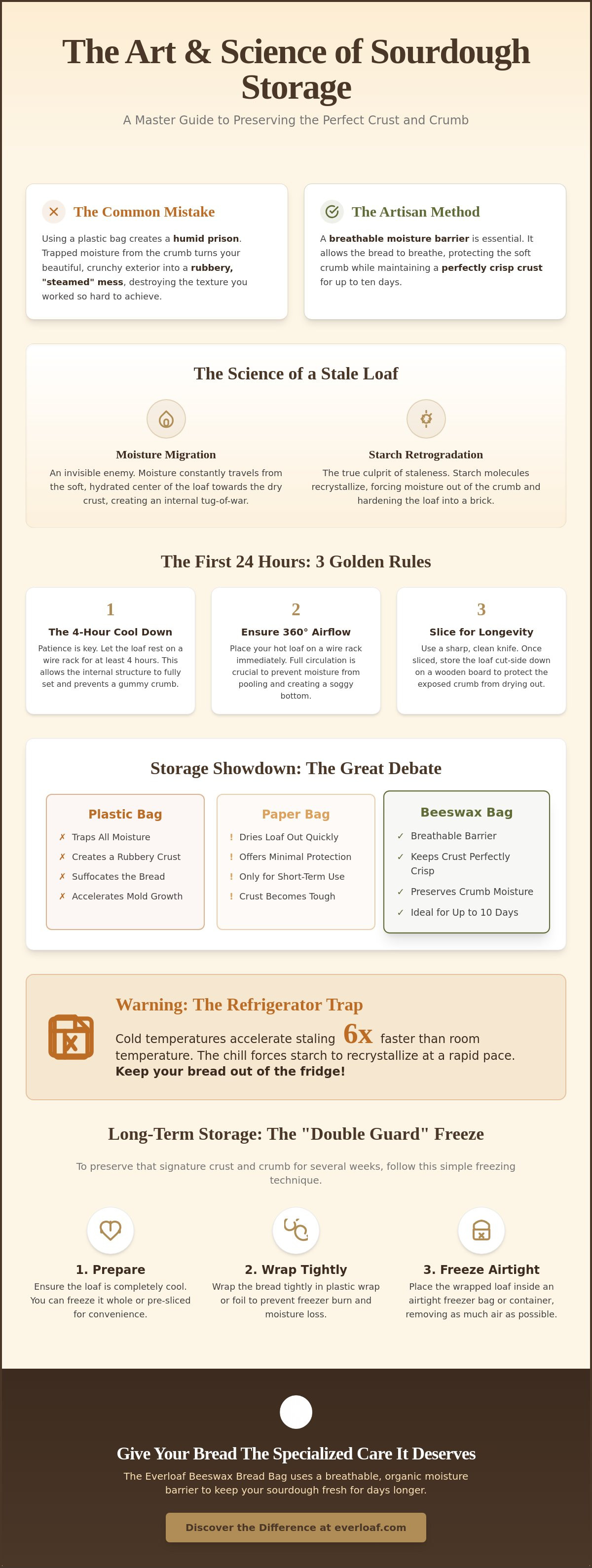
Moisture is a restless traveler. It constantly migrates from the soft, hydrated center of your loaf toward the thirsty, dry exterior. This movement is inevitable. If you wrap your bread in plastic, you create a humid prison. The moisture leaving the crumb gets trapped against the crust. This turns your beautiful, crunchy exterior into a rubbery, "steamed" mess. You are essentially suffocating your craft and destroying the texture you worked so hard to achieve.
Retrogradation is the crystallization of starch that hardens the loaf by forcing moisture out of the crumb. When this happens, the bread loses its elasticity. It becomes crumbly and bland. To stop this, you need a storage solution that allows the bread to breathe while maintaining a protective barrier. You must respect the bread's need for airflow.
Temperature and the 'Fridge Trap'
Stop putting your bread in the refrigerator. It is a trap that many well-meaning bakers fall into. Cold temperatures actually accelerate the staling process by six times compared to room temperature. The chill of the fridge forces starch molecules to recrystallize at a rapid pace. It turns a fresh loaf into a brick overnight. Unless you are dealing with extreme tropical heat, the fridge is the enemy of quality.
Keep your loaf at ambient room temperature to preserve the crumb's vital elasticity. This environment allows the natural acidity of the sourdough to do its job. You should also consider how humidity affects bread storage in your specific kitchen. A stable, cool, and dry spot on your counter is the gold standard for preservation. Treat your bread like the specialized craft it is, and it will reward you with days of perfect flavor.
The First 24 Hours: Cooling and Initial Storage
The oven bell is not the finish line. Your loaf is still evolving. Respect the bake. The cooking process continues long after the bread leaves the heat. Residual steam is currently moving through the crumb, finishing the transformation of starch and water. If you interrupt this process, you ruin the loaf. You've spent hours on fermentation; don't throw it away for a premature slice.
Cutting into a hot loaf is a rookie mistake. It forces the internal moisture to evaporate in a single cloud of steam. This leaves you with a gummy, sticky center and a loaf that will be dry by dinner. The 4-hour rule is your new law. Waiting four hours ensures the internal structure has fully set. This is the first step in learning how to keep sourdough bread fresh for the long haul. Patience is the secret ingredient that preserves the elasticity of your crumb.
The Perfect Cool-Down Routine
Airflow is everything. Place your loaf on a wire rack immediately. You need 360-degree circulation to prevent moisture from pooling at the base. A soggy bottom is a sign of neglect. Avoid placing your bread in a drafty area or near an open window. Sudden cold air can cause the crust to crack or "shatter" before it is ready. Using the Everloaf Bread Sling allows for a safe, stable transfer from your Dutch oven to the rack without damaging the expansion scores. This ensures your loaf cools evenly and maintains its structural integrity.
Slicing for Longevity
Precision matters. A clean, sharp cut preserves the internal "seal" of the bread. When you use a dull blade, you tear the fibers of the crumb. This creates more surface area for air to attack. A jagged edge is an open door for staleness. Once you've taken your first slice, store the loaf cut-side down on a clean wooden board. This uses the weight of the bread to protect the exposed crumb from the air. It is a simple, effective way to maintain that perfect texture for the first 24 hours. For even better protection as the day goes on, consider using a beeswax Bread Bag to maintain that delicate moisture balance.
By the end of the first day, your bread has reached its peak. The crust is firm, and the crumb is fully developed. Transitioning to proper storage now is critical. If you leave it exposed on the counter overnight, you'll wake up to a brick. If you suffocate it in plastic, you'll wake up to a sponge. Your bread is a living thing; treat it with the specialized attention it deserves.
Plastic vs. Paper vs. Beeswax: The Great Debate
Choosing a storage method is a statement of respect for your craft. Most bakers default to what is convenient, but convenience is the enemy of quality. If you want to master how to keep sourdough bread fresh, you must understand the environment your loaf inhabits. Plastic and paper are the two most common choices. Both are fundamentally flawed for artisan sourdough.
Plastic bags are a fast track to disaster. They create a zero-airflow environment that traps every ounce of evaporating moisture against the crust. This suffocates the bread. Within hours, your once-shattering crust becomes a rubbery, damp mess. Worse, this humid microclimate is the perfect breeding ground for mold. You didn't spend days fermenting a loaf just to watch it turn green in a grocery store bag.
Paper bags sit at the other extreme. They act as a moisture thief. Paper is highly porous and actively wicks hydration away from the crumb. While it might keep your crust somewhat crisp for an afternoon, it turns the interior into a dry, flavorless brick by the next morning. Paper offers no protection against the dry air of modern kitchens. It is a temporary solution that fails the long-term test.
Beeswax-infused organic cotton is the innovative hybrid your bread has been waiting for. This material mimics a natural rind. It provides a structured, protective layer that allows the bread to breathe without dehydrating. Organic cotton is the superior foundation because its weave provides the necessary strength to hold a heavy boule while remaining flexible enough to seal out excess air. It is the only method that treats bread as a living product.
The Problem with Traditional Linen
Many traditional guides claim linen is the gold standard. This advice is outdated for 2026 home environments. Modern air conditioning and heating systems create incredibly dry indoor air. Linen is simply too porous; it allows too much moisture to escape, leading to a premature death for your crumb. Beeswax creates a semi-permeable barrier that 'breathes' at a controlled rate. It prevents the dehydration that linen allows. You can read more about why beeswax wins the eco-friendly storage battle here.
Beeswax: Nature’s Preservative
Pure beeswax is a marvel of nature. It possesses natural antibacterial properties that help keep your storage environment clean. When you use the beeswax Bread Bag, the warmth of your hands allows you to mold and seal the fabric around the loaf. This creates a custom fit that protects the bread's specific needs. Beeswax is the 'Goldilocks' of bread storage because it retains enough internal moisture to keep the crumb soft while providing enough breathability to stop the crust from softening. It is the professional's choice for a reason.
Long-Term Preservation: Freezing and Reviving
Sometimes, the counter isn't enough. If you won't finish your loaf within three days, admit defeat. Don't let your hard work turn into a flavorless brick. Freezing is the only way to pause the biological clock of your bread. It is a vital strategy for anyone mastering how to keep sourdough bread fresh over the long term. When done correctly, your bread will emerge from the cold with its soul intact.
The secret is the 'Double Guard' method. Air is the enemy in the freezer just as much as on the counter. Wrap your loaf tightly in beeswax wraps before placing it inside a freezer-safe, airtight container. This dual layer prevents the dreaded "freezer burn" flavor that ruins so many artisan bakes. It keeps the moisture locked inside the crumb where it belongs. It's a simple step that separates the experts from the amateurs.
Freezing the Right Way
Precision in the freezing process saves you time later. Pre-slicing your bread is the ultimate move for easy morning toast. It allows you to grab exactly what you need without thawing the entire boule. Use the 'Flash Freeze' technique. Lay individual slices on a baking sheet for thirty minutes before moving them into your container. This prevents them from sticking together in a single frozen mass. Your bread will remain at peak quality for a three-month window. Label your container with the date to ensure you're always eating the freshest stock.
The Oven Resurrection
The microwave is the enemy of sourdough. It agitates water molecules in a way that destroys the starch structure. This leaves you with a rubbery, inedible mess within minutes. Never use it. Instead, use the 'Mist and Toast' method. Preheat your oven to 350°F. Lightly mist your frozen or stale loaf with water to rehydrate the crust. For a truly rock-hard loaf, give it a quick dip under a running tap. The moisture will steam the interior while the heat recrisps the exterior. Bake for ten to fifteen minutes until the center is warmed through. You'll be rewarded with a loaf that tastes like it just left the Dutch oven. Your craft deserves this second chance. To keep that revived loaf soft for the rest of the day, store it back in your beeswax Bread Bag.
The Orvix Solution: Precision Storage for Sourdough
Your bread is a masterpiece. It does not belong in a generic container. We designed the Orvix solution in Lyon to meet the high standards of the American home baker. This is not just a bag. It is a specialized environment. It represents the final step in mastering how to keep sourdough bread fresh without compromising on the texture you worked so hard to achieve.
We use 100% organic cotton for the foundation of every bag. This material provides the maximum breathability your crust demands. We then infuse that cotton with pure beeswax. This creates a natural, semi-permeable seal that locks in the crumb's essential moisture. It is a sustainable, plastic-free commitment to your baking craft. You respect the fermentation process; now you can finally respect the preservation.
Why the Orvix Bread Bag is Different
Size matters in the world of artisan baking. Our beeswax Bread Bag is large enough to house boules, batards, and long-fermented loaves with ease. It is a tool built for longevity. One bag replaces hundreds of single-use plastic bags over its lifetime. The experience is also deeply sensory. You will love the subtle, clean scent of honey and the feel of high-quality, weighted fabric. It turns the simple act of storage into a ritual of quality. It is the gold standard for anyone serious about how to keep sourdough bread fresh for the long haul.
Join the Everloaf Community
You are not alone in your pursuit of the perfect loaf. Thousands of passionate bakers have already ditched suffocating plastic for our Orvix bags. They understand that a great bake deserves a great home. Social proof from our community confirms that this is the missing piece in the home baker's toolkit. Stop wasting your hard work on insufficient storage. Give your bread the specialized care it needs to thrive on your counter. Your loaves have inherent needs, and it is time to meet them with professional-grade tools.
Keep your sourdough fresh for 10 days with the Orvix Bread Bag.
Give Your Loaf the Home It Deserves
Your sourdough is more than just flour and water. It is a labor of love that deserves professional protection. You now understand the science behind staling and the critical importance of that first four-hour cool-down. Mastering how to keep sourdough bread fresh is about respecting the biological needs of your loaf. You don't have to settle for rubbery crusts or rock-hard crumbs ever again. Your craft is too valuable for insufficient storage.
Don't let another beautiful bake go to waste. Our Orvix solution was designed by culinary professionals from Lyon to provide the perfect balance of breathability and moisture retention. Crafted from 100% organic cotton and infused with pure beeswax, it mimics a natural rind to keep your bread at peak quality. Join a community of thousands of bakers who treat their craft with the reverence it deserves. It is time to upgrade your kitchen ritual and protect your investment.
Stop wasting bread and start using the Orvix Beeswax Bread Bag. Your next masterpiece is waiting for its perfect home. Keep baking, keep sharing, and keep every slice as fresh as the first.
Expert Answers for Better Bread
Can I store sourdough in a bread box?
Yes, but a bread box alone is often insufficient for long-term quality. It provides a stable environment and protects the loaf from kitchen drafts. However, it doesn't regulate the bread's internal moisture migration on its own. Use a beeswax Bread Bag inside your box for the best results. This combination creates a double barrier that respects the bread's need for a controlled, breathable atmosphere.
How long does sourdough bread stay fresh at room temperature?
A well-cared-for loaf stays fresh for 4 to 7 days at room temperature. Sourdough’s natural acidity is a built-in defense against mold and spoilage. You can extend this window by using professional storage tools that prevent the crumb from drying out. Without a proper barrier, you’ll likely notice a significant decline in the crumb’s vital elasticity after only 48 hours on the counter.
Is it better to store sourdough in paper or plastic?
Neither is a professional solution for your craft. Plastic kills the crust by trapping moisture and creating a rubbery texture. Paper kills the crumb by wicking moisture away and turning it into a brick. To truly master how to keep sourdough bread fresh, you need a hybrid solution like beeswax-infused cotton. It offers the breathability of paper with the moisture protection of plastic.
What is the best way to store sourdough bread after it's been cut?
Place the loaf cut-side down on a wooden board for the first 24 hours. This simple trick uses the bread’s own weight to seal the exposed crumb from the air. Once you move past the first day, transition the loaf into a beeswax Bread Bag. This ensures the center doesn't turn into an inedible brick while you sleep, maintaining the perfect balance of texture.
Can you freeze sourdough bread in a beeswax bag?
Use the beeswax bag as the inner layer of a "Double Guard" system for the freezer. Place the bread in the bag, then put the bag inside an airtight freezer container. This prevents the dry freezer air from stealing the loaf’s soul and causing freezer burn. It is the most effective way to protect your bake and your organic ingredients for up to three months.
How do you keep the crust of sourdough bread crispy?
Airflow is the secret to a shatteringly crispy crust. You must allow the bread to breathe so moisture doesn't collect on the surface. Avoid airtight containers and plastic wraps at all costs. If your crust loses its crunch due to humidity, a quick ten-minute session in a 350°F oven will bring it back to life and restore its professional texture instantly.
Why does my sourdough bread get hard so fast?
Your bread is likely a victim of starch retrogradation. This is a natural chemical process where starch molecules crystallize and push water out of the crumb. It happens much faster in dry air or in the cold environment of a refrigerator. Using a specialized moisture barrier is the only way to slow this process and keep your sourdough bread fresh and elastic.


