

Your freezer shouldn't be a graveyard for beautiful bread. It's a vault that most people simply don't know how to lock properly. You might worry that the cold will destroy your investment. Many home bakers ask, can you freeze bread in beeswax bags without the wax cracking or the crust turning into rubber? The answer is a resounding yes, provided you respect the physical limits of the materials. Your artisan loaf deserves better than a plastic bag that suffocates its soul.
We know the frustration of tossing out a half-eaten sourdough because of freezer burn. You want an eco-friendly kitchen that actually works for your lifestyle. In this 2026 guide, you'll discover the exact steps to freeze your bread safely in beeswax bags. We'll show you how to protect the wax from peeling and how to maintain that perfect bakery-fresh texture after defrosting. From the "thaw before you touch" rule to the benefits of a double-wrap strategy, you're about to master the art of long-term preservation for your Everloaf bag.
Key Takeaways
- Stop wasting your artisan loaves. You'll learn that you can freeze bread in beeswax bags for up to 30 days while keeping that bakery-fresh crust intact.
- Cold makes wax brittle. Discover the essential "wait and warm" rule to prevent your bag's coating from cracking or peeling after it leaves the freezer.
- Preparation is everything. Learn why cooling your bread completely and slicing it before freezing is the secret to perfect on-demand toast.
- Say goodbye to rubbery crusts. Master the counter-to-oven pipeline that restores your bread's original texture and warmth in minutes.
- Quality materials matter. See how the Orvix bag's dense cotton weave and jojoba blend provide the flexibility needed for sub-zero storage.
Yes, You Can Freeze Bread in Beeswax Bags—and You Should
So, can you freeze bread in beeswax bags? The answer is a resounding yes. It's actually a brilliant move for your kitchen. Most people think the freezer ruins quality bread. They're wrong. The freezer is the ultimate stale-stopper for your precious artisan loaves. It locks in the soul of the bread and stops time. Our community of bakers agrees that the freezer is the best vault for a great loaf. You just have to know the rules of the game.
Artisan bread is a delicate craft. It has a specific moisture balance that makes the crumb soft and the crust crackle. When you leave it on the counter, it eventually dries out. When you put it in the fridge, something much worse happens. This is called starch retrogradation. It's a scientific process where starch molecules crystallize and turn your loaf into a dry brick. Using a beeswax Bread Bag provides a natural shield. It stops moisture from escaping while preventing the loaf from becoming a soggy mess. It's the perfect balance of protection and breathability. Your bread stays safe for up to 30 days in the deep chill.
The Stale Zone: Why the Fridge is Your Enemy
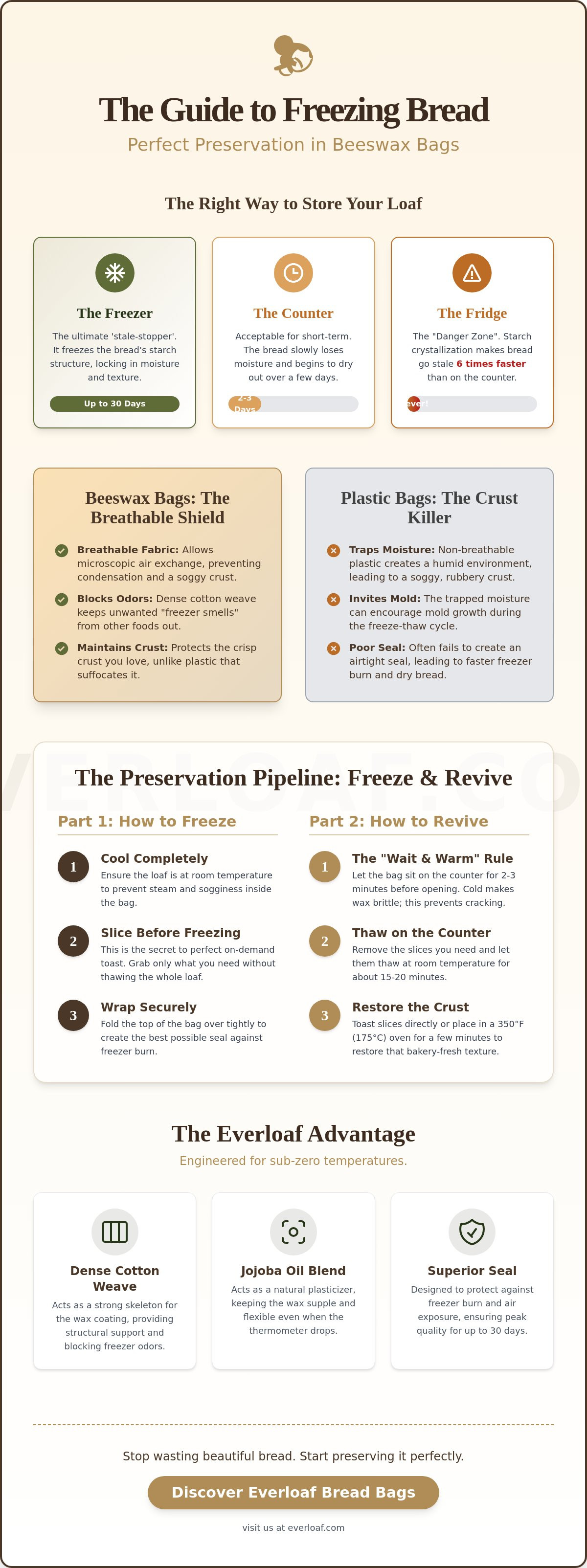
The refrigerator is a bread killer. Temperatures between 35 and 45 degrees Fahrenheit are the "Danger Zone" for your loaf. In this range, starch crystallization happens at lightning speed. Your bread will go stale six times faster in the fridge than on your kitchen counter. It's a tragic waste of good flour. The freezer is different. It drops the temperature so low that the starch structure is frozen in place. It preserves the softness you worked hard to achieve. Stop putting your bread in the fridge and start trusting the cold.
Beeswax vs. Plastic: The Breathability Factor
Plastic is the enemy of a good crust. It traps every bit of moisture inside. This leads to a "soggy" crust during the freeze-thaw cycle. Worse, it often invites mold to grow. High-quality beeswax wraps and bags are different. They use organic cotton and natural wax to allow for microscopic air exchange. This tiny bit of breathing is vital. It prevents condensation from building up on the surface of the bread.
When people ask can you freeze bread in beeswax bags, they are usually looking for a way to save their hard work. The science of breathability proves it's the superior choice over plastic. The Everloaf bag is specifically designed with a dense cotton weave for insulation. This weave keeps out unwanted "freezer smells" from other foods. Your sourdough should taste like sourdough. Stick to the 30-day rule for peak quality. After a month, the physical limits of the wax begin to shift. Respect the bread and it will reward you with that bakery-fresh taste every time.
The Cold Truth: How Freezing Affects Beeswax and Cotton
Physics doesn't care about your sourdough cravings. At sub-zero temperatures, beeswax undergoes a physical transformation. It becomes brittle. This is a natural reaction to the cold. It isn't a defect in your storage tools. It's just science. Many people ask, can you freeze bread in beeswax bags without the material snapping? The answer depends entirely on the quality of the foundation. A thin, cheap wrap will fail because it lacks structural support. A dedicated bread bag uses a heavy-duty cotton weave to act as a skeleton for the wax. This partnership allows the bag to survive the deep chill without the wax flaking off into your crust.
The USDA provides extensive guidelines on Freezing and Food Safety, highlighting that while freezing keeps food safe, it can impact texture if the barrier fails. To keep your loaf in peak condition, you must protect the "seal" of the bag. When the bag is frozen solid, the wax is at its most vulnerable. Treat it with respect. If you force the opening, you risk micro-cracks in the wax coating. These cracks invite air in, and air is the enemy of freshness. Investing in a high-quality beeswax Bread Bag ensures the wax is supported by a structural cotton weave designed for these temperature swings.
The Brittle Point: Handling with Care
Never snap or aggressively fold a frozen bag. It's a simple rule. Use the "wait and warm" method. Let the bag sit on the counter for two minutes before you try to open it. This brief pause allows the wax to regain its grip and flexibility. High-quality formulas, like those in Everloaf bags, include jojoba oil. This oil acts as a natural plasticizer. It keeps the wax supple even when the thermometer drops. It's the difference between a bag that lasts years and one that ends up in the bin after a single winter.
Freezer Burn: The Real Threat
Freezer burn is just a fancy name for dehydration. It happens when air reaches the surface of your bread and sucks the moisture out. You can prevent this by using a tight "dumpling fold." Roll the top of the bag down firmly to eliminate air pockets. This creates a pressurized environment that keeps the moisture inside the crumb. Remember the 30-day limit. Even the best barrier can't stop time forever. For the best experience, eat your frozen treasures within a month. Your taste buds will thank you for the discipline.
Step-by-Step: How to Freeze Your Loaf the Right Way
Freezing is a preservation strategy. It isn't a shortcut. If you’re wondering can you freeze bread in beeswax bags for the long haul, the secret is in the prep work. Your loaf is a living thing. Treat it with respect before it hits the ice. Following a disciplined process ensures your artisan crust stays sharp and your crumb stays soft. Your bread deserves a better fate than a haphazard toss into the freezer drawer.
Slicing is your best friend. Don't freeze a whole loaf unless you plan to eat it all in one sitting. Slice the bread before it goes into the bag. This allows you to pull out exactly what you need for breakfast without thawing the entire loaf. It's the secret to on-demand toast. You can pop a frozen slice straight into the toaster. It will taste like it was baked this morning. For storage lasting longer than two weeks, use the double wrap method. Wrap the loaf in one of our smaller beeswax wraps first. Then slide it into the beeswax Bread Bag. This extra layer is like a winter coat for your sourdough. It keeps the air out and the flavor in. Label your bag with a small piece of masking tape on the closure. Never write directly on the wax surface.
Pre-Freeze Prep: The Cooling Phase
Cool your bread completely. This is the golden rule of preservation. Never put a warm loaf into a bag. Internal steam is the enemy. If you trap that steam, it turns into ice crystals. These crystals pierce the delicate starch structure and ruin the crumb. Wait at least four hours after baking before the bag meets the freezer. You want the loaf to be at room temperature throughout. Remember that residual heat is the enemy of a crisp frozen crust. Patience now means a better sandwich later.
The "Everloaf Roll" Technique
Air is the thief of freshness. You must eliminate it. Slide your sliced bread into the bag and squeeze out every molecule of excess air. Use a firm hand. Fold the top of the bag over itself several times. This creates a physical light and air barrier that protects the bread from the harsh freezer environment. Use the warmth of your hands one last time. Press your palms against the folds to "set" the seal. The wax will soften slightly and grip the fabric. This creates a custom, airtight fit before the bag hits the cold. It's a simple move that makes a massive difference in quality. Can you freeze bread in beeswax bags effectively? Yes, but only if you master the seal.
Reviving Your Bread: From Freezer to Table
Your bread is out of the vault. Now comes the most critical phase. Many people ask, can you freeze bread in beeswax bags only to ruin the results by rushing the thaw. This is where the magic happens or where the crust dies. You've respected the freeze. Now you must respect the revival. The transition from sub-zero to room temperature requires a steady hand and a bit of patience. Your loaf has been in a deep sleep. Waking it up too fast causes shock. Give it the time it needs to adjust.
Keep the bread inside the bag during the thaw. This is non-negotiable. As the bread warms, it naturally wants to pull moisture from the surrounding air. If you take it out too soon, condensation forms on the cold surface of the crust. This leads to that dreaded rubbery, damp texture that ruins a good sourdough. The beeswax and cotton work together as a climate-controlled buffer. They manage the humidity levels during the temperature swing. You can learn more about How Humidity Affects Bread Storage to understand the science behind this delicate moisture balance. Respect the process and your bread will reward you.
The Gentle Thaw
Give the bag time to breathe. Place it on your counter and walk away. You need to wait until the wax is no longer stiff before you even think about unfolding it. This usually takes about 10 to 15 minutes in a standard 70-degree kitchen. If you try to force the opening, the wax will protest and potentially crack. Once the bag feels supple and the bread has reached a soft state, you're ready for the final heat. This slow process prevents the crumb from becoming gummy and keeps the internal structure intact. It's a small wait for a huge payoff in quality.
The 350°F Refresh
The oven is your best friend. The microwave is the enemy of craft. Never microwave artisan bread. It vibrates water molecules so violently that the starch structure collapses instantly. You'll get a loaf that's hot for sixty seconds and a literal rock for the rest of the day. Instead, use a 350°F oven flash. Place your loaf or slices directly on the rack for five minutes. This short burst of dry heat triggers the Maillard reaction again. It re-crisps the crust and wakes up the dormant aromas of the grain. It tastes like it just came off the baker's peel. Can you freeze bread in beeswax bags and still get that crunch? Absolutely, if you use the oven to finish the job correctly.
Ready to stop wasting your hard work? Grab a beeswax Bread Bag and start preserving your loaves with confidence.
Why the Orvix Bread Bag is Built for the Freezer
Generic beeswax wraps are fine for a spare half-avocado. They usually fail when it comes to a full sourdough boule. Bread has volume. It has a high surface area. It needs a dedicated tool that respects its size. If you've been wondering, can you freeze bread in beeswax bags that actually last, you need to look at the engineering of the bag itself. Most wraps are too thin. They crack under the pressure of a large loaf in the cold. The Orvix bag is different. We crafted it from 100% organic cotton with a weave density specifically designed for insulation. This isn't just a cover. It's a climate-controlled environment for your crust.
The secret lies in our proprietary infusion. We blend pure beeswax with high-grade jojoba oil. This combination ensures maximum cold-weather flexibility. While other waxes turn to glass in the freezer, our blend remains supple. This protects the integrity of the seal through every temperature swing. The bag is large enough to handle a full boule without overstretching the fabric or stressing the wax. It's a sustainable alternative that pays for itself quickly. You'll stop throwing away money in the form of stale, freezer-burned bread. It's a win for your kitchen and the planet.
The Everloaf Difference: Quality You Can Feel
Our design roots are in Lyon. We brought that French culinary focus to every stitch of the Orvix bag. We didn't want a disposable product. We wanted a kitchen heirloom. These bags are built to survive hundreds of freeze-thaw cycles without losing their grip. You can feel the density of the cotton the moment you touch it. It provides a level of protection that generic wraps simply cannot match. It's a professional tool for the home baker. Secure your own Orvix Bread Bag today and see how quality changes your storage game.
Join the Community of Conscious Bakers
You aren't alone in this journey. Thousands of bakers are ditching single-use plastic every day. They're choosing a path that respects the environment and the bread. There's a deep emotional reward in treating your hard-earned sourdough with reverence. You spent days on that starter. You spent hours on the stretch and fold. Don't insult that effort with a flimsy plastic bag. Can you freeze bread in beeswax bags and feel good about your footprint? Yes. It's about more than just storage. It's about a commitment to excellence. Upgrade your kitchen habits today. Your loaves deserve the best vault in the house.
Stop Wasting Bread and Start Preserving the Craft
You now have the blueprint for perfect loaf preservation. Freezing is no longer a risk. It's a strategy. By mastering the "wait and warm" rule and the 350°F oven refresh, you ensure your artisan bread never meets a tragic end in the bin. The question of can you freeze bread in beeswax bags has a clear, scientific answer. Yes, you can, provided you respect the physical limits of the natural materials and the needs of the bread itself.
Your sourdough deserves a vault that matches its quality. Don't settle for plastic that suffocates the crust. Home bakers have rated our design #1 for sourdough freshness for a reason. It combines a Lyon-inspired culinary design with the durability of 100% Organic Cotton. It's time to join a community that treats every loaf with reverence. Stop wasting your sourdough—get the Orvix Beeswax Bread Bag now. Your next perfect slice is waiting in the freezer. Go get it.
Frequently Asked Questions
Will the beeswax smell transfer to my bread in the freezer?
High-quality beeswax is practically odorless once it reaches freezer temperatures. You won't find any honey or wax scents migrating into your crumb. The cold locks the wax structure in place. This prevents any aromatic transfer. Your sourdough will taste exactly like the grain and fermentation you intended. Trust the cold to keep the flavors separate and pure.
How do I clean my beeswax bag after it has been in the freezer?
Wash your bag with cool water and a tiny drop of alcohol-free dish soap. Never use hot water because it will melt your preservation barrier. Gently wipe away any stray crumbs. Let the bag air dry completely before your next use. Treat the bag with care. It is a specialized tool that responds best to a gentle touch and low temperatures.
Can I freeze a whole sourdough boule or should I slice it first?
Slicing your boule before freezing is the superior method. It allows you to grab exactly what you need without thawing the whole loaf. This prevents the cycle of thawing and refreezing that destroys bread quality. Pop a single frozen slice straight into your toaster for a perfect result. It saves time and preserves the integrity of the remaining bread in the vault.
What happens if I accidentally crack the wax while the bag is frozen?
Don't panic if you see a micro-crack in the wax. Let the bag reach room temperature first. Use the warmth of your hands to gently press the wax back together. For larger cracks, you can reset the wax using a very brief blast from a hairdryer on the lowest setting. Always wait for the bag to warm up before you try to fix it.
How long can bread stay fresh in a beeswax bag in the freezer?
Aim for a maximum of 30 days for the best taste and texture. While the bread remains safe to eat longer, the quality begins to dip after the first month. Can you freeze bread in beeswax bags for longer? You can, but you risk minor moisture loss. Stick to the one-month rule to ensure every slice tastes like it just left the bakery oven.
Can I use beeswax bags for store-bought bread too?
You can absolutely use these bags for store-bought loaves. They are much more effective than the thin plastic sleeves from the grocery store. The beeswax provides a thicker barrier against the dry freezer air. It prevents that chemical freezer taste from seeping into the bread. Your sandwich bread will stay soft and usable for much longer than in its original packaging.
Does the freezer kill the beneficial bacteria in my sourdough?
Freezing does not kill the wild yeast or beneficial bacteria in your sourdough. It simply puts them into a deep sleep. The cold halts the fermentation process without destroying the biological profile of the loaf. When you reheat the bread, the flavors developed during the long ferment remain intact. Your gut-friendly bread stays exactly as nutritious as the day it was baked.
Is it better to use a linen bag or a beeswax bag for freezing?
Beeswax bags are the clear winner for freezer storage. Linen is too porous and allows cold air to reach the bread surface. This leads to instant freezer burn. Can you freeze bread in beeswax bags more effectively? Yes, because the wax creates a solid moisture barrier that linen cannot provide. Keep your linen bags for the counter and your beeswax bags for the freezer.


